
Paris Nautic Show's centenary programme revisits 100 years of boating in Paris through three discussions on engines, construction materials and new ways to enjoy small boats.
A centenary viewed from the small-boat end of the harbour
Paris Nautic Show is using its 2026 edition to examine a century of recreational boating, with a three-part discussion programme created in collaboration with the Musée de la Plaisance. The organiser announced the centenary series on 26 November, while the exhibition is taking place from 25 to 29 November at the Paris–Le Bourget exhibition centre. For leisure-boat owners, the programme offers a useful way to understand how the everyday experience of getting afloat has changed, not merely how boats have become faster or more elaborately equipped.
The anniversary commemorates a century of boating exhibitions in Paris, beginning in 1926. It does not mean that a single uninterrupted event has been held in precisely the same format every year. The organiser's 26 November centenary announcement identifies propulsion, construction techniques and changing patterns of participation as the three themes. Together, they make a compelling portrait of how people with modestly sized vessels have acquired more ways to travel, learn, share and maintain their boats.
Why a century of boating matters to a newcomer
A visitor who arrives at the show without a boating background could easily assume that the exhibits belong to one market. In reality, a short dinghy outing, a family canal cruise, a trailerable motorboat holiday and a long coastal passage require different skills, craft and arrangements ashore. A century of change has expanded those options and complicated some of the decisions. The centenary discussions provide a useful framework precisely because they do not concentrate exclusively on a spectacular new yacht.
The ordinary questions remain recognisable: Who will travel with you? Where will the boat stay? How will it be moved, operated and maintained? How often can it be used? Changes in materials and engines affect these choices, yet the financial and practical demands of ownership remain important. The best measure of innovation is often whether a family can enjoy the water more safely and reliably, rather than whether an exhibition hall contains another impressive specification.
Propulsion was the Thursday conversation
The first discussion, scheduled for Thursday 26 November at 16:00, carries the theme of marine propulsion at a crossroads. The organiser uses the Aquamatic stern-drive system, large V8 outboards, electric and hybrid propulsion and alternative fuels as examples of the technologies shaping this debate. These examples cover different eras and vessel sizes; they should not be read as a claim that each solution suits a particular small boat or meets the same environmental target.
For a boat used near a town, propulsion choices might begin with noise, local restrictions and the availability of charging or fuel. A family travelling between coastal harbours may weigh practical range, maintenance support and safe reserves more heavily. An electric system can offer appealing quiet operation in certain circumstances, but responsible ownership requires looking at the complete installation, charging facilities and the real operating profile. A combustion engine can be appropriate for other routes; the important point is to compare verified capabilities rather than slogans.
Battery power should be evaluated as a system
An engine demonstration can make the new technology feel remarkably simple, particularly on a compact tender or lake boat. Yet the motor is only one part of the system. The prospective owner must also understand the battery, charging equipment, wiring, protection, thermal safeguards, service arrangements and the practical effects of wind and current. Range claims need a stated speed, loading and weather context to mean anything when planning a real trip.
These questions are especially relevant for boats under twelve metres, which may spend long periods unused between outings. A prospective buyer can ask how a battery should be stored over winter, how the dealer handles software or diagnostic issues and what happens when shore power is unavailable at a favourite destination. The Paris centenary theme does not settle those technical debates. It does, however, make clear that the shift in propulsion is about patterns of use as much as engineering.
Construction materials take the Friday stage
The second discussion is scheduled for Friday 27 November at noon, with construction technology as its subject. The official programme traces a line from plywood to composite materials, aluminium and natural fibres. It also raises eco-design, the recyclability of boatbuilding materials, end-of-life management and the influence of offshore racing on innovation. That is a broad agenda, but one with direct consequences for owners who expect their boats to remain serviceable for many seasons.
Construction choices affect what can be inspected, repaired and upgraded in ordinary use. The buyer of an older plywood or composite boat should understand the actual structure and condition of the particular hull, rather than assume that every example from an era behaves alike. An aluminium vessel brings a different maintenance conversation, while novel fibre materials require questions about repair processes and long-term access to suitable expertise. The point is not that one material is universally superior. Suitability depends on design, manufacture, use and upkeep.
The most sustainable boat may be the one maintained well
The centenary debate places recyclability and the end of a boat's life alongside innovation. For leisure-boat owners, this raises a complementary question: what can be done to keep a sound boat useful for longer? Thoughtful maintenance, sympathetic refits and competent repairs may extend service life and prevent unnecessary replacement. Nevertheless, an old hull should not be described as environmentally preferable without considering actual condition, repair materials and likely future use.
Visitors considering a refit can use the materials theme to ask builders and repairers how they identify hidden damage, bond new components to existing structures and document the finished work. They can also ask what happens to replaced components. A well-planned repair is not simply cosmetic; it should preserve structural integrity and the future owner's ability to understand what was done. No general claim about low environmental impact can substitute for information about the particular project.
Boat sharing changes the question of who gets afloat
The third centenary discussion, scheduled for Saturday 28 November at 16:00, looks at changing uses and customers. Among the organiser's examples are rentals, boat clubs, shared ownership, renovation, second-life boats and new onboard technology. This may be the programme's most immediately accessible subject. Boat ownership is not a single decision between buying outright and staying ashore. Different arrangements create different levels of access, responsibility and flexibility.
For someone who can sail or cruise on a few weekends each year, a rental or club membership may provide time on the water without taking on every task of maintenance and storage. A keen owner who sails regularly might place greater value on having a familiar boat ready at short notice. Shared ownership can distribute costs, but it also requires clear agreements about reservations, repairs, liability and what happens when partners want to change their participation. The right choice depends on actual use rather than on the prestige of ownership.
A boat club is not the same as owning a boat together
The terms boat club, subscription and shared ownership sometimes appear in the same discussion, but they can imply different contractual arrangements. A club may give members access to vessels operated by the organisation. Shared ownership may involve a continuing stake in a specific boat and a role in its costs and decisions. A straightforward rental usually covers a more limited period. No two products should be assumed equivalent without examining their terms.
For families assessing these options, the most important questions may concern availability during school holidays, cancellation rules, qualifications, insurance and the distance to the departure point. Access that looks economical on paper can lose its appeal if the relevant boats are regularly unavailable on the dates people can actually travel. On the other hand, a reliable club with suitable training and a convenient base can make frequent short outings much easier. The centenary theme acknowledges these shifts without prescribing a universal business model.
From boat construction to the culture of the weekend
Taken together, the three stage sessions tell a larger story. An owner does not buy propulsion, materials or access in isolation; those elements shape a shared experience. A relatively inexpensive craft can support fishing with friends, coastal exploring, a sailing lesson or an unhurried canal journey. What matters is how the boat fits into a life that also includes work, travel, family commitments and weather that does not always cooperate.
A different generation of recreational boaters may define convenience in different ways. Some value the freedom to maintain an older craft themselves. Others prefer a professionally managed vessel they can use when time allows. Technology may help with navigation and maintenance monitoring, yet it should complement training rather than replace it. An event celebrating a century of boating can usefully expose this diversity, especially when contemporary marketing sometimes treats every owner as though they want the same sort of adventure.
The history is broader than the biggest yachts
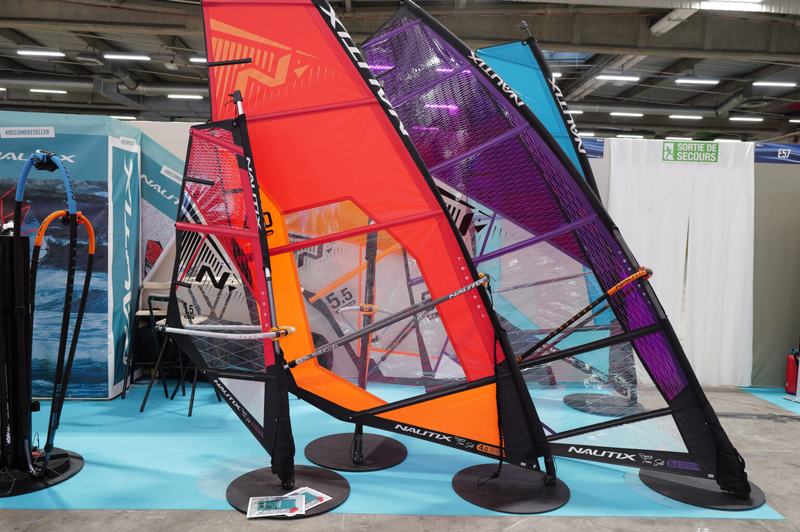
Archive photograph: © Paris Nautic Show, official 2025 exhibition gallery. The image illustrates boating culture and does not depict the 2026 centenary events.
Paris's boating history is not just a record of larger hulls or greater installed horsepower. Sailing clubs, river cruising, practical motorboats, boatbuilding workshops and holiday rentals have all been part of the way people encounter the water. The present Paris Nautic Show describes itself as covering sailboats, motorboats, equipment, watersports, outdoor activity, tourism, charter and services. It also gives visitors the chance to speak directly with suppliers rather than judge vessels from online pictures alone.
This broad canvas is particularly relevant to readers of Leisure Boat Guide, whose interest is in boats below twelve metres and the lifestyle around them. A modest outboard boat and a small sailing cruiser may share a marina but differ considerably in how they are prepared for a trip. Both are part of recreational boating history. Looking at access and upkeep as historical themes helps explain why the leisure marine sector has not converged on one perfect craft.
A real exhibition, not an on-water demonstration
Paris Nautic Show takes place indoors at the Le Bourget exhibition centre. The organiser's visitor information makes clear that visitors may be able to board boats exhibited at stands, but individual exhibitors decide whether to permit access. It also states that there are no water trials at the exhibition. This is an important distinction for newcomers, particularly those who are inspired by a comfortable cockpit or an elegant sailboat displayed under bright indoor lighting.
A show visit can reveal layout, build details and the confidence with which a dealer explains maintenance. It cannot establish real handling in waves or the performance of a hull under load. Visitors who are serious about a purchase should use the show to build a shortlist and arrange a later inspection or on-water demonstration where appropriate. The centenary sessions are an invitation to ask more informed questions, not an assurance that every uncertainty can be settled on the exhibition floor.
A weekend programme with room for discovery
The 2026 show runs from Wednesday 25 to Sunday 29 November at Paris–Le Bourget. According to the official visitor information, the usual opening hours are 10:00 to 18:30, with a late opening on Friday 27 November until 22:00 and a Sunday closing at 17:30. Anyone travelling specifically for a stage discussion should confirm its programme and location before departure because schedules can change.
For a leisure-boating visitor, a focused itinerary might pair the centenary discussion on Saturday with time among smaller sailing and motorboat exhibits, equipment specialists and tourism providers. A newcomer should allow room for unplanned conversations: a club representative or a marina operator may offer more practically useful information than a sales demonstration. Visitors need not treat the exhibition as an exercise in covering every hall. A small number of genuinely relevant meetings can create a more useful plan for the next boating season.
A 2025 photograph, not a scene from this year's centenary
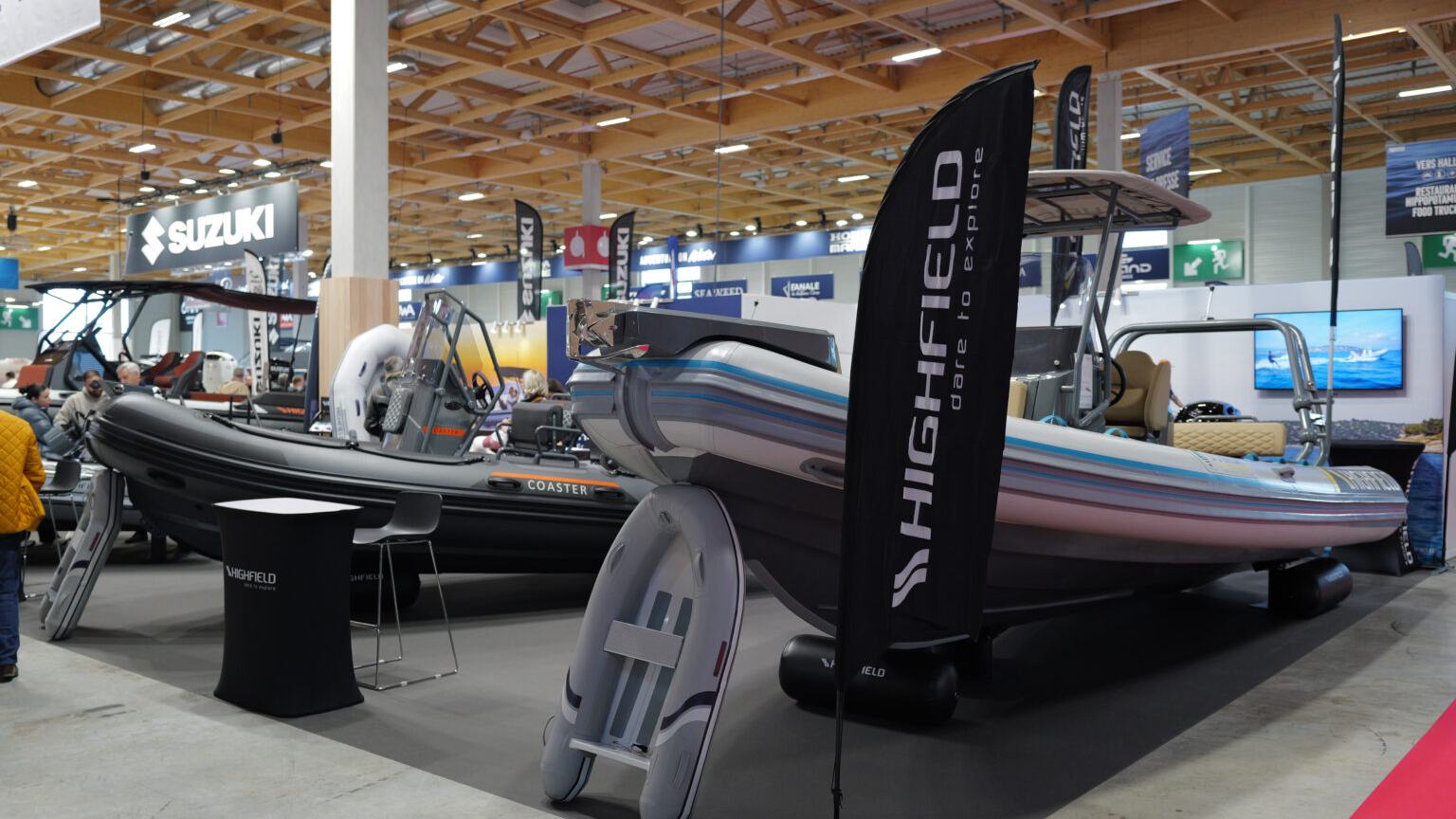
The accompanying official Paris Nautic Show image shows a leisure motorboat exhibited at the 2025 event. It comes from the organiser's archived gallery linked through the official media resources. The media centre expressly makes press imagery available for editorial publications concerning the Paris Nautic Show. The photograph illustrates the type of leisure-boating display that forms part of the show's culture; it is not claimed to depict the 2026 centenary talks or an event that has not yet happened.
Correctly identifying the year matters in a retrospective article. Exhibition images can be useful context, but they should not be substituted for evidence of who spoke at a specific seminar or how visitors responded. As of this report on 27 November, Friday's construction discussion and Saturday's participation discussion belong to the published 2026 programme. This article does not invent a transcript, statement, outcome or attendance figure for those events.
What a century of boating offers the next generation
The centenary's clearest lesson is that the future of recreational boating may be defined as much by accessibility and responsible ownership as by headline technologies. More efficient equipment is valuable when it suits the journey. New construction methods deserve attention when they improve repairability and durability. Shared and rental models are useful when they enable people to travel safely on the water without taking on commitments they cannot sustain.
There are no easy universal answers. A small-boat owner who enjoys maintaining an older craft and a newcomer who would rather hire a boat may both be making excellent decisions for their circumstances. The three Paris Nautic Show discussions create a conversation between those approaches, while reminding visitors that the pastime has been repeatedly reshaped over the last hundred years. A century after Paris began celebrating boating in exhibitions, the enduring attraction is still the chance to leave the quay and experience the water.
Official sources and editorial image credit
This original feature draws on the organiser's dated 1926–2026 centenary announcement, its 2026 visitor information and its media and image-use page. The media page identifies show-related images as available for editorial publication; the associated 2025 photographic archive establishes the photograph's event provenance.
Lead photograph: official Paris Nautic Show 2025 exhibition gallery, showing a small motorboat on display. © Paris Nautic Show. It is an archive image for the historical discussion, not a photo taken during the 2026 centenary. No quotation is attributed to any speaker and no unsupported outcome is reported.