
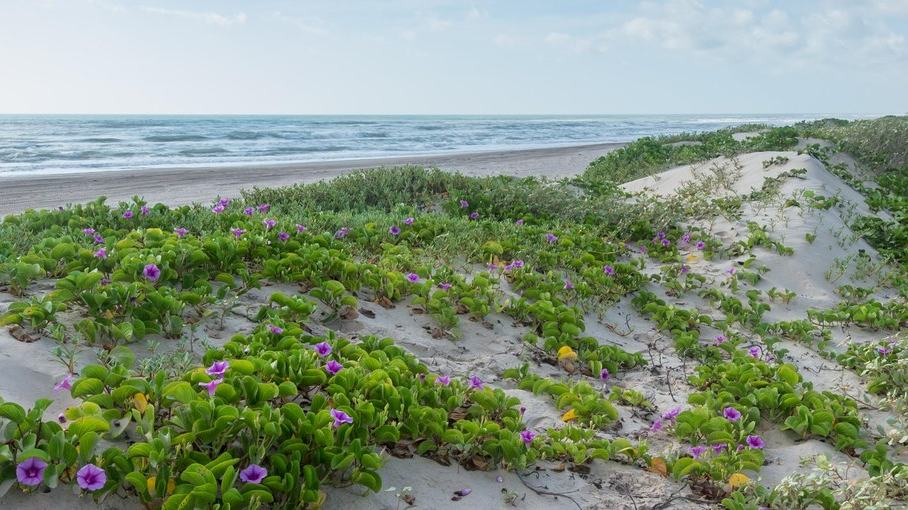
Padre Island National Seashore provides access to the shallow Laguna Madre, where careful boat handling protects seagrass and prevents grounding.
Laguna Madre is an unusually shallow destination
The western side of Padre Island National Seashore opens toward the Laguna Madre, a broad shallow lagoon along the Texas coast. Small boats, kayaks and anglers use the area, but its apparent size can be misleading. Much of the lagoon has limited depth, demanding more precise navigation than a deeper recreational lake.
The National Park Service describes an average water depth of around four and a half feet in the Laguna Madre. That figure cannot be used as the clearance for a particular route: some areas are much shallower, and water conditions vary. Vessel draught, local charts and the ability to recognise shallow bottom are essential considerations.
Bird Island Basin is the principal launch
Bird Island Basin offers a boat ramp for access to the Laguna Madre. The location is popular with recreational craft and provides a convenient starting point for people seeking fishing and day boating. A visiting crew should arrive with time to examine the conditions rather than simply follow the boat ahead down the ramp.
The basin also has a designated windsurfing area where motorized vessel operation is prohibited. Owners must understand the boundary and avoid passing through it just because it appears to provide a shorter route. Sharing a waterfront with windsurfers and paddlecraft requires courtesy and an effective lookout.
Propeller scars can last long after a trip
Seagrass beds are important habitats for fish and other wildlife, and they can be damaged by propellers or hulls in shallow water. The Park Service advises boaters to use a trolling motor or push pole where appropriate to avoid damaging these habitats. Reducing speed alone does not prevent damage if the propeller is still cutting into the seabed.
An owner should identify the boat's actual running and stationary draught before entering an unfamiliar shallow area. If the channel ahead is uncertain, the safer choice is to stop and assess rather than continue at power. Responsible boating means protecting the habitat while also avoiding expensive engine and hull damage.
Large vessels also use the surrounding waters
The Gulf Intracoastal Waterway marks a boundary on the western side of the national seashore. The maintained channel is considerably deeper than the surrounding flats and carries commercial vessel and barge traffic. A small boat crossing or travelling near it must be prepared for wakes and the limited manoeuvrability of larger traffic.
Do not assume that a wide-looking waterway allows a large ship to move away from a kayak or fishing boat. Maintain a careful lookout, understand the traffic rules and avoid obstructing a vessel that is constrained by its channel. A quiet sightseeing trip can become hazardous when a crew loses track of nearby commercial movements.
Kayaks and paddleboards offer another option
The Laguna Madre includes areas suitable for paddling when conditions are appropriate, and Bird Island Basin provides access to rentals through a local operator. A small paddlecraft can allow visitors to explore closer to shallow shores than many powered boats, although wind can quickly make an open-water return difficult.
Paddlers should understand the direction of the wind and choose a conservative route. A shallow lagoon is not automatically an enclosed or sheltered environment. The best first outing often stays within a manageable distance of the launch and avoids making a long crossing merely because the opposite shore looks close.
Gulf beaches operate under different rules
The national seashore permits certain small soft-hulled motorized vessels, less than fourteen feet long, to launch from a specified part of South Beach beyond the five-mile marker. Hard-hulled motorized vessels may not launch from the park's Gulf beaches. These are specific restrictions rather than a general invitation to beach-launch an outboard-powered craft.
Ocean surf introduces additional risks that are absent from many sheltered lagoon launches. A craft suitable for still water may struggle in breaking waves or steep beach conditions. Visitors should review the current park compendium before attempting any unusual launch rather than relying on informal advice.
Family flotation and safety requirements
Texas rules require children under thirteen to wear approved lifejackets while aboard recreational vessels under twenty-six feet when underway, including drifting. Adults must have suitably sized flotation readily accessible, while additional rules may apply to particular craft and activities. The best practice is to ensure everyone understands how and when their equipment must be worn.
Families should also plan for exposure to sun, salt and wind. Drinking water, suitable footwear and an emergency communication method are sensible preparations. A small boat can be an excellent platform for exploring the lagoon when the operator recognises that the location remains a real marine environment.
Fishing should respect the natural surroundings
Anglers value the lagoon's shallow flats and productive habitat. Their boat-handling decisions influence not only the day's fishing but also the environment supporting future fish populations. Avoid using excessive power in sensitive areas and observe wildlife from a responsible distance.
Any fishing trip also needs to follow applicable state rules, including licensing and protected species requirements. An invitation to fish in national seashore waters does not replace ordinary legal obligations. Owners should check current guidance before selecting equipment, bait or a stopping location.
A useful plan for a first small-boat visit
Choose a route that matches the boat's draught and the day's wind, and identify the return passage in advance. Review current local charts and the park's published restrictions. Plan stops in areas where anchoring or landing is permitted, rather than disturbing seagrass in an attractive-looking shallow cove.
Watch the condition of the water as well as the forecast. Strong wind can make both navigation and steering more demanding, and a shallow flat can become unsuitable at a different water level. If the conditions do not fit the original plan, a shorter route is a sensible alternative.
Leave the lagoon in good condition
Boat owners should check hulls and trailers for unwanted organisms before moving between waters. Litter, fishing line and poorly managed equipment can damage wildlife even without an obvious collision or grounding. Take rubbish back to a suitable disposal point and retrieve lost gear where safe.
The Laguna Madre rewards people who appreciate its unusual combination of wide horizons and delicate shallow habitat. The objective is to enjoy a day afloat without leaving propeller scars or creating danger for other users. A little more planning can preserve both the environment and the experience.
Source
National Park Service