
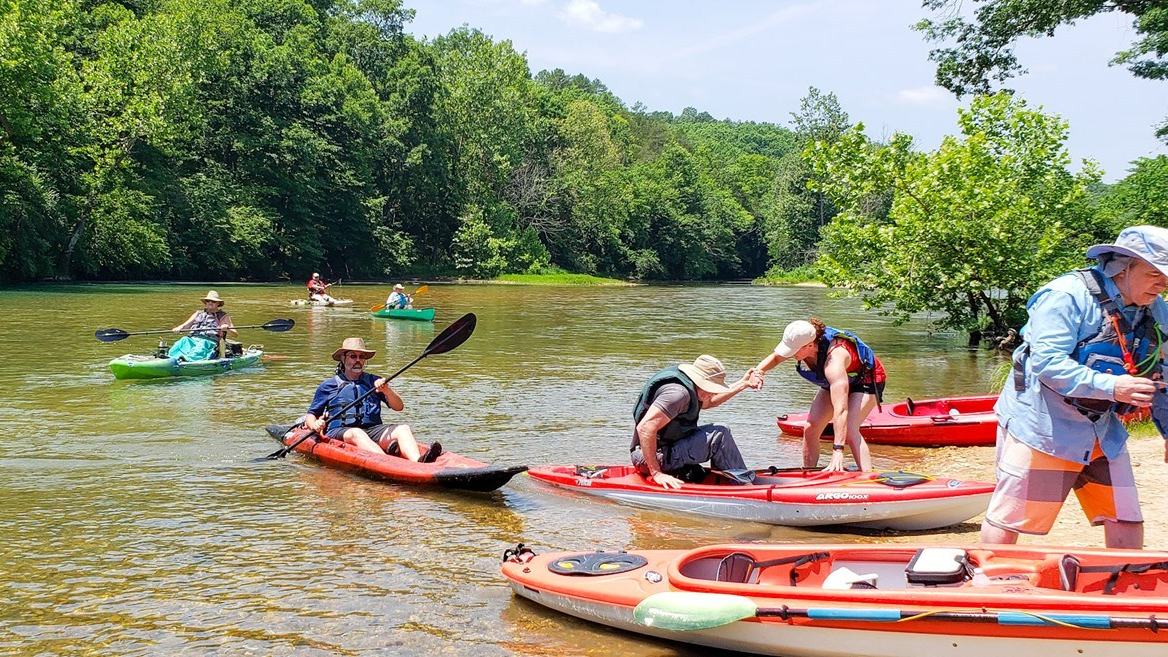
Ozark National Scenic Riverways offers a range of canoe, kayak and raft trips on Missouri's Current and Jacks Fork rivers, including licensed outfitters.
A river holiday shaped by the landscape
Missouri's Ozark National Scenic Riverways offers paddling journeys through a landscape of wooded banks, clear water and the waterways that have long shaped the region. The Current River and Jacks Fork are especially well known for canoeing, kayaking and rafting, with trips available for different levels of experience. The National Park Service describes floating as one of the park's most popular forms of recreation.
A small boat allows the visitor to travel slowly and enjoy the changing scenery, but the river's movement and the distance between access points still require planning. Not every reach has the same current or obstacles. A sensible itinerary begins by choosing the section that suits the crew and determining how everyone will return after the downstream journey.
The Current River offers varied routes
The Current River includes a range of floating sections, with some areas particularly popular during summer weekends. This means visitors can choose between a lively social experience and a quieter outing by travelling at a different time or selecting a suitable route. An experienced outfitter may help identify the reach most appropriate for the group's interests.
The distance of a route should not be considered in isolation. Water level, stops and the type of craft all affect how long a journey takes. A family who wants to swim or picnic at permitted places may cover much less ground than an experienced kayaker who keeps moving. A realistic schedule leaves enough time to return before the day becomes tiring.
Jacks Fork provides another river character
The Jacks Fork is another important Ozark waterway, offering paddling opportunities through attractive river country. Visitors may appreciate its different sections and seasonal water levels, which influence when particular reaches can be comfortably navigated. The Park Service encourages travellers to check conditions rather than relying on a route description written for a previous year.
A canoe or kayak should be matched to the section's actual conditions. Low water may create difficult shallows while increased flow after rain can introduce stronger currents and submerged hazards. Asking a ranger or authorised outfitter about the recommended reach is more valuable than choosing solely from a photograph of calm summer water.
Rental outfitters organise the journey
National Park Service-authorised outfitters provide equipment, transport and practical assistance along the rivers. A visitor may rent a canoe, kayak, raft or tube according to the services available and the chosen route. The outfitter normally explains the meeting place, launches the group and helps organise transport after the trip.
The Park Service notes that some businesses may collect guests from campsites or accommodation, making a floating holiday easier for people travelling without their own vehicle arrangements. Prices, availability and deposit policies differ, so travellers should contact the appropriate business directly. A clear confirmation of the route and take-out reduces the chance of logistical confusion at the end of the day.
Bringing a privately owned craft
Visitors can also float designated sections of the Current or Jacks Fork using their own suitable equipment without a general park floating fee, subject to the applicable federal and state regulations. This may appeal to people who have a familiar canoe and wish to tailor their outing. They must still account for parking, launch access and return transport.
A private crew should not assume that an outfitter's shuttle automatically includes their boat. Arrangements need to be discussed before departure, including the size of the craft and the number of people involved. Those without a practical return plan may find a short rented trip more convenient than taking their own equipment.
Canoes, rafts and tubes move differently
The type of craft significantly affects the floating experience. Kayaks and canoes may be more efficient over distance, while rafts and tubes can travel more slowly and respond differently to wind or current. Park guidance on estimating float times notes that rafts and tubes may take twenty-five to fifty percent longer than the equivalent canoe or kayak route.
A visitor should account for those differences rather than assume that a five-mile river section will require the same amount of time for every group. Floating without actively paddling may also slow progress, while higher water can make the current both faster and more hazardous. The safest planning combines current local advice with realistic expectations of the craft and passengers.
Preparing for a warm-weather day
An Ozark outing often takes place in bright weather, making sun protection, drinking water and suitable footwear important. A personal flotation device needs to fit correctly and be worn according to the law and conditions. Loose belongings should be secured in the boat so that a sudden movement or capsize does not scatter objects through the river.
Visitors should avoid bringing glass or other items prohibited by river regulations and take responsibility for all waste. Rental operators can explain what is required and what the company provides. A family should also establish where younger passengers will sit and how the skipper will respond when the river narrows or becomes crowded.
Scenic stops without environmental damage
Gravel bars and other permitted stopping places can give a paddling group time to rest, eat and appreciate the scenery. The official NPS photograph by Jessica Poppa shows paddlers stopping beside the river, accurately representing a common part of an Ozark float. Such photographs are useful because they show ordinary recreation, not a staged yacht or fabricated setting.
A pleasant stop should not leave litter or disturb the banks. Visitors need to respect camping and fire regulations where they apply and avoid landing on private property without permission. Animals and sensitive vegetation also deserve space. The river remains attractive to future visitors when today's crew treats the shoreline carefully.
Choosing a route for the next visit
The Park Service's floating guide and current-condition notices are the right starting points for planning a Missouri river holiday. Before booking a shuttle or equipment, visitors should establish river levels, launch access and expected conditions for the chosen date. Travelling outside the busiest periods may be appealing but still requires checking whether outfitters are operating.
The best Ozark trip may be a short family canoe journey or a more involved outing on a suitable reach. In either case, a sound return plan and attention to conditions provide the freedom to enjoy the landscape. The pleasure lies in moving at the river's pace and having enough time to notice what surrounds the boat.