
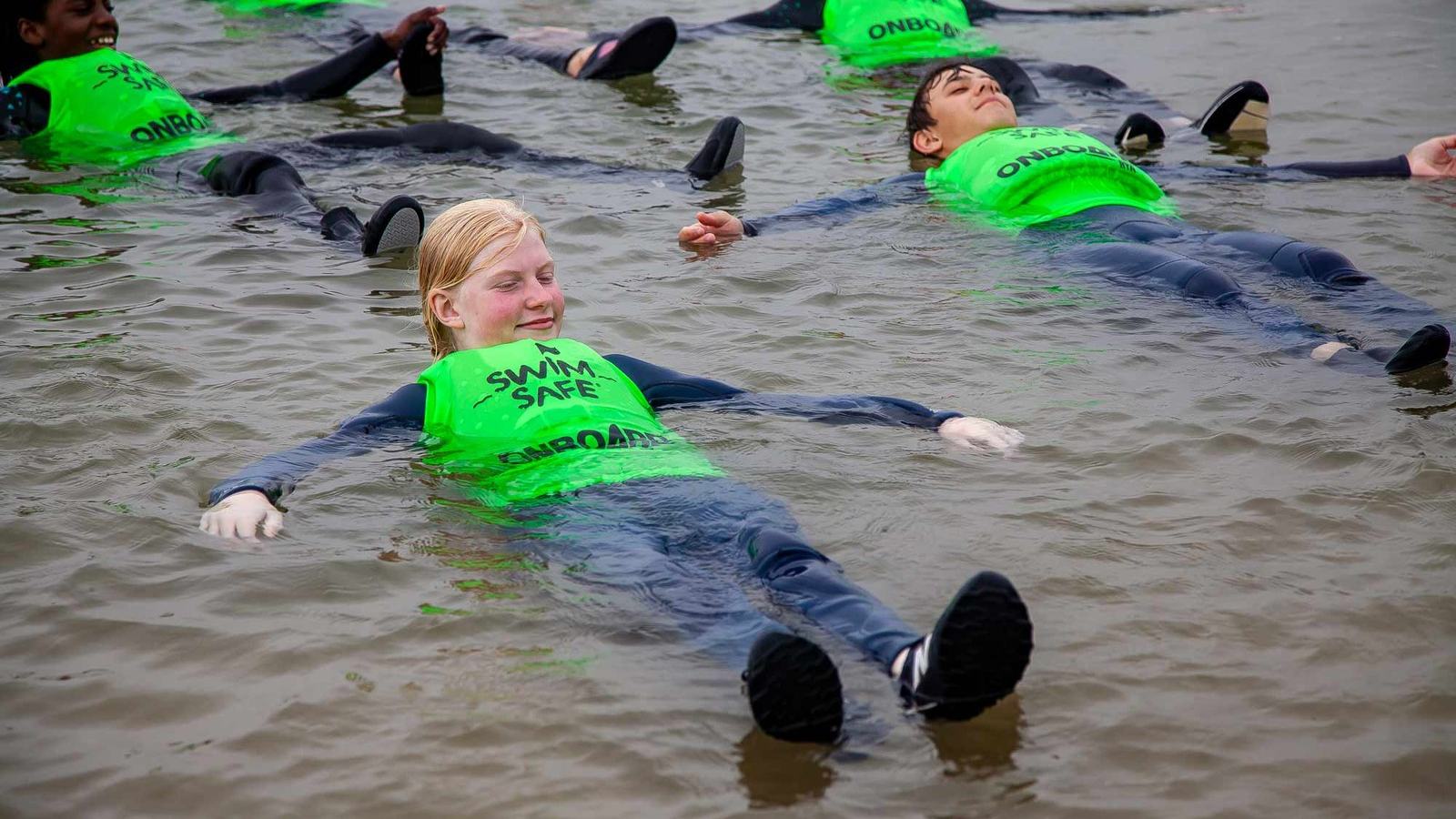
The RYA has highlighted Swim Safe as a way for OnBoard clubs to improve young people’s confidence and basic water knowledge alongside their sailing and watersports activities.
A child learning to sail is also learning how to behave around jetties, shorelines and open water. The RYA has highlighted the Swim Safe programme as an additional way for OnBoard clubs to teach essential water knowledge.
The initiative involves Swim England and the RNLI and is intended to give children practical understanding of water-related risks. It complements rather than replaces instruction in a particular watersport.
Confidence needs appropriate skills
Young participants benefit from understanding how conditions and hazards differ between a pool and an open-water venue. Sessions can help them recognise when to seek help and how to respond without entering a dangerous situation.
A child's apparent comfort near water is not proof of swimming competence. Parents and instructors must still provide supervision suited to the person and the location.
Clubs can connect learning with experience
OnBoard organisations already bring young people into supervised sailing and windsurfing activities. Adding water-safety learning can make those visits more useful beyond the immediate course.
Instructors have to plan for weather, access and the abilities of the group rather than treat every venue alike. Practical skills should be taught by suitably trained people using the programme’s guidance.
A foundation for boating families
Knowledge about flotation, cold water and local hazards matters even on a short outing in a small boat. Lifejackets and buoyancy aids need to be properly chosen and worn for the activity and circumstances.
For LBG readers, Swim Safe underscores a simple idea: being near water should come with understanding it. Enjoyment and a responsible approach to risk belong together from the first session.
Source
Royal Yachting Association