
Lake Crescent offers mountain-lake paddling in Olympic National Park, with dramatic views, practical boat-cleaning facilities and important cold-water safety advice.
The atmosphere of a mountain lake
Lake Crescent is one of the most distinctive freshwater settings within Olympic National Park in Washington State. Steep forested slopes rise around its clear water, creating a landscape where a short paddle can feel removed from the bustle of nearby roads. The National Park Service identifies boating among the ways visitors can experience Olympic, with kayaks and canoes offering an especially close connection to the lake.
The attraction lies in the changing reflections, shoreline shapes and sense of space. An experienced paddler may enjoy tracing a portion of the shore, while a newcomer could be satisfied with a short escorted outing from an appropriate access point. Neither needs to cross the lake to appreciate the surroundings.
Selecting a permitted place to launch
The Lake Crescent area includes places such as Fairholme, Storm King and the Log Cabin Resort vicinity, which also appear in the Park Service's guidance on boating and equipment cleaning. Visitors should check the present arrangements for launching, parking and any temporary closures rather than assume that an attractive roadside opening is a suitable place to put a kayak into the water.
Some travellers bring their own craft, while others seek a suitable local rental or guided outing. Equipment availability may change by season, and the operator should explain the permitted paddling area. A family can avoid unnecessary complications by choosing a launch close to its accommodation and allowing enough time to return before daylight fades.
Cold water beneath mild air
Olympic's waters remain cold through much of the year, and the NPS warns that water temperatures can be below fifty degrees Fahrenheit. Even on a pleasant summer day, accidental immersion may cause cold shock and impair the ability to swim or hold a paddle. This can be especially surprising to visitors who have only used kayaks on warm inland lakes.
Clothing should be selected for the consequences of entering the water, not solely the air temperature. Suitable flotation equipment is essential, while a wetsuit or drysuit may be appropriate depending on conditions. A group should practise recovery techniques in a safe setting and avoid journeys that place vulnerable passengers far from a reliable landing.
Boat-cleaning stations protect the lake
The Park Service provides free boat-cleaning stations at Fairholme, Storm King and Log Cabin Resort, encouraging people to clean, drain and dry their craft before and after use. The objective is to protect Olympic's lakes against aquatic invasive species, including organisms that may be transported in residual water or attached to wet gear.
For a kayak, the process includes checking hatches, footwells and equipment rather than only rinsing the visible outer hull. A boat moved between lakes without proper precautions can contribute to environmental damage even when it appears clean. Taking the cleaning routine seriously is part of respecting the water that makes the outing so attractive.
Weather and local conditions matter
Mountain weather can change quickly, while wind crossing a lake can create chop and make the return journey unexpectedly tiring. Mist or rain may also reduce visibility and obscure shoreline landmarks. The NPS advises boaters to research wind and weather before launching and to carry appropriate equipment, food and spare clothing.
Paddlers should prepare a modest route with a clear turning point and tell a responsible person when they expect to return. A phone or suitable communication device needs water protection, and reliance on a single electronic map is unwise. Familiarity with the lake's shape and local access can be more useful than attempting an ambitious route based on a distance measured at home.
Combining paddling with the wider park
Lake Crescent is attractive partly because it can form one element of a broader Olympic holiday. Visitors may enjoy nearby trails, lakeside viewpoints and accommodation before or after the boating day. A well-paced itinerary can therefore leave time for a gentle paddle without demanding that every hour be spent on the water.
Such variety provides a welcome alternative when the forecast turns unsuitable for kayaking. A walk or educational stop is better than forcing a launch in deteriorating conditions. The most successful family holiday is one flexible enough to adapt to the mountain environment rather than treating the original activity plan as an obligation.
A kayak offers a different viewpoint
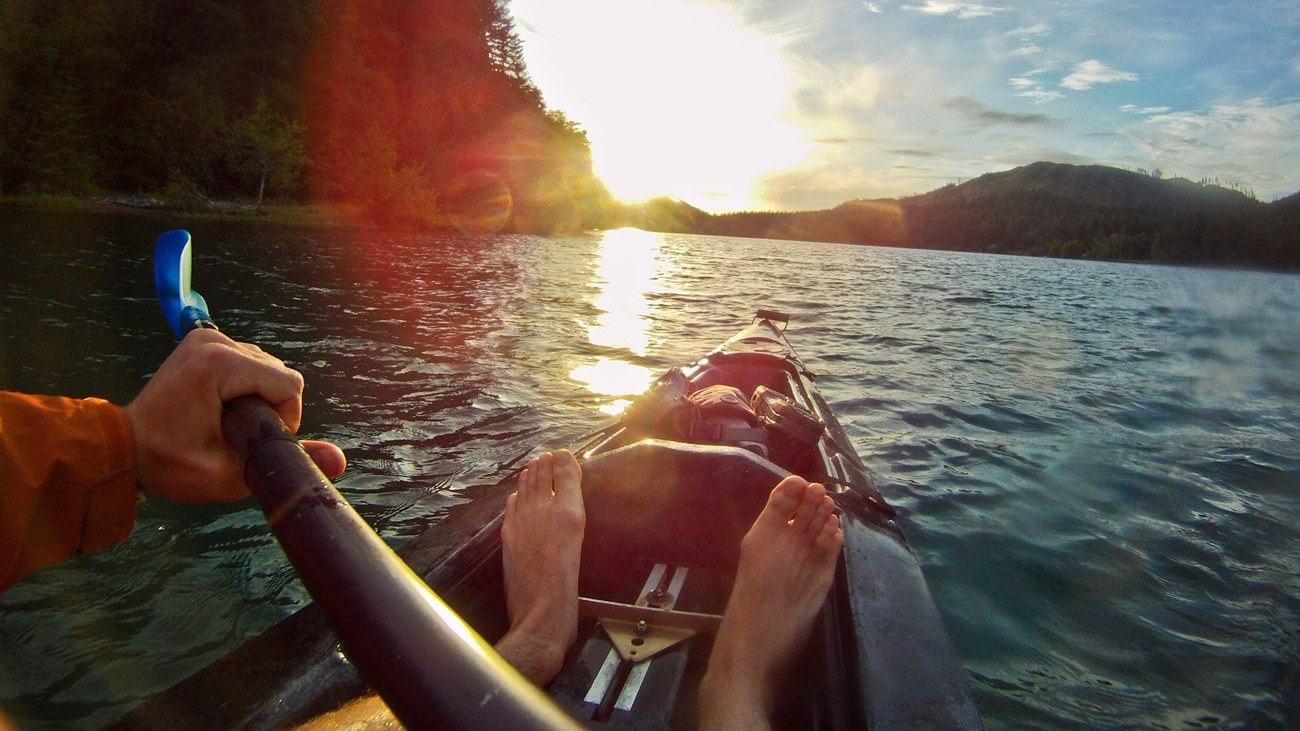
The official NPS photograph selected for this article shows an actual kayak on Lake Crescent, with the bow and paddle visible against the mountain water. It captures the sensation of looking outward from the craft rather than using a generic image of a distant lake. The setting can look especially appealing in low sunlight, but conditions still need to be judged independently on the day.
Taking photographs should never distract from controlling the kayak or keeping an adequate lookout. A passenger can enjoy the scenery from a stable seated position, while more complex camera handling is best left until the boat is safely stopped. The value of the view comes from experiencing it directly, not obtaining the most dramatic image.
A measured day on Washington water
A Lake Crescent outing can be a rewarding part of a holiday for people who enjoy quiet places and simple small craft. The primary decisions are straightforward: choose the appropriate boat, confirm the launch, check the wind, dress for cold water and plan a manageable return. None of these preparations reduces the pleasure of paddling; they help protect it.
The National Park Service's current boating and Lake Crescent guidance should be reviewed before departure. The goal is a calm encounter with the landscape, achieved through patient movement and respect for local rules. A few well-chosen hours can reveal why paddling is such a fitting way to enjoy this part of Olympic National Park.