
A practical small-boat camping and kayaking guide to Okanagan Lake Provincial Park, with pebbly beaches, campground planning and water safety.
Okanagan Lake in British Columbia extends through a landscape of dry hills, lakeside communities and broad open water. For travellers who want a small-boat holiday away from the busiest urban launching ramps, Okanagan Lake Provincial Park offers an appealing base on the western shore between Summerland and Peachland. BC Parks confirms that canoeing and kayaking are permitted on the lake and describes campgrounds, swimming areas, boat access and views across toward Okanagan Mountain Park. This is a different sort of trip from a day spent navigating Kelowna's downtown waterfront. The attraction is spending time near the water, choosing modest paddle routes and allowing enough of the holiday for walking, picnics and relaxed evenings at a campsite.
A provincial park on a substantial lake
Okanagan Lake is a large inland waterway, so its broad expanse can feel more like a miniature sea than a sheltered pond. The provincial park's shoreline offers attractive views toward the hills on the opposite side, with open water stretching beyond the immediate beach. BC Parks identifies Okanagan Mountain Park across the lake as part of the panorama. A visitor in a kayak should not interpret that view as a recommendation to make the crossing. Distance and wind exposure can be deceptive, and a short route along an appropriate section of shoreline may be much safer. The right objective is to experience the park at water level, not to reach the far side.
Why camping works well with paddling
The provincial park has two large campgrounds, making it suitable for travellers who want to stay close to the water instead of towing a boat back and forth each day. A campsite can provide a convenient base for an early outing, a picnic and time to rest after returning from the lake. The park's popularity means that reservations and seasonal operation need to be checked in advance. A camping booking does not necessarily give the occupant the right to store a kayak on a sensitive bank or launch from any point along the waterfront. Follow posted rules and identify the approved access before unloading the craft. A well-organised base makes the holiday less hurried.
The character of the beach
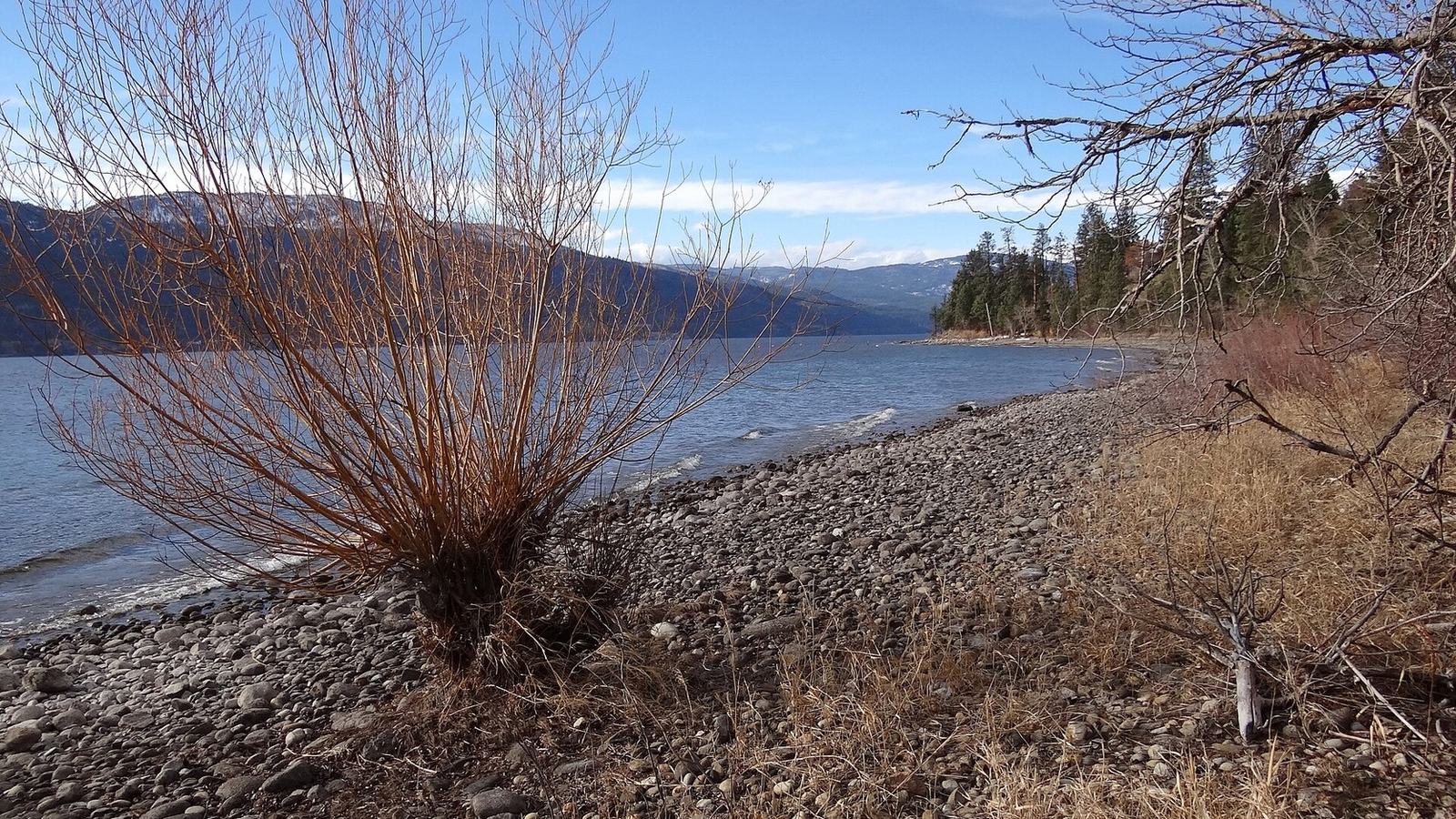
BC Parks describes the park's beach as pebbly rather than sandy, an important detail for anyone picturing soft sand for carrying a canoe or sitting beside the water. A rocky shore can require sturdy footwear and care when moving a hull to avoid slipping or damaging the boat. The park also states that there are no lifeguards on duty and that swimming areas are marked with buoys. These facts should shape family plans: swimming and boating should remain separate activities, and children need active supervision near the water. A pebbly beach can still be a lovely setting for a picnic or watching the lake, provided the crew comes prepared.
Canoeing is permitted, not risk-free
The BC Parks listing explicitly allows canoeing and kayaking on Okanagan Lake, which makes it a valid small-boat destination. It does not mean that conditions are suitable at all times or that every part of the shoreline is a safe launch. A kayak should be inspected before departure, with buoyancy, fittings and paddles in good condition. Every occupant should wear suitable flotation and know the plan. A paddler familiar only with small sheltered lakes may be surprised by wind waves and traffic on a larger body of water. Choose a modest route close enough to an authorised return point and monitor conditions continually.
The provincial park's boat access
BC Parks provides information about boating facilities and launching arrangements associated with Okanagan Lake Park. The exact ramp or access point should be confirmed against the current park map, particularly when arriving with a trailerable craft or a kayak that is awkward to carry. A developed campground is not an excuse to pull a boat through vegetation wherever a shortcut looks convenient. Prepare equipment away from ramps and leave space for other users to manoeuvre. Water levels can affect launching conditions, and regional authorities have warned of unusually low water at other Okanagan Lake ramps during 2026. Check current access immediately before travelling rather than assuming previous conditions still apply.
A small route rather than a crossing
An appealing canoe itinerary can simply follow a recognised section of the park's shoreline and return to the starting point. This allows time to appreciate the hills, reflections and changing character of the bank without committing to an open-water passage. A broad lake can encourage ambitious route planning, but the return may take longer if wind increases. The group should agree on a turnaround point based on the least experienced paddler and the forecast. A shore that looks inviting for a picnic may be private or ecologically sensitive, so any planned landing must be checked in advance. The safest journey is often the simplest one.
Wind and weather in the valley
The Okanagan valley can experience winds that produce uncomfortable chop on the lake, especially where the water has a long, exposed fetch. A kayak that travels easily with a following breeze may struggle when returning against it. Check the forecast and observe the water before setting out, including how conditions behave away from the shelter of a beach. Thunderstorms or deteriorating visibility are reasons to return early or postpone the outing. A campsite gives visitors the option of enjoying time ashore without feeling that the entire holiday is wasted if the lake is unsuitable for boating. Flexibility is one of the benefits of staying locally.
Motorboats and water-skiing
BC Parks notes that the lake is used for recreational motorboating, waterskiing, windsurfing and other activities, meaning small paddling craft will share the water with faster vessels. A canoe sits low and may be less visible against a sunlit shore, particularly when the operator is wearing dark clothing. Paddlers should keep a constant lookout, avoid busy approaches and plan routes that minimise unnecessary crossing of concentrated traffic. Motorboat operators also need to consider the effect of wake on smaller craft and respect relevant navigation restrictions. Good sharing depends on predictable movement and leaving enough space for everyone to operate safely.
Swimming zones are not boat shortcuts
The park's marked swimming areas are intended to provide separation for bathers, not convenient routes for kayaks and motorboats. A visitor should not enter a buoyed swimming area with a craft merely because it offers the shortest path to a campsite. Ask park staff where to launch and how to keep clear of the beach's busiest sections. Families can enjoy both activities during a stay, but they should be planned separately, with children supervised at the water's edge. The absence of a lifeguard means every group is responsible for realistic safety precautions. A relaxing holiday does not require mixing bathers and moving craft in the same space.
Fishing from a small boat
BC Parks lists freshwater fishing among Okanagan Lake's activities and directs anglers to the provincial regulations for licences, species and restrictions. A compact fishing kayak may be appealing, but it presents particular challenges with rods, hooks and equipment storage. Keep tackle secured so it does not interfere with paddling or balance. A person concentrating on fishing must still maintain awareness of motorboat traffic and changing conditions. Anchoring in a busy channel or close to a launch approach can create an avoidable hazard. Anglers should use a route and stopping area that are appropriate for their craft, not simply follow where other boats seem to be fishing.
The opposite shore and Okanagan Mountain Park
The park's official description highlights the landscape across the lake, which is part of Okanagan Mountain Park. The opposite shore can look especially attractive from a campsite, with slopes rising behind the water. For novice paddlers, however, it should remain part of the scenery rather than a default destination. A crossing increases exposure to wind and other boats and may leave the crew without a convenient place to land if conditions change. Visitors who want to explore the mountain park can investigate approved road access or organised tours instead of assuming that a short kayak outing must take them there. The view is valuable even when enjoyed from a safe distance.
Respecting local habitats
The dry Okanagan environment contains habitats that may be vulnerable to repeated trampling, shoreline erosion and disturbance. BC Parks asks visitors to stay on established routes and respect the natural environment, particularly where vegetation and soil can be damaged. Paddlers should use recognised entry points and avoid dragging kayaks through sensitive plants. Motorboats should follow speed and wake requirements near shore, while everyone should secure rubbish and fishing line. Wildlife can be observed from a distance without approaching nesting areas. A campground visitor has the advantage of facilities to dispose of waste properly, making it easier to keep the beach and surrounding water clean.
Managing equipment between lakes
The Okanagan region contains several popular lakes, and a holidaymaker may be tempted to use the same kayak on multiple waters during a trip. That creates a responsibility to prevent the movement of invasive organisms in damp gear. Clean, drain and dry hulls, paddles and fittings before moving between water bodies, and follow provincial inspection or decontamination requirements where applicable. A craft may retain moisture inside hatches or around seats even when the outer hull appears dry. This small amount of care helps protect the distinctive ecology of each lake. The best small-boat traveller treats prevention as part of the routine of packing up after a paddle.
Camping logistics for a family
Staying in the park can make the day easier for families because everyone has a place to rest after a short outing. Pack drinking water, suitable clothing, food storage and any equipment needed to secure the kayak without blocking campground paths or disturbing vegetation. Children may tire more quickly than expected, so plan a route with easy opportunities to return. Camping beside the lake also means that the weather can influence activities: a breezy afternoon may suit walking or a picnic rather than paddling. The itinerary should leave enough time to enjoy the shore instead of forcing an extended boating session simply because equipment was brought along.
Avoiding assumptions about facilities
Published campground descriptions can be useful, but the availability of individual services depends on operating dates, staffing and maintenance. BC Parks indicates that some concession facilities are seasonal, so visitors should not assume that a summer food outlet or hire service is operating in November. Confirm campsite bookings, boat access, parking restrictions and fire rules before travelling. The lake may still be attractive outside peak season, but colder water, shorter daylight and variable weather change the practical safety calculation. A successful trip begins with knowing which facilities are actually available on the intended day rather than relying on an old visitor review.
A holiday that values the shoreline
Okanagan Lake Provincial Park is well suited to travellers who want the pleasure of a kayak alongside the comforts of a recognised camping destination. The park offers clear evidence that canoeing and kayaking are permitted, and its beach and campground landscape provides opportunities for a varied stay. The important limits are equally clear: watch the wind, keep out of swimming areas, use approved boat access and avoid assuming that the wide lake is a sheltered training pond. An unhurried paddle near shore, followed by time at camp or a picnic by the pebbly beach, can be more rewarding than an ambitious journey across open water.
Sources and photograph attribution
Official destination and boating guidance: BC Parks Explorer — Okanagan Lake Park (verified against the official BC Parks park record). Current access, rules, weather and reservations must be checked independently before travel.
Photograph: Adam Jones from Kelowna, BC, Canada — “Along the Shore of Okanagan Lake - Lake Country - BC - Canada - 03 (8540388911).jpg” (CC BY-SA 2.0), via Wikimedia Commons. Resized and converted to JPEG for editorial display. Source: https://commons.wikimedia.org/wiki/File:Along_the_Shore_of_Okanagan_Lake_-_Lake_Country_-_BC_-_Canada_-_03_(8540388911).jpg. Licence: https://creativecommons.org/licenses/by-sa/2.0. Original rights remain with the credited creator or as specified by the source and licence.
