
A Kelowna Okanagan Lake kayak guide covering the official paddle trail, three beach departure options, downtown rentals, wind and the city's dated 2026 boat-ramp alert.
A city waterfront with a small-craft trail
Okanagan Lake gives visitors to Kelowna, British Columbia, the unusual opportunity to explore a long, scenic freshwater shore without leaving the city. The official Tourism Kelowna guide promotes a dedicated paddle trail with suggested launch areas around Rotary Beach, Tugboat Bay at Waterfront Park and Sarsons Beach. Kayaks, canoes and stand-up paddleboards are natural ways to experience it. The city waterfront also has marinas and powered craft, making correct route selection and awareness of other water users important.
A practical guide for 2026 needs another dimension. On 24 July, the City of Kelowna warned that low Okanagan Lake levels were affecting public boat launches. That announcement was date-specific and should not be treated as a present-day guarantee of closure. It does, however, show why a visitor should check the city's current launch status before towing a trailer or arranging a kayak trip that depends on a particular access point.
The Kelowna Paddle Trail concept
Tourism Kelowna describes the paddle trail as a way for kayakers, canoeists and paddleboarders to enjoy the shoreline at their own pace. Rather than presenting one compulsory route, its information identifies popular starting locations and encourages visitors to choose a suitable section. That approach is valuable because the comfort of a paddle depends on wind, distance and the experience of the group.
A beginner might prefer a short out-and-back close to a recognised beach, while a competent paddler may plan a longer passage after examining the day's conditions. The name 'trail' should not create a false sense of a protected lane on the water. Boats of different sizes share the lake, and there may be no physical boundary separating a paddling route from areas used by powered traffic.
Rotary Beach for a measured start
Rotary Beach is among the launch points identified in the destination's trail information. For a family, an established shore location offers a more manageable start than carrying a kayak to an unfamiliar section of bank. Examine any local signs, the separation between swimmers and paddlers, and the conditions immediately offshore. A recognised park or beach is still a shared public space, not an exclusive departure zone for one type of craft.
Prepare the kayak and fit flotation devices away from a busy entrance before moving toward the water. Agree on a short route with a clear return point and keep enough time to recover the equipment without rushing. If the shore is crowded or signs restrict launching at a specific location, follow the posted guidance rather than improvising across vegetation or a swimming area.
Tugboat Bay and downtown Kelowna
Tugboat Bay at Waterfront Park provides another familiar reference in the official paddle-trail guide. Its downtown setting can make a short outing convenient for visitors staying near the city centre. The appeal is partly the different perspective on Kelowna: waterfront buildings, parks and distant slopes appear differently when viewed from the lake. The experience need not involve an extensive crossing or the logistics of a trailer.
The same urban position also calls for careful attention. Nearby marinas, docks and faster recreational boats can generate traffic and wakes. A paddlecraft crew should remain visible, avoid stopping in approaches used by powered vessels and choose a route suited to the actual conditions. A waterfront walk or café visit can be a good alternative if the lake is too busy or exposed for the group's ability.
Sarsons Beach and route choices
Sarsons Beach is another location named by Tourism Kelowna in its trail suggestions. Including several possible starts is useful because no single location is optimal in all winds or for every visitor. The most sheltered option depends on the direction and strength of the breeze, the number of people on the shore and the route permitted by local rules.
Before setting out, identify the authorised entry and how the craft will be brought back onto land. If the outing involves two vehicles or a point-to-point journey, organise transport in advance. A family new to kayaking may find it simpler to return to the original launch rather than arrange a complicated recovery from another beach. The aim is to make the day accessible and enjoyable, not to complete a long itinerary for its own sake.
What the July 2026 alert means for boat owners
The City of Kelowna's 24 July 2026 notice reported that low water was affecting several public boat launch facilities and advised boaters to check current conditions. Water levels can expose the ends of ramps, increase the risk to propellers and trailers, or alter the usable depth at a landing. A skipper accustomed to one ramp should not assume it remains suitable at every seasonal lake level.
This is particularly important for visitors transporting a privately owned powerboat. Use the city's current official boat-launch information and check for new notices before departing. If access is uncertain, contact the responsible authority. The absence of a recent closure announcement does not confirm that a particular trailer or hull can safely be launched, and improvising from an unapproved shoreline may create environmental damage and recovery problems.
How paddlecraft differ from trailer boats
A kayak can be carried to a hand-launch area and may not need the same water depth as a powered boat, but it remains affected by low levels. An exposed bank can be slippery or unstable, and a familiar beach may have a changed profile. A paddleboarder could encounter rocks or submerged debris nearer the surface than expected. The prudent response is to inspect the actual landing area and follow current instructions.
Hand-carrying a craft also does not confer permission to launch from any accessible-looking part of the shore. Established parks and designated points help reduce conflict with swimmers and protect vegetation. A kayak is simpler to transport than a trailer boat, but the responsibility for legal access and safe recovery is much the same.
Rental equipment along the waterfront
Tourism Kelowna lists providers of kayaks, paddleboards and other lake activities, while Kelowna Downtown Marina and Kelowna Yacht Club each publish first-party rental information. Such services allow visitors to enjoy the water without owning a boat. The exact inventory, booking terms and return area depend on the business. Some providers offer single and tandem kayaks; others may have broader fleets with powered craft or water toys.
Ask where the rental must be collected, whether a briefing is provided and what equipment is included. A paddler should know what to do if the weather changes or if the craft cannot return under its own power. An operator's published example photograph may not represent the exact model provided on a particular day, so confirm suitability rather than selecting solely by appearance.
A short family paddle rather than a race
For visitors who are relatively new to kayaking, a short route near a permitted launch can be highly rewarding. Spend the first minutes practising turning, stopping and keeping a steady course. In a tandem, partners should communicate clearly about pace and direction. A child should not be expected to provide sustained propulsion on a long return, even when the outing feels easy at the start.
Agree on a turnaround point while everyone is still comfortable. Watch the surface for signs of wind building and remain within supporting distance of the group. A modest paddle allows time to appreciate shoreline details and wildlife without creating pressure to reach a distant headland. It can also leave enough energy for a walk or meal ashore afterward.
Wind and wake on a large lake
Okanagan Lake has sufficient open water for a breeze to produce waves that affect lightweight craft. A route following the shore may feel sheltered in one direction but become difficult when the crew turns home. Check the local forecast and pay particular attention to wind direction rather than only the predicted temperature. A calm marina does not necessarily describe conditions beyond it.
Powered boats create wakes that can reach a kayak after the passing vessel has moved on. Paddlers should make their movements predictable and remain alert around busy docks. Operators of faster craft have corresponding responsibilities to observe navigation rules and avoid creating unnecessary wash near small boats. Shared awareness makes the lake safer for everyone.
Safe equipment and cold-water thinking
Every paddler should wear a properly fitted personal flotation device, with children given equipment suited to their size. British Columbia's warm summer weather can be appealing, but water temperature and the risk of immersion still require attention. A wet person in wind may become chilled even after a sunny departure. Wear practical clothing, carry a dry layer if appropriate and bring enough drinking water.
Secure phones and cameras but keep emergency communication accessible. A party should tell someone where it plans to paddle and when it expects to return. Inflatable craft and paddles should be checked before leaving shore. A rental does not remove the need to understand how to manoeuvre, turn around or assist another member of the group.
Shoreline manners and wildlife
A quieter craft gives visitors the chance to observe shoreline birds and changes in the lake's colour. Keep a respectful distance from wildlife and avoid entering reeds or other sensitive habitat. Do not land on an appealing bank without confirming public access. Much of the Okanagan shoreline has different ownership and use arrangements, and a route past waterfront homes is not a licence to stop on private property.
Carry all rubbish back and ensure loose plastic or food packaging cannot blow into the water. Owners moving their kayaks between lakes should follow any applicable cleaning and drying guidance to reduce the spread of unwanted aquatic organisms. These measures are easy to take and help preserve the environment that makes the paddle trail attractive.
When to use a guide
A guided outing may suit people who want advice about local wind patterns, safe routes or the practical aspects of using a kayak. It can also be helpful for families whose members have different experience levels. Ask what skills the tour expects, how long the group will paddle and whether the provider can adjust the plan if the weather changes. A guided trip should not be mistaken for a promise of an easy day under all conditions.
Independent hire can be just as enjoyable when the paddler is competent and chooses a conservative route. The deciding issue is not the length of the tour but the crew's judgment. Those unfamiliar with Canadian boating rules should also verify requirements before operating a powered rental, rather than assume experience on a kayak is sufficient preparation.
Combining water and city in one day
Kelowna's waterfront makes a paddle easy to connect with other leisure activities. A visitor could walk to a recognised launch, spend an hour or two on the lake and return for a meal without driving to a remote marina. A longer holiday might include an additional paddling location if the weather and the group's ability allow it. There is no need to fit several demanding routes into the same afternoon.
The strongest schedule includes a land-based alternative for windy or unsuitable days. If a chosen launch is restricted or a rental is unavailable, the parks and shoreline views remain part of the experience. Planning around flexibility can turn an uncertain day into a pleasant one without sacrificing safety.
Confirming conditions before a 2027 visit
Tourism Kelowna's paddle-trail guide is the first-party source for Rotary Beach, Tugboat Bay and Sarsons Beach as potential launch points. The City's July 2026 notice provides historical evidence of how low levels affected launching that year. Both should be read alongside current official information rather than treated as guarantees that any facility is open, usable or permitted for a specific type of craft today.
Before departure, verify the actual access, the day's forecast and any applicable boating rules. Rental customers should confirm equipment, collection location and seasonal opening. A little preparation makes it easier to enjoy the destination's greatest advantage: the freedom to leave the bustle of the city and see its shoreline at a slower pace.
The pleasure of a lake beside the city
Okanagan Lake is an inviting place for modest boating because its scenery and urban waterfront sit so close together. A kayak can provide a quiet, personal encounter with the shore while leaving visitors free to enjoy Kelowna on land afterward. But the experience depends on recognising changing levels, wind and the needs of other lake users.
Choose a suitable launch, stay within a realistic route and be prepared to alter the plan. With those decisions in place, the Kelowna Paddle Trail offers a straightforward way to make a small craft the centre of a memorable summer day.
Sources and photograph attribution
Official destination and boating guidance: Tourism Kelowna — Kelowna Paddle Trail. Current access, rules, weather and reservations must be checked independently before travel.
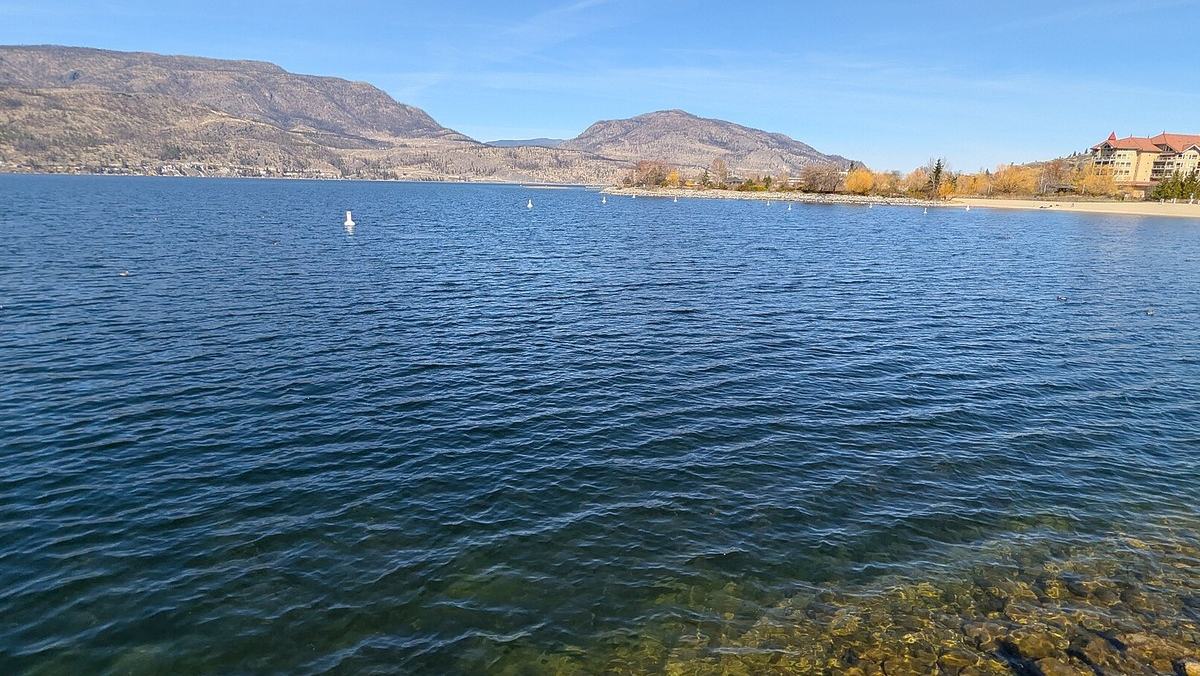
Photograph: Joli Rumi — “Okanagan Lake, Kelowna, BC, Canada.jpg” (CC BY-SA 4.0), via Wikimedia Commons. Resized to JPEG 1200×800 for editorial display. Source: https://commons.wikimedia.org/wiki/File:Okanagan_Lake,_Kelowna,_BC,_Canada.jpg. Licence: https://creativecommons.org/licenses/by-sa/4.0. Original rights remain with the credited creator or as specified by the source and licence.
