
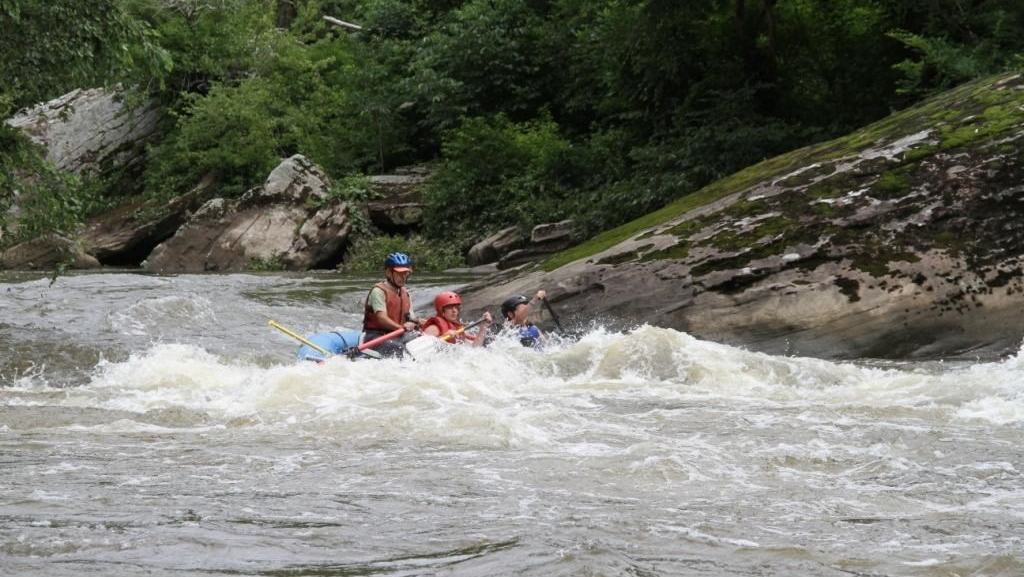
Obed Wild and Scenic River in Tennessee attracts skilled whitewater paddlers to its remote gorges and dynamic currents, where current gauge readings and advanced skills are essential.
The Obed is a destination for experienced whitewater paddlers
The Obed Wild and Scenic River protects a group of free-flowing streams on Tennessee's Cumberland Plateau, including stretches of the Obed River, Clear Creek, Daddys Creek and Emory River. These waterways have cut through deep wooded gorges, attracting paddlers who want challenging moving water rather than a conventional sightseeing cruise. The scenery is striking, but its remoteness is inseparable from the experience.
The National Park Service emphasises that all sections of the park's streams contain potentially lethal hazards and demand extensive whitewater experience. A stretch described as Class II is not automatically a beginners' route. Technical manoeuvres, fallen trees and changes in current can create problems even in comparatively modest rapids. Visitors new to the sport should seek training elsewhere before attempting an independent Obed descent.
Understanding the character of the rapids
The river system offers powerful whitewater on rain-fed streams that can change greatly during a season. The park's history of paddling includes trips over rapids with colourful local names, while its broader descriptions refer to demanding features that experienced kayakers and rafters come to negotiate. Each rapid requires a decision based on the current flow and the abilities of the group, not merely its name.
Undercut rocks, sieves formed between boulders, and fallen trees known as strainers are particularly serious obstacles. Fast current can push a person into places where water passes through but a body or boat cannot. Reversing currents within hydraulic holes add another danger. These are not hazards overcome by enthusiasm alone; recognising them, choosing a safe line and knowing when to avoid a section require practiced judgement.
Water levels can change while a trip is under way
The Obed watershed responds quickly to rainfall. The National Park Service warns that gauge readings may change by several feet in a relatively short time and that floods can transform a familiar rapid. A flow suitable for one well-trained party might be completely inappropriate for another, and conditions upstream can affect water downstream without local rain at the launch point.
The park directs paddlers to current stream gauges for the Emory River at Oakdale, the Obed River at Lancing and Adams Bridge, Clear Creek at Lilly Bridge and Daddys Creek near Hebbertsburg. Reading a number is not enough without experience of what that level means for a specific run. Visitors should discuss conditions with knowledgeable local paddlers and be prepared to cancel when the forecasts or water levels are uncertain.
Timing the season without assuming safety
January through April are described by the National Park Service as the heart of the usual paddling season. December and May may offer usable water in some years, while summer and autumn trips generally depend on unusual rain or wetter conditions. That seasonal guidance is a broad pattern rather than a prediction that particular streams will be runnable on any chosen day.
Cold water remains a concern almost year-round. The contrast between comfortable air temperatures and immersion in moving water can be deceptive, especially after an unexpected swim. The park warns that hypothermia can develop on surprisingly mild days when waves repeatedly wash over a boat or paddler. Appropriate protective clothing, the ability to complete the route and an alternative plan are all part of assessing whether to launch.
Proper equipment is only the starting point
The park identifies a whitewater-specific lifejacket, helmet, throw rope, spare paddle and suitable wetsuit or drysuit among the essentials for a serious trip. The craft itself must be designed for whitewater use. Equipment appropriate for a flat lake or a gentle recreational canal may offer little protection when a boat meets violent currents and submerged rocks.
The ability to use that equipment matters just as much as carrying it. A throw rope is useful only when the team knows how to deploy it safely, and a helmet does not remove the need to avoid a dangerous line. Experienced groups practise rescue techniques and agree how to respond if someone leaves the boat. The best kit is part of a prepared team rather than a guarantee of an uneventful journey.
Remoteness makes planning and communication vital
Obed's gorges are rugged and rescue access may be slow. The National Park Service warns that mobile phone service is unreliable and recommends satellite-based communication for emergencies. Even an experienced paddler can face a longer stay outdoors if an incident delays the trip. Knowing where the group will put in and take out is therefore a basic requirement rather than a detail to decide while driving.
Before setting out, someone ashore should know the intended route, launch point, destination and expected return time. The park also advises taking food, water, a light, a first-aid kit and basic survival equipment. In remote terrain, walking out can be difficult even when a road appears relatively close on a map. Good planning reduces uncertainty when the original itinerary no longer works.
Learning with experienced paddlers
For newcomers attracted to whitewater, the park recommends connecting with experienced groups such as the East Tennessee Whitewater Club, Chota Canoe Club or Tennessee Scenic Rivers Association. These organisations offer a route into training, practical judgement and partners who know individual waterways. A person who is comfortable canoeing on still water should not interpret that experience as preparation for the Obed's most demanding reaches.
Building skills gradually is a more convincing plan than trying a difficult river because an online photograph looks appealing. Instruction can introduce moving-water boat control, safe route assessment and appropriate responses to a capsize. Going with people familiar with a specific section provides another layer of experience, although no group can eliminate uncertainty from a free-flowing river. The choice of water should remain within the abilities of everyone taking part.
Why this protected river attracts specialists
The appeal of Obed's waterways lies in the unusual combination of rugged scenery and demanding natural flow. Deep gorges, wooded slopes and changing rapids provide an experience different from an engineered whitewater centre. The river system is also a protected landscape, and visitors share responsibility for treating access points and shorelines respectfully while enjoying its recreational opportunities.
A sound paddling day begins with present conditions rather than ambitious mileage. Check the National Park Service alerts and gauge links, arrange the full route, and accept a different plan if a stream is too high, too low or otherwise unsuitable. The famous rapids will remain there for another visit. Travelling with strong skills, reliable companions and sound judgement is the best way to appreciate why experienced paddlers value the Obed.