
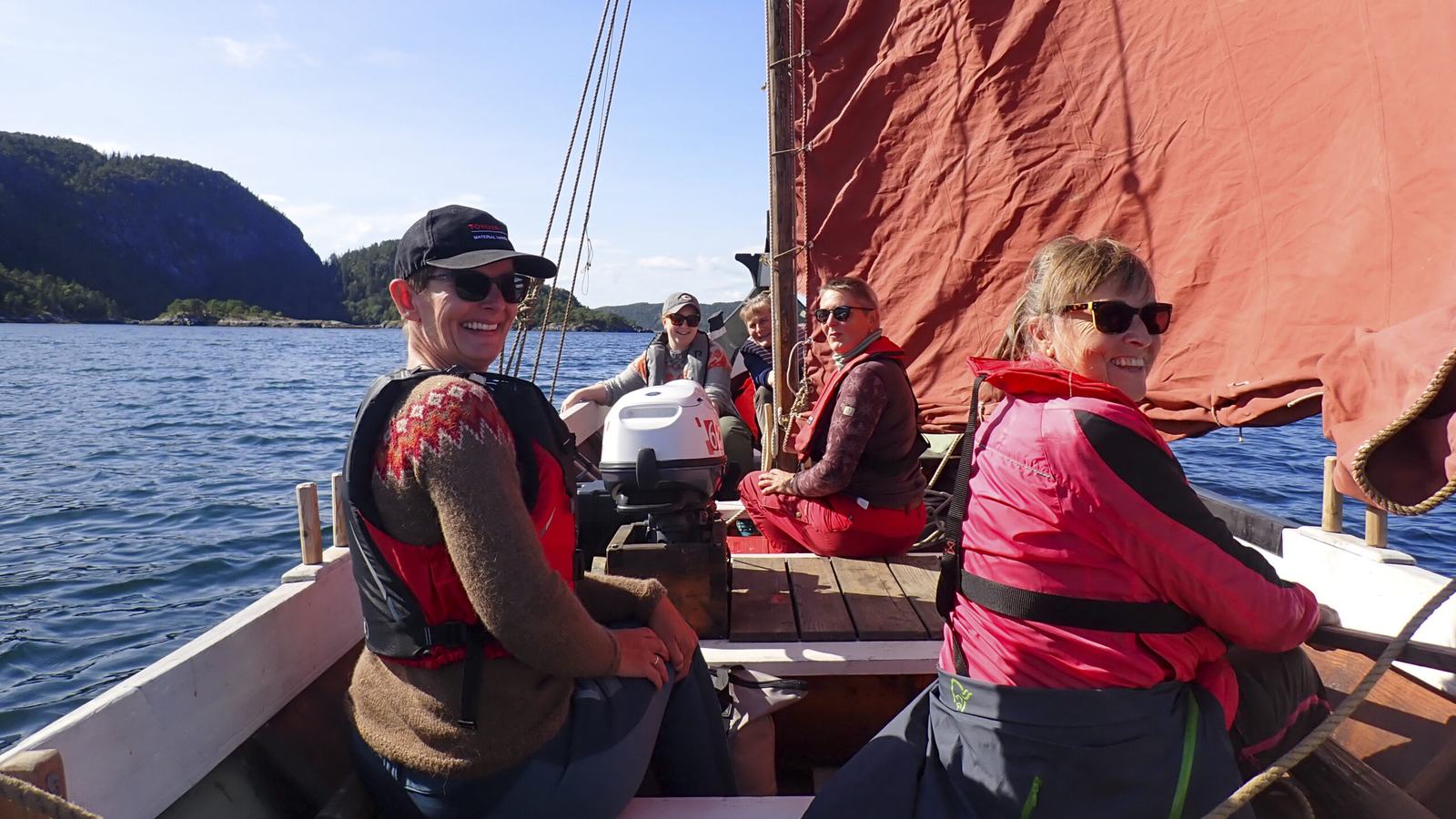
The Faragut Association offers guided sailing in locally built Nordland boats around Bindal in Helgeland. This is small-boat heritage at its most tangible: wind, wood, local knowledge and a coast shaped by generations of boatbuilders.
When the boat is part of the destination
Norway’s Helgeland coast is often introduced through photographs of sharp peaks, fjords and hundreds of islands. A more intimate way to understand it is to board a traditional Nordland boat and feel how the hull behaves under sail. The Faragut Association operates experiences around Bindal in the southern part of Helgeland, using locally built wooden craft with roots in the region’s seafaring traditions. Here the boat itself is not a backdrop; it is the centre of the journey.
Visit Helgeland describes the Nordland boat as a low, sturdy open vessel connected to generations of local boatbuilding knowledge. The experience is deliberately different from stepping into a modern motor cruiser with an enclosed cabin and electronic aids. A passenger can hear water move along the timber and watch the crew work the sail, gaining a direct sense of how coastal communities travelled and worked before engines changed the sea.
That does not mean the outing should be romanticised as a reenactment without hazards. An open boat has limitations in wind, spray and cold, and a skilled local skipper’s judgement remains central. Visitors need to arrive prepared for outdoor conditions and accept that the route may change. The reward is a genuinely tactile introduction to Norwegian maritime culture rather than a tightly scripted sightseeing performance.
Bindal’s boatbuilding heritage
Faragut’s boats are associated with Bindal, where traditional construction skills have been passed between builders. The official regional description emphasises careful workmanship and respect for the demands placed on vessels in coastal waters. That craftsmanship can be appreciated even by travellers with little technical knowledge. Look at the shape of the hull, how the sail is handled and how the crew adapts to a changing breeze.
Boatbuilding heritage becomes more meaningful when it can still be experienced at sea. A static museum exhibit can explain timber, tools and history, while a sailing trip reveals why the shape of a traditional boat matters. The movement under sail connects design decisions to real conditions. Those used to larger yachts may be surprised by how clearly an open craft communicates every shift in wind and wave.
The local setting adds depth. Bindal’s fjords, forested shorelines and islands tell a story of communities for whom the sea was a route for work and everyday travel. A guide who knows the area can connect visible places to that wider history. Travellers should ask questions, but give crew members room to carry out manoeuvres without distraction. Safety tasks take priority over conversation when conditions demand it.
What a Faragut outing can include
Visit Helgeland explains that the association tailors trips to the weather and the interests of each group. Options can include sailing along the fjords, fishing and going ashore to prepare a meal when conditions are suitable. Longer experiences may venture towards Harangsfjord, with simple overnight arrangements and activities offered by the operator. All such details should be reconfirmed because availability depends on season, staff and the particular booking.
A gentle half-day sail can be ideal for families who want an unusual experience without committing to a demanding voyage. Others may enjoy a longer outing with more time to understand the traditional boat. The group should discuss expectations honestly before booking. A participant who prefers quiet scenery and conversation might not want the same programme as someone eager to help with sail handling.
The destination does not require a perfect sunny day to feel distinctive, but it does require a safe one. The operator’s local knowledge is a significant part of the service, particularly where fjords open towards more exposed water. Visitors should expect a route to be shortened or altered if the forecast changes. A flexible plan is not a lesser experience; it is an appropriate response to the realities of sailing.
Preparing passengers for an open wooden boat
On open craft, comfort and safety are closely connected. Windproof layers, suitable footwear and clothing that remains useful when damp are sensible even during a Norwegian summer. Passengers should follow the operator’s instructions on flotation equipment and safe seating positions. Families travelling with children must ask directly about age suitability and any special arrangements, rather than relying on generic descriptions of an activity as family-friendly.
Personal belongings are best kept simple. A waterproof bag for a camera, phone and spare clothing may be more useful than a large day pack that becomes an obstacle in the boat. Those prone to motion sickness should consider the expected conditions and make appropriate preparations. Passengers should also understand that moving around aboard a small sailing craft at the wrong moment can affect both safety and enjoyment.
Accessibility requires an honest discussion with the provider. Boarding, low seating and exposure to the weather are different from travelling on a modern passenger ferry. Someone with limited mobility may need assistance that the boat cannot safely provide under all conditions. Asking about these matters before departure protects the visitor and the crew, and allows alternatives to be considered without disappointment on the quay.
A memorable addition to a Helgeland journey
Helgeland invites several styles of boating holiday. Travellers can explore harbours by motorboat, board a scheduled ferry or join a guided trip to discover a specific stretch of coast. A Faragut sail stands apart because it interprets the landscape through a working tradition. The route may be modest, but the experience can add a richer layer to a holiday otherwise organised around modern transport and scenic stops.
Those arriving in the region with their own boat can treat the outing as a shore excursion. They should arrange a suitable berth separately and confirm the meeting point in Terråk with the Faragut operator before travelling. A guided heritage sail does not imply that an unfamiliar private vessel can use the same landing place or mooring. Keeping those operational details distinct is a practical part of responsible cruising.
The most enduring memory may be a simple one: the sound of wind filling a traditional sail, a wooded shore passing slowly and a local skipper explaining why a hull was built a certain way. That is a valuable kind of leisure boating because it connects pleasure with knowledge. Prepare for the weather, listen to the crew and allow the boat’s character to shape the day.