
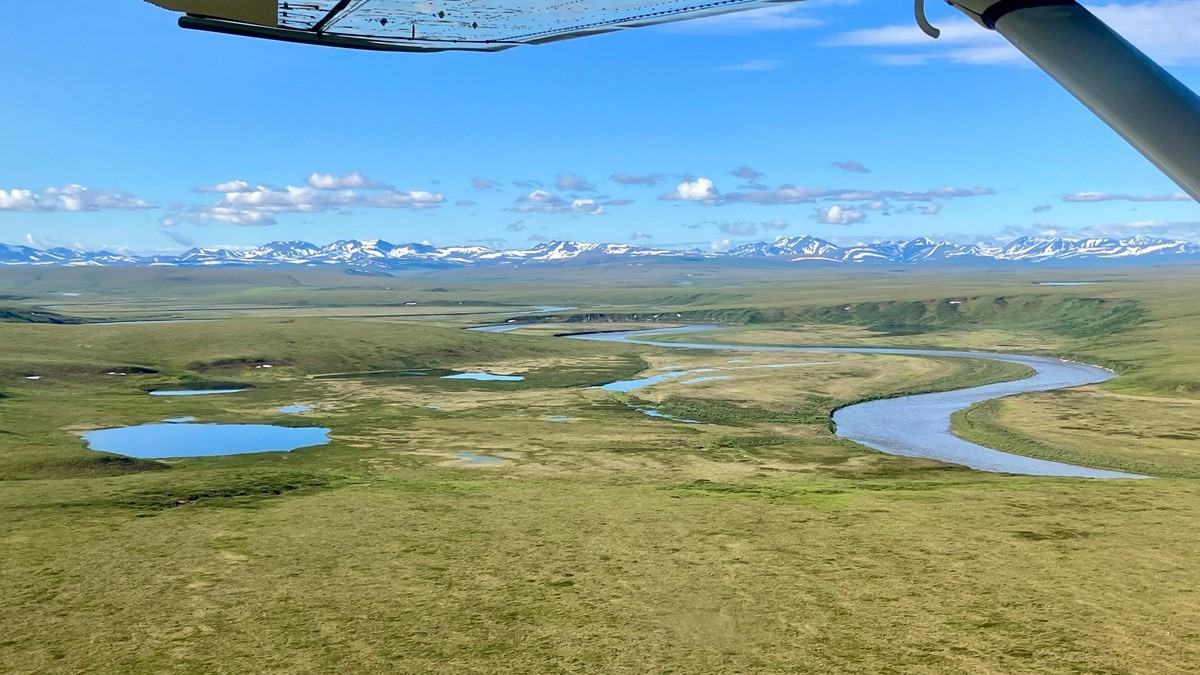
Alaska's Noatak National Preserve offers wilderness float journeys on the Noatak, Kelly and Kugururok rivers, where air-taxi travel, cold water and self-sufficient camping demand careful planning.
A remote river system beyond Alaska's road network
Noatak National Preserve protects one of Alaska's most remote river landscapes, where the Noatak River runs from the Brooks Range toward the Chukchi Sea through a broad wilderness valley. The National Park Service describes a waterway system stretching more than 400 miles, with the Noatak recognised as a Wild and Scenic River. Its isolation is a central part of the experience, with long reaches where a canoe or raft may be the main way to travel.
This is not a holiday in which visitors collect a rented kayak from a busy marina and return to a nearby hotel. Trips need advance coordination for aircraft, boat transport, equipment and pickup arrangements. Services effectively disappear after visitors leave the towns and the flight operator behind. That absence of infrastructure creates exceptional opportunities to watch a changing Arctic landscape, but it also demands realistic self-sufficiency from every participant.
Three rivers offer different routes through the preserve
The Noatak is not the only river that draws float travellers. The National Park Service also identifies the Kelly River and the Kugururok River as popular choices for wilderness journeys. Each passes through a different combination of gravel bars, clear streams, tundra and hills. Slow water can make a collapsible canoe or kayak practical in many places, although visitors should never assume the entire route will maintain the same difficulty.
A group choosing its first journey should discuss likely distances, expected river levels and entry points with people who know the area. Remote rivers have fewer ways to abandon a trip when progress turns difficult. A change from easy floating to a rapid or a long shallow section can affect the schedule by days rather than minutes. The strongest itinerary is one developed around the weakest paddler and a generous allowance for interruptions.
Air-taxi logistics shape the whole expedition
Access to the rivers is mainly by small aircraft operating from Bettles or Kotzebue. The park recommends working with air-taxi services well ahead of departure to organise both the flight in and the pickup out. Travellers normally take all of their camping and paddling equipment with them, including a boat suited to aircraft transport. Collapsible canoes and kayaks are useful precisely because their packed size is easier to accommodate.
The logistics require decisions that are unfamiliar to many recreational boaters. Airline baggage allowances, aircraft payload limits, weather delays and the availability of a landing site can all influence which vessel is practical. An inflatable raft offers a different combination of load carrying and handling from a folding canoe. A guided expedition may simplify arrangements, but visitors should establish what the operator supplies and what personal equipment is still required.
Fishing and wildlife reward a slower journey
The river corridors support fish and wildlife characteristic of northwestern Alaska. According to the National Park Service, the Kelly River and its tributaries hold chum salmon, Arctic grayling, Dolly Varden and Alaska whitefish. The Noatak offers Arctic char and grayling, while the Kugururok is another place to find grayling and Dolly Varden. Fishing can be part of a longer float, subject to the relevant local regulations.
Travellers may also encounter caribou, moose, wolves, birds and bears while moving quietly through the valley. These are wild animals and sightings are never guaranteed. The best observation is made from a distance without altering an animal's behaviour or blocking its travel. Carrying binoculars and a camera is more respectful than steering close to a bear or other wildlife for a dramatic photograph. The rivers are living habitats rather than just routes across a map.
Gravel bars create temporary camps, not guaranteed sites
Sandbars and gravel bars are natural places to stop along the Noatak waterways, offering room to land a boat, arrange equipment and prepare for the night. They are not developed campgrounds with drinking water, marked plots or waste services. The park asks visitors to use Leave No Trace practices and to be ready for changing conditions that can turn a good camp into a poor one.
High water can cover bars that were exposed earlier in the trip, and the park notes that downstream of the Portage Shelter Cabin it may become difficult to find suitable camping locations. A party should avoid committing to a late finish based on an assumed landing. Carrying tents, appropriate food storage and spare clothing provides flexibility. The absence of toilets and supplies means that waste practices and care for the riverbank need to be planned before travel.
Changing water levels demand a flexible route
River conditions vary through the season and after rainfall. In late summer, low water may leave shallow gravel stretches and rocks exposed, requiring careful boat handling or short carries. High water creates a different problem: current can become stronger and familiar features may be submerged. Some reaches contain rapids or fallen trees, so the safest line is not necessarily obvious from a distant view.
Those changes are important for choosing both the craft and the expedition dates. A wide, loaded raft may struggle across shallow channels, while a lightweight canoe offers easier carrying at the cost of different handling demands. At stronger flows, even a river that looks open and broad can present challenging water. Crews should assess conditions as they travel and be prepared to stop or change plans rather than follow a fixed mileage target.
Cold Arctic weather remains a constant factor
Northwestern Alaska's summer can bring long hours of daylight, but the National Park Service warns that weather can change suddenly. Wind, heavy rain and cold air can make a straightforward paddle exhausting. River water remains cold throughout the year, increasing the danger of hypothermia following an accidental swim. Appropriate protective layers and dry clothing are therefore relevant even during an apparently mild spell.
Safety equipment needs to match the isolation as well as the expected conditions. A fitted flotation device, suitable immersion protection and the ability to keep emergency supplies dry belong on any serious packing list. Travellers should carry dependable maps and a means of obtaining assistance that does not rely solely on ordinary mobile reception. The objective is to remain capable of coping while waiting for a weather-delayed pickup or help from outside.
Respect private land and people using the region
Noatak National Preserve contains private land parcels alongside protected public areas. The National Park Service advises visitors to learn about land ownership before arriving and to stay clear of signs, buildings and other evidence of private use. The region is also a living landscape for local communities whose residents continue long-standing subsistence activities, including fishing and hunting.
River travellers share that landscape rather than having exclusive use of it. Giving people working along the water adequate space, avoiding camps close to occupied places and respecting cultural and practical needs are basic forms of consideration. Independent visitors generally do not need a recreational trip permit, but organised recreational groups must contact the Chief Ranger about the appropriate permit. The park's Northwest Arctic Heritage Center in Kotzebue can help with planning and information.