
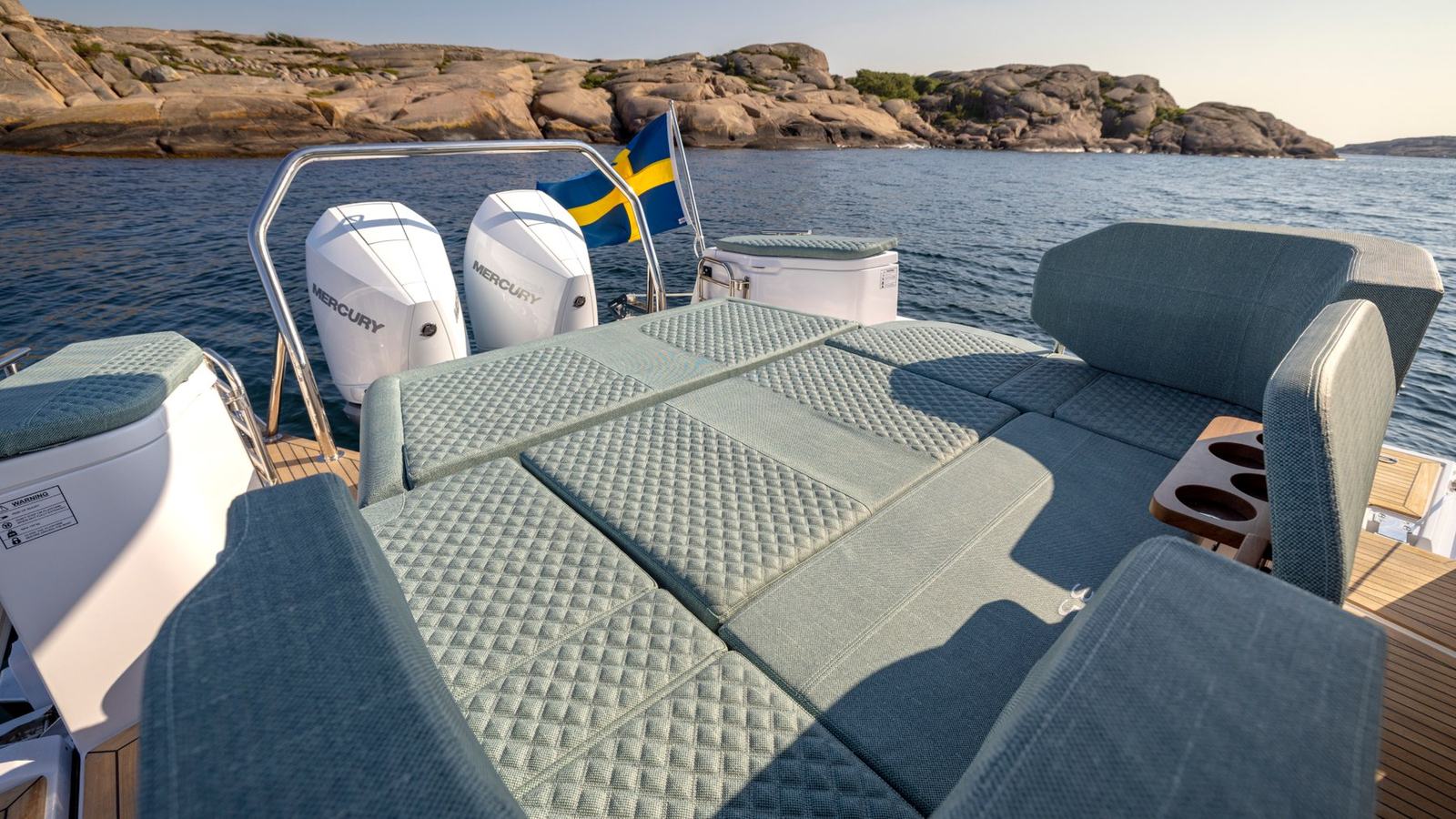
The 10.80-metre Nimbus Sport Tender 35 aims to make weekend boating easier for small families, with flexible outdoor furniture, walkaround decks and two cabins below.
A boat designed around the hours between trips
For a family cruising between nearby harbours, the most valuable feature of a weekend boat may not be its top speed. It may be the ease of moving from the helm to a lunch table, finding a place to change after swimming or putting children to bed without ending the evening for everyone else. The Nimbus Sport Tender 35 is designed around precisely those transitions. The Swedish builder introduced the 35 in 2026, with a world premiere at Cannes in September, and positions it as the open-air member of its new Sport Cruiser family.
This is a closer look at the model's published layout for leisure boaters, not a claim that we have independently sea-trialled it. Nimbus gives the boat an overall length of 10.80 metres and beam of 3.20 metres, putting it comfortably within the small-cruiser territory where marina berths, family handling and everyday practicality are major considerations. The flexible social furniture and overnight accommodation offer a deliberate contrast with dayboats that excel at a sunny afternoon but become awkward when the trip extends into a second day.
A cockpit that changes with the plan
The aft seating is built around a large U-shaped sofa. Its three-part backrest can be repositioned to create an ordinary lounge, a sunbed or seats looking out over the water. Fold-out side terraces expand the sense of usable room at anchor. These are useful arrangements for a group in which some people want to swim, others want shade and another person is preparing food. They also make the cockpit the obvious gathering place when the weather is pleasant and the boat is safely secured.
As with any fold-out platform, its use should follow the builder's instructions on operating conditions, weight limits and clearance. A feature that works beautifully at anchor should not be assumed safe while underway. For families, the more revealing question is whether the cushions and movable parts can be adjusted without turning the entire boat into a storage puzzle. Before buying, try the full changeover: seat to sunbed, sides open and closed, and a clear route to the water when people are carrying towels or equipment.
The foredeck is more than a sunpad
Nimbus describes a bow area able to alternate between a secure working deck and two broad sun lounges. That dual role is important on a 35-foot boat. Anchoring, handling lines and stepping ashore all require stable movement, even when the other passengers regard the foredeck as their favourite place to relax. The boat's walkaround arrangement is intended to keep people moving between bow and stern without climbing through seating. Practical safety still depends on appropriate footwear, a tidy deck and passengers moving only when instructed by the skipper.
The hardtop and substantial windscreen give the helm more protection than a completely exposed console, while leaving the cockpit connected to the outdoors. Nimbus says the roof and structure form a continuous laminate behind the helm seats, and the builder highlights the placement of frequently used controls within easy reach. These details matter most when conditions change during a short passage: a family day often includes sunshine, spray and breeze in the same outing. Always judge the actual boat's sightlines with the intended driver aboard.
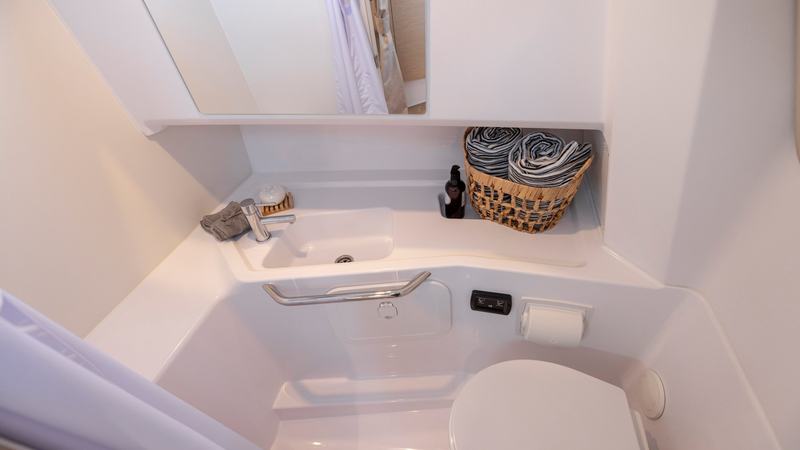
A cabin illustration from the official Nimbus Sport Tender 35 gallery. Credit: Nimbus Boats.
Two cabins make a weekend possible
Below the main deck are two sleeping cabins. Nimbus specifies a full-length double berth forward, two full-length berths in the mid-cabin and a sofa suitable for a child, expressed in the builder's accommodation total as two plus two plus one. That makes the model particularly interesting to a couple travelling with children or to friends who want separate sleeping areas. A head with shower and washbasin means the crew need not rely entirely on marina facilities for routine overnight stops.
Five possible berths do not mean that five adults will experience the same level of comfort, and a sofa berth is not equivalent to a dedicated cabin. The practical test is to climb aboard with the bags and bedding a real weekend requires. Check where wet clothing goes, how much ventilation reaches the mid-cabin and whether one person can use the head while another is asleep. A short overnight trial can tell an owner more about the layout than an impressive daytime showroom presentation.
Fuel, water and the art of choosing a route
The published specification lists 620 litres of fuel, 80 litres of fresh water, a combined 80-litre black-and-grey-water tank and a 40-litre hot-water heater. Those capacities should inform a family itinerary rather than be read as a promise of a particular range or number of nights away. Cruising speed, sea state, load, engine choice and the reserve carried can change fuel consumption. Fresh-water use varies even more sharply with showers, washing-up and guests' habits, so a comfortable marina-to-marina plan may be wiser than an ambitious series of remote anchorages.
The builder offers single Mercury V10 and twin V8 outboard configurations. It publishes an indicative cruising band of 30 to 36 knots and says the twin V8 version can run around 45 knots, subject to actual configuration and verified test conditions. A fast trip can extend the number of places within reach, but small families tend to benefit more from comfortable passage-making and extra time ashore. Before choosing a power option, ask for current certified boat-specific performance tables and consider noise, service access and fuel costs as well as the top figure.
The checks that matter before a family purchase
Nimbus lists CE design category C for ten persons and category B for six persons. Those categories relate to design conditions and stated capacities; they are not an instruction to fill every seat or ignore local licensing, insurance and operating rules. The boat's most appealing features are also the ones worth testing carefully: folding terraces, adaptable seating, the roof-integrated windscreen, cabin steps and visibility from the helm. A buyer should try the boat underway and at rest with their actual travelling companions, not only examine the catalogue pictures.
The Sport Tender 35 sits alongside planned Sport Weekender and Sport Coupé derivatives of the same hull family, giving buyers a reason to compare how much protection they want against how often they use the open cockpit. In warm-weather cruising the Tender's open arrangement may feel especially inviting; for more exposed passages or a longer season, the balance can shift. Rather than one perfect specification for every family, the useful lesson of this model is to define the real weekend first: sleeping arrangements, safe movement, meal preparation, shore access and the homeward run.
The Nimbus Sport Tender 35's sociable cockpit, shown in an official builder visualisation. Credit: Nimbus Boats.
Original reporting sources: Nimbus model technical specifications and official image gallery, Nimbus 25 June 2026 launch preview, and Nimbus Genoa show programme. Images are manufacturer visualisations, not documentary photographs or independently verified sea-trial footage.
Source
Nimbus Boats