
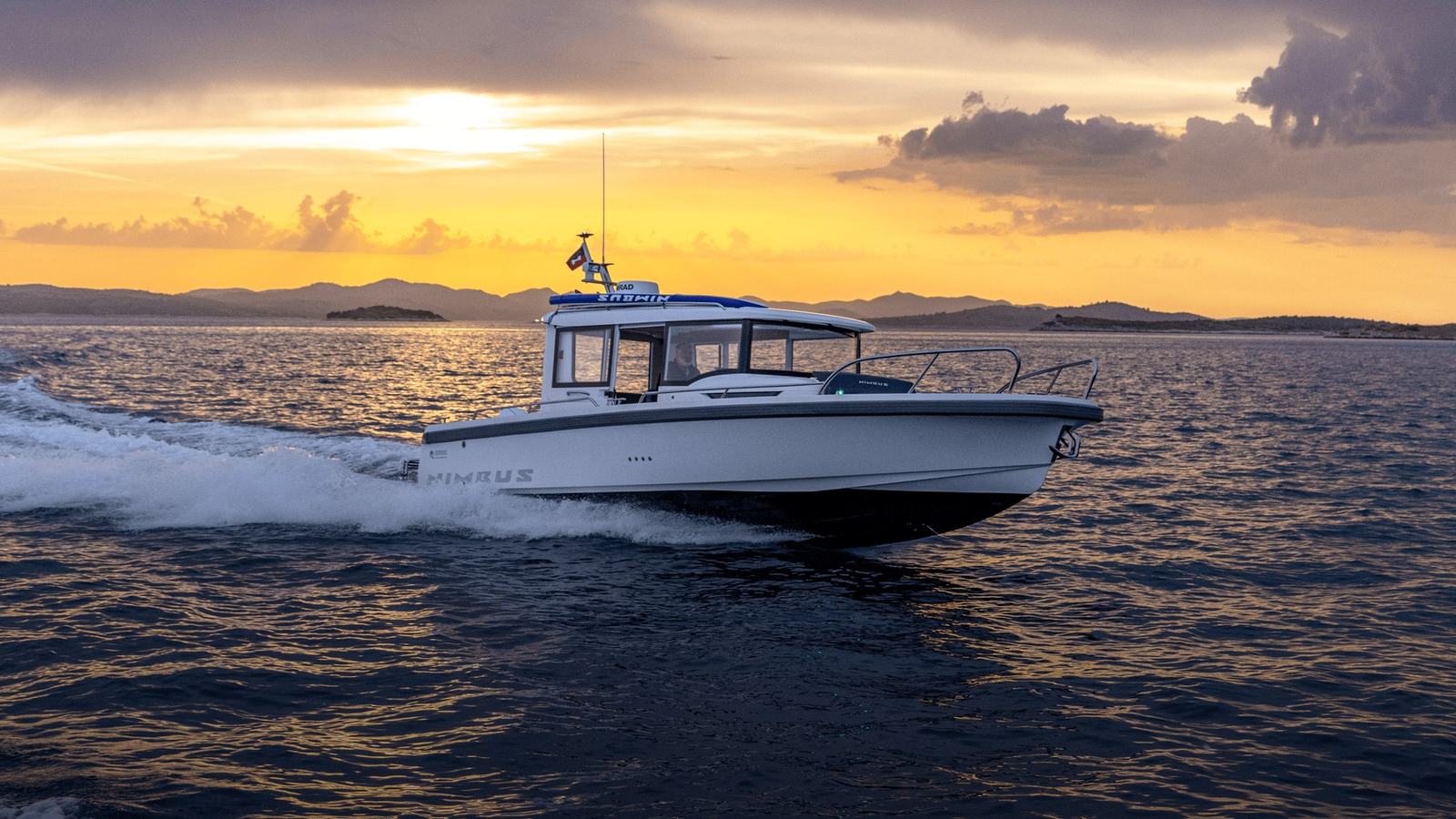
The Nimbus C9 combines a protected wheelhouse, walkaround decks and simple overnight accommodation in a fast, sub-10-metre family cruiser built for longer seasons afloat.
A commuter that can also be a weekend boat
Nimbus's Commuter 9, better known as the C9, occupies a distinctive space between the open family dayboat and the more substantial cabin cruiser. The Swedish builder gives its overall length as 9.35 metres and the beam as 2.95 metres, with a fully enclosed wheelhouse, walkaround side decks and accommodation for two. It is designed to make short passages easy without asking its owner to accept an exposed helm whenever wind or rain turns up.
The wheelhouse is central to that proposition. Large sliding doors provide direct access to the side decks, while a sliding roof hatch can bring in air and daylight when conditions are settled. Nimbus says the openings are generous enough for two people to move through comfortably, a small but meaningful detail on a boat that may be used repeatedly for short trips between harbours, islands and waterside homes.
Unlike a pure cabin cruiser, the C9 retains an active outdoor layout. There is useful space at the stern, a seating area at the bow and the possibility of a shaded deck arrangement, making it adaptable for a swim stop or a picnic. At the same time, the enclosed helm offers somewhere to retreat when the temperature falls or spray starts reaching the cockpit.
The published performance description includes speeds exceeding 40 knots with suitable power, although this should be understood as a model capability rather than a speed every owner will regularly use. A comfortable and economical cruise depends on engine selection, trim, conditions and the number of people aboard. Its attraction may ultimately be the freedom to keep using the boat on days when an open console would be less appealing.
The advantages of protected passage making
An enclosed helm is a major quality-of-life advantage for families who are not limited to peak summer weather. A sheltered driving position helps reduce fatigue from wind exposure and offers a more comfortable place to monitor instruments. It can also encourage journeys beyond a brief local circuit, provided that suitable navigation and safety planning remain in place.
The C9's walkaround design offers access along the sides without forcing passengers to climb around the helm. This becomes useful when putting out fenders, handling a spring line or reaching a foredeck mooring point. However, a walkaround passage must still be used with care in rough conditions, and a skipper should agree in advance who handles lines and who remains seated.
Nimbus lists a single-engine arrangement and Mercury Verado options of 250, 300 or 350 horsepower. Owners should think about where the boat will be maintained and the speed they realistically need before deciding between these packages. An engine choice can change not just performance but servicing costs, insurance conditions and the margin available for longer days away from the home marina.
Fuel capacity is quoted at 320 litres, and the manufacturer's general cruising-speed band is 20–35 knots. Those figures help owners compare the boat with alternatives, but they are not a substitute for a measured fuel-consumption curve for the exact engine and loading. Planning a passage requires an adequate reserve and an honest allowance for detours, wind, current and time spent manoeuvring.
What a family finds on board
Inside the cabin, the C9 is designed to do more than keep the driver dry. Nimbus describes a passenger sofa that can provide an additional sleeping place, a compact indoor galley arrangement and a separate toilet compartment with a wash basin. Some galley and deck features are optional, so prospective owners should not assume every advertised photograph represents the standard equipment fitted to a particular boat.
A freshwater system, 56-litre water capacity and 40-litre black-water capacity appear in the builder's technical specification. Those modest tanks are consistent with short-stay cruising rather than prolonged independent living aboard. A family staying overnight should plan where water, sanitary facilities and shore power will be available, and use only authorised waste-disposal arrangements.
The stern seating and potential bow table extend the living space beyond the cabin. A short cruise to a quiet anchorage can become an afternoon spent eating, swimming and enjoying the scenery without needing an elaborate entertainment setup. Storage for wet towels, spare clothes and safety gear remains a practical test that owners should make during a viewing rather than judging the boat solely by the sleeping arrangements.
A small cabin also introduces a few obligations often absent from simpler open boats. Heating and defrosting options need safe installation, ventilation matters when preparing food, and any overnight occupancy requires proper carbon-monoxide awareness. It is sensible to rehearse how passengers will leave the accommodation in an emergency and ensure that no bags or furnishings obstruct the exits.
Choosing a boat for real seasonal use
An owner who commutes across a fjord or sheltered coastal passage may value the C9 differently from someone who mostly anchors outside a beach club. For the commuter, dependable access through both sliding doors and a protected driving position are primary advantages. For the leisure user, the appeal is likely the mix of outdoor seating and the reassurance of an enclosed retreat when the afternoon breeze increases.
The boat's 2.95-metre beam has a welcome effect on internal space, but it also deserves attention when planning winter storage or road transport. Trailering permissions and route limitations vary considerably by country. A buyer should establish the combined weight and dimensions of the complete package rather than rely on the boat-only reference figure, which Nimbus lists at about 3,170 kilograms with a Mercury 350.
Equipment options can refine the C9 for a particular region. Nimbus lists roof racks, a windlass, different navigation displays, heating and protective shade arrangements among potential choices. Fitting everything is rarely the best answer; it is more useful to identify the journeys that occur every week, select the equipment that makes those trips easier, and leave enough access for maintenance.
The Commuter 9 demonstrates how a practical motorboat can extend a family's boating season without requiring a much larger yacht. It offers a genuine helm shelter, deck movement designed for everyday use and basic overnight facilities in less than ten metres. Buyers should still arrange a realistic sea trial, confirm their regional specification and ask whether the boat suits the weather and passengers they will actually encounter.