
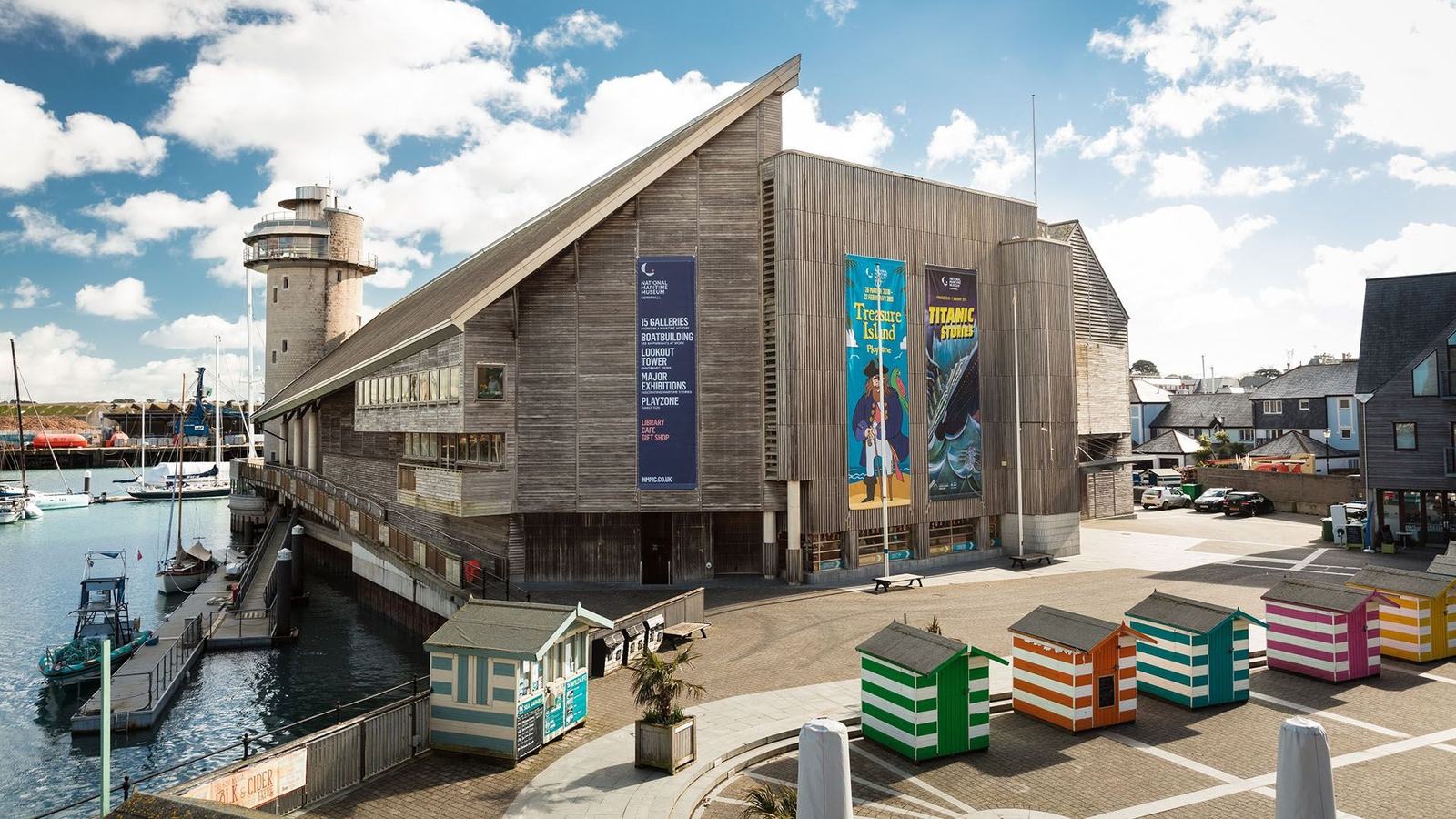
A richly detailed Falmouth shore-day guide for boaters, covering National Maritime Museum Cornwall's Boat Hall, tidal lookout, RNLI Rescue Zone and visitor logistics.
A maritime shore day in the heart of Falmouth
Falmouth is a natural stopping point for sailors exploring the south Cornish coast, but an enjoyable visit need not be confined to the waterfront cafés. National Maritime Museum Cornwall, on Discovery Quay, provides a substantial indoor programme of boats, coastal history and hands-on displays within easy reach of the town's harbour setting.
The museum is particularly well suited to a cruising crew that includes people with different interests. Boat enthusiasts can spend time with historic craft and practical seamanship, while families can move between interactive displays, exhibition spaces and views back over the working water.
This is not simply a place to escape bad weather, although that is welcome on an autumn sailing trip. The collections tell a wider story about how sea travel, boatbuilding, rescue work and coastal livelihoods have shaped Cornwall, turning a stop in port into an opportunity to understand the place.
The museum is an independent charity, and its official visitor information invites people to take their time rather than dash around in an hour. A relaxed morning or afternoon allows the building and the harbour outside to complement one another instead of becoming separate appointments.
Small boats suspended above the Boat Hall
Inside, the Boat Hall introduces the museum through a flotilla of craft displayed overhead. It is an evocative starting point for a boating audience, because the variety of hull forms prompts immediate questions about how vessels were built for different conditions, trades and ways of life.
The gallery encourages more than passive observation. A dinghy sailor may recognise familiar ideas in the shape of a traditional hull, while a motorboat owner can reflect on how construction materials, handling and on-board priorities have evolved across generations.
At the Boat Pool, visitors can try remote-controlled boats and experiment with steering in a controlled setting. For younger guests this provides a playful introduction to navigation; for adults it can be an enjoyable reminder that a good passage begins with understanding how a hull responds.
Families should resist the temptation to treat the interactive zones as a childcare stop while the keen sailors disappear elsewhere. Sharing a few challenges and observations can give everyone something to talk about back aboard, especially when the children begin asking why real boats behave differently from models.
Falmouth, Cornwall and a working maritime past
The Falmouth Gallery introduces the port's history through documents, photographs and interpreted objects. It helps visitors see the harbour not merely as a backdrop to a holiday but as a place formed by trade, travel, defence and the people whose lives have depended on the sea.
Elsewhere, the Cornwall and the Sea displays examine the region's maritime livelihoods and craft traditions. These galleries add context to the fishing ports, small boatyards and coastal communities encountered on a cruise around the peninsula.
The Cornish Quayside reconstruction is especially useful for guests interested in the practical side of history. It brings together stories of fishing and traditional sailmaking, including a reconstructed pilchard cellar, which makes the work behind old harbour scenes easier to imagine.
Another absorbing area is the boatbuilding gallery and workshop, where the museum presents historical reconstruction work. Its current programme includes a reconstruction connected with wartime clandestine operations from the Helford area, although specific work in progress should always be checked before a visit.
Watch the tide from inside the museum
One of the building's most distinctive experiences is its Tidal Zone, with windows that look underwater into the harbour. The museum encourages visitors to notice the rising and falling tide and keep an eye out for marine life, turning the actual environment outside the glass into a living exhibit.
The Lookout Tower offers the corresponding view from above, across the harbour, docks and estuary. Seen together, these two perspectives make a striking lesson in how the same water changes with time, height and the activity moving through it.
A visiting skipper might use the experience to start a conversation about tide planning, harbour traffic and respectful navigation. The museum's displays are educational, not a substitute for official charts, harbour notices or a boat's own instruments, but they can sharpen a crew's attention to the surrounding water.
The tower also makes a pleasing pause in a busy museum circuit. Instead of seeking another screen, visitors can look for ferries, small boats, workboats and landmarks, and connect what they have learned indoors with the estuary they will later navigate.
Rescue skills, families and changing exhibitions
The RNLI Rescue Zone gives families a practical introduction to lifesaving work along the coast. It includes rescue-themed activities, real equipment and sea-safety messages, helping children understand that volunteer crews, planning and sound judgement matter far beyond dramatic rescue footage.
Skull Island Play Zone offers a different sort of maritime imagination for younger visitors, while changing trails and holiday activities give repeat visits variety. Parents should consult the museum's current programme for age guidance and session availability rather than assume every activity is running continuously.
The museum's large exhibition space hosts temporary displays alongside the permanent maritime galleries. In October 2026 the museum advertises SURF!, a look at surfing in Cornwall, while its half-term programme includes Nautical Nasties from 24 October to 1 November.
For families visiting this week, the Nautical Nasties event listing provides the published date window, but participation details should still be checked with the museum. Exhibitions and activities may require different amounts of time, and programme changes are more likely during busy school holidays.
Practical arrangements from marina to museum
National Maritime Museum Cornwall lists its address as Discovery Quay, Falmouth, TR11 3QY. Its visitor information says the museum is accessible by several local transport options including ferry, bus and train, but a boat crew should still plan the specific authorised route from its actual berth.
Captains and owners should establish harbour arrangements independently, using the appropriate harbour authority and marina guidance. The museum's waterside position does not mean that leisure boats can simply land passengers at its building, so shore transfers and any tender movements must be confirmed beforehand.
The museum currently lists normal public opening from ten in the morning until five in the afternoon, with closures on Christmas Eve, Christmas Day and Boxing Day. It advises allowing at least three hours for a full visit, which is a useful benchmark when matching a shore excursion to a planned tide or onward passage.
Access information indicates lifts and step-free arrangements through the museum, but crews should raise any particular mobility needs with the venue before fixing departure times. The waterside café, gallery shop and opportunities to return during a longer stay make it easy to shape a visit around the pace of the group.
Falmouth rewards the boater who takes a little time ashore. A day spent among historic boats, rescue stories and tidal views can enrich the next passage, especially when the crew returns to the harbour with a more informed sense of the coastline, the vessels that use it and the people who keep maritime skills alive.