
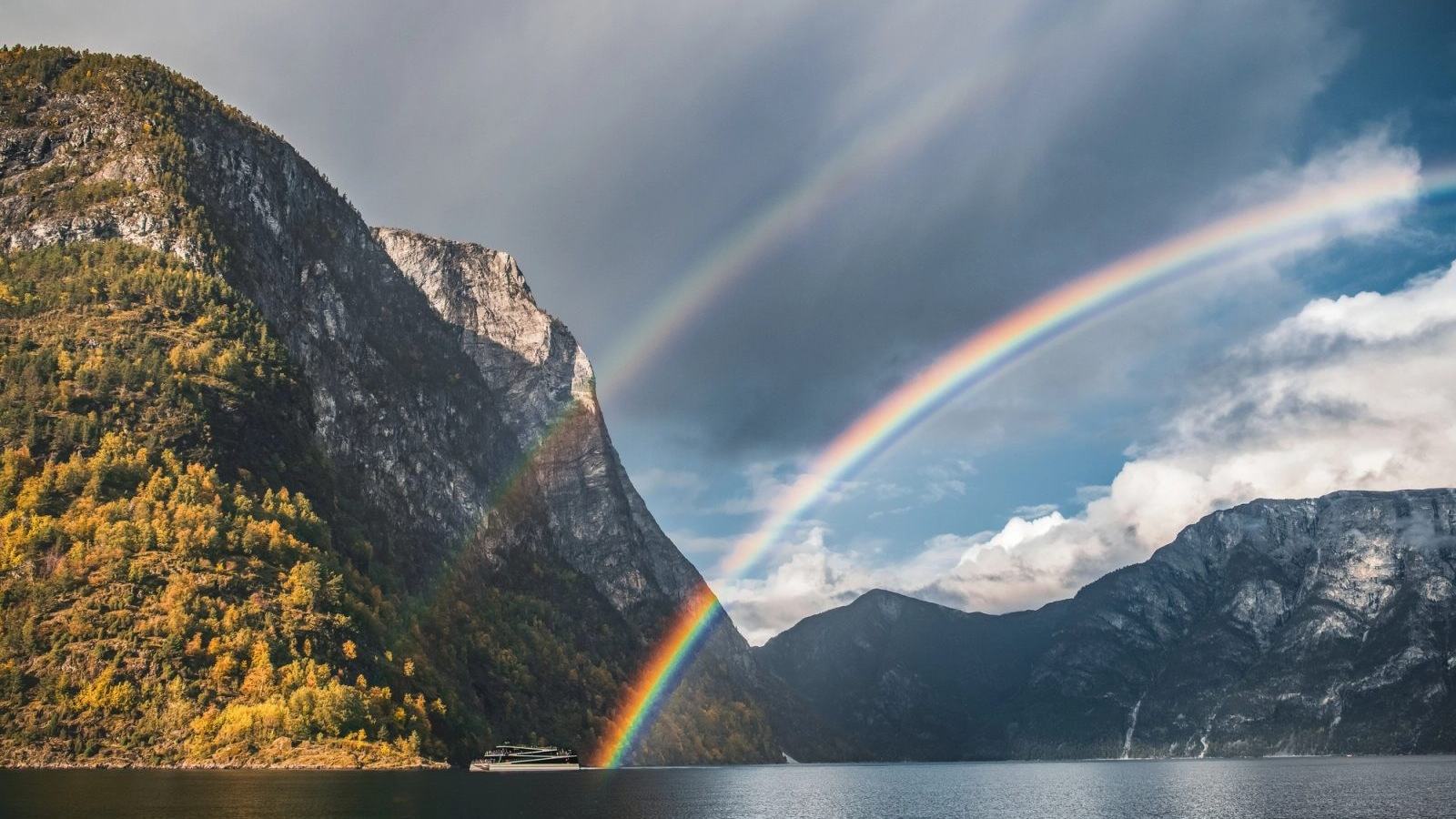
A journey between Flåm and Gudvangen links two Norwegian villages by water and opens a view into the steep UNESCO-listed Nærøyfjord. Norway's Best operates a purpose-built electric sightseeing experience with generous glazing and outside spaces. For families, photographers and curious leisure boaters, the route illustrates how careful planning can make a dramatic fjord landscape accessible without rushing.
A fjord journey with unusually close scenery
Nærøyfjord is one of western Norway's most arresting stretches of sheltered water, yet its scale is difficult to appreciate from the road. On a boat, steep rock faces rise directly beside the route, while waterfalls, small farms and pockets of shoreline settlement appear and disappear as the channel bends.
The operator Norway's Best offers the journey between Flåm and Gudvangen, crossing parts of Aurlandsfjord before entering the narrower Nærøyfjord landscape. The advertised cruise takes approximately two hours each way, so this should be planned as a proper excursion rather than a short hop to fit between unrelated appointments.
The Nærøyfjord landscape forms part of the West Norwegian Fjords UNESCO World Heritage listing, a recognition of its remarkable glacial landforms. That designation does not mean visitors should treat every part of the shoreline as a landing place; a sightseeing cruise allows observation without requiring a private boat or an unfamiliar mooring.
For leisure boaters accustomed to broad bays, the perspective is striking because the apparent width of the water changes with each headland. The mountain walls make the view feel almost enclosed, even when the actual route remains well established. Standing on an outside viewing deck brings scale and weather into sharp focus.
What an electric sightseeing vessel changes
Norway's Best describes modern, fully electric sightseeing vessels on the fjord route, including the well-known Future of The Fjords. The appeal for passengers is partly the chance to watch a sensitive landscape from a vessel designed around panoramic views. Anyone comparing departures should check the specific boat assigned to the chosen sailing.
Wide glazed areas are useful when rain, cold or strong wind makes the open decks less comfortable. Outside walkways can still provide the clearest photographs, but a good trip alternates between shelter and open air. On a Norwegian fjord, that flexibility matters more than insisting on one uninterrupted spot outdoors.
Electric propulsion can contribute to a quieter sensation aboard, although actual noise levels also depend on passengers, weather and onboard machinery. Visitors should avoid assuming a voyage has no environmental footprint simply because the vessel has an electric drivetrain. The more practical question is whether the operator's boat and route suit the trip.
A sightseeing boat is particularly helpful for mixed-age groups because no family member must concentrate on navigation while everybody else enjoys the view. This is not a self-drive excursion; the crew manages vessel operation and boarding. Passengers can spend their attention on the mountains, the water and the changing light.
Choosing a sensible route and season
Some travellers begin in Flåm and end in Gudvangen, while others prefer the reverse direction or combine the cruise with overland transport. Check the current timetable before reserving connections, because a two-hour water journey only describes time aboard. Transfer times and the location of each departure point are separate planning matters.
The fjord experience can be rewarding in different seasons, but the conditions and amount of usable daylight vary considerably. Summer brings long days and active visitor services; cooler months can create a more austere mountain scene. Dress for the date actually booked rather than for photographs taken during another season.
When working out a day trip, decide whether the boat itself is the main attraction or one part of a wider Flåm itinerary. A hurried itinerary built around multiple transfers can leave little chance to linger at the quay or explore the village. Time on shore before and after the cruise makes the journey feel more considered.
Visibility deserves special attention if photography is important to the group. Mist can hide the higher slopes even when the boat is operating normally, while changing cloud can make nearby cliffs especially atmospheric. Be flexible about expected photographs and let the immediate setting determine what becomes the memorable part of the day.
Small decisions that improve time on board
Reserve tickets through the operator and confirm the correct departure quay, boarding window and any check-in requirement. There may be more than one type of water-based activity in the area, and names can look similar online. A saved ticket and a little time to find the berth prevent an avoidable last-minute scramble.
Warm layers and a waterproof outer shell are useful even when the land forecast looks mild. Moving through a fjord exposes passengers to cool air and occasional spray, particularly on the external decks. Gloves and shoes with dependable grip can be more valuable than a fashionable outfit chosen for a sheltered café.
Carry camera equipment in a secure bag and avoid changing lenses beside exposed railings. Reflections from interior glass can complicate photographs, while outside viewing places may attract other visitors at scenic points. Give everybody space to enjoy the outlook and remember that a quiet observation is as worthwhile as a photograph.
Families should agree on a meeting point aboard and listen to crew instructions about moving between decks. Weather, embarkation arrangements and vessel layout can change what is accessible on a specific sailing. Questions about wheelchairs, prams and onboard facilities are best put directly to the operator before purchase.
Why this belongs on a boating itinerary
The passage between Flåm and Gudvangen offers an unusually clear lesson in how geography shapes boating. Deep water, steep mountains, compact settlements and changing weather are all visible within a relatively short cruise. Travellers who later hire a small boat elsewhere may gain a healthy appreciation of local knowledge and conditions.
Instead of treating the trip as a checklist of photographic landmarks, watch how the scenery evolves over the full route. Distant peaks become close cliffs, the banks open near settlements and the colours of the water shift with light. That gradual sequence is what distinguishes a fjord voyage from a roadside viewpoint.
An electric excursion vessel also makes the journey approachable for people who enjoy the water but do not want the responsibilities of a private charter. The experience can be shared across generations without asking anyone to handle a helm or plan a navigation passage. It is boating from the passenger's perspective, and that has its own pleasures.
Check Norway's Best for the latest service dates, boat allocation and any conditions affecting a return journey. With sensible layers, a comfortable transfer plan and time to pause at either end, this Nærøyfjord cruise can be a memorable centerpiece of a relaxed Norwegian holiday. The spectacular setting needs little embellishment.