
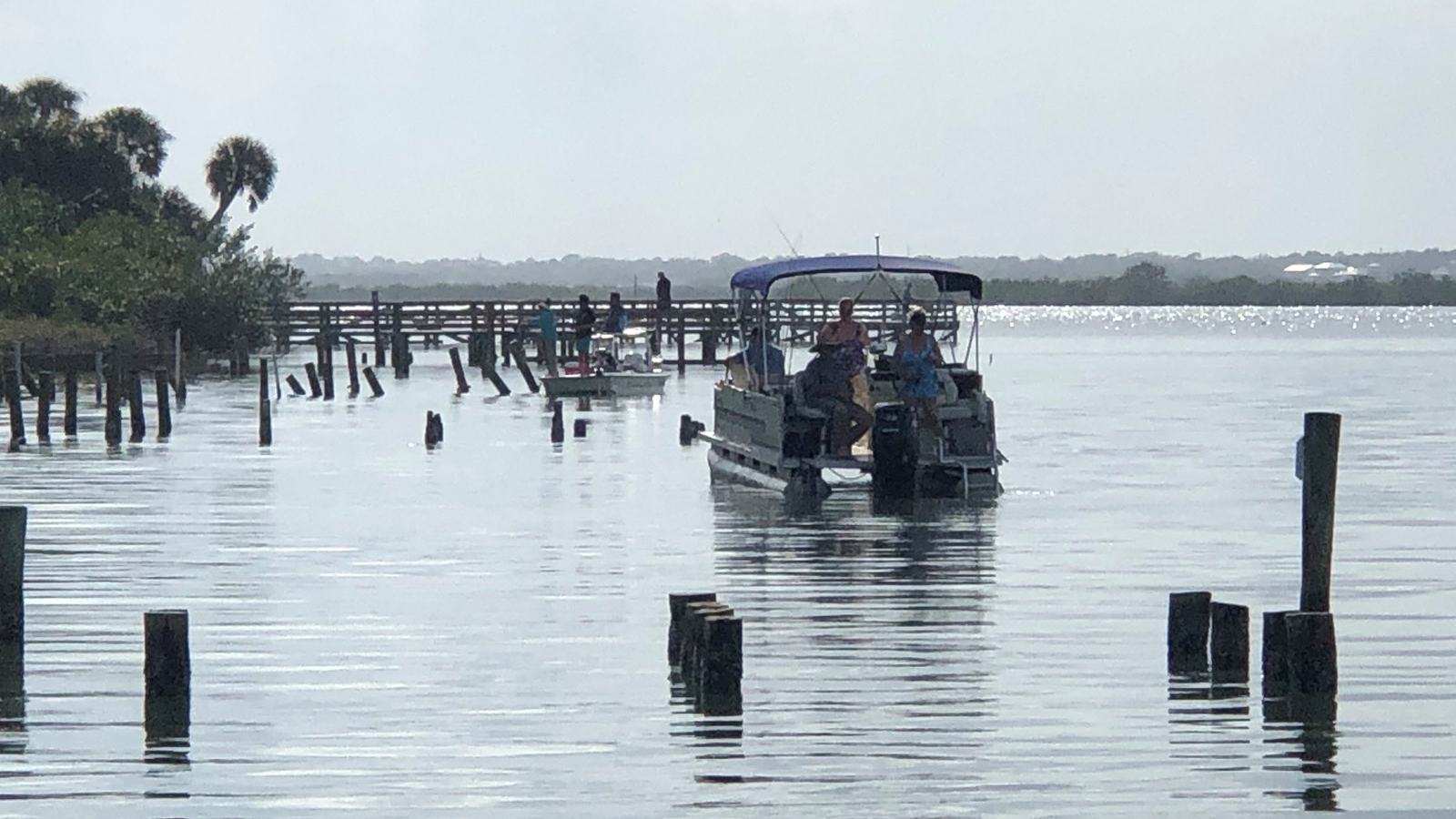
A practical, richly detailed small-boat travel guide to Mosquito Lagoon at Canaveral National Seashore, covering official boat ramps, shallow-water navigation, wildlife, paddling and visitor safety.
A lagoon that rewards the slowest boat
Between New Smyrna Beach, Oak Hill and the northern edge of Florida's Space Coast, Mosquito Lagoon offers a markedly different boating day from the open Atlantic. The sheltered-looking water is a mosaic of shallow channels, grass flats, mangrove edges and small islands. Much of the east side belongs to Canaveral National Seashore, whose official visitor guidance encourages boaters and paddlers to discover the landscape while treating navigation and wildlife protection as serious responsibilities.
For a modest centre-console, skiff, small fishing boat or touring kayak, the appeal is the intimacy of the setting. There is no need for a marina-lined parade or long offshore passage. Instead, a carefully chosen route can reveal wading birds over a quiet flat, the textures of mangrove roots and a horizon of low coastal vegetation. The most satisfying day may be the one with the fewest miles travelled and the greatest attention paid to what surrounds the boat.
Choose the right craft for shallow water
Not every leisure boat that is comfortable in a tidal estuary is suited to the interior of Mosquito Lagoon. Some areas are shallow enough to demand a purpose-designed flats boat or paddle craft, and even an apparently unobstructed stretch may conceal shoals or delicate seagrass. A trailer boat with modest draught and a skipper who understands local marks can reach rewarding sections, but the prudent approach is to identify navigable waters before departure and to avoid improvised shortcuts across vegetation.
A propeller striking bottom is more than an inconvenience. Grounding can injure passengers, damage a lower unit and scar sensitive habitat. Boat owners should check their true loaded draught, tidal level, engine-trim limitations and manufacturer's guidance before leaving a marked route. Those uncertain about a particular passage can book local instruction, remain in deeper channels or choose the equally immersive experience of a kayak in conditions suitable for their ability.
Apollo Beach provides a practical entry
The National Park Service identifies the Apollo Beach boat ramp near New Smyrna Beach as a launch point accessible around the clock. Its published guidance describes facilities for kayaks, canoes and motorboats such as flats boats configured for lagoon navigation. Separate trailer and non-trailer parking makes the distinction worth checking before arriving with the family car or a hired trailer. Access conditions and parking arrangements can change, so a same-day check remains sensible.
Other Apollo District options are more closely tied to park operating hours. The visitor-centre area and specified parking-lot launch points support paddle craft, with some provision for small motorboats, but each has its own access limitations. A good departure routine begins on land: choose the actual ramp, note when it closes, inspect wind and weather forecasts, load safety gear, then tell somebody the expected route and return time. Leaving enough daylight for retrieval is part of the day's enjoyment.
Alternative launches around the lagoon
The National Park Service also lists boat-launch alternatives on the west side and farther south. River Breeze Park at Oak Hill is described as a free public ramp, while Menard-May Park in Edgewater has a more basic launch. Within Merritt Island National Wildlife Refuge, access and fees differ by location, and the park warns that some facilities may be unavailable during repairs. Any old list of ramps should therefore be treated as a starting point rather than an assurance of today's access.
These choices matter because the best launch is not always the closest one to the accommodation. A small skiff with a shallow-running engine may approach a route differently from a touring kayak or a heavily loaded family bowrider. Ramp gradient, parking, prevailing wind and the distance to planned stopping points should determine the decision. The operator should also understand whether their intended trip crosses into differently managed waters where additional park or refuge requirements apply.
A maze of islands without roadside signs
Mangrove-fringed islands can look remarkably similar from water level, particularly when the light changes or wind-driven chop reduces visibility. The park specifically warns that the mangrove islands can become a maze for people who do not know the area and advises unfamiliar paddlers to remain in open waters. It is useful advice for powered boats too. Satellite imagery on a phone is no substitute for a current navigation chart, working positioning equipment and an ability to recognise the return route independently.
Plan an outward track with obvious navigation references and a conservative turning point. Save adequate time for unexpected wind, a slower-than-planned passage or an additional stop to observe wildlife. Paddlers should carry a protected phone and a whistle, but should not assume cellular coverage or a battery will solve every problem. A disciplined trip leader can make the experience feel wonderfully spontaneous while quietly preserving the option of a simple, safe return.
Fishing without losing the landscape
Mosquito Lagoon has a strong reputation among inshore anglers, and a small skiff can make a relaxed platform for watching fish movement across flats or approaching suitable fishing water without unnecessary wake. Yet the quality of the outing should be measured by more than a catch. Shallow-water fishing places the boat among birds, plant communities and other people enjoying a protected coastal system, so speed, distance and considerate movement matter.
Anglers need to check current Florida fishing licences, species seasons, size limits, bag limits and any special rules that apply to the exact water before setting out. These can change and should never be inferred from a years-old trip report. Bring a secure container for tackle, avoid discarded line and release unwanted fish with appropriate handling. If a location is crowded or ecologically sensitive, moving on can be a better choice than waiting for a particular fish at all costs.
Wildlife watching from a respectful distance
Patience is one of the best pieces of equipment aboard a lagoon boat. Bird activity is often easier to appreciate when the engine is shut down in a safe position and people remain still, while changing light can reveal patterns in the grass and water that were invisible under midday glare. A compact camera, binoculars and a waterproof field guide turn a short run into a genuine exploration rather than an exercise in reaching a fishing mark.
Wild animals should never be pursued, baited or deliberately surrounded for photographs. If a bird changes behaviour because of the boat, the sensible response is to increase distance. Wildlife encounters are not guaranteed, and visitors should treat any sighting as an unplanned privilege. Families can encourage children to record what they observe from the vessel, helping develop an appreciation of the lagoon without expecting to touch or collect anything.
Weather, hydration and the smaller-boat margin
Florida's coastal weather can change a placid paddling scene quickly. A strengthening breeze against shallow water makes short waves uncomfortable, while thunderstorms introduce lightning and poor visibility. The National Park Service asks visitors to inspect wind, rain and temperature forecasts and to plan carefully before launching. A skipper should establish a conservative weather limit appropriate to the actual boat, passenger ages and their experience, rather than assuming sheltered water cannot become difficult.
Personal flotation devices should be properly sized, accessible and worn when conditions or regulations require them; paddlers are strongly encouraged by the park to wear Coast Guard-approved life jackets and carry a whistle. Drinking water, sun protection, a dry bag and an agreed return time are basic necessities. A family boat should also carry the safety and communication equipment required by the relevant laws, with an operator who knows where each item is stowed and how to use it.
Pair the outing with the national seashore
The lagoon can form one chapter of a wider visit to Canaveral National Seashore, whose barrier island also offers Atlantic-side scenery and stories of the region's long human history. A well-paced day might begin with a brief lagoon circuit, continue with a shore-based walk on an authorised route and end with a relaxed meal on the mainland. Such a plan suits travellers who enjoy boating as a means of encountering a place, not only as an activity in itself.
Check district access and the latest park notices before adding a beach or historic-site visit. Park entrances, parking facilities and launch permissions are not interchangeable, and a motorboat trip may not connect directly to a safe landing at the chosen shore stop. Guests should respect posted closures and avoid carrying invasive material or litter between sites. The best combined itinerary is one that stays within manageable distances and leaves generous time to enjoy each landscape.
Leave a lighter trace on the return
One reason Mosquito Lagoon feels special is the relative absence of built-up shores in many views. Responsible boaters help preserve that feeling by keeping wakes low around vulnerable banks, staying clear of bird concentrations and treating seagrass as habitat rather than an obstacle. Secure every loose object before departure so drink containers, bait packaging and lightweight clothing cannot blow into the water. Anyone taking lunch into a remote stretch should bring a reliable way to return all waste.
Mosquito Lagoon need not be experienced at speed. A carefully chosen small boat, a thoughtful plan and a willingness to turn back as conditions change are enough for a memorable coastal day. The real luxury is unhurried access to a living, protected waterway close to Florida's busy coast, and the knowledge that the crew's decisions have helped leave it in good condition for the next visitor.