
A Lake Placid village kayaking guide to Mirror Lake's two recognised hand-launch sites, equipment rentals, low-impact craft, summer waterfront conditions and practical safety.
A lake beside the village, not a motorboat playground
Mirror Lake sits at the heart of the village of Lake Placid in New York's Adirondack Mountains, giving visitors the unusual opportunity to go paddling without beginning with a long drive or a trailer. The official Lake Placid destination guide identifies the lake as an accessible place for kayaks, canoes and stand-up paddleboards, with two places to hand-launch. It also explains the quiet-water character that distinguishes Mirror Lake from the larger and more motor-oriented Lake Placid nearby. For families who want an outing built around simple boat handling rather than speed, that is an important difference.
The presence of a popular village waterfront should not be confused with a guarantee of unrestricted access at all times. Seasonal conditions, events and posted shoreline rules can change what is practical on a particular day. Mirror Lake in November is a different proposition from the summer photographs shown by rental businesses. The right approach is to check the official launch information, ask an operator about current equipment availability and select a route that reflects the crew's skills and actual weather.
Two hand-launch options
The official destination guide describes a hand-launch location near the town beach and another at the New York State Department of Environmental Conservation boat dock on the northern shore. This is unusually helpful information for travellers with a kayak or canoe on a car roof. Instead of guessing where to enter the water, visitors can begin with two recognised possibilities and check which is suitable for their craft, parking needs and time of day.
A hand-launch does not necessarily provide every facility associated with a trailer-boat ramp. Carrying distance, available parking and local events may influence the best choice. Before unloading, visit the intended access on foot, read signs and examine how other visitors are using the space. Do not create an improvised shortcut down a landscaped bank or cross an active swimming area merely because the shortest route looks convenient.
Mirror Lake and Lake Placid are not the same water
The names can cause confusion. Mirror Lake is the smaller lake beside the village centre, while Lake Placid is a separate body of water with different navigation and rental considerations. A visitor booking a boat should confirm the departure point and the lake on which the craft is permitted to operate. A business mentioning Lake Placid may be referring to the village, the larger lake or both. That is an easy misunderstanding to resolve before travelling and a frustrating one to discover while looking for a rental counter.
The contrast is part of Mirror Lake's appeal. Visitors can choose a low-speed paddle with village and mountain views without needing a long engine-powered excursion. Conversely, people wanting a powered boating itinerary should check the separate facilities and rules for the other lake rather than assume that a particular rental craft can be moved between them.
The variety of small-craft hire
Mirror Lake Boat Rental, an established operator on Main Street, advertises a range of light recreational craft including kayaks, canoes, paddleboats, rowboats, stand-up paddleboards and electric boats. The regional tourism information also points visitors toward the business. These options allow the experience to be matched to different ages and interests, but prices and boat availability should always be confirmed directly before arriving.
A single kayak may be ideal for an adult who wants to paddle at their own pace. A tandem can let two people share the effort, while a rowboat offers a quieter seated alternative for a party that does not want to balance on a board. Electric-powered craft can be attractive to visitors who want to enjoy the lake without paddling, subject to current local restrictions and rental conditions. Different boats create different responsibilities; even a very slow or human-powered craft needs proper control and a lookout.
Why a short route works well
Mirror Lake's relatively compact setting makes it tempting to decide that an entire circuit must be completed on a first visit. A better approach for beginners is to start with an out-and-back along a sheltered part of the shore, become familiar with the equipment and turn while the crew remains comfortable. The appeal lies as much in reflections, distant mountain silhouettes and the village waterfront as in reaching a particular point.
If a longer paddle is planned, allow time for changes in wind and for other recreational users. Do not rely upon a map distance as proof that a novice can complete the route. A canoe carrying children can move more slowly than an experienced solo kayaker, and a paddleboard can be affected by wind differently from a seated boat. A flexible route prevents one person's fatigue from becoming a problem for everybody.
A village waterfront with shared uses
Mirror Lake serves swimmers, walkers, paddlers and people attending seasonal events. The shore near the town beach therefore requires particular attention to signs, designated swimming zones and local instructions. The presence of a hand-launch near a beach does not mean that a kayak should be carried through a crowded bathing area or that boats may enter water set aside for swimmers.
Before launching, look for marked boundaries and ask if any event or temporary regulation changes access. Paddlers should avoid blocking the shore while organising equipment, and anybody renting an electric boat should manoeuvre slowly and give paddlecraft ample room. A courteous approach can be especially important where the lake is close to shops and accommodation and attracts people who have never handled a boat before.
Electric craft and a quiet-lake experience
The operator's published availability of electric boats is one reason Mirror Lake is an interesting case study in low-impact boating. Unlike a fast motorboat, a small electric rental can provide a seated way to see the scenery at a modest pace. But the presence of this type of rental must not be interpreted as permission to launch any privately owned motorised vessel. Local operating restrictions need to be checked directly with the appropriate authority.
When hiring an electric boat, ask about the permitted route, maximum duration, battery expectations, passenger capacity and procedures if propulsion stops. An apparently straightforward powered craft still needs a competent operator and a realistic plan. Avoid obstructing kayak launches or approaching swimmers, and treat other users as people enjoying the same limited public space.
The Adirondack setting from water level
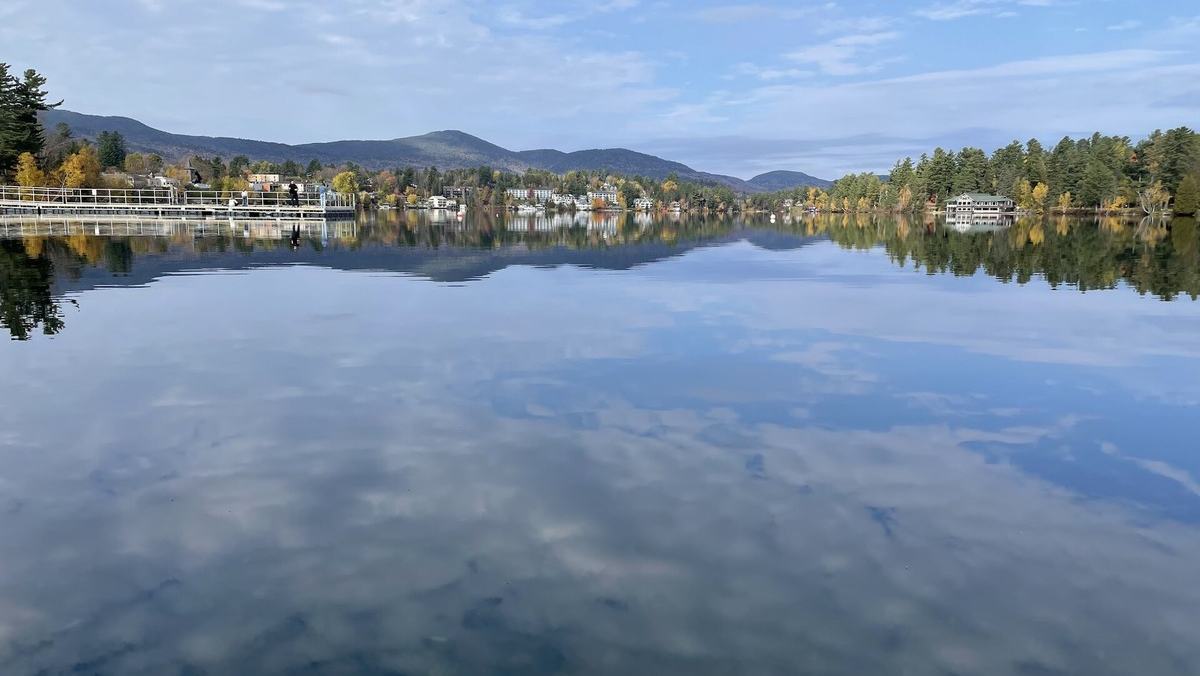
From the surface, Mirror Lake reveals a perspective that is different from walking along the village streets. Buildings and trees are reflected in the water, and mountains beyond the shoreline help frame the view. A paddler can pause safely to watch light move across the landscape, which may be more rewarding than trying to cover every part of the lake at speed. The quiet atmosphere is central to the experience.
Photography is easiest when the boat is stable and in a place where stopping will not interfere with traffic. Do not lean over a canoe gunwale or stand suddenly in a kayak to obtain a picture. Secure phones and cameras against loss. A companion who wants to take photographs should be briefed before departure about the need to keep movements predictable.
Family safety on an accessible lake
It is easy to underestimate risks because Mirror Lake sits beside a busy village. The water remains a real environment where weather, cold and poor judgment can cause problems. Everyone should have a properly fitting personal flotation device, and children should receive clear instructions before entering a boat. Carry drinking water, appropriate sun protection and clothing suited to possible immersion rather than simply to the temperature on Main Street.
A parent or group leader should understand how the craft can be brought back to shore if a participant becomes tired or frightened. A tandem kayak may allow one adult to do more of the work, but it is not a substitute for choosing a reasonable distance. Agree on a simple signal for turning home and avoid a route that depends on a particular child maintaining a fixed pace for an hour.
Recognising weather changes
A light breeze can make a paddleboard harder to control and can significantly slow a canoe returning against the wind. Check the forecast, observe the lake from the chosen launch and remain alert to the movement of cloud and water. Summer sunshine does not guarantee calm conditions or warm water. If weather becomes uncertain, remain ashore or shorten the outing.
In the colder part of the year, rental availability may be limited and water temperatures can make an unexpected immersion particularly serious. Do not treat an open shoreline as evidence that an ordinary summer outing is safe in November. A well-planned holiday includes museums, walking or other village activities for days when boating is not appropriate.
Avoiding disturbance along the shore
The lake's appeal depends on clean water, an attractive waterfront and the sense that visitors can enjoy the setting without crowding one another. Paddle quietly near shore properties, keep a respectful distance from birds and avoid landing in landscaped or private areas. Carry rubbish back and ensure loose straps or food packaging cannot blow into the water. An inflatable board should be cleaned and dried as appropriate before being taken to another lake.
Avoid leaving craft tied up at a public landing longer than necessary, and keep pathways clear for other users. Families launching several kayaks can arrange equipment away from the water before moving one craft at a time to the entry. These habits are not complicated, but they make an accessible village lake more pleasant for everyone.
A one-day plan without a car-dependent itinerary
A useful summer programme starts with a walk to a recognised launch or rental, followed by a short inspection of the weather and the equipment. Choose a boat appropriate to the party and spend the first part of the outing practising basic control. If conditions remain suitable, continue along a modest shoreline route before returning with enough time to recover the craft without rushing. The rest of the day can be enjoyed in the village.
This approach makes Mirror Lake attractive to travellers who do not want an extensive boating holiday. Instead of using a boat to reach a distant destination, the boat becomes a way of seeing a familiar-looking mountain town from an unfamiliar angle. It also gives visitors the freedom to stop early and do something else if the weather does not cooperate.
Confirm the exact rental and return arrangements
Hire businesses may operate different hours and equipment inventories, especially outside the main summer season. Before leaving accommodation, confirm the selected operator is open, what it supplies, whether advance booking is necessary and where the boat must be returned. Ask about accepted payment methods, rules for younger passengers and the procedure if the weather deteriorates during a rental.
For privately owned craft, check current hand-launch access and parking restrictions through the relevant official information. A visitor should not confuse the existence of a public access point with permission to leave a vehicle wherever space appears available. A little planning avoids a frustrating search for a place to unload and protects the surrounding village from unnecessary congestion.
Why Mirror Lake belongs on a small-boat itinerary
Mirror Lake offers a compact form of boating pleasure: the chance to paddle or row close to a welcoming village while remaining surrounded by Adirondack scenery. Its two recognised hand-launches and varied rental equipment make it approachable for many visitors, provided they respect the local restrictions and choose appropriate conditions.
The best experience does not require speed or a demanding route. A short kayak outing in suitable summer weather can reveal reflections, mountain views and the character of the waterfront in a way that is impossible from a car. With well-chosen equipment, careful weather judgment and consideration for other users, Mirror Lake is an excellent example of how much enjoyment a modest leisure boat can offer.
Sources and photograph attribution
Official destination and boating guidance: Lake Placid Tourism — Mirror Lake Paddling and Hand Launches. Current access, rules, weather and reservations must be checked independently before travel.
Photograph: Fergo22 — “Mirror Lake (NY) from the South End.jpg” (CC BY-SA 4.0), via Wikimedia Commons. Resized to JPEG 1200×800 for editorial display. Source: https://commons.wikimedia.org/wiki/File:Mirror_Lake_(NY)_from_the_South_End.jpg. Licence: https://creativecommons.org/licenses/by-sa/4.0. Original rights remain with the credited creator or as specified by the source and licence.
