
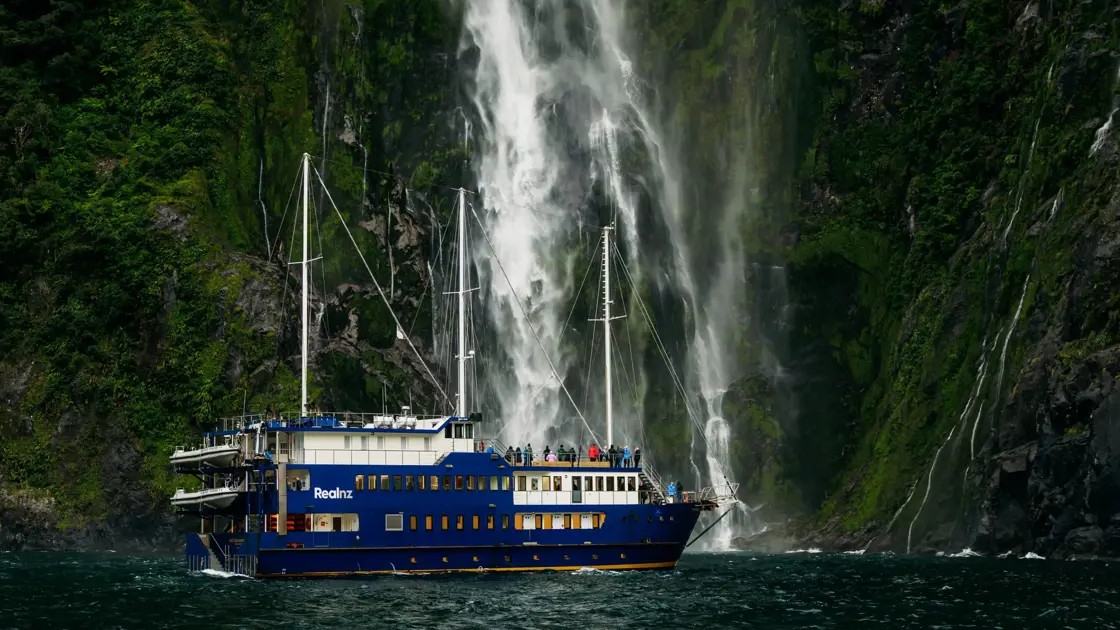
A boat-level guide to New Zealand's Milford Sound, from the shadow of Mitre Peak to waterfall spray, wildlife watching, changing weather and the practicalities of reaching the fiord.
Why the fiord is best understood from the water
Milford Sound, known in Māori as Piopiotahi, is a landscape that reveals its scale only when the boat leaves the visitor terminal. The steep sides rise almost immediately from dark water, so the view is not a distant panorama but an enveloping encounter with rock, forest and cloud. A modest passenger vessel provides a surprisingly effective viewing platform because its low vantage point makes the walls feel immense and brings falling water into direct contact with the journey.
The signature on-water landmark is Mitre Peak, rising to 1,692 metres above sea level according to cruise operator RealNZ. Its familiar triangular outline is striking in photographs, but the more memorable impression aboard is how rapidly light and weather rearrange the face of the mountain. Low cloud can erase the summit while bright patches open across the water, and both versions belong to the experience. A perfectly clear day is not the only day worth visiting.
The practical choice is between a guided scenic cruise, a longer small-boat outing when offered and a kayaking experience arranged with a qualified local operator. For many first-time visitors the two-hour cruise is the most forgiving introduction, with indoor shelter and open decks available as conditions change. It also gives families the chance to enjoy the water without having to manage navigation or specialist equipment in a remote, demanding environment.
A route built around waterfalls and wildlife
RealNZ's published signature route leaves the Milford Sound Visitor Terminal and takes in Lady Bowen Falls, Stirling Falls, Copper Point and Seal Rock. The sea entrance is approached when weather permits, which is an important qualification rather than a disappointment. The operating crew chooses where conditions allow the vessel to travel safely, and the journey remains dramatic even when the outer waters are unsuitable for an extended look towards the Tasman Sea.
Stirling Falls is an especially tangible landmark, falling 146 metres from a hanging valley between the mountains. On some cruises the boat approaches sufficiently closely for passengers outside to feel the fine spray, creating a moment that is both exhilarating and reliably damp. Waterproof outer layers belong in the day bag even when the morning began in sunshine. Keep cameras and phones protected until the vessel moves clear of the waterfall.
At Seal Rock, passengers may see New Zealand fur seals resting on their small patch of exposed stone. The operator also points out sites including Harrison Cove and the surrounding rainforest, which reveal another side of the fiord away from the postcard centrepiece. Wildlife sightings cannot be ordered to appear at a particular time, so a relaxed, watchful pace is more rewarding than rushing between photo opportunities. A guide's commentary helps put distant details into context.
Life aboard and the art of dressing for Fiordland
RealNZ describes two signature cruise vessels, Milford Haven and Milford Mariner, each with outdoor viewing space and sheltered interior seating. The operator offers refreshments and nature commentary, with specific arrangements dependent on the booked sailing. Couples may prefer the movement of an open deck, while older visitors and families can retreat indoors when rain sweeps across the water. The most satisfying cruise usually involves changing positions as the scenery changes, rather than guarding a single seat.
Weather in Fiordland is famously changeable, and frequent rain is part of what feeds the waterfalls. A warm mid-layer, a waterproof jacket and secure non-slip shoes are more useful than dressing solely for the forecast at the point of departure. Sunglasses and sun protection still matter when cloud lifts and light reflects off the water. Carry essential medicines and a dry pouch for valuables, especially if you intend to remain outside during the approach to the falls.
The camera should not dominate the outing. A wide view works for cliffs, but a telephone or modest zoom lens can be valuable when seals are distant and the boat cannot approach them. Photographing people against the scale of the landscape often tells the story better than a succession of empty mountain views. Watch the waterline and the patterns of rain on the fiord as well: they provide a sense of weather and movement that static scenery alone cannot communicate.
Planning the journey without rushing
The road into Milford Sound is part of the undertaking. RealNZ advises allowing several hours by road from Te Anau and substantially longer from Queenstown, with additional time for conditions and stopping points. Its published guidance also calls for checking in at least 20 minutes before departure. Travellers should confirm current road information, parking arrangements and cruise times directly before setting out; a photograph stop or alpine delay can quickly absorb an optimistic schedule.
Arriving early makes room for a short look at the terminal waterfront and removes the temptation to hurry through one of New Zealand's great landscapes. Visitors based in Queenstown can consider coach and cruise combinations, while travellers staying near Te Anau have a shorter approach. Flights are sometimes offered as part of combined itineraries, but air operations are weather-dependent. The decision should be driven by comfort and realistic timing rather than the number of experiences squeezed into one day.
Milford Sound rewards a clear plan followed by an unhurried attitude. Book the sailing you can reach comfortably, carry the right clothing and accept that clouds, rain or sunshine will shape the photographs differently from an advertisement. The essential experience is the passage through the fiord itself: a small vessel, enormous cliffs and waterfalls that are heard before they are fully seen. Few leisure-boat excursions make the relationship between water and landscape quite so immediate.