
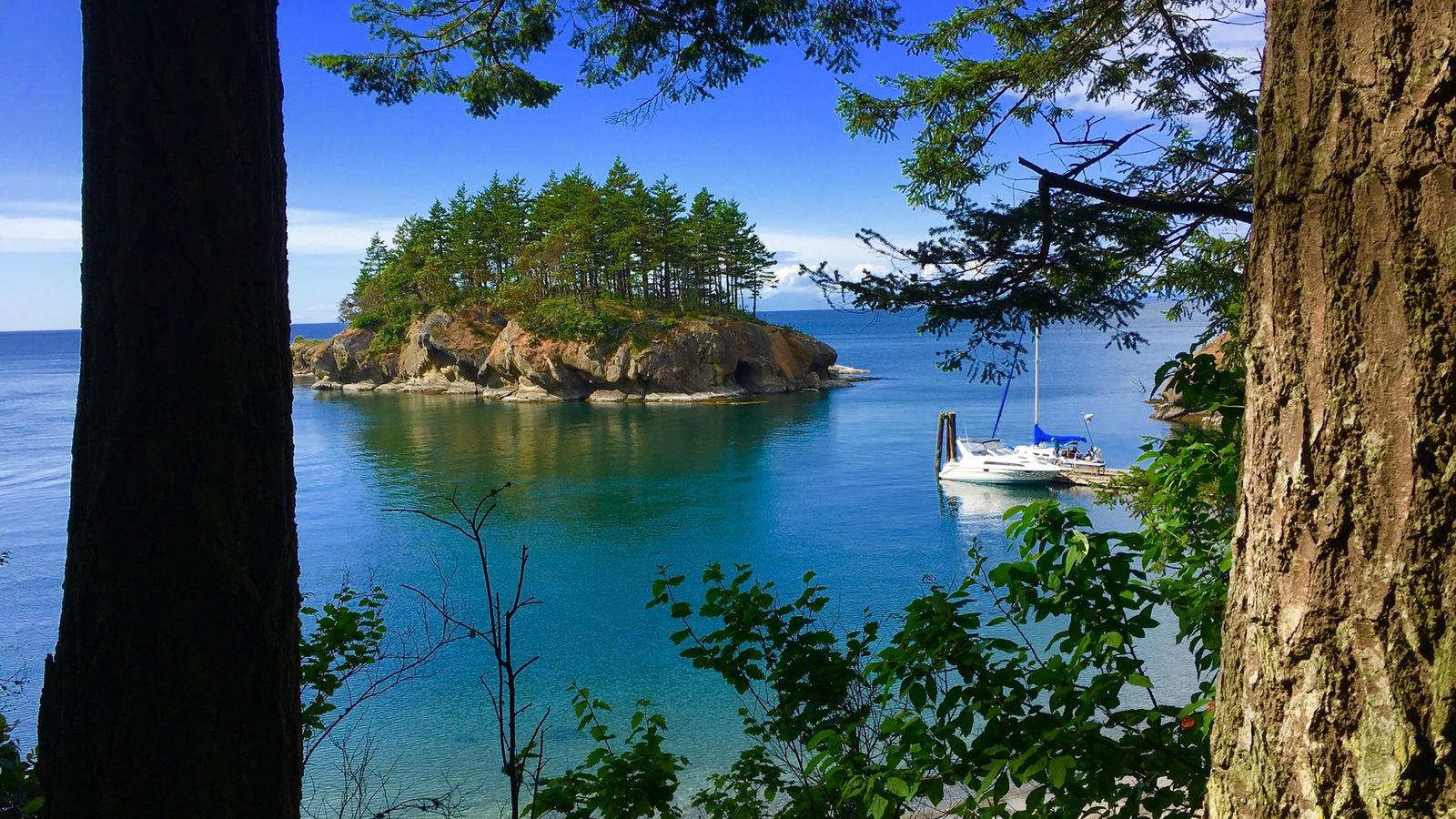
A boating-first guide to Matia Island Marine State Park in the San Juan Islands, combining official 2026 moorage rates and winter camping status with Rolfe Cove access rules, habitat protection, onboard preparation and a low-impact shore itinerary.
A quiet island arrival in the San Juan archipelago
Matia Island is one of the San Juan Islands' most appealing short escapes for an experienced private-boating crew. Unlike a marina-centred resort visit, the reward is a wooded shoreline, a sheltered-looking cove and a chance to spend time in an island landscape that feels much farther removed from everyday traffic than its position on the chart might suggest. Washington State Parks describes Matia as boat-access only, with old-growth trees, moss-covered forest and striking sandstone around the water's edge.
The visit begins with a practical decision: treat Matia as a protected public park, not an open island where guests may land or explore wherever they please. The state's current park rules confine public access to Rolfe Cove, the campground, the loop trail and the beaches, with other areas closed to protect habitat and wildlife. A successful boating itinerary respects those boundaries from the moment a tender touches shore.
For an autumn visit, the attraction is less about warm-weather swimming than thoughtful cruising and a short shore walk among trees. The island's limited amenities encourage visitors to bring what they need and leave with everything they brought. That is particularly useful for families and visiting crews who might otherwise assume that a pier and a campsite guarantee a shop, drinking water or waste collection.
Rolfe Cove: dock, mooring buoys and the arrival plan
The official Matia Island page lists a 128-foot moorage dock as well as mooring buoys at Rolfe Cove. These are public facilities, not berths reserved by this guide, and a captain must judge whether the vessel's size, conditions and available space allow a safe visit. Washington State Parks lists mooring charges year round for use between 1 p.m. and 8 a.m., with the published rate of 23 US dollars for a buoy or 1 US dollar per vessel foot at the dock.
Arriving without a fixed moorage reservation means preparing a genuine alternative. The broader Washington State Parks moorage guidance says its facilities operate on a first-come, first-served basis and that phone registration is available on participating buoys, including Matia. A skipper who finds the dock full should not block the approach while guests decide whether to go ashore; identifying a fallback destination earlier protects both the crew's time and other boaters.
Planning also means recognising the difference between a day visit and an overnight stay. The park's moorage payment period, campsite arrangements and navigation needs are separate matters, and a mooring position does not automatically create an overnight campsite booking. Check the current Matia Island park page and the official statewide moorage guidance immediately before departure rather than relying on yesterday's availability.
What the 2026 winter schedule really says
The state parks' published winter schedule makes Matia unusually useful to consider late in the year. As checked for 26 October 2026, the Matia Island entry lists camping as open, with sites remaining first-come, first-served all year. It also explicitly states that there is no water on the island. A boating party should therefore arrive with drinking water aboard and enough additional supplies for any unexpected delay.
That winter listing should not be read as a guarantee that every dock, buoy or landing will be appropriate in every weather window. Autumn winds, visibility, current and changing sea conditions are more important than a calendar promise. Before leaving a home port, consult an up-to-date forecast, tide information, marine notices and the park's alert panel; a captain should have both a conservative return time and a plan for leaving the island untouched if the approach feels unsafe.
Matia's official visitor hours are shown as 8 a.m. to dusk throughout the year, but visiting vessels should separately confirm any overnight or moorage entitlements they intend to use. Later sunsets, shorter autumn daylight and the comfort of passengers affect the itinerary just as surely as the formal operating notice. The best day trip aims to finish its forest walk well before failing light starts dictating the passage.
Walking among cedar trees without disturbing wildlife
The island's appeal is concentrated around the designated loop trail and the natural surroundings of Rolfe Cove. Moss, evergreen forest and weathered rock create a strong sense of place without the need for a long march or a dramatic viewpoint. A slow walk allows guests to notice details that a crowded waterfront visit tends to obscure: changes in the canopy, the contrast between sheltered and exposed shorelines and the sounds of a working marine environment.
The permitted-access rule is central to that experience. Visitors must stay within the areas the park identifies as open, even if a tempting path appears to head into another part of the island. The restrictions exist for habitat and wildlife protection, and private yacht guests are no exception. Shore parties should avoid leaving equipment in vegetation, disturbing nesting areas or treating a quiet beach as a staging area for elaborate gatherings.
Another important difference from a typical dog-friendly shore stop is that Washington State Parks expressly prohibits dogs at Matia. The same official park notice bans fires at all times. Crews should tell guests these rules before leaving the boat: a pet cannot simply accompany the family ashore, and a beach barbecue or campfire should not be presented as an option.
Six primitive campsites and a proper low-impact visit
Rolfe Cove has six campsites, according to the state parks' current description, and the spaces are available on a first-come, first-served basis. There is no potable water or rubbish collection, making this a genuinely self-sufficient destination. The camping provision can work for a carefully equipped party, but it should never be treated as an informal overflow accommodation plan for yacht guests arriving without camping equipment.
For those remaining aboard, the most satisfying visit may be a modest one: a cautious approach, a walk on the designated trail, a photograph or two from an authorised public area and a relaxed lunch back on the vessel. That programme leaves space for the crew to reassess conditions before departing. It also avoids putting pressure on a small public campground that serves paddlers and other low-impact visitors.
Kayaking and diving are among the activities listed by the park, but the agency notes that these require advanced experience and suitable equipment. This is not an invitation to send first-time paddlers away from their yacht unsupervised because the water appears calm from the dock. The captain should match the activity to the abilities of the guests and the real marine conditions, and the tender driver should be confident about the return boarding arrangements.
Fishing, supplies and how to prepare responsibly
Matia is also listed as a place for fishing, crabbing and shellfishing, though those activities are governed by Washington Department of Fish and Wildlife rules rather than the park brochure alone. Seasons, licences, species limits and any local health closures must be checked independently before anyone collects seafood. Guests should be offered the pleasure of watching the shoreline if the regulatory position is uncertain, not an assumed right to harvest from it.
The park names Gooseberry Point near the Lummi ferry dock as a source for nearby fuel and groceries, alongside seasonal services at West Beach Resort on Orcas Island. Neither is a substitute for fuel reserves planned before departure, especially outside the peak visitor season. A prudent boat brings adequate water, waste-storage capacity, suitable footwear, layered clothing and enough provisions to return comfortably without requiring island services.
Before sailing, give guests a simple briefing: Matia has no dogs, no fires, no potable water, no rubbish service and strict limits on where people may go ashore. Then consult the latest 2026–27 Washington State Parks winter schedule for any changed seasonal status. Combining those official instructions with the captain's live navigation assessment is what turns an attractive island idea into a responsible private-boating day.
The right way to finish a Matia Island day
Some marine destinations reward ambitious checklists; Matia rewards restraint. The most memorable moment may be leaving Rolfe Cove with the shoreline looking much as it did on arrival, knowing the crew chose an appropriate mooring, stayed on authorised paths and left no waste behind. An itinerary that preserves the island's quiet character is more valuable than one that fills every available hour with activities.
All details here were checked against the official Washington State Parks Matia Island park information, its boat-moorage guidance and its winter schedule on 26 October 2026. Rates, alerts, weather restrictions and access conditions can change, and this feature is a planning guide rather than a navigation instruction. The accompanying photograph is an official Washington State Parks image showing the island's trees, water and a moored vessel.