
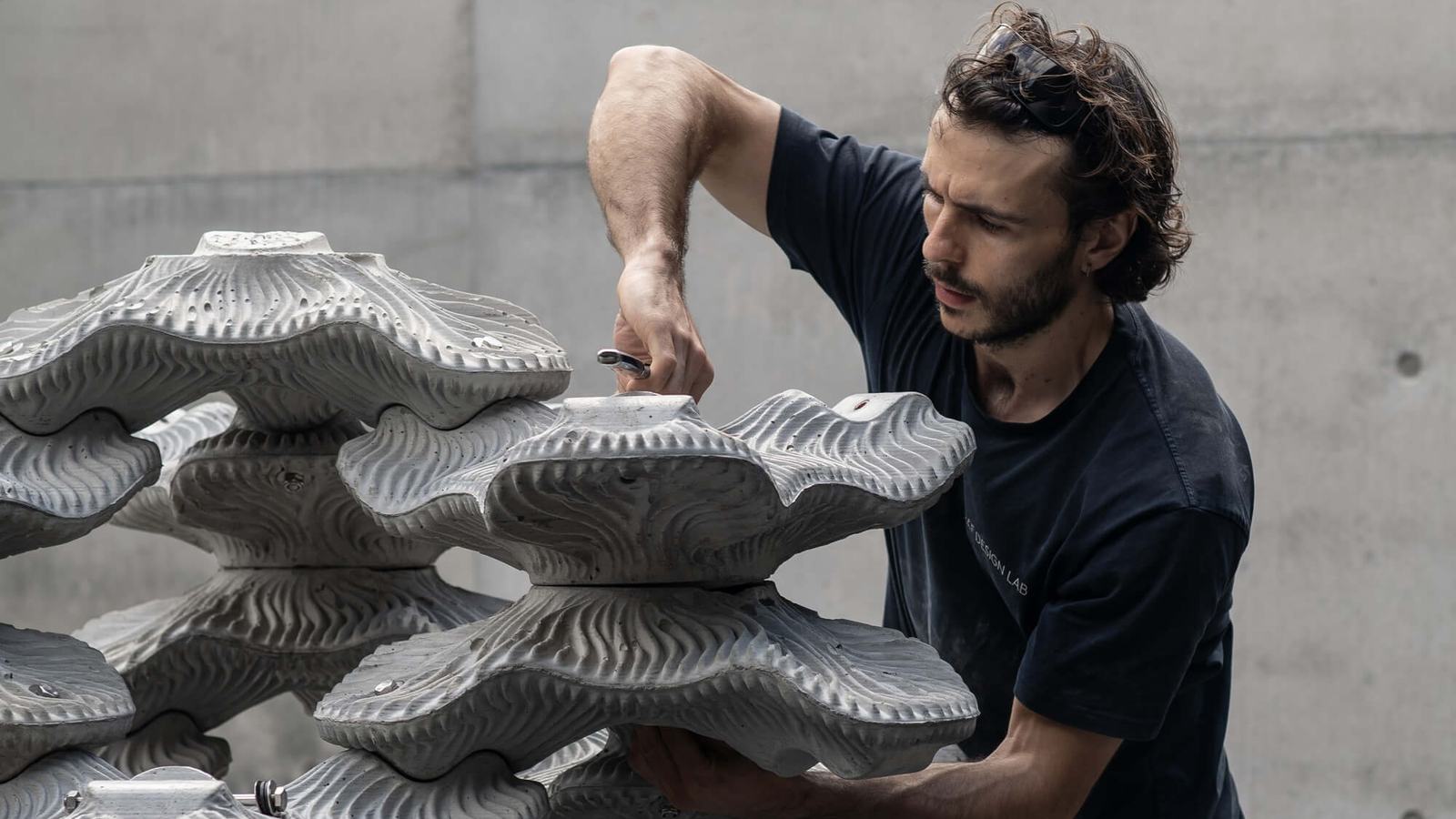
The Australian-designed MARS II reef system has been recognised in the 2026 Good Design Awards, highlighting how divers can assemble modular underwater habitats without barges or cranes.
When a reef loses its shape
Coral reef recovery is not simply a matter of placing new coral fragments into the sea. A healthy reef has a three-dimensional architecture of ridges, holes, ledges and sheltered spaces that allows marine organisms to establish themselves. Dynamite fishing, bottom trawling and major storms can break that architecture apart, leaving unstable rubble where young corals struggle to take hold. For coastal communities that depend on reefs, the loss affects fishing grounds, biodiversity and the attraction of underwater landscapes to visiting divers.
Reef Design Lab, an Australian marine-design company, has developed a system intended to put some of that lost structure back. Its Modular Artificial Reef Structure II, known as MARS II, was recognised in the 2026 Australian Good Design Awards. The system is designed around a notably practical idea: a team of divers can assemble habitat-building structures underwater without relying on the large cranes or barges that may be unavailable in remote island locations.
Small modules, larger underwater landscapes
MARS II uses individual cast-concrete units that connect to their neighbours through lap joints and bolts. The assembled geometry creates a lattice of cavities, shaded overhangs and surfaces on which corals may be attached or naturally settle. That architecture matters because a bare flat surface provides fewer refuges for small fish and invertebrates than a mature reef. The project aims to provide a framework around which living coral and other organisms can establish themselves over time.
The design deliberately makes the individual pieces manageable for trained underwater workers. Reef Design Lab lists each unit at approximately 27 kilograms out of water and 15.5 kilograms in water, reflecting the difference buoyancy makes during deployment. Those figures are not an invitation for untrained recreational divers to build artificial reefs independently. Installation still requires professional planning, appropriate environmental permissions, trained personnel and careful assessment of currents, substrate and local ecology.
Why the surface of the concrete matters
Marine concrete might seem an unlikely material for a conservation project, but the function of these modules depends on providing a robust physical home for biological growth. Reef Design Lab developed moulds that can be used for repeatable local production, with textured surfaces intended to accommodate coral attachment and encourage small organisms to settle. Channels and contours help moving water carry sediment away rather than allowing every horizontal face to become a blanket of fine particles.
The company's product description explains that coral fragments may be transplanted to prepared surfaces, while smaller end caps can be seeded separately and attached later. This offers restoration teams options for work with nursery-grown material and local coral-management plans. The design cannot by itself overcome poor water quality, sustained high temperatures or continued damage by human activity; it is one potential tool within a broader programme that must address the causes of reef decline.
Why local assembly can change the economics
Many coral restoration sites are close to small communities where marine engineering equipment is expensive to mobilise. A project that depends on heavy lifting equipment, specialist vessels or long supply chains may prove impractical even if the ecological plan is sound. A modular structure assembled underwater offers an alternative approach, especially when local teams can obtain suitable materials and manufacture pieces using established moulds. Reducing logistical barriers is an important part of making restoration work more accessible.
The Good Design Awards submission says the design evolved from an earlier MARS system, shifting towards a more scalable concrete construction and a repeatable two-part mould. Reef Design Lab separately reports that its modular approach was refined using feedback from restoration researchers who used the original product. Those statements describe design intent and development experience rather than a guarantee that every project will be low-cost. Site surveys, monitoring and coral cultivation can still be substantial expenses.
Projects from the Red Sea to Malaysia
The 2026 award entry identifies work in the Red Sea and restoration collaboration around Malaysia's Pom Pom Island as examples of deployment. At Pom Pom Island, the marine conservation organisation TRACC has been trialling the system to re-establish physical habitat in areas affected by destructive fishing. Reef Design Lab says the modular format can help teams build structures on sloping sites, where stability and safe diver access can be especially difficult to manage.
The company also describes a Red Sea installation that demonstrates how the units can be combined into taller constructions. Its published product page cites a structure reaching approximately three metres, made with 49 units by four divers over two days. That is a reported project example, not a standard completion time for new locations. Different seabeds, weather windows, permits, labour, water visibility and conservation objectives will determine the scale and difficulty of any individual installation.
What restoration can and cannot promise
Artificial reefs are sometimes presented as quick substitutes for natural ones, but conservation outcomes cannot be judged by the number of concrete blocks deployed. A well-designed structure may provide shelter and surfaces for colonisation while ecological recovery remains uncertain for years. Local coral species, heat stress, sedimentation, water quality and fishing pressure all influence the eventual habitat. A badly sited or poorly monitored installation can also create unintended effects, which makes expert environmental assessment essential.
MARS II is therefore most useful to understand as habitat infrastructure rather than a ready-made coral ecosystem. Reef Design Lab's stated ambition is for the modules gradually to become integrated into living reef formations as organisms grow over and around them. Meaningful evaluation would follow coral survival, fish and invertebrate use, structural stability and impacts on nearby habitat over time. Recognition for intelligent design is encouraging, but long-term ecological success must be documented in the water.
What boaters and visiting divers can learn
Many recreational boaters first experience a reef through a mooring, snorkelling stop or guided dive. Seeing the complexity of a thriving reef can make it easy to overlook how vulnerable that structure is to anchoring, careless fin kicks, fishing gear and persistent human pressure. Restoration technologies invite a useful conversation about the responsibility of leisure users: protect the habitat that already exists before assuming it can be replaced after it has been damaged.
For visiting boat owners, the most immediate contribution may be adopting approved moorings rather than dropping an anchor onto sensitive seabed, following local protected-area rules and supporting reputable conservation operations. Divers should observe dive-operator guidance and avoid touching coral installations or relocating organisms. An engineered reef framework is usually part of a permitted scientific or community programme; it is not a do-it-yourself project for any skipper who finds a damaged patch of bottom.
An industrial design award with a marine purpose
The 2026 Australian Good Design Awards listed MARS II in the product design programme's commercial and industrial category, with Reef Design Lab both designer and commissioning organisation. The jury's recognition highlights the meeting of manufacturing, underwater installation and ecological ambitions in a single design. Rather than rewarding the appearance of a luxury consumer object, it draws attention to the way a technical product might be used by restoration teams in challenging settings.
The project also illustrates an important difference between design recognition and environmental certification. The award provides a public account of design goals, described applications and development, but it does not mean that the product is suitable for every marine environment without a separate assessment. Potential users need local expertise, regulatory approval and an evidence-based restoration plan. Coastal authorities may additionally need to consider navigational risk, protected species and interactions with existing fishing or diving activities.
The longer view of reef restoration
One reason the MARS II approach is interesting is that it combines repeatable manufactured parts with the irregular conditions of a living underwater ecosystem. A module can be specified, cast and connected with engineering precision, while the organisms around it respond to conditions that nobody controls completely. The intended final appearance is not a finished manufactured object but a living reef whose biological growth gradually makes the original framework less visually dominant.
Reef Design Lab has published technical details and project photographs on its MARS II product page, while the official 2026 Good Design project entry explains the design rationale. For the leisure boating community, the lesson extends beyond any single product: sensitive coastal environments benefit most when thoughtful technology is paired with prevention, responsible access and long-term ecological care.