
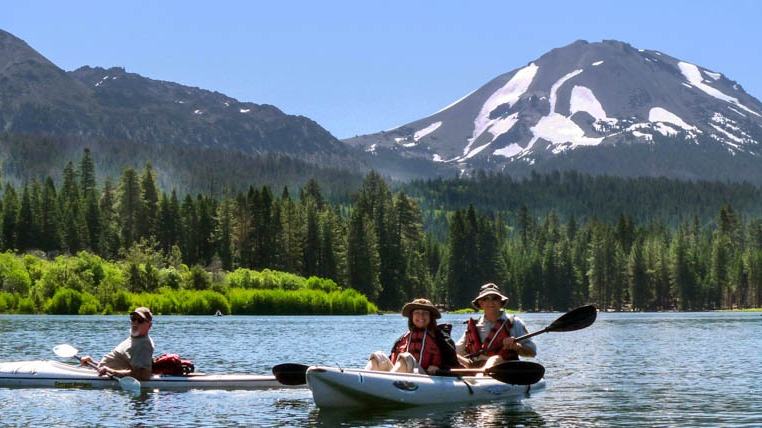
Manzanita Lake lies near the northwest entrance of Lassen Volcanic National Park in northern California, framed by forest and views towards Lassen Peak. It is a destination for people who prefer a slow paddle, a quiet shoreline and time to notice the changing mountain light. The National Park Service permits non-motorised boating on Manzanita.
A lake where the engine stays at home
Manzanita Lake lies near the northwest entrance of Lassen Volcanic National Park in northern California, framed by forest and views towards Lassen Peak. It is a destination for people who prefer a slow paddle, a quiet shoreline and time to notice the changing mountain light. The National Park Service permits non-motorised boating on Manzanita and several other park lakes, but engines and motors are prohibited on vessels in park waters, even when the equipment is switched off. That is a central rule, not a minor detail to discover at the ramp.
For Leisure Boat Guide readers, the lake shows how much pleasure a small craft can offer without speed or complicated machinery. A canoe or kayak makes it possible to explore a modest area with minimal disturbance, while leaving time for a walk, photographs or a picnic ashore. The objective is not to cover the maximum distance. A comfortable outing will often revolve around one calm launch, an unhurried loop and a return well before the weather or group fatigue becomes an issue.
Arriving in the northwest corner of the park
The Manzanita Lake area sits close to the northwest park entrance and includes a campground, nearby amenities and access to the lake. Visitors should consult the park's current conditions before making the drive, particularly outside the main summer season when roads and services can be affected by snow or closures. A photograph of sunny mountain water does not tell a visitor whether the approach road is clear or whether the rental operation is open on the intended day.
Private boat owners should plan around the designated launching arrangement. The National Park Service says watercraft must enter and leave both Manzanita and Butte lakes at the designated boat launches. This helps protect vulnerable shoreline areas and makes access easier to manage. Unloading near the correct launch, organising equipment away from other visitors and avoiding damage to vegetation are good habits that also reduce the chance of an awkward start.
Choosing between a canoe and a kayak
A stable recreational kayak can be appealing to a solo visitor who wants to move quietly and take photographs. A two-person kayak or canoe may suit partners or a parent and older child, depending on the boat's intended capacity and the paddlers' experience. The correct craft is not necessarily the largest one available. It should be manageable when carrying it to the launch and comfortable once loaded with personal gear, especially for a visitor unused to the physical demands of paddling.
Ask about the boat's stability, seating and approved passenger load before departing. If travelling in a rented craft, follow the rental operator's instructions for use and return. A wet seat or cramped foot position can make an otherwise pleasant trip uncomfortable, so take a moment to adjust the boat before leaving the launch. The simplest day afloat often succeeds because these small matters are sorted out before the group reaches open water.
The seasonal rental option
The National Park Service notes that single and double kayak rentals are generally offered at Manzanita Lake from around late May through September, subject to the operator's schedule. The published procedure involves purchasing a rental at the Manzanita Lake Camper Store, following the short trail to the boat launch and presenting the receipt. It is useful to know the process before arriving with a family, but hours and availability should be verified directly for the date of travel.
The park states that life vests are provided or available for rental and that they must be worn on rented vessels. Visitors using private boats should still ensure appropriate personal flotation devices are carried and worn as required by law and conditions. Do not assume a rental is available because the park entrance is open. Those travelling in spring, autumn or after snowfall should have an alternative land-based plan in case boat services are closed.
Understanding California's lifejacket rules
California law requires an approved lifejacket for each person aboard, with additional requirements for children. The park's guidance states that children under thirteen must wear an appropriate Coast Guard-approved lifejacket while aboard a moving recreational vessel. This is particularly important for families treating a lake outing as a relaxed holiday activity, because mild weather and an attractive mountain setting can make the water seem less demanding than it really is.
A lifejacket should fit the individual, remain serviceable and be fastened correctly. Adults should set the example by wearing suitable flotation rather than keeping equipment inaccessible beneath bags. Explain to younger paddlers how to sit safely, how to avoid sudden movements and what to do if the boat feels unstable. The aim is not to frighten anyone. Good preparation makes the outing calmer and gives people the confidence to enjoy it.
Why the lake is more than a scenic backdrop
The view towards Lassen Peak gives Manzanita Lake much of its identity. Forest, mountain slopes, patches of snow and reflections can turn a short paddle into an absorbing afternoon. Conditions on the surface change with light and wind, so photographers may find as much interest in a sheltered morning as in a longer mid-day outing. A compact kayak makes it possible to stop paddling, drift gently and observe the shoreline without creating much wake.
That quiet experience depends on respecting other visitors and wildlife. Avoid approaching birds or animals for a closer photograph and do not disturb vegetation along the water's edge. The National Park Service has chosen restrictions on powered craft partly to preserve the natural setting. A paddler can contribute by leaving no rubbish, keeping noise low and giving fishing parties plenty of space.
Fishing and the importance of local rules
Manzanita Lake is also known for trout fishing, including fly fishing, and the park provides separate guidance on permitted techniques. The National Park Service says only lures and artificial flies may be used at Manzanita, with natural bait excluded, and that anglers need the appropriate California fishing licence. These are material restrictions that should be checked against current regulations before packing equipment. A visitor arriving with an ordinary bait bucket should not assume that familiar lake practices are lawful here.
Fishing from a small craft can offer access to quiet water, but casting near other paddlers requires care. Hooks, lines and sudden movements can create difficulties in a confined kayak. An angler should choose equipment they can manage while seated and avoid attempting to stand in a craft not designed for that use. Anyone intending to keep fish should check the latest limits and handling requirements rather than relying on an older article's account of the rules.
Choosing an appropriate day and hour
Mountain weather can change, with afternoon winds, cooler temperatures and reduced visibility affecting a trip that began in sunshine. Check the forecast and park notices immediately before launching. On any lake, a short crossing that feels trivial in calm water can become difficult when the wind rises. The right decision may be to stay close to the launch or return early rather than continue towards a distant shore for the sake of completing a loop.
Cold water deserves particular respect. Air temperatures may encourage lightweight clothing while the lake remains uncomfortable or hazardous for an accidental immersion. Dress for the water as well as the weather, bring spare clothing in a dry bag and avoid paddling alone when skills or conditions are uncertain. A group should agree on the intended route and remain close enough to assist one another if needed.
Other Lassen lakes are not automatically available
The park lists Butte, Juniper and Summit among the popular lakes where non-motorised boating may be possible, but it also expressly prohibits boating on Lake Helen, Emerald Lake, Reflection Lake and Boiling Springs Lake. Visitors should not generalise from permission at Manzanita to every picturesque body of water on the map. Some closures protect sensitive scenery, vegetation or hydrothermal features. Even a small paddleboard counts as watercraft for the purposes of the closure.
The rule about engines is similarly strict throughout park waters: a motor cannot be brought aboard merely because the owner promises not to operate it. A compact boat fitted with an electric trolling motor therefore needs a different plan before visiting. Removing the motor and related equipment may be necessary if the remaining craft is otherwise suitable, and the current park rules should be checked. The most straightforward option is to use a purpose-built non-motorised boat.
A picnic and walk after the paddle
The Manzanita area is well suited to combining a short paddle with time on shore. A simple picnic, a gentle walk and an opportunity to look across the lake can make a satisfying day without filling every hour with movement. Pack suitable clothing, drinking water and snacks, and treat the shoreline as a shared place rather than a private campsite. Use designated facilities and check whether any restrictions apply to food storage or access during the chosen season.
Family groups often enjoy the water most when they know a second activity is waiting without requiring another long drive. A child who has spent an hour learning to paddle may prefer a relaxed lunch to a second crossing. Building that flexibility into the itinerary is a strength, not a sign of insufficient ambition. It leaves everyone with a positive memory and an appetite to return.
Preparing a privately owned small craft
Before loading the car, check the canoe or kayak for damage, secure all hatches and make sure the seats, footrests and carry handles are sound. Bring paddles in good condition, suitable flotation, water, a weatherproof map and a means of contacting someone ashore. Keep equipment light and stowed low, because loose bags and overloading can affect handling and make recovery after a capsize harder. A short test paddle near the launch is worthwhile when the boat has been stored for some time.
Remember that transporting the boat and launching it may involve more work than the paddling itself. Carrying a kayak along a narrow access route requires good coordination, especially with children nearby. Set the boat down only where permitted and avoid dragging it across fragile ground. The best outdoor routines protect both the people involved and the lake they have come to enjoy.
A deliberate change of pace
Manzanita Lake offers a reminder that small-boat ownership does not have to revolve around horsepower, marina infrastructure or long-distance travel. A well-chosen paddle can deliver spectacular scenery, quiet exercise and genuine time together. The destination is also a lesson in following local rules: engines are prohibited, launches are controlled, rentals are seasonal and several nearby lakes are closed to all boating.
The National Park Service's boating and fishing pages provide the right foundation for planning, but current conditions should always be checked before departure. Choose a suitable non-motorised craft, wear the right flotation, respect wildlife and leave ample time to come ashore. A slow day beneath Lassen Peak can be one of the most memorable ways to experience a small boat precisely because the itinerary remains simple.
Official information: National Park Service — Lassen Volcanic National Park. Kayakers and mountain scenery on Manzanita Lake, official National Park Service kayaking photograph on the Lassen boating page.