
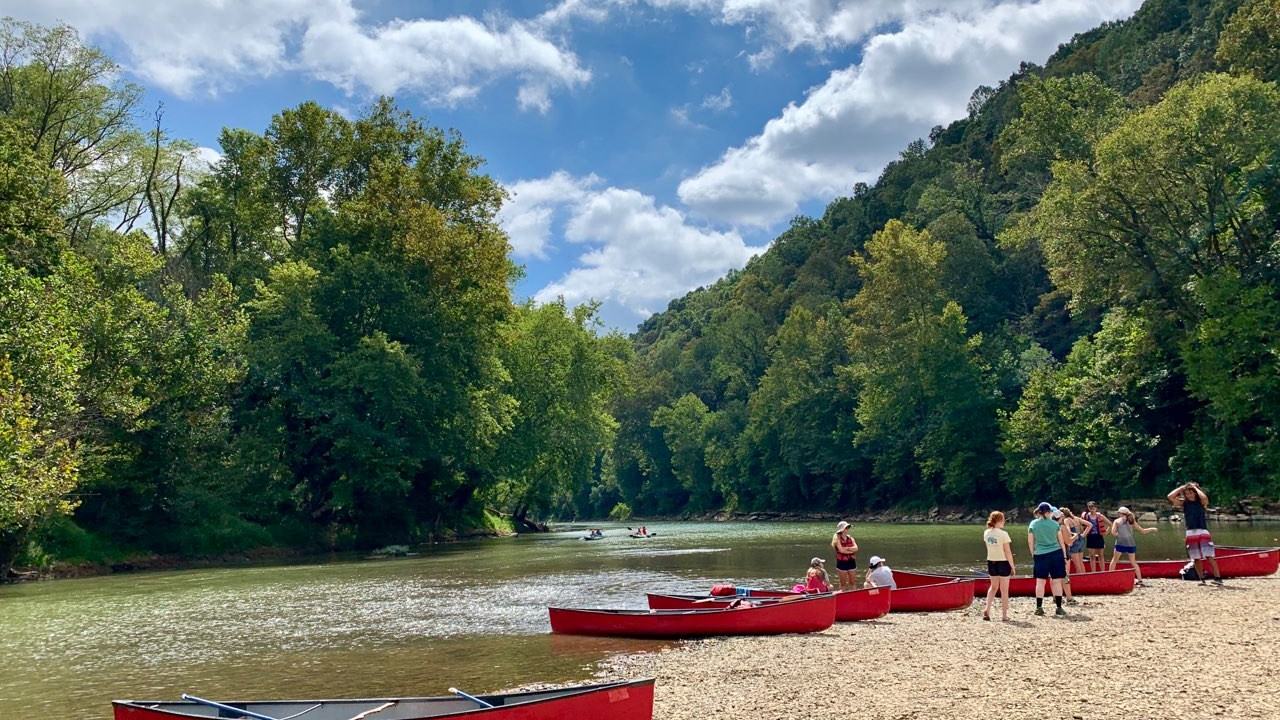
Mammoth Cave National Park is not only an underground destination: the Green and Nolin rivers offer scenic paddling with swift water, shifting gravel bars and ferry hazards.
An unexpected journey through Mammoth Cave
Mammoth Cave National Park is famous for its underground passages, but the surface landscape provides another reason to visit. The Green River and its tributary, the Nolin River, offer canoeing and kayaking through wooded country where wildlife, cliffs and riverbank springs create a striking alternative to a cave tour.
The National Park Service explains that twenty-five miles of the Green River run through the park. The water can seem gentle, but it remains a dynamic river with changing channels and a current that may move faster than an inexperienced paddler expects. Planning should therefore begin with present river conditions rather than the distance alone.
A biodiverse river deserves close attention
The Green River supports an unusually rich aquatic environment, with more than 150 fish species and over seventy species of freshwater mussels identified by the Park Service. Some of those species are threatened or endangered, making careful recreation important for more than just the comfort of other visitors.
Quiet paddling is a useful way to appreciate the river without disturbing it. Visitors may see wooded banks and gravel bars where stopping can sometimes be possible, depending on water levels. Avoid damaging habitat or collecting living creatures, and keep equipment and rubbish out of the water.
Expect the Green River to change
Gravel bars, islands and channels evolve over time, especially after rain and higher flows. A shallow route identified on an earlier trip may be obstructed or have a different current on the next visit. Submerged trees, floating debris and logjams deserve attention even when the surface looks relatively smooth.
While the river is commonly described as flat water, its current can be swift and prior paddling experience is recommended. The captain should understand how to identify hazards ahead, manoeuvre early and avoid becoming pinned against a tree or other obstruction. A leisurely appearance should never be the sole basis for judging suitability.
Nolin River adds a different option
The Nolin River flows into the Green River within the park, providing another paddling itinerary. A route from the Nolin River Dam Tailwater Recreation Area toward Houchin Ferry is described in the official guidance, although the exact journey depends on the selected take-out and conditions.
Dam releases and rainfall can affect water level and speed. The Park Service notes that changes may be substantial after a storm, meaning the river can become unsuitable or more difficult with little resemblance to a photograph taken during calmer conditions. Paddlers should check the latest information before setting off.
Give the Green River ferry room
An automobile ferry crosses the Green River at approximately river mile 197. Its visibility and stopping ability are limited, and the Park Service warns that a collision or close encounter could swamp a canoe or kayak. A paddler must not assume that a ferry can move aside or stop quickly.
Keep a safe distance and make sure the ferry operator is aware of the approaching small craft before attempting to cross its route. The National Park Service directs canoes and kayaks to the designated upstream access near the junction of the Green and Echo rivers. The ferry crossing is a working transport operation, not an attraction to approach for close photographs.
Choose where to launch and finish
The park provides designated river access areas, and some itineraries depend on a downstream pickup rather than returning to the original point. Selecting the right launch requires checking the drive, the equipment needed to reach the river and the condition of the intended take-out.
Do not wait until the last hour of the trip to discover that the finish is on the wrong bank or inaccessible from the road. Arrange transport and keep the relevant information protected from water. Rental or guided arrangements can simplify the journey for visitors who do not have two vehicles and suitable river experience.
Camping is possible but regulated
At suitable water levels, gravel bars and riverside locations can provide opportunities for overnight stays, but a valid riverside camping permit is required where applicable. Camping plans must account for water level changes and the fact that low banks can become unsafe during higher flow.
Overnight equipment should be carried securely and protected from rain or capsize. Visitors need sufficient food, drinking water and a safe way to manage waste. A campsite that is easy to approach in the evening should also be assessed for how the group can leave if the river rises overnight.
Flotation and weather remain priorities
Appropriate lifejackets should be worn, and the crew must understand basic self-rescue before entering moving water. Even moderate current can separate a swimmer from a boat or pull loose equipment downstream. Training on simpler water may be necessary before a group attempts a longer Green or Nolin trip.
Weather checks should include conditions upstream as well as the immediate park forecast. A river can rise because of rain that never fell on the launch site. The best decision may be to postpone or choose another outdoor activity when water conditions do not match the abilities of the group.
Avoid unnecessary environmental damage
The park's waterways support sensitive mussels and fish populations that benefit from clean water and careful shoreline use. Paddlers should avoid scraping along shallow riverbed habitats when an alternative route is available and should never leave fishing line or food waste behind.
Equipment should be cleaned between waters to reduce the risk of spreading aquatic invasive organisms. Respect private property and use authorised places for landing. A healthy river is part of what makes the journey rewarding, and each party can help preserve that quality.
A final practical checklist
Consult the National Park Service's current river guidance, water levels, access points, permit information and ferry precautions. Choose a route appropriate to the least experienced participant, arrange the pickup and tell somebody ashore when the group expects to return.
A Green River canoe trip can provide a memorable complement to the famous cave system. Its success depends not on covering the most miles but on recognising hazards and making good decisions. A sound plan allows visitors to enjoy an extraordinary Kentucky river landscape with confidence and respect.
Families planning both a cave tour and a river outing should leave enough time between reservations for changing weather and transport. A cave itinerary has its own fixed schedule, while river conditions may demand a last-minute change. Treating the two experiences separately can make the overall holiday easier to manage and less hurried.
Source
National Park Service