
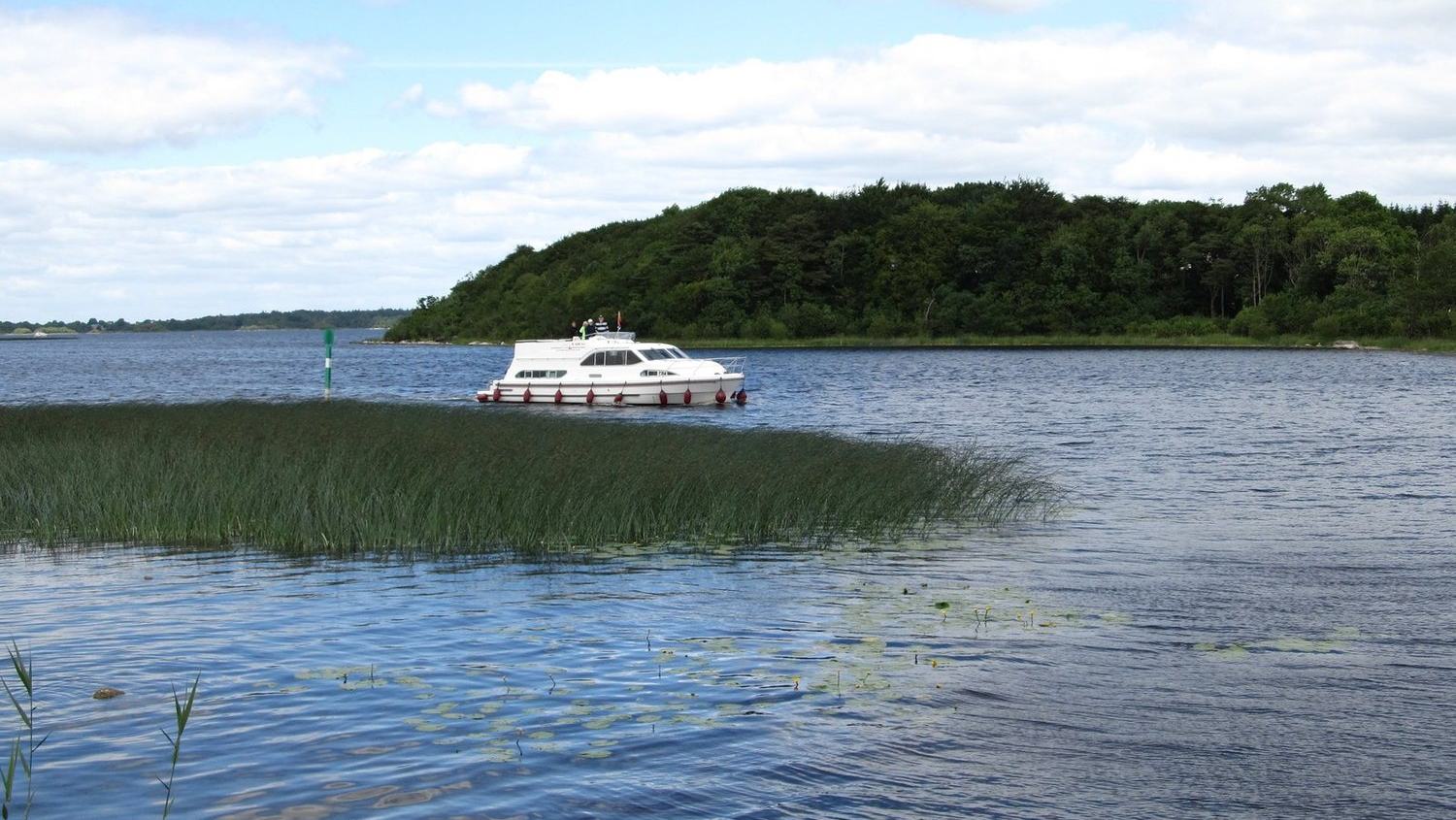
Lough Ree offers tranquil Irish inland boating near Athlone, but Shannon Navigation rules, sailing courses and marked exclusion areas require attention.
A lake with a river on either side
Lough Ree is a broad lake on Ireland's Shannon Navigation, north of Athlone, with islands, reed-fringed shores and welcoming towns nearby. It is an appealing destination for a small dayboat, a sailing dinghy or a canoe, but its open water and changing weather deserve respect. The lake's character differs from the more sheltered river sections adjoining it, and a boat that feels comfortable near a quay may be far less comfortable crossing an exposed reach in a freshening wind.
Discover Ireland describes an easy way to enjoy the area from Athlone through Hodson Bay, where passenger trips provide a first impression of the lake. Owners can also develop a modest itinerary from a suitable access point. The priority should be a manageable route, not a quest to visit every island or shoreline attraction. A relaxed short outing can provide time to appreciate the water and still allow for an uncomplicated return.
Athlone makes a practical base
Athlone sits on the Shannon just south of Lough Ree and provides shops, restaurants and transport links that make a boating holiday easier to organise. From the town, passenger excursions travel upriver toward the lake. Someone unfamiliar with the area may gain useful context by taking one of these trips before hiring or launching a small private craft. A working navigation brings commercial tourist activity, rowing, leisure boats and anglers into close proximity.
Launching a privately owned boat is a different question from boarding a passenger vessel. Confirm the actual slipway, parking conditions, fees and any booking requirements before driving to the shore. Not every quay used for scheduled trips welcomes independent launching. A skipper should also familiarise the crew with the local channel and the position of any lock or bridge involved in the plan. Starting close to suitable shelter and services can make a first outing much easier.
Hodson Bay offers an obvious destination
Hodson Bay lies a short distance north of Athlone and is a recognised point for enjoying Lough Ree. Discover Ireland identifies passenger trips that travel from central Athlone into the lake and call at the bay. The setting offers an appealing balance of lakeside scenery and nearby visitor services. A private small-boat crew can use the area as inspiration for a short route, but should not assume a berth or commercial landing is available simply because a tour boat uses it.
Check permissions and current conditions at any intended quay before visiting, and keep the approach clear for scheduled passenger traffic. A small boat may need to turn back if the landing is full or weather has changed. Carry food and drinking water rather than relying on an unconfirmed shore stop. When the crew knows the return point and has a flexible plan, even a short cruise around a sheltered part of the lake can be very satisfying.
The Shannon is a managed navigation
Waterways Ireland oversees the Shannon Navigation and publishes bye-laws, speed limits, lock information and marine notices. It describes a system of three major lakes, several locks and numerous public moorings, with rules that vary by location. A five-knot speed limit applies on specified sections of the navigation; additional reductions are required near jetties, moored craft, bridges and locks. This is not a single universal lake speed that a visitor should assume applies everywhere. Always consult the current route information.
Boat wash is a serious concern because it affects small rowing craft and can erode banks or disturb reed habitats. Slow down in narrow approaches even if the engine is capable of much higher speed on open water. A skipper who has previously travelled a different inland waterway should not rely on remembered rules from elsewhere. Waterways Ireland's latest notices and local markers are the correct starting point for understanding each section of the Shannon.
Sailing dinghies and rowing craft share the lake
Waterways Ireland advises that sailing dinghies can be numerous on Lough Ree during the summer, with race or training courses marked by yellow buoys. A powered dayboat should recognise that a course may occupy a section of water that looked clear on an older map. Observe the direction of the fleet and avoid crossing tightly between racing dinghies. A spectator can often enjoy the activity from a reasonable distance without disrupting the sailors.
Rowing boats are common around Athlone and elsewhere along the navigation. They sit low in the water and may be difficult to distinguish against a busy shoreline. Do not make a large wake close to rowing crews, and allow space for their limited ability to stop or turn quickly. A polite skipper reduces speed early and keeps a predictable course. Shared-water habits are particularly important for visitors unfamiliar with local clubs and events.
The firing-range exclusion deserves attention
Waterways Ireland's 2026 special marine notice identifies a designated Defence Forces firing range on Lough Ree, marked by X-shaped buoys displaying danger warnings. Navigation is prohibited within that marked area. This is not a point that can safely be inferred from a scenic tourist map. A visiting skipper should study the current charts and marine notices and steer well clear of any marked exclusion zone. When unsure of the position or the status of a restriction, obtain official advice before starting.
Waterway closures and notices can also concern nearby locks, bridge operation or maintenance. A trip entirely within a selected part of Lough Ree may not require a lock passage, but a longer river cruise might. Confirm the exact route and the status of required infrastructure rather than assuming normal operations. This is especially important if a return journey relies on passage through a controlled point during limited opening hours.
Conditions can change quickly across open water
Lough Ree's broad reaches allow wind to build short waves that can be uncomfortable for an open motorboat or sailing dinghy. A gentle morning in the lee of a bay is not evidence of equally gentle conditions across the middle of the lake. Check the forecast, assess the experience of the crew and consider how the boat will behave when loaded with passengers and equipment. A short trip close to shelter is often the most appropriate first visit.
Water temperature and an unexpected immersion should also influence preparation. Provide suitable personal flotation for everyone, especially children, and explain how a person could be recovered from the water. Carry dry warm clothing, a dependable way to request assistance and adequate fuel or battery reserve. A mobile phone in a waterproof case is useful but should not replace other sensible communication arrangements when travelling farther from settled shores. Returning early is a sound decision when the weather begins to worsen.
Island views do not mean unrestricted landing
Lough Ree's islands are part of its scenic character and historical appeal, but that does not make every shore open to visitors. Some land may be privately owned, environmentally sensitive or inaccessible in the prevailing conditions. A boat's shallow draught is not permission to beach wherever the water looks inviting. Use current guides and permitted landing places. When a stop cannot be confirmed, enjoy the island from a safe distance and proceed to the next approved destination.
Keep anchor equipment suitable for the boat and use it only in appropriate areas. Avoid damaging reeds or underwater habitat and secure the craft well before anybody goes ashore. Carry waste away, do not disturb nesting birds and avoid letting dogs roam freely on sensitive land. The scenery can be appreciated without turning every island into an informal picnic site. A respectful route also gives other users room to enjoy quiet parts of the lake.
An easy programme around the inner waters
Waterways Ireland promotes a network of Lough Ree Inner Lakes paddling routes, with sheltered loops around locations such as Coosan Lough and Killinure Bay. The designated routes are designed for paddlecraft and vary in distance and difficulty, so they should not be treated as automatic motorboat itineraries. Nevertheless, their existence highlights the variety of the lake's margins and quieter waters. Paddlers can consider them only after checking the applicable current route and safety guidance.
A small motorboat owner may instead choose an approved launch and a modest circuit in navigable water, returning before the afternoon becomes busy. Allow time for other boats, swimmers and wildlife, and keep a suitable distance from narrow reed-lined passages. If a trip involves a controlled Shannon lock, check opening times and equipment before departure. Not every attractive waterside destination is accessible by every type of craft, and that difference should shape the route.
Why Lough Ree is worth a measured visit
Lough Ree offers a wonderful introduction to Ireland's inland cruising, combining open water, historic settlements and the character of the River Shannon. Discover Ireland's Athlone and Hodson Bay guidance makes it easy to understand the visitor possibilities, while Waterways Ireland provides the necessary operational detail. Both are important: a scenic route is incomplete without reliable navigation and access information. The lake's marked firing-range exclusion, race activity and changing weather reinforce the need for careful preparation.
For a first small-boat visit, begin with a confirmed launch, choose a limited operating area and retain comfortable time to return. Take suitable flotation, monitor the forecast and respect other water users and protected shorelines. The most enjoyable outing may be a quiet morning near Athlone rather than a long passage across the lake. Good judgement leaves the crew time to appreciate the scenery without making the final miles home unnecessarily demanding.
Sources: Discover Ireland's guide to Hodson Bay and Lough Ree, Waterways Ireland Shannon Navigation rules and 2026 marine notice. Photograph: Athlone and Coosan Point, by Ian Rob, Wikimedia Commons, CC BY-SA 2.0; resized.
