
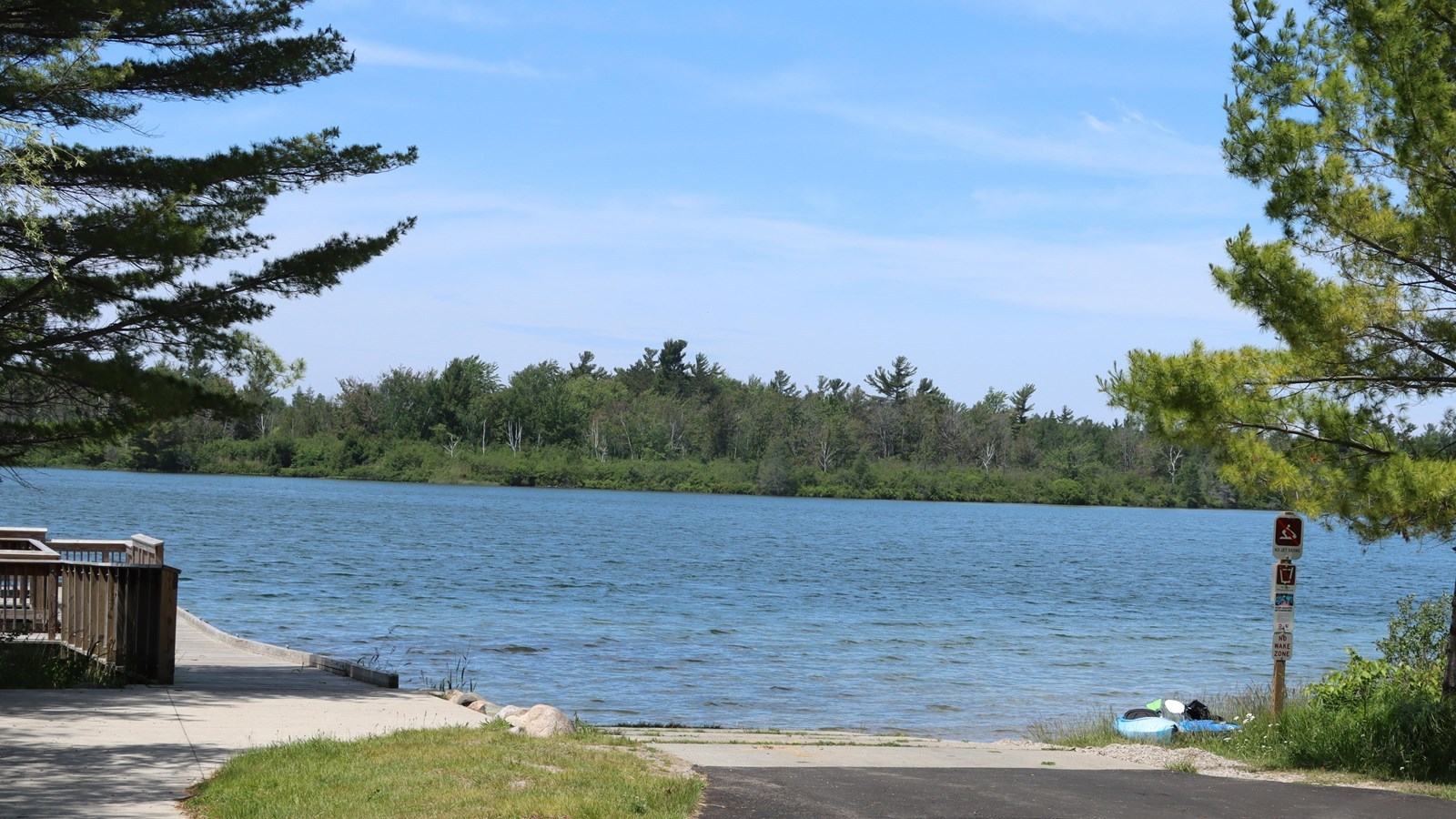
Loon Lake gives paddlers an accessible launch and a quiet inland-water option in Sleeping Bear Dunes. Its facilities help visitors focus on the lake rather than portage obstacles.
An inland lake with unusually useful facilities
Sleeping Bear Dunes National Lakeshore is celebrated for Lake Michigan beaches and high sandy bluffs, but it also protects a network of inland lakes with a gentler boating character. Loon Lake, near the Platte River in the southern part of the park, stands out because the National Park Service identifies it as one of the easiest inland lakes to access. For paddlers, the attraction is not a spectacular crossing or powerful engine, but the opportunity to launch a small craft with practical shore facilities close at hand.
The park describes a paved boat launch, a fishing dock and ample parking for vehicles and trailers. Most notably, Loon Lake has an accessible canoe and kayak launch with a transfer system and floating dock designed to help visitors board and disembark more safely. That feature can make the water more approachable for people who find conventional rocky or muddy launches difficult. It does not remove the need for personal judgment, suitable equipment and assistance where required.
Loon Lake is reached from the M-22 corridor, and the park also lists accessible toilets and nearby picnic facilities. Plan to review current opening arrangements before travelling, because seasonal operations and maintenance may affect any site. The lake is a sensible choice when a mixed-ability group wants a manageable shore base, but each paddler should still check whether the specific craft fits the transfer system and whether independent launching is realistic.
A good place for a measured short paddle
Smaller inland lakes can feel more forgiving than Lake Michigan’s exposed shore, although wind and changing weather remain real concerns. Begin with a short circuit or a simple out-and-back journey near the launch instead of planning an ambitious crossing. Watch the water surface before departure, agree on a turnaround point and stay within comfortable paddling range of a legal landing. The day’s conditions, not the accessibility of the dock, determine whether the journey is appropriate.
An accessible launch is most effective when the group allows time for careful transfers and keeps the approach area clear for other visitors. Prepare flotation equipment, paddles and seat adjustments before occupying the facility. If someone needs assistance, agree on the method before moving the boat, using a stable and familiar approach. The goal is confidence and dignity on the water, not speed through a queue. Avoid leaving gear in the way of people moving between parking and the dock.
Those who prefer to remain ashore can use the fishing dock or picnic surroundings to share the visit. The NPS identifies wheelchair-accessible elements at the site, providing opportunities for relatives and friends who have different interests. Keep anglers’ casting space free of drifting kayaks and avoid using the fishing dock as an unauthorised launch point. A well-planned gathering can combine boating, wildlife watching and an unhurried meal without forcing everyone into the same activity.
Discovering the lakeshore at low speed
The lakes of Sleeping Bear support a range of plant and animal habitats, and a kayak offers a chance to observe without engine noise. Stay far enough from nesting birds and shoreline vegetation that the visit does not disturb them. A shallow inlet can be interesting to photograph, but a grounded hull or scraping paddle can damage sensitive plants. The best natural-history experience often comes from drifting quietly and watching ordinary changes in the light along the shore.
The park’s wider inland-lake guide describes other bodies of water with different access arrangements, including locations with restrictions on power-driven vessels. Do not assume that a rule applying to Bass Lake, Otter Lake or another nearby water body automatically applies to Loon Lake. Check the official lake-specific guidance and posted notices for current limits. Inland-lake protection is often a patchwork of different restrictions, each tied to local habitat and visitor needs.
Pack the normal essentials even though parking is close: correctly sized life jackets, drinking water, sun protection, a dry bag for communications and suitable layers for cooler conditions. If a paddler expects to fish, confirm Michigan regulations and any park restrictions before setting off. Keep hooks and tackle secure on a small kayak, and never obstruct the accessible dock with rods or equipment. A relaxed pace is part of the attraction, but safety rules remain unchanged.
Make inclusive access part of the plan
For visitors who need accessible facilities, the useful question is how the whole journey works, from parking and toilets to the final recovery of the craft. The NPS describes a floating dock and transfer arrangement, but personal access needs vary widely. Review photographs and current park information in advance, and contact staff about details that matter to the intended group. A feature labelled accessible is a helpful starting point, not a promise that every individual transfer or vessel will work without assistance.
Weather is the final deciding factor. If wind makes the dock unstable or the water unpleasant, it is reasonable to postpone the launch and enjoy time ashore. Stay alert to other boats, give beginners plenty of space and establish an easy way to return to the same access point. A responsible plan should also explain who will move the craft back to the vehicle after the day, particularly if some paddlers cannot carry heavy equipment.
Loon Lake is valuable precisely because good access can make a gentle boating experience available to a wider range of visitors. A short paddle can feel generous when the practical barriers are thoughtfully managed. Use the designated facilities, protect shoreline habitat and prepare for the individual needs of the crew. With suitable weather and equipment, this inland lake offers a memorable alternative to more exposed water elsewhere in Sleeping Bear Dunes.
Primary planning source: National Park Service Sleeping Bear Dunes inland lakes access guide. Consult the original National Park Service guidance and current notices before departure.