
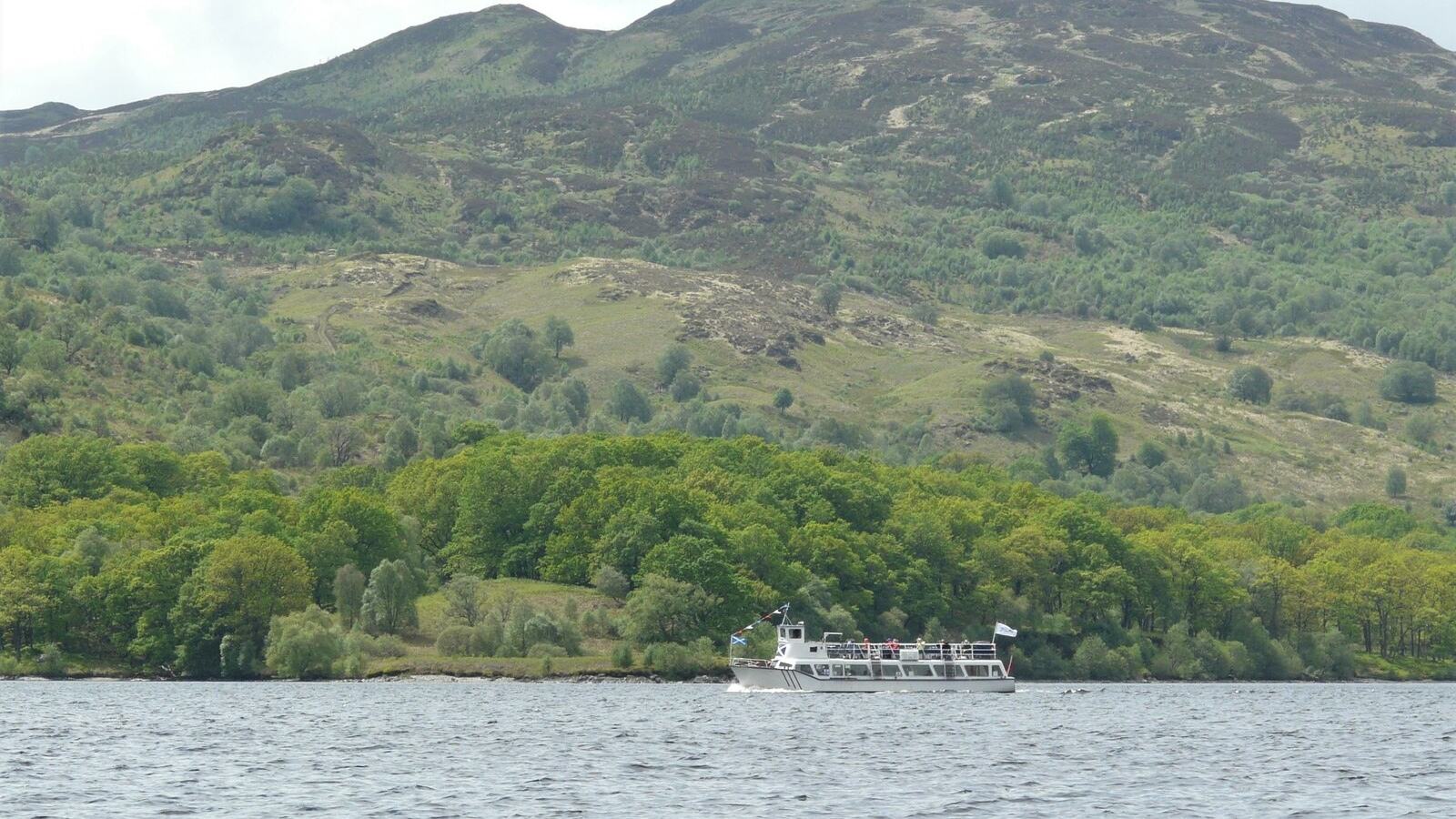
A small-boat guide to Loch Katrine in Scotland, covering approved kayak and canoe launching, Trossachs and Stronachlachar piers, cruises and local conditions.
Loch Katrine in Scotland's Trossachs is a memorable place to experience Highland scenery at water level, with forested slopes, islands and a long tradition of passenger-boat excursions. The location is associated with the historic steamship Sir Walter Scott, but the official Loch Katrine Cruises information also addresses people who want to bring their own canoes, kayaks and paddleboards. The important detail is that launching is controlled by place and time, not permitted at every attractive-looking bank. Forestry and Land Scotland describes the piers, cruise opportunities and ways to combine a trip afloat with cycling or walking. A carefully planned small-boat visit can make the most of the scenery without interfering with scheduled vessels or the environment.
A loch surrounded by Trossachs scenery
Loch Katrine occupies a distinctive landscape of wooded hills and valleys in Loch Lomond and The Trossachs National Park. From the shore, the water may seem almost enclosed by mountains, while a journey afloat reveals changing views of distant ridges and small islands. The atmosphere lends itself to slow travel, whether aboard a passenger vessel or in a responsibly launched kayak. But the loch is substantial enough for wind and cold water to present serious risks. An appropriate itinerary begins with observing the conditions rather than assuming that sheltered water near the pier represents the full length of the lake.
Starting at Trossachs Pier
Forestry and Land Scotland identifies Trossachs Pier as an important visitor hub, with public facilities, places to eat and opportunities to book cruises or hire bicycles. The pier is a sensible starting point for researching a visit, whether the aim is a scheduled excursion or an independent paddle. Its facilities do not imply that private boats may enter the slipway whenever they choose. Scheduled vessels require operating space and the visitor should respect signs, staff instructions and any restrictions in force. Allow enough time for parking, equipment preparation and a safety briefing before deciding what can be undertaken on the water that day.
The official private-launching conditions
Loch Katrine Cruises' published frequently asked questions state that private canoes, kayaks and stand-up paddleboards may use the slipway at Trossachs Pier from 5 pm onward. The operator also identifies an approved location at Stronachlachar, immediately southwest of the pier car park, where these craft may be launched at any time. This is a significant distinction from an unrestricted public shoreline. Visitors should confirm that these arrangements remain current and ask whether additional rules apply to the chosen activity. It would be misleading to assume that all private boats, including powered vessels, qualify for the same access. The published permission specifically concerns paddlecraft.
Why launch timing matters
Trossachs Pier handles commercial boat operations, and separating private paddlecraft launching from the busiest cruise period helps reduce potential conflicts. A visitor arriving with a kayak at midday should not assume that the operator will make an exception simply because the water looks calm. Planning an evening paddle raises other questions, including the amount of remaining daylight and the ability to return safely before darkness. Seasonal sunset times vary considerably in Scotland, and a late launch may be unsuitable in autumn or winter. Anyone wanting more time on the water could investigate the approved Stronachlachar location, while still checking parking, access and safety information.
Stronachlachar as an alternative
Stronachlachar sits toward the other end of the loch and has a pier and visitor facilities. For paddlers who want to use their own craft, the officially described launch location southwest of the car park is a useful alternative to the time-limited arrangement at Trossachs Pier. The suitability of a route depends on forecast wind, shoreline conditions and the crew's experience. An approved launch is not a guarantee that the entire loch can be crossed safely or that a private boat can land anywhere else. A modest out-and-back route close to a recognised access point may be more enjoyable than trying to reach a distant pier.
The historic steamship
The steamship Sir Walter Scott has been part of Loch Katrine's story for more than a century, and the official visitor information continues to present cruises aboard the vessel as a distinctive experience. A passenger trip provides a way to see more of the loch without taking responsibility for steering or navigating a small craft. It can also help visitors understand the scale of the water and how conditions may vary along its length. A private kayak should remain clear of the steamship and other excursion boats, particularly at their piers. The existence of a historic vessel is part of the charm, but its working schedule must be respected.
A choice between paddling and a cruise
Not every person in a holiday group will want to paddle, especially in cool or breezy conditions. Loch Katrine's cruise network allows visitors to choose a journey that suits their experience and comfort. Families with young children or passengers with limited mobility may prefer a booked excursion, while a capable kayaker may enjoy a short independent route from an approved launch. These alternatives are complementary rather than competing. The important decision is selecting the activity that matches the day's weather and the abilities of everyone involved. A shorter trip can be just as memorable if it leaves time to appreciate the surrounding landscape.
A bike-and-boat holiday tradition
Forestry and Land Scotland promotes the combination of a one-way boat journey and a return cycle or walk along the lochside, describing the route between the ends of the loch as approximately thirteen miles. This offers a way to see the landscape from two different perspectives without needing to manage a private boat. The official cruise operator may be able to explain bike carriage and hire arrangements, but schedules and capacity should be checked before booking. A family should also assess the walking or cycling distance realistically, including the needs of younger members. The combination works best when the transport and timing are planned together rather than improvised after arriving.
Small private kayak routes
An independent kayak outing should be planned around the approved departure point, conditions and the requirement to return safely. It is tempting to make a long journey along the loch because its shore appears continuous, but an exposed windward return may be much harder than the outward paddle. A practical first visit might involve a modest section close to the launch, with a clear turnaround point rather than an open-ended journey. Any intended landing must be checked for permission and suitability, not assumed from a map. A responsible paddler will also remain clear of cruise routes and protect shoreline habitat from unnecessary disturbance.
Cold water is a major consideration
Loch Katrine's mountain setting means the water can remain very cold, and the cruise operator's own FAQ warns visitors to take care when swimming. An unexpected capsize can impair movement and breathing, even if the air feels comfortable. A suitable buoyancy aid or lifejacket should be worn, and clothing should be chosen for immersion risk as well as weather. A solo paddler should be especially cautious, while groups should agree on what to do if someone falls in or a boat becomes disabled. It is better to shorten an outing than to rely on reaching a distant shore after a problem. Cold-water awareness is essential in any Scottish loch.
Wind and the narrow shape of the loch
Loch Katrine's long valley shape can make the wind direction particularly relevant to small craft. A route that is relatively easy with a following breeze may become much harder when paddling into it on the way home. Conditions may also be calmer near trees and bays than they are in an exposed section. Obtain a local forecast and observe the water before launch, then monitor conditions during the trip. A kayak can be difficult to control in unexpectedly strong gusts. If the forecast is doubtful, a passenger cruise or shore-based walk may be a safer choice for the day.
Staying away from commercial pier movements
Cruise boats need predictable access to the piers at Trossachs and Stronachlachar. A small craft should not drift into a docking approach or hover near a gangway while taking photographs. Wake and propeller wash may also affect a kayak, and the larger vessels' operators require room to manoeuvre. The official launching arrangements appear designed in part to keep these activities separated. Follow posted signs and instructions from the operator's staff. A visitor should also avoid tying an unattended canoe to an active passenger landing, even briefly. There are more rewarding ways to enjoy the water than creating unnecessary difficulty for other users.
Protecting wildlife and water quality
The Trossachs landscape supports wildlife and natural habitats that can be disturbed by a boat coming too close. A low-noise kayak is preferable to many powered craft in certain circumstances, but even paddle strokes and repeated shoreline landings can affect sensitive areas. Keep away from resting birds, avoid pushing into reeds and take rubbish back to an appropriate disposal point. A small craft should be cleaned and dried when moving between different water bodies, helping reduce the spread of invasive organisms. Respecting these details allows visitors to appreciate the loch's natural character while reducing the impact of their outing.
A visit beyond the water
The surrounding area offers opportunities for walking, cycling and enjoying the scenery ashore, which makes Loch Katrine suitable for a varied itinerary. A visitor can use the café at Trossachs Pier, choose a boat cruise or spend time on a forest path rather than making every part of the day dependent on a private paddle. The existence of alternative activities is particularly useful when wind or rain changes the plan. A holiday becomes more enjoyable when everyone has choices suited to their ability and interests. The best memories may come from an unhurried afternoon rather than an overly ambitious route across the water.
Current schedules must be checked
The cruise operator publishes timetables and practical information, but services can vary seasonally, and historic vessels may be affected by maintenance or other operational requirements. A November publication should not be treated as proof that every summer cruise or watersport arrangement is available today. Before travelling, confirm cruise departures, access at the desired pier and the latest private paddlecraft launching rules. A short phone call can be particularly valuable when using your own kayak because arrival time affects permitted launch access at Trossachs Pier. Check parking and any related fees as well, ensuring the plan is realistic before loading the boat.
Photography with care
Loch Katrine's islands, forest slopes and historic vessels make compelling photographic subjects. But a camera should not distract from keeping the boat under control or watching for changing conditions. A second person in a stable craft may be better placed to take photographs while another paddles, and all equipment should be protected against water damage. The most dramatic view may involve a broad composition rather than moving too close to wildlife or a cruise ship. If a private craft is approaching a busy pier, the operator should focus on navigating clear of commercial traffic, leaving the photograph for another opportunity.
An outing that respects the loch
Loch Katrine rewards small-boat visitors who plan around its official access arrangements rather than treating the entire shoreline as unrestricted. The combination of historic cruises, approved paddlecraft launching points and lochside cycling creates several ways to enjoy the landscape. A capable paddler might choose a quiet route from Stronachlachar or an appropriately timed departure at Trossachs Pier, while others may prefer Sir Walter Scott or another scheduled vessel. In every case, weather, cold water and respect for commercial traffic matter. The aim is to return with memories of the forested hills and open water, not an exhausting journey forced beyond the crew's ability.
Sources and photograph attribution
Official destination and boating guidance: Forestry and Land Scotland — Loch Katrine Activities; Loch Katrine Cruises FAQ. Current access, rules, weather and reservations must be checked independently before travel.
Photograph: Richard Sutcliffe — “Cruising Loch Katrine - geograph.org.uk - 6858397.jpg” (CC BY-SA 2.0), via Wikimedia Commons. Resized and converted to JPEG for editorial display. Source: https://commons.wikimedia.org/wiki/File:Cruising_Loch_Katrine_-_geograph.org.uk_-_6858397.jpg. Licence: https://creativecommons.org/licenses/by-sa/2.0. Original rights remain with the credited creator or as specified by the source and licence.
