
A boating guide to Loch Insh Outdoor Centre in the Cairngorms, covering canoe hire, lessons, family boat sizes, River Spey excursions, equipment and local conditions.
Loch Insh in Scotland's Cairngorms National Park offers a useful progression from a short recreational canoe hire to a longer river journey with local guidance. The Loch Insh Outdoor Centre, near Kincraig, advertises open canoes in several sizes, introductory lessons and a self-guided trip on the River Spey. Its official activity information describes 90-minute hire sessions on the loch and a separate Kingussie-to-Kincraig journey that typically takes three to five hours. This variety makes the area appealing to families, couples and groups whose experience differs. The important decision is not which route looks most dramatic on a map, but which activity is appropriate to the people travelling, the conditions and the skills they have already developed.
The loch is a natural introduction
A short canoe session on Loch Insh gives newcomers an opportunity to become familiar with paddling before thinking about a moving river. The centre describes the water near its beach as a suitable environment for learning basic techniques, with mountain views and a countryside setting. Staying within the designated hire area allows the group to focus on balance, timing and turning. A short outing can be rewarding without travelling far; visitors may enjoy a picnic afterwards or spend time exploring the area. A calm appearance is not a guarantee of safe conditions, however, and staff instructions remain essential.
A named centre provides clear choices
Loch Insh Outdoor Centre publishes canoe hire, group taster lessons, private sessions, longer courses and river trips on its own website. The provider lists two-, three- and four-seat canoes, allowing different family or group arrangements subject to each craft's capacity. It also supplies buoyancy aids as part of the rental. These details are practical, but every booking should still be confirmed for the intended date, particularly in November when seasonal schedules and weather may differ from summer operations. The centre's current programme can change, so a promotional description should not be read as a guarantee of daily availability.
Ninety minutes is enough for a first experience
The centre advertises a 90-minute canoe hire as an option for a calm morning or afternoon outing. For many visitors, this is a sensible length: it allows time to board, practise a few strokes, move along a suitable part of the shore and return without exhaustion. A newcomer should not be pressured into heading farther afield simply because the rental period permits it. Wind, cold and the comfort of younger passengers may change the practical distance. Ask staff which section is appropriate and how to signal if assistance is needed. A modest first outing can build enthusiasm for a future lesson or longer journey.
The right number of seats matters
The official listing describes two-seat canoes as suitable for couples or an adult and child, three-seat models for small families and larger options for groups who want to stay together. This is useful guidance but does not replace the operator's approved loading limits. The crew must sit where instructed and avoid sudden movement that destabilises the boat. A child may be happier with a shorter session than an adult expects, and correct flotation equipment needs to fit securely. A small group should choose a craft that everyone can handle comfortably instead of selecting the biggest available boat by default.
Introductory lessons offer more than a rental
Loch Insh's group taster lesson is described as a 90-minute introduction, available for participants from eight years old. The centre also offers private sessions that may accommodate younger children within a suitable family arrangement. A guided introduction can help beginners learn efficient strokes, steering and basic safety without being distracted by deciding where to go. It also allows the instructor to notice awkward technique or uncertainty before these become problems. Families should confirm current age requirements and whether an adult must accompany a child. The exact approach should reflect the participant's ability and confidence, not a generic expectation of immediate proficiency.
A longer course can build real confidence
The centre describes five-day paddlesports programmes for adults and children, beginning with basic handling on Loch Insh before progressing to more demanding manoeuvres and river experiences. Such a programme may appeal to visitors who want to learn rather than simply hire equipment. Participants can practise turning, controlling the craft and responding after a capsize, with instruction matched to the group. It is worth asking what skills are required at the start and how the later river sessions are adapted to weather and water levels. A course offers a structured progression, but it should not be confused with a licence to paddle independently in all conditions afterwards.
The River Spey changes the type of outing
The advertised self-guided Beaver Trail follows a section of the River Spey from Kingussie toward the Loch Insh beach. The centre describes it as a relatively gentle, Grade 1 journey, with transport arranged to the launch point. Unlike a simple lake hire, a river trip has a downstream direction, changing water movement and an established start and finish. It requires attention to obstacles, navigation and the consequences of missing the intended landing. The centre says no previous experience is essential for its supported option, but travellers should discuss fitness, coordination and conditions before relying on that description for their own group.
The trip involves real logistics
According to the centre's published itinerary, the self-guided trip departs around 10:00 a.m. and typically lasts three to five hours. The provider arranges transport from its base to Kingussie, after which participants paddle downstream to finish near Loch Insh. This makes a point-to-point experience practical without requiring guests to arrange their own vehicle shuttle. Before booking, confirm the meeting place, transport times, landing location and what happens if the group takes longer than expected. A river trip is most enjoyable when the logistical details are agreed rather than improvised after the canoe has been launched.
Equipment needs differ for a river excursion
Loch Insh states that the longer trip includes buoyancy aids, paddles and dry bags, with its staff offering guidance before departure. Visitors should also bring suitable waterproof clothing, a dry change, drinking water and food as recommended. A lightweight picnic can be pleasant on an authorised stop, but overloading a canoe makes handling more difficult. Ask about communication procedures and how to obtain assistance if someone becomes tired or unwell. A waterproof phone case can be useful, though mobile coverage should not be presumed everywhere. A well-equipped group is one that knows how to use its gear, not one that carries the most items.
A guided option extends farther downriver
The centre also advertises a guided Kincraig-to-Aviemore journey, accompanied by an instructor and followed by transport back to Loch Insh. The listed activity can be undertaken in a canoe, kayak or paddleboard according to arrangements with the provider. A guided trip may be a more appropriate choice for visitors who want a river experience without taking sole responsibility for route decisions. The provider's published group size is between four and sixteen, and booking requires direct contact. Travellers should confirm the current route, duration, price and water-level criteria before committing, as the most suitable departure will depend on conditions.
Wildlife observation rewards restraint
The centre's description of the Spey route mentions ospreys, waterfowl, otters, swans, deer and the possibility of seeing beavers. These are wildlife-observation possibilities, not guaranteed sightings. Paddlers should avoid approaching an animal closely or trying to follow it through reeds for a photograph. Nesting birds may be especially sensitive to repeated disturbance near their sites. Binoculars allow observation from a respectful distance and reduce the temptation to change course. A quiet canoe can create memorable encounters when the occupants allow wildlife to behave naturally. The most responsible groups leave no litter and minimise noise around sensitive areas.
A river may feel gentle while still demanding attention
The operator describes the selected Spey stretch as relatively tranquil, but moving water introduces risks different from those of a lake. A canoe can be carried toward a fallen tree, a shallow gravel bank or another obstruction, particularly when paddlers are distracted. Current speed and water levels may change after rain. A participant should understand the guide's or operator's instructions on steering, avoiding obstacles and safely reaching the designated landing. Nobody should attempt an unsupervised river route merely because the activity page uses reassuring language. The local conditions on the day are more important than the route's general classification.
The weather in the Cairngorms is variable
Scottish Highland weather can change quickly, and a sunny start does not guarantee a comfortable afternoon. Wind may make a canoe hard to control on open water, while rain may affect visibility and water conditions. Check forecasts specific to the area and accept the centre's decisions if a trip must be changed or cancelled. A waterproof outer layer and spare clothing are important even during summer. Those joining a longer river trip should ask how the operator assesses water levels and whether alternative activities are offered. An itinerary with flexibility is safer and ultimately more enjoyable than one that depends on an inflexible timetable.
Cold water can affect even strong swimmers
A capsize in cool Highland water can become serious before a paddler has time to reach a distant shore. Wear the buoyancy aid supplied by the centre and understand the recovery procedure appropriate to the chosen craft and route. Clothing should reflect the likelihood and consequences of immersion rather than simply the temperature in a sheltered car park. Participants with limited mobility or swimming confidence should discuss their needs directly with instructors. A group must also understand how to stay together and summon assistance if someone needs to stop early. These ordinary precautions support a calm, enjoyable experience on the water.
Shore activities provide a natural break
The Loch Insh Outdoor Centre also promotes a restaurant, accommodation and other recreational options. This can make it convenient for a family to combine one main water activity with time ashore. A participant who has spent several hours paddling may appreciate a relaxed meal rather than another demanding excursion. Groups with mixed interests can choose different supervised activities while arranging a common meeting point. Opening times and facility access should be checked separately, especially outside the main visitor season. A flexible schedule leaves room to enjoy the location without treating every part of the day as a timed challenge.
Responsible access protects the river
Outdoor access in Scotland brings responsibilities to landowners, residents and wildlife. Use approved launching and landing points, follow local guidance on protected areas and leave shore vegetation undamaged. A picnic stop must not obstruct another user's access or introduce waste into the water. Clean equipment appropriately when moving it between water bodies to reduce the risk of transporting invasive species. The ease with which a canoe can reach a quiet bank should not be interpreted as permission to camp or light a fire wherever the scenery is attractive. Respectful behaviour helps preserve the appeal of the Spey and the loch.
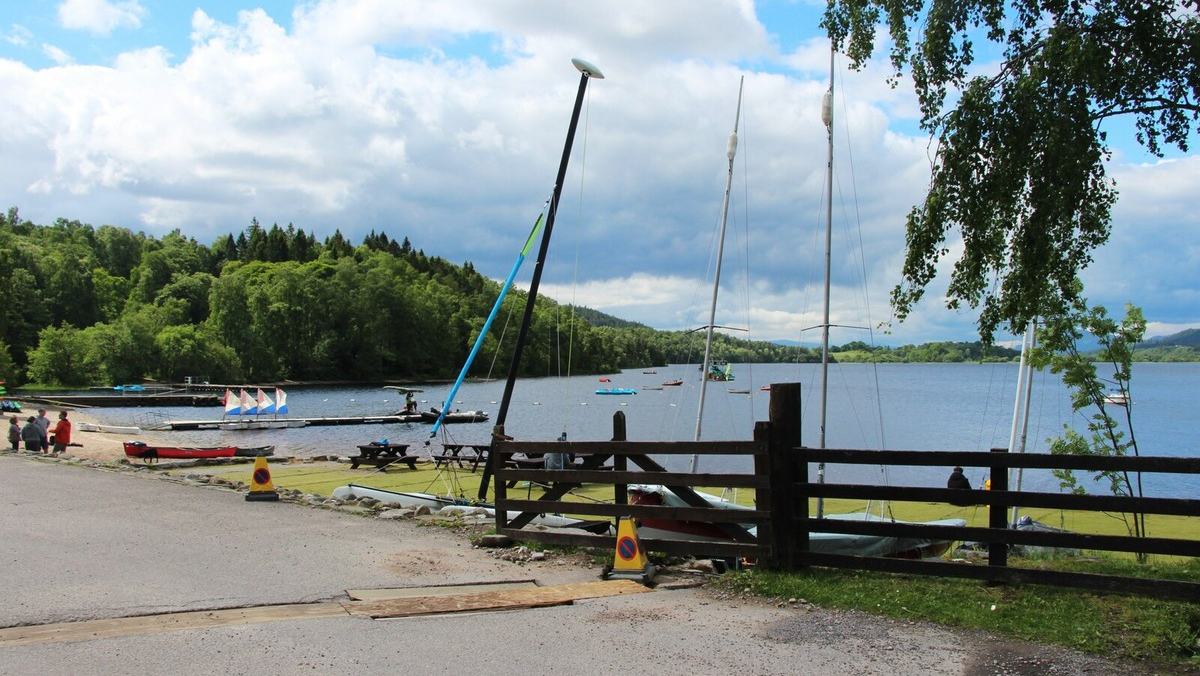
A photograph of actual Loch Insh watersports
The lead image, “Water-sports at Loch Insh,” was made by Alan Reid and published through Wikimedia Commons under Creative Commons Attribution-ShareAlike 2.0. It depicts the actual Scottish destination and its water-based recreation, rather than an unrelated Highland lake. The photograph does not establish the centre's current fleet, water conditions or availability on 23 November 2026. The original photographer, source and licence are credited. Detailed descriptions of hire sizes, taster lessons and river options come from Loch Insh Outdoor Centre's own published programme, which remains subject to direct confirmation.
Choosing the right Loch Insh experience
Begin with the centre's canoeing page and choose between a 90-minute hire, introductory lesson or longer River Spey adventure. Tell the staff about all participants' ages, paddling experience and any needs that could affect equipment or route choice. Confirm transport for a river trip, understand the current weather and water-level rules, and allow time for a change of clothes afterwards. A first visit may be most rewarding when it remains on the loch, while a later holiday can build toward an organised river journey. Loch Insh offers that progression within one beautiful Highland setting, provided the crew respects the limits of its skills and the changing conditions.
Sources and photograph attribution
Official destination and boating guidance: Loch Insh Outdoor Centre — Canoeing, Lessons and River Trips. Current access, rules, weather and reservations must be checked independently before travel.
Photograph: Alan Reid — “Water-sports at Loch Insh - geograph.org.uk - 7792578.jpg” (CC BY-SA 2.0), via Wikimedia Commons. Resized to JPEG 1200×800 for editorial display. Source: https://commons.wikimedia.org/wiki/File:Water-sports_at_Loch_Insh_-_geograph.org.uk_-_7792578.jpg. Licence: https://creativecommons.org/licenses/by-sa/2.0. Original rights remain with the credited creator or as specified by the source and licence.
