
A practical guide to kayaking Loch Faskally at Pitlochry, including boat-station hire, forest scenery, local operators, dam safety and seasonal planning.
Loch Faskally near Pitlochry in Perthshire offers a compact but rewarding place for a small-boat outing, with wooded banks, reflections and a landscape shaped by Scotland's hydroelectric history. Pitlochry Boating Station advertises kayak hire from its lochside base, making it possible to enjoy the water without bringing a boat from home. Guided paddling experiences are also promoted by outdoor providers in the area. The loch is smaller than some of Scotland’s famous Highland waters, but that does not make a trip automatically risk-free. Visitors should consider cold water, weather, the movement of other craft and the correct place to launch. The strongest itinerary may be a simple, unhurried paddle followed by a walk through the surrounding woodland.
A loch beside Pitlochry
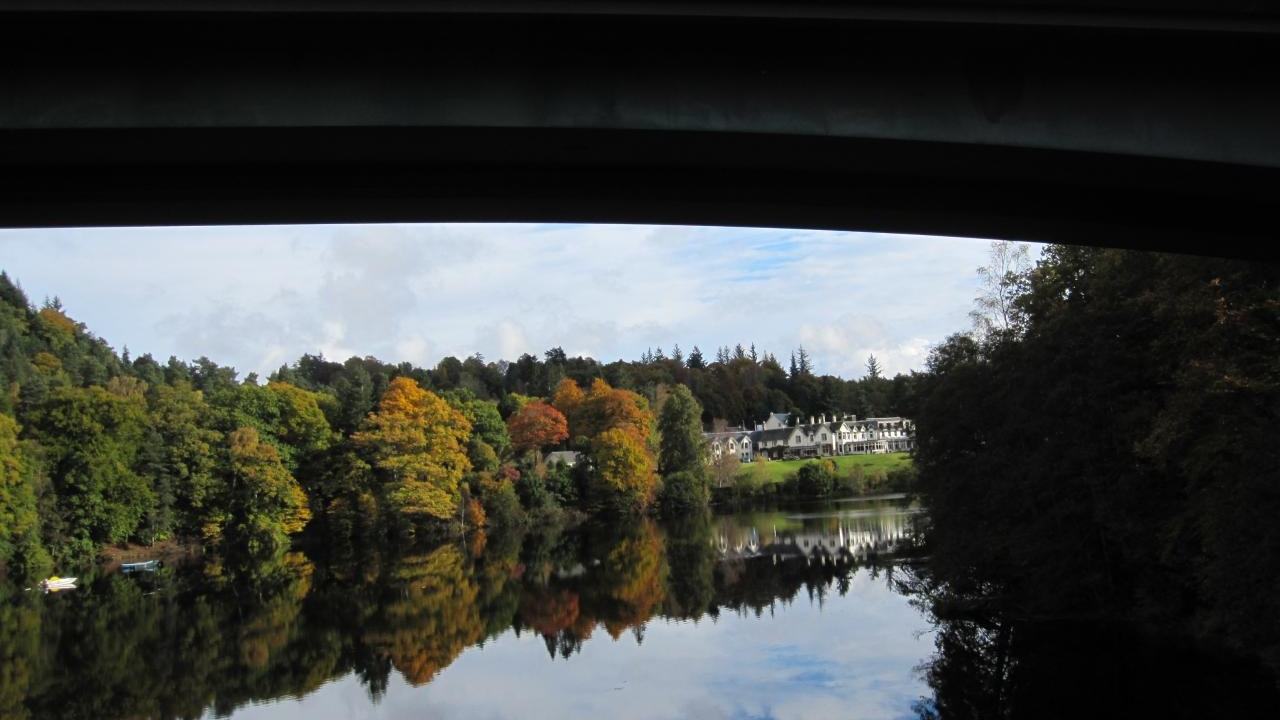
Loch Faskally lies close to the town of Pitlochry and the wooded landscape of the Tummel valley. Its accessible position makes it appealing to travellers who want to add a water activity to a holiday without travelling deep into a remote mountain area. From a kayak, reflections and bankside trees provide interest at a pace that is difficult to reproduce on a road journey. The loch can appear particularly attractive when autumn colours are reflected in calm water. That seasonal beauty is no guarantee of warm conditions, however. The shorter days of autumn can make planning and a conservative return time especially important.
A landscape created by hydroelectric engineering
Loch Faskally was formed as part of the Tummel hydroelectric scheme associated with the Pitlochry dam. Understanding this history adds an interesting dimension to a boat trip. The water is part of an engineered system rather than an entirely untouched natural loch, and changes in level or current can be relevant near infrastructure. A recreational kayak should keep well clear of dams, intakes, barriers and any prohibited operating areas. Do not treat an apparently calm surface as permission to approach working structures. A guided tour or established local hire provider can explain which parts of the loch are suitable and how to avoid hazards.
Hiring at Pitlochry Boating Station
The local boating station's website lists recreational kayak hire among its watersports offerings, with a base beside the loch and other activities available nearby. This creates a useful starting point for visitors who do not own a suitable craft. An operator can explain the kayak options, the equipment supplied and the permitted operating area. The published website describes different recreational models, but visitors should check availability rather than assume a particular one is offered on the intended date. A good hire includes a safety handover and clear return instructions. It is better to resolve questions about weather and equipment ashore than while drifting away from the launching point.
Choosing the correct kayak
Different recreational kayaks suit different people and conditions. A stable, open sit-on-top design may appeal to beginners who want a relaxed outing, while other models can require more confidence and skill. The right choice depends on a participant's weight, mobility, experience and the provider's assessment. Passengers should not overload the craft or carry loose equipment that can shift and affect balance. Ask how to turn and stop, where to place feet and what to do if the kayak capsizes. The first few minutes near the launch should be used to become comfortable with the boat rather than immediately attempting a long route.
Guided outings provide an alternative
VisitScotland and local adventure operators describe guided kayaking on Loch Faskally, often linking the water with the surrounding forest and river scenery. This can be a good choice for people who want both instruction and interpretation of the area. A guide may identify suitable routes based on the forecast and the capabilities of the group, while also helping inexperienced paddlers manage turns and stopping. Not all advertised tours depart from the same point or cover the same distance. Ask about the exact meeting place, duration, minimum age and whether any section involves a river rather than quiet loch water. Clear expectations make an organised experience more enjoyable.
Faskally Wood from the water
The woodland around the loch is an important part of the setting, with trees and reflections creating a sense of enclosure even though Pitlochry is nearby. Paddling offers a low viewpoint from which visitors can appreciate the trees and changing light without needing to cover much distance. Wildlife may appear near the shore, but a kayak should not be used to follow animals or enter sensitive vegetation. Remaining on a suitable route allows the crew to enjoy the atmosphere while protecting bankside habitat. A short outing can be especially rewarding for photographers when conditions are calm, provided that taking pictures does not interfere with the responsibility to steer safely.
What makes the water appear calm
A forested shoreline can reduce the apparent effect of wind near the bank, while a more open section may experience gusts and waves. A paddler should not judge conditions solely by watching an inlet from a café or walking path. Check the weather and observe the water at the intended launch. Even a small change in wind direction can make returning against the breeze much more tiring, especially for someone still learning the basic strokes. Choose a conservative turnaround point and retain time to return before the hired craft is due back. The best trip finishes comfortably, not with the crew rushing or paddling exhausted into worsening conditions.
Cold water in Perthshire
The water can remain cold even when the air is mild, and immersion creates risks that should be understood before launching. Wearing properly fitted flotation is sensible for every paddler, including adults who consider themselves strong swimmers. Clothing should suit the chance of becoming wet, and a dry layer may be valuable afterward. A waterproofed phone or other communication method can provide a way to ask for help, but it should not replace a basic rescue plan. Ask the operator to explain what to do after a capsize and how assistance would be arranged. A short outing is most enjoyable when participants have the confidence to handle an unexpected problem calmly.
Children and family experiences
A group with children should choose the session and equipment that best suit the youngest participant rather than the most ambitious adult. A kayak may be exciting to a child who has never used one, but repeated waves, wind or cold can quickly make the experience uncomfortable. Check minimum-age rules and whether tandem or supervised options are available. Each child needs correctly sized flotation and clear instructions about sitting safely. An introduction that lasts less than an hour may provide enough novelty for a successful first trip. If anyone becomes tired or anxious, returning to the hire base early is a good decision rather than a disappointment.
The appeal of woodland reflections
Loch Faskally can be particularly beautiful when clouds, trees and buildings are reflected across its water. A photograph taken from a kayak may reveal a different composition from one made on a footpath, especially where a bridge frames the loch or the bank curves into the distance. A paddler should never stop monitoring other craft to frame an image. A camera can be handled by a passenger or during a suitable pause when the boat remains under control. Waterproof cases reduce the consequences of a dropped phone, but they cannot prevent an accident caused by leaning too far over the side. Enjoying the scenery without distraction is often the better reward.
Other boats and shared access
The boating station also advertises rowing boats, pedal craft and other recreational vessels, so kayaks may not be the only boats moving near a popular launching area. A small paddlecraft should maintain a lookout and avoid crossing immediately in front of another boat whose operator has limited visibility or manoeuvring space. Keep clear of pontoons while other visitors board, and do not obstruct staff moving hire equipment. If powered boats are operating, wake can affect a recreational kayak even at moderate speeds. All visitors benefit from predictable movement, courtesy and a willingness to wait for a safe opportunity before leaving or entering the landing area.
Keeping clear of hydroelectric hazards
The loch’s engineered nature makes it important to understand any restrictions near the dam and related infrastructure. Visitors should follow signage, barriers and the operator’s route instructions rather than assuming an open stretch of water is unrestricted. Water movement and access conditions may differ near structures, and a kayak lacks the power to escape every situation easily. The sensible approach is to remain within a recognised leisure-boating area and never paddle toward a dam, sluice, intake or other operational feature. Local advice is more reliable than an old route shown on a recreational map, especially when water levels or operating conditions change.
A combined walking and boating day
Pitlochry offers woodland walks, viewpoints and other attractions that can complement a short paddling session. A visitor may enjoy the loch from water level in the morning, return the kayak and then walk through Faskally Wood or spend time in the town. This provides two perspectives without requiring a long or demanding boating itinerary. It also creates a useful alternative when wind or rain makes the kayak unsuitable. A flexible programme is particularly valuable in Scotland, where conditions can change rapidly. Choosing a shore activity is never wasted time when the aim is to experience the character of the place rather than complete a fixed distance on water.
Nature and responsible access
The forest and bankside vegetation contribute to the loch’s atmosphere and deserve care from everyone using the water. Avoid entering reedbeds, disturbing nesting birds or dragging a hull through sensitive plants. A small craft's shallow draft should not be used as a reason to land where access is unclear. Carry litter and food packaging back to the correct disposal point and keep fishing line or other equipment secured. Visitors bringing a private boat from another water body should clean and dry it before launching. These habits reduce avoidable impacts and make the loch a pleasant place for residents, wildlife and future travellers.
What to check before hiring
Before booking, confirm opening hours, rental duration, the available kayak types, required experience and the equipment included. Ask what happens if the weather becomes unsafe and whether the booking can be moved or cancelled. The operator should explain exactly where to launch, which part of the loch may be explored and how to get assistance. Visitors travelling in November should be especially cautious about assuming that summer services remain available, as short daylight and colder water can affect the operating season. A destination website confirms that an activity exists; it does not guarantee that a boat is waiting on any particular afternoon.
Choosing a journey that feels complete
Loch Faskally offers a satisfying small-boat experience because it can be enjoyed without a large vessel or a complicated voyage. An established hire base, forest scenery and the option of guided kayaking create opportunities for different levels of experience. The correct route is one that suits the crew and avoids hydroelectric structures, busy landing areas and changing weather. A comfortable paddle followed by a walk or meal in Pitlochry can provide more enjoyment than a long outing undertaken simply to reach a distant point. For leisure boaters, the loch's value lies in slowing down and seeing a familiar Scottish landscape from the water.
Sources and photograph attribution
Official destination and boating guidance: Pitlochry Boating Station — Kayaking Hire on Loch Faskally. Current access, rules, weather and reservations must be checked independently before travel.
Photograph: Glen Wallace from Inverness, Scotland — “Loch Faskally (8125808365).jpg” (CC BY-SA 2.0), via Wikimedia Commons. Resized and converted to JPEG for editorial display. Source: https://commons.wikimedia.org/wiki/File:Loch_Faskally_(8125808365).jpg. Licence: https://creativecommons.org/licenses/by-sa/2.0. Original rights remain with the credited creator or as specified by the source and licence.
