
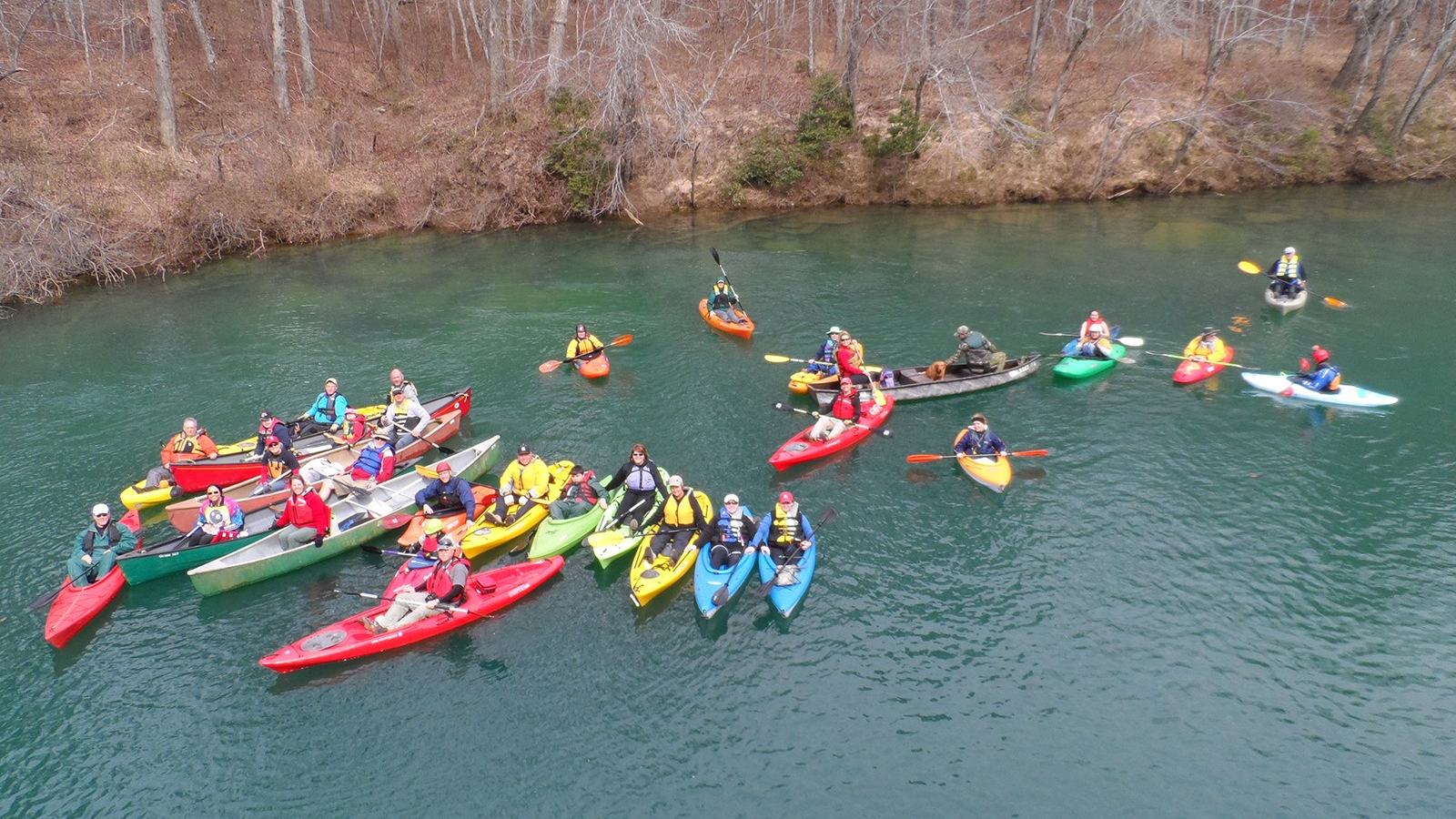
Little River Canyon mixes upper-river paddling with powerful canyon whitewater. Seasonal flows, changing water levels and the falls make careful route selection essential.
A river with two very different personalities
Little River Canyon National Preserve in Alabama offers an extraordinary place to see wooded cliffs and fast water from a kayak. It is also a destination where an apparently simple decision about where to launch can separate an enjoyable paddle from an expert-only whitewater expedition. The National Park Service distinguishes the river above Little River Falls from the canyon below, and visitors should make that distinction before loading boats.
The watercourse is strongly influenced by rainfall rather than a steady release from a managed reservoir. Its river level and difficulty can therefore change dramatically within a short period. A section that looks inviting during a visit from the roadside may be unsuitable after heavy rain, while a stretch that carried kayaks last month can become too shallow to paddle during a dry spell.
Read the route rather than the scenery
The upper river, in the Wildlife Management Area above the falls, includes sections used by canoeists and kayakers with suitable experience. The National Park Service describes the accessible upper reaches as more forgiving than the canyon, although conditions still vary and some whitewater demands sound technique. Even a modest rapid needs a crew able to control direction and recognise a dangerous obstacle.
The canyon below the falls is a fundamentally different undertaking. Park guidance identifies Class IV, V and even VI rapids in its challenging reaches, and says the lower canyon is appropriate only for highly skilled paddlers. A family group accustomed to flatwater kayaking should not interpret the existence of a launch or the presence of other boats as evidence that an entire downstream route is appropriate.
The falls are a planning boundary
Little River Falls should be treated as an unmistakable navigational boundary, not as a landmark to approach casually while drifting downstream. Before the trip, identify the exact take-out and confirm that every member of the party knows it. If an intended stretch terminates above the falls, it is the skipper's responsibility to leave enough space and time to land safely and recover the craft.
The best paddling trip is not necessarily one that covers the most river. On a watercourse with steep gradients and rapidly changing sections, stopping short of the difficult canyon can produce a more satisfying day than committing to a run that exceeds the weakest paddler's abilities. Use the park's route guidance as the starting point, and seek experienced local advice on current conditions.
Winter and spring bring the water
According to the National Park Service, river travel most commonly becomes possible from about November to April, when rainfall typically provides the necessary flow. In summer and autumn, parts of the river can be extremely shallow, and severe drought can leave sections with little water. These are broad seasonal patterns rather than dates on which a river trip can be promised.
The timing creates a paradox for visitors. Higher water may make paddling possible but also magnifies the force of rapids and changes the character of rescue. The sensible approach is to examine both the recent rainfall and the present river level, rather than assuming that a wet month is automatically a safe month. A winter outing also calls for suitable clothing and an immersion plan.
Do not rely on one gauge reading
The National Park Service warns that its river gauge readings may not fully reflect what is happening upstream and can lag sudden changes. Rapidly developing storms elsewhere in the drainage can produce a rise without giving paddlers a comfortable amount of warning. A reading checked at home is a useful planning clue, not a guarantee about every channel or rapid several hours later.
Check the forecast close to departure and identify a straightforward cancellation threshold for your group. If water is rising unexpectedly or a storm is approaching, the safest decision may be not to launch. Once afloat, take changes in water colour, current and floating debris seriously. Do not let the cost of a journey or the expectation of a spectacular photograph push the group into questionable conditions.
Equipment must match the consequence
On moving water, correct safety equipment is part of the paddling system rather than an optional accessory. The park recommends a helmet and personal flotation device, while suitable river clothing, secure footwear, a whistle and emergency planning become especially important on remote or technical sections. Group members should already know basic manoeuvres and what to do after a capsize; a difficult canyon is no place for first instruction.
Communication is another concern because mobile coverage can be unreliable in parts of the preserve. Leave a detailed float plan with a responsible person, including launch and take-out, the participants, the expected finish time and a contact procedure if overdue. A paddler should also carry suitable navigation information and enough dry clothing and water to manage a delay onshore.
Protect the river while enjoying it
Little River's appeal lies partly in the narrowness of the route through a natural landscape. Land at durable access points, keep waste out of the water and avoid treating the riverbank as a place to leave equipment or litter. A quiet paddle offers the chance to notice birds, rock formations and the changing forest without creating a disturbance of its own.
For an appropriately experienced crew, this Alabama river can offer a memorable day in a remarkable setting. Its rewards are earned by recognising the substantial difference between the upper river and the expert canyon, and by treating rain, gauge information and changing conditions as central elements of the itinerary rather than details to consider after arrival.
For changing conditions and access rules, consult the official National Park Service Little River Canyon paddling guide. Hero photograph credited to National Park Service, kayaks and canoes on the Little River.