
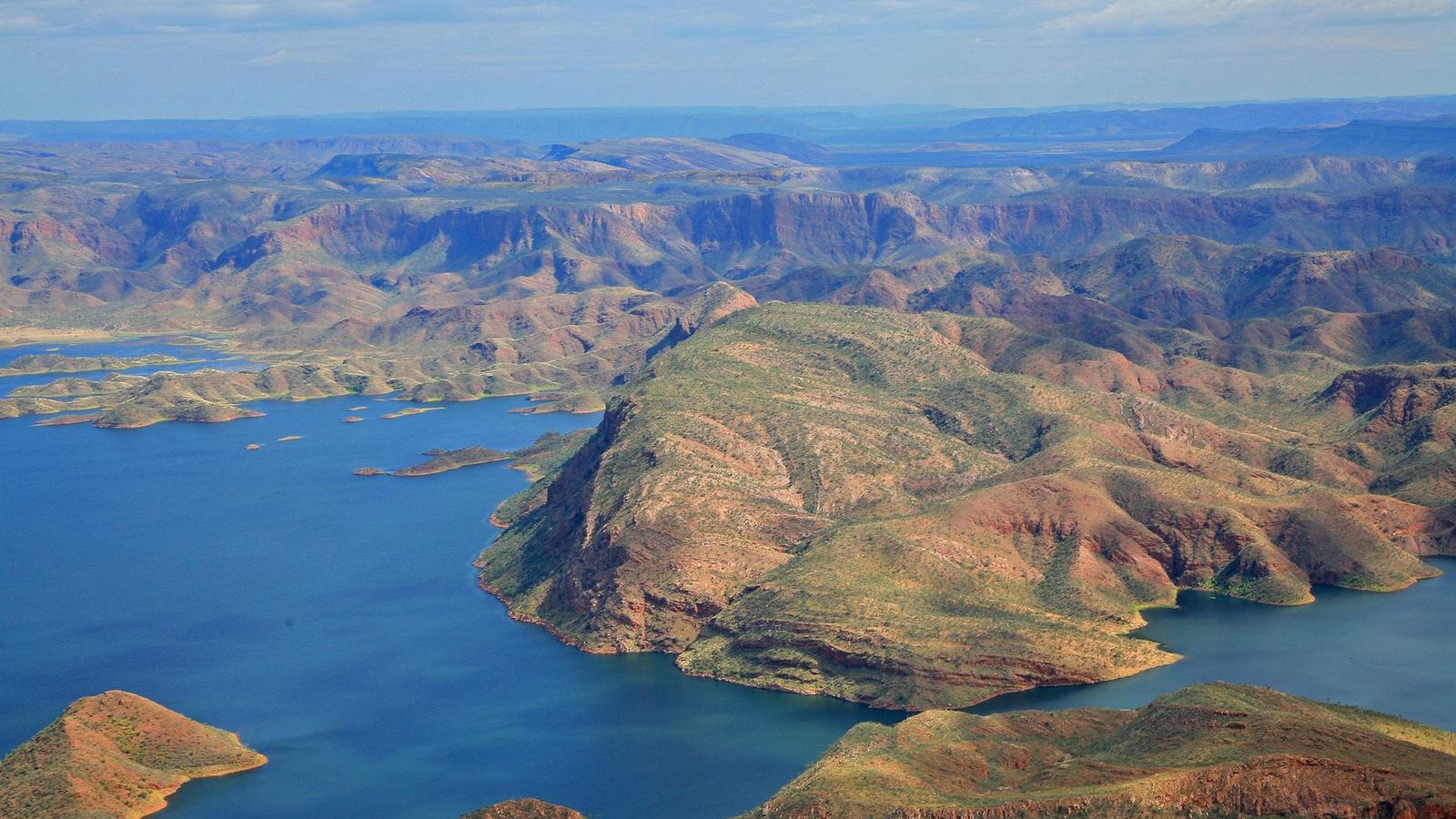
Original Lake Argyle lifestyle feature covering sunset excursions, Kimberley reservoir scenery, boat choices, wildlife and practical safety.
A reservoir on an extraordinary scale
Lake Argyle brings a wide-open boating landscape to the eastern Kimberley of Western Australia. Set among rugged dry-country slopes, the lake offers a change of rhythm from a coastal harbour or a short river excursion. Australia's North West, the region's official tourism organisation, describes sightseeing cruises, sunset trips and options to hire smaller paddle craft. Such experiences are established attractions, but the availability of any particular departure, rental or water activity must be checked directly. The pleasure of a well-paced visit comes from watching the sun move across the water and understanding the contrast between a large reservoir and the country surrounding it.
Where Lake Argyle fits into a Kimberley journey
Lake Argyle lies east of Kununurra in a region where travel distances are significant and weather can govern daily plans. A tourist may combine the lake with other Kimberley destinations, yet the boat outing deserves its own space in the itinerary. Confirm the drive, meeting point and boarding time rather than assuming a cruise departs from the nearest roadside lookout. Roads, tour pickup locations and distances to accommodation should be checked for the actual date. An afternoon on the water can be memorable even without a full day of activities. Trying to squeeze it between distant excursions may replace the sense of space with unnecessary haste.
Why sunset trips attract visitors
As the sun lowers, the colour and apparent shape of the hills around the reservoir can change. Reflections may turn warm or subdued, and a landscape that seems stark in the middle of the day can become more textured. Sunset cruises are promoted by regional tourism sources because the water offers a distinctive place to observe that transformation. A photograph of golden reflections does not guarantee the same appearance on a particular evening: cloud, wind, season and the route will make a difference. Choose a reputable operator that gives a realistic return time, provides flotation equipment and communicates what happens if the weather is unsuitable.
Understanding the dam and lake
Lake Argyle is associated with the Ord River scheme and its dam, which helped create the reservoir that visitors explore today. This managed-water context matters to boaters. Water levels, operating restrictions and the suitability of certain shorelines may vary. The lake should not be treated as an unregulated natural swimming pool or a body of water where any apparent bay can be entered without planning. Ask for current navigation advice and keep the vessel within approved routes. Learning the history of the reservoir adds a useful layer to the excursion, connecting the scenic hills to an important water-management landscape in northern Australia.
A boat-level view of the islands
The shoreline and islands create changing silhouettes as the vessel moves through the lake. Some shapes seem close until the boat approaches and the scale becomes clearer, while others emerge from behind a headland. From the water, visitors can appreciate the interaction between rocky slopes and the lake surface without attempting to land. A guided cruise can be particularly useful because the skipper knows where navigation and wildlife viewing are appropriate. Avoid pressuring a crew to visit an unplanned island or stretch of bank for photographs. The richness of the scenery comes from the journey, not a promise to reach every visible feature.
Choosing between a cruise and a paddle
A passenger cruise and a kayak outing offer very different forms of boating. A cruise suits visitors who prefer an organised route and a skipper responsible for navigation, while paddling can bring a closer relationship with the water at the cost of more physical effort and exposure. Australia's North West lists opportunities for small-craft hire in the area, but travellers must confirm what is available and where independent use is permitted. Beginners should ask about instruction, accompanied routes and rescue arrangements. A broad reservoir can look calm from a viewing platform while wind or distance makes self-propelled travel demanding away from shelter.
The significance of wind and heat
The Kimberley climate can involve high temperatures, strong sun and changes in wind. A boat trip should be planned around those conditions instead of assuming a warm destination is automatically easy. Heat may affect comfort and hydration even when passengers are seated, while wind can produce difficult waves for small paddle craft. Check the local forecast and operator guidance close to departure. Carry sufficient drinking water, suitable clothing and sun protection, and avoid exertion beyond the group's capability. An afternoon scheduled for sunset may still involve significant exposure before the light softens. Cancellation for unsafe conditions is a professional decision, not a failed holiday.
Wildlife observation at a respectful distance
Regional tourism promotes the broader lake as a destination for observing wildlife, but a trip cannot promise any particular animal. Watch birds and other creatures from a distance that allows them to behave naturally. Do not seek a close approach, feed animals or encourage a skipper to alter a safe route purely for photographs. Visitors should ask the operator about wildlife hazards and where entering the water is or is not safe. Local knowledge is particularly important in northern Australian environments where conditions and wildlife concerns can change. Binoculars may provide a better experience than a boat making repeated approaches to a resting animal.
Swimming requires explicit local advice
Travel descriptions and promotional photographs may show people entering water during a cruise, but swimming is an activity that requires current permission, appropriate supervision and a suitable location. Never jump into the lake on the basis of an old travel account or because another passenger seems comfortable. Ask the skipper about water depth, nearby craft, wildlife considerations and the operator's approved procedures. A passenger who does not swim can still enjoy the full scenic value of the trip. Safety depends on conditions and informed decisions on the day, not an assumption that a broad body of freshwater is free of hazards.
The comforts that matter on a cruise
Before booking, ask whether shade, seating, drinking water, toilets and weather protection are available on the actual vessel. Some cruises may serve refreshments or include other activities; these should be treated as booking-specific details, not universal features of Lake Argyle trips. Families may need suitable flotation devices for children, while older travellers might ask about steps and boarding assistance. Confirm whether the boat has space for small bags and whether passengers can move safely to take photographs. A comfortable trip starts with choosing a service that matches the party rather than buying an itinerary because of an appealing sunset image.
Photography without compromising balance
Lake Argyle's broad horizons reward patient observation, and good photographs can be made without leaning across the boat or shifting weight unexpectedly. Keep phones and cameras secured and follow any instructions about standing or moving on deck. If a skipper slows near an island, remain behind the designated barriers or seated where directed. A wide view of water and hills may convey the place more effectively than an extreme close-up. Photographs selected for an editorial article should have verified rights and must be described as contextual if they show a historical rather than a current cruise. The aim is an accurate sense of place.
Combining water and shore perspectives
A lake visit can include a suitable lookout or a short permitted walk as well as the boat journey. Shore views reveal the reservoir's broad shape and help visitors understand the landscape that appears differently from the water. Check current access, heat conditions and the length of any walking route before adding it to the day. A trail may be better early in the morning than immediately before an afternoon cruise in hot weather. There is no need to fill every hour. Allow a quiet interval for lunch, rest or watching the changing light, especially if a long drive follows the excursion.
Booking the right operator
Use the official tourism site's current listings as a starting point and confirm details directly with the chosen provider. Ask for the precise departure point, included services, price, group size, cancellation policy and restrictions for children or guests with reduced mobility. A sunset cruise may run on different terms from a daytime sightseeing trip. If kayaking is advertised, establish whether the equipment is hired independently or supplied only as part of a guided activity. Ask what happens in strong wind or severe weather. Clear answers about practical matters are a more reliable sign of a good operation than a promise of spectacular photographs.
Responsible tourism beside the water
The Kimberley landscape carries ecological and cultural significance that deserves respect. Follow instructions about protected areas, Aboriginal cultural heritage and permitted shore access. Do not take rocks or other natural objects, leave rubbish, or land on an island without authorisation. Keep noise reasonable near wildlife and support established local services rather than improvising access across private or sensitive land. Pack out anything brought aboard when the crew requests it. A visitor's small choices matter because a scenic shoreline may seem empty while still forming part of a vulnerable environment used by local communities and wildlife.
An illustrative afternoon on Lake Argyle
A sensible day might begin with time to inspect the lake from shore, followed by a drive to the operator's confirmed boarding point. Arrive in time to check tickets, fit any required safety equipment and listen to the briefing. During the cruise, focus on the scenery, allow room for other passengers and follow the crew's instructions. On return, leave sufficient time for the journey back to accommodation rather than assuming a departure will end at the exact minute advertised. This is an example of practical pacing, not a specific 2026 timetable or guarantee that a sunset departure is available.
The value of an unhurried lake journey
What makes Lake Argyle special is the feeling of distance and scale. A vessel can move through vast water while the hills seem almost motionless, inviting a pace unlike that of a busy coastal excursion. The best trip balances scenic discovery with realistic attention to heat, wind, wildlife and navigation. Australia's North West provides the grounded regional starting point; the operator's current guidance determines what can actually happen on the day. Whether viewed from a guided cruise or a properly planned paddle, the reservoir rewards visitors who watch carefully and treat the surrounding Kimberley landscape with respect.
Sources and photograph attribution
Official destination and boating guidance: Australia’s North West — Lake Argyle. Current access, rules, weather and reservations must be checked independently before travel.
Photograph: W. Bulach — 00 2098 Western Australia - Lake Argyle.jpg (CC BY-SA 4.0) via Wikimedia Commons. Original image resized as JPEG. Historical landscape photograph of Lake Argyle in the Kimberley, Western Australia; not a specific current cruise, rental, wildlife encounter or weather report. Source: https://commons.wikimedia.org/wiki/File:00_2098_Western_Australia_-_Lake_Argyle.jpg. Licence: https://creativecommons.org/licenses/by-sa/4.0. Original rights remain with the credited creator or as specified by the source and licence.
