
An original Alqueva houseboat guide covering Amieira Marina, onboard life, boat handover, Alentejo shoreline stops, mooring and safe lake travel.
A different way to see the Alentejo
Lake Alqueva offers a slower inland boating holiday in the broad landscape of Portugal's Alentejo. Rather than racing between coastal ports, visitors can explore a large reservoir with shorelines, small settlements and a sense of space that rewards taking time. Amieira Marina, a first-party provider operating on the lake, describes houseboat holidays that let travellers combine time afloat with stops ashore. The availability of such an experience does not mean that every vessel, anchorage or stretch of water is suitable for every visitor. A well-organised journey begins with the provider's current operating conditions, the boat's limitations and the skills of the people aboard.
The appeal of a floating base
A houseboat changes the relationship between accommodation and travel. Meals, rest and sightseeing can take place aboard the same craft, potentially reducing the need to change hotels between destinations. The attraction is not necessarily travelling far, but having the freedom to select an appropriate stop and watch the landscape at different times of day. The boat remains a working vessel, with procedures for navigation, mooring, waste and onboard systems. Guests should not treat it like a stationary holiday apartment that happens to float. A briefing on the craft, its equipment and its permitted operating area is central to enjoying the freedom responsibly.
Where Amieira Marina fits
Amieira Marina provides a practical focus for houseboat travel on Lake Alqueva. Its first-party information describes self-contained boats and services that allow guests to navigate the lake and visit nearby places. Confirm the exact boarding location, parking and transfer arrangements before arriving, because a map of the reservoir does not identify a specific rental handover point. Allow time for documentation, luggage loading and a complete safety briefing. Guests arriving after a long journey may prefer to remain near the marina initially rather than depart immediately into an unfamiliar lake environment. A calm start can prevent mistakes with machinery, mooring lines and basic onboard systems.
Choosing a suitable houseboat
The important questions concern the craft's actual layout, operating equipment and permitted capacity, rather than its marketing name. Ask how many people can sleep comfortably, whether the boat has a suitable bathroom, how water and power systems are managed and whether cooking equipment is included. Families may value separate sleeping areas, while a couple may prioritise a manageable boat and an uncomplicated deck layout. Clarify accessibility, stairs and boarding arrangements for anyone with mobility limitations. A larger boat is not automatically more enjoyable if its handling or manoeuvring creates unnecessary stress. Select the craft that matches the group's genuine capabilities and expectations.
Understanding the handover
A professional handover should explain how the engine and steering work, the use of controls, stopping distances and the procedures for mooring and emergencies. Guests should also learn how to operate water, electricity, fuel and other essential services. Amieira Marina publishes guidance for houseboat clients, but the precise legal and operational requirements must be verified for the booked vessel and date. Never assume that a general travel feature can determine whether a boating licence is required. Ask what practical instruction is provided and whether the operator is satisfied that the nominated skipper can handle the craft safely before departure.
Navigating a reservoir
Lake Alqueva is not an ordinary sheltered canal with uniform depth and clearly visible banks. Reservoirs can have changing water levels, irregular margins and shore features that require careful navigation. Use the current chart and equipment supplied or recommended by the operator, and stay within permitted areas. Never rely solely on a general phone map or a photograph to judge whether an inlet is deep enough. Give yourself time to understand the boat's response to wind before approaching narrow spaces. A short first passage is often more sensible than a lengthy journey through unfamiliar water. Good navigation starts with knowing where it is safe to stop.
Planning a route around comfort
The most rewarding houseboat itinerary can be deliberately modest. Choose a sensible first destination and allow time for cooking, reading, swimming only where explicitly authorised, and exploring a permitted shore location. Check how long the intended passage is likely to take at the vessel's cruising speed, remembering that the route may not follow a straight line. Build in flexibility for wind, mechanical issues and slower-than-expected manoeuvres. Avoid scheduling a different village every hour. A floating holiday is distinctive precisely because guests can enjoy the landscape without turning each day into a strict sequence of arrivals and departures.
The scenery from the water
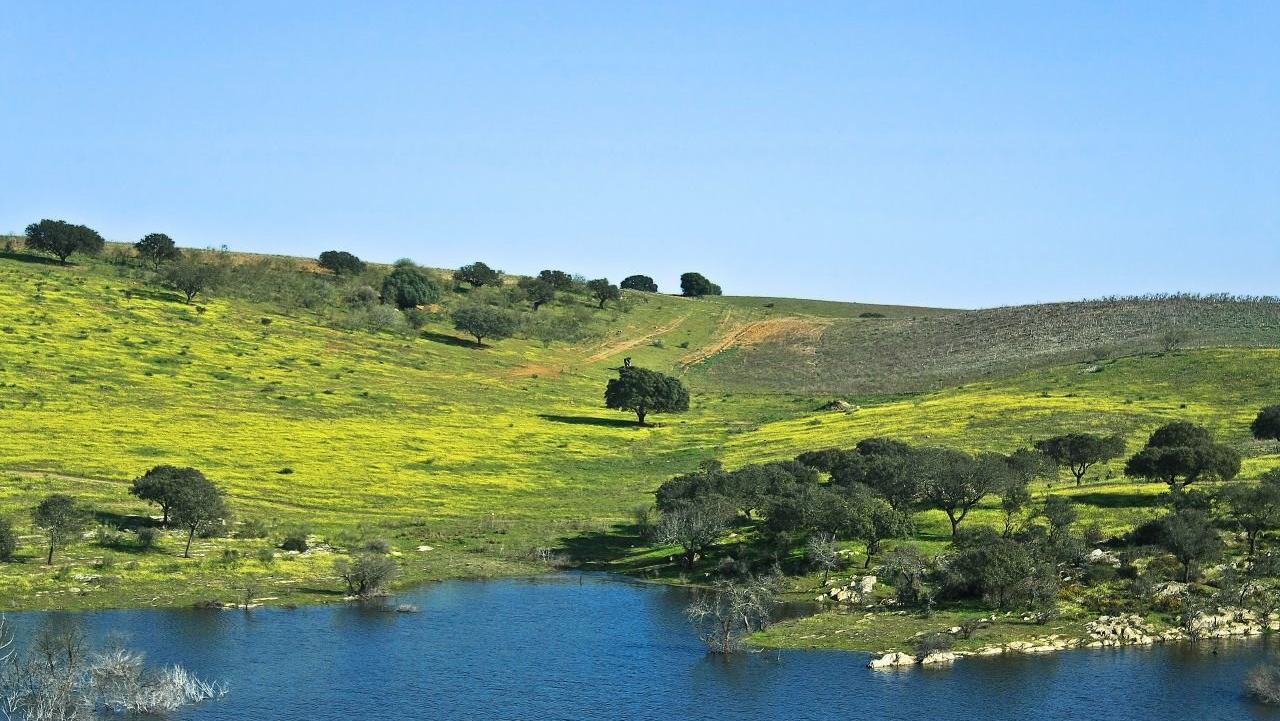
Lake Alqueva's broad horizons, gentle shore contours and changing light contrast with the dramatic rock walls of some other inland boating destinations. A slow passage can reveal the differences between open water, quiet bays and distant buildings. Weather and season will influence colours and visibility, and a historic licensed photograph should not be described as a live view. Travellers can enjoy the landscape through patient observation rather than chasing a particular viewpoint. On a houseboat, simply sitting in an appropriate safe position while the vessel is under way may become an important part of the holiday.
Mooring as a practical skill
Mooring is one of the key moments in a houseboat holiday because a slow-moving vessel still has mass and momentum. Follow the marina's approved locations and procedures, approach with enough time and coordinate clearly with everyone aboard. Do not step or jump onto a bank to catch an awkward line, and keep hands and feet clear of pinch points. Secure ropes where instructed and confirm that the boat is safely positioned before anyone disembarks. Some inviting shores may be private, environmentally sensitive or unsuitable for landing. The operator's guidance is the correct authority for where guests may stop overnight.
Onboard living without surprises
Houseboats can offer a comfortable base, but guests should understand their capacity for freshwater, waste storage, electrical demand and cooking. Ask when and where supplies may be replenished and how the boat's systems indicate that attention is needed. A vessel with a galley does not eliminate the need to plan food, particularly if shore services are limited along the chosen route. Keep drinking water and essential medication accessible. Follow instructions for safe use of appliances and ventilation, and avoid overloading electrical circuits. The better the practical routine, the more time visitors have for the relaxing aspects of life on the water.
Weather on open inland water
The Alentejo is associated with sunny conditions, yet heat, wind and occasional adverse weather still influence a boat trip. A larger houseboat may have more protection than a kayak, but it can be sensitive to crosswinds while manoeuvring or approaching a dock. Review the latest forecast and the provider's operating advice before each passage. A calm-looking morning should not be treated as permission to ignore later changes. If conditions become unsuitable, remain at a safe authorised berth or follow the operator's instructions. An extra quiet afternoon is preferable to attempting a difficult landing in poor visibility or stronger wind.
Safety for everyone aboard
Every passenger needs access to an appropriate personal flotation device, and all participants should understand the location of emergency equipment and basic procedures. Discuss who is responsible for steering, who assists with lines and what should happen if someone falls overboard. Children should be supervised around the deck and should not be allowed to play with controls or mooring equipment. Confirm how to contact the operator for assistance and what coverage is available on the lake. Even with modern navigation equipment, sound judgement and clear communication remain essential. A rental agreement is not a replacement for a meaningful safety briefing.
Visiting villages responsibly
A houseboat can make it possible to see places along the lake at a leisurely pace, but visitors must establish where landing and mooring are permitted. A shoreline settlement may have its own tourism facilities, while another stretch may be private or inaccessible from the water. Ask for current route recommendations rather than assuming that every village seen on a map has a suitable pier. When visiting communities, respect residents, support local services if available and return to the boat before light or weather conditions make departure difficult. It is better to explore one place properly than hurry through several with little opportunity to learn about them.
Nature and a quieter footprint
A slow holiday can encourage attention to birds, changing light and the relationship between water and dry Alentejo landscapes. Wildlife sightings are never guaranteed, and visitors should avoid approaching animals or feeding them. Carry all rubbish until appropriate disposal is available and use onboard waste facilities strictly as instructed. Do not discharge prohibited materials into the reservoir. Follow any speed limits and environmental restrictions, and avoid disturbing vegetation during landings. The absence of large crowds does not make a place free of ecological responsibilities. Thoughtful behaviour keeps a quiet lake experience valuable to those who follow.
Photography from a houseboat
A houseboat presents tempting viewpoints from decks and cabin windows, but photographs should never interfere with navigation. Keep equipment away from controls and avoid moving around the deck during manoeuvres unless the skipper approves. A long view of the lake may be easier to capture while safely moored than while the boat is negotiating an approach. Seek consent before photographing identifiable passengers or local residents. Photographing the boat's ordinary routines can tell a richer story than a single wide landscape, provided safety comes first. Any licensed editorial image should be credited by author and clearly separated from claims about a specific rental craft.
Booking and the fine print
Before paying a deposit, request complete information about rental dates, prices, security deposit, fuel, cleaning, onboard supplies and the operator's cancellation terms. Ask whether the listed capacity describes sleeping arrangements or maximum permitted passengers and whether any prior boating experience is necessary. Confirm the permitted navigation zone, mooring rules and emergency support. Weather policies should be written and understandable. Make sure the person who will skipper the boat is included in the handover arrangements. A transparent booking process makes the later voyage more relaxing because the group understands what the holiday includes and what it does not.
A sensible first-day pattern
An illustrative first day could involve arriving at Amieira Marina early, completing the boat inspection, receiving training and loading luggage carefully. Then choose a short permitted passage or remain at an approved berth to practise handling the vessel. Prepare a simple meal and review the next day's forecast rather than trying to accomplish a long cruise immediately. Later days can balance short navigation periods with shore visits when authorised. Keep extra time before the final return, allowing for fuel or other handback procedures. This is a planning example, not an advertised rental itinerary or a guarantee of particular destinations.
Why the journey suits slower travel
Lake Alqueva rewards the traveller willing to treat the boat as a means of attention, not just transport. A day can be shaped by a short passage, a safe mooring and time spent watching rural scenery change with the light. Amieira Marina's first-party information establishes that houseboat experiences are offered on the reservoir; the actual trip must follow current availability, navigation rules and safety instructions. Preparedness supports freedom by reducing surprises and allowing guests to enjoy the ordinary details of life afloat. The pleasure lies in exploring carefully and returning with a stronger sense of the Alentejo's inland waterscape.
Sources and photograph attribution
Official destination and boating guidance: Amieira Marina — Houseboats on Lake Alqueva. Current access, rules, weather and reservations must be checked independently before travel.
Photograph: Vitor Oliveira from Torres Vedras, PORTUGAL — Albufeira do Alqueva - Portugal (3315471367).jpg (CC BY-SA 2.0) via Wikimedia Commons. Original image resized as JPEG. Historical location-specific landscape photograph of Alqueva reservoir in Portugal; not a current rental craft, marina berth or water-level forecast. Source: https://commons.wikimedia.org/wiki/File:Albufeira_do_Alqueva_-_Portugal_(3315471367).jpg. Licence: https://creativecommons.org/licenses/by-sa/2.0. Original rights remain with the credited creator or as specified by the source and licence.
