
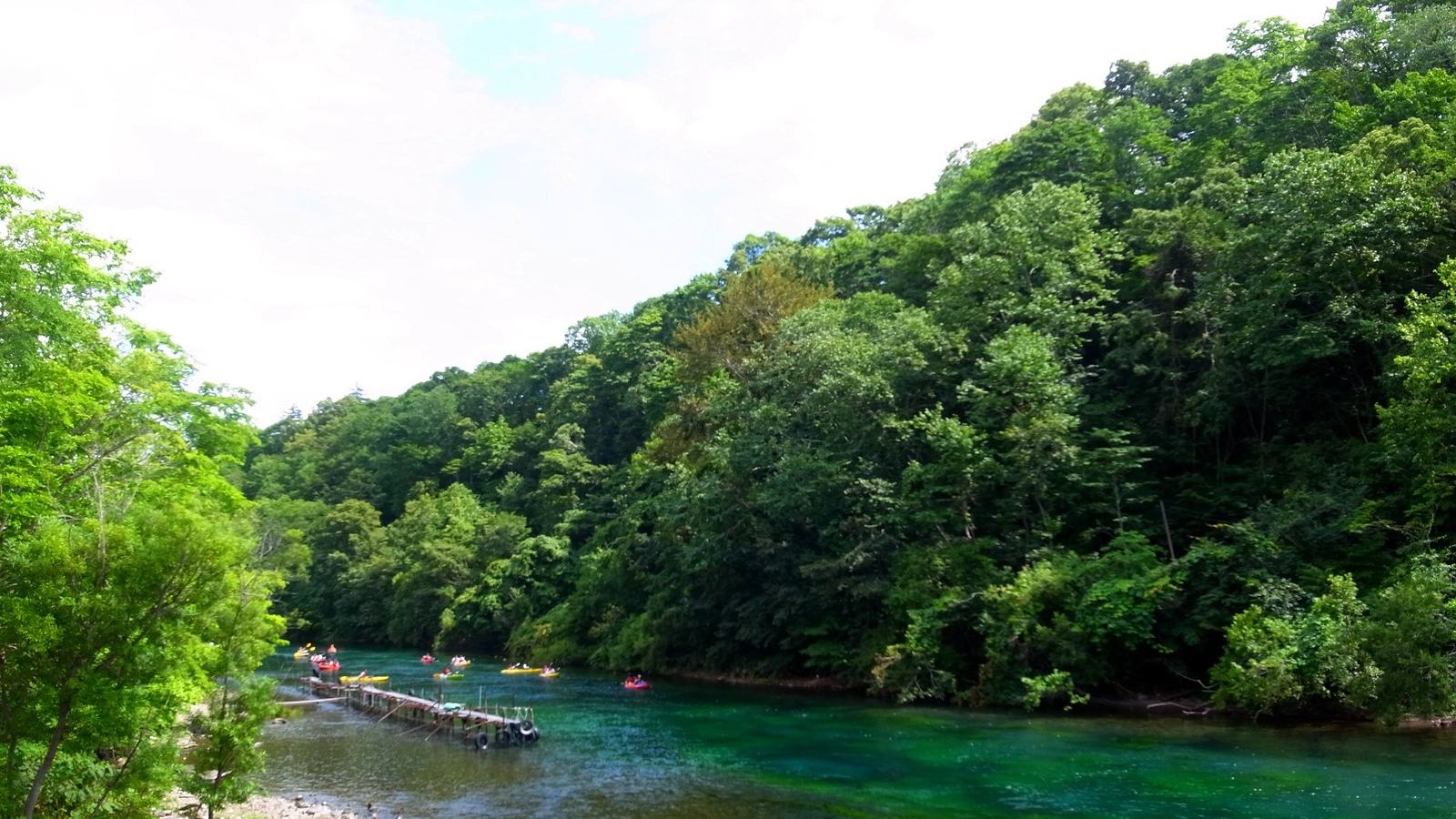
An original Lake Shikotsu feature covering transparent kayaks, Shikotsu Kohan access, national park scenery, weather and safe touring.
Looking through the kayak
Lake Shikotsu in Hokkaido offers an unusual variation on a familiar boating experience. On selected guided outings, a kayak with a transparent viewing section allows passengers to look into the water as well as across it. Japan's official National Parks tourism information describes this clear-bottom kayak activity within Shikotsu-Toya National Park. That is an invitation to observe, not a guarantee of perfect underwater visibility on every day. The landscape is associated with volcanic origins, wooded shores and open lake scenery. A slow paddle can reveal changes of colour and depth while giving the visitor a distinctive perspective on one of Hokkaido's notable natural settings.
A lake shaped by geology
The broad water and surrounding hills of Lake Shikotsu are best understood as part of a volcanic landscape rather than an ornamental leisure lake. This geological character helps explain the scale of the basin and the mountains beyond the shoreline. From a kayak, the horizon may look open and calm, but the lake can be affected by wind and cold-water conditions. The attraction is not only what the transparent viewing section reveals below; it is also the juxtaposition of forest, rock, sky and deep water. Appreciate the scenery from appropriate touring areas and avoid assuming that distant stretches of shore are reachable during a standard activity.
What a clear-bottom kayak can show
A transparent panel changes the focus of a paddling trip. Instead of directing every glance toward the next shoreline, passengers can notice variations in colour, underwater textures and the play of sunlight on the surface. Conditions affect this view: glare, cloud, wave movement and suspended material can change what is visible. The official activity description promotes underwater observation, but no booking should promise that visitors will see particular fish or a consistently crystal-clear image. An operator should explain where the activity takes place and how the craft is used without leaning dangerously over the side. The quality of the experience depends on patient observation, not on an underwater spectacle arranged to order.
Shikotsu Kohan as a starting point
The eastern lakeside settlement of Shikotsu Kohan is an important visitor area associated with Lake Shikotsu. It provides a practical focus for organising activities and combining a water excursion with time ashore. Check the exact meeting location rather than assuming that every kayak provider departs from the same place. A lakeside community may have parking, visitor facilities and accommodation, but access and opening times must be verified for the travel date. Allow time to find the operator, change clothing and attend a briefing before paddling. Arriving in a rush undermines the unhurried quality that makes this kind of experience appealing.
Guided rather than improvised paddling
A visitor unfamiliar with the lake should consider a properly organised guided outing, especially when using a specialised craft. Ask whether the activity is suitable for first-time paddlers and whether instruction is included before departure. The guide should explain steering, stopping, maintaining spacing and what to do in the event of capsize. A clear-bottom kayak should not be treated as a glass-bottom excursion boat: passengers still contribute to movement and stability. Confirm age, size and fitness restrictions and whether the boat is single or tandem. A safe, supervised first paddle allows attention to the scenery without pretending that the lake is free of hazards.
Water temperature matters more than appearance
Clear water can look inviting even when the temperature makes immersion dangerous. On a northern Japanese lake, clothing and rescue preparation should be selected for the actual water and weather conditions. Wear an appropriate flotation device throughout the trip. Ask the operator what thermal protection is provided and whether a wetsuit or similar clothing is recommended. Keep spare warm layers dry and protect personal belongings from splashes. Sunny air temperatures do not cancel the risk of cold shock after an unexpected fall into the lake. A responsible guide will make decisions based on conditions, not the colour of the water in a promotional photograph.
Wind on open inland water
Unlike a narrow sheltered canal, a large lake provides room for wind to build waves across its surface. A gentle start near shore may become much more demanding if the wind strengthens or changes direction. Check the forecast and the guide's decision before launching, and be ready to accept a shortened outing or cancellation. Keep enough energy to paddle back rather than treating the outward leg as the entire adventure. Any independent trip would require its own navigation and emergency plan. In a clear-bottom kayak session, the best route is often the one that provides a safe observational experience rather than a long circuit around prominent landmarks.
The visual rhythm of the shoreline
The lake's shoreline can reward close attention even when little is visible through the bottom of the kayak. Watch the angle of the trees, the colour of the shallow water and the way the reflections change when the wind moves across the surface. Avoid grounding a kayak on sensitive habitat or approaching areas that are restricted for conservation. A photography stop should be agreed with the guide, not improvised by drifting into the path of other boats. The lake's beauty does not depend on constant movement. Sometimes stopping the paddle and simply observing provides a stronger memory than chasing the next viewpoint.
Respecting a national park environment
Shikotsu-Toya National Park is a protected area and should be visited with an awareness of its environmental limits. Carry all waste out, avoid disturbing birds and aquatic life and never remove plants, stones or other natural objects. Clean and dry hired or personal equipment as instructed to prevent contamination between waters. Follow designated access and landing rules. The transparent kayak encourages interest in the underwater environment, which should strengthen the case for protecting it rather than touching or collecting what appears beneath the boat. A responsible outing leaves the shore and water unchanged for the next visitor.
Selecting the right time of day
Light is central to clear-bottom viewing. Bright sun may illuminate parts of the water, but glare can make looking down more difficult; overcast conditions can produce an entirely different visual effect. Ask the operator for advice rather than assuming that the earliest or latest departure is always best. Weather and guide availability are more significant than obtaining a particular photographic look. If the goal is photography, bring a polarising filter only if familiar with its use, and remember that handling a camera can distract from paddling. Keep the most important equipment in a waterproof case with a secure attachment.
How the activity fits a Hokkaido visit
Lake Shikotsu can be the focus of a day built around walking, lakeside sightseeing and a short guided paddle. The official tourism material also places the lake within a broader national park setting. Avoid trying to combine too many distant attractions on one day if transfers consume most of the available time. A relaxed itinerary allows visitors to experience the lake both from the shore and from the water. Check seasonal road conditions, public transport arrangements and operator availability in advance. The region's weather may differ considerably from that of another part of Japan on the same travel date.
Families and first-time paddlers
A transparent viewing feature may appeal to families, but suitability depends on the actual operator, craft and conditions. Ask about minimum age and height, weight restrictions, supervision ratios and whether children must share a kayak with an adult. Some participants may be more interested in looking down than learning to steer, making a clear briefing particularly important. Anyone nervous about water should feel free to ask questions or decline the activity. A good provider will describe the real physical demands rather than implying that sightseeing removes the need to paddle. Familiarity with the rules is often what makes a beginner comfortable enough to enjoy the scenery.
Equipment that makes the outing easier
Pack lightly: a waterproof pouch for essentials, suitable footwear, warm layers according to conditions, drinking water and sun protection are a better foundation than a bag of unnecessary electronics. The operator should supply or specify paddles and flotation devices suited to participants. Confirm what may be carried aboard a clear-bottom craft and whether sharp objects or hard luggage could damage its viewing surface. Secure glasses and cameras, and avoid items that could fall into the lake. A simple equipment routine also helps guests focus on instruction. Before launching, make sure everyone knows where the guide wants them to sit and how they should move.
Other boats and shared water
A kayak is one of several possible ways to enjoy Lake Shikotsu. Watch for powered craft, other paddlers and any local navigation restrictions. Do not stop in a busy passage simply to look through the transparent panel. Maintain predictable movements and remain with the group at the distance set by the guide. Noise and wake can change conditions quickly at small-boat level. If a larger vessel approaches, follow the guide's instructions and avoid abrupt turns. The calm atmosphere promoted in tourism imagery depends in part on visitors sharing the water considerately, not on the absence of other users.
Bookings, cancellations and the small print
Before making a reservation, confirm that the product is specifically a clear-bottom kayak activity on Lake Shikotsu, not a general lake cruise or a different paddle programme. Ask whether fees include guide services, equipment, protective clothing, photographs and transport from the meeting point. Check the policy for wind, poor visibility and other conditions that may prevent launching. A reputable provider should be willing to cancel or modify a route for safety. If English-language guidance is important, establish what language the briefing uses. Clear expectations mean that an unavoidable weather change becomes an understandable adjustment rather than a dispute.
Beyond a picture-perfect promise
Lake Shikotsu is worth considering precisely because the activity is not identical on every outing. The transparent section may reveal a surprising underwater view, or the strongest memory may be a reflection of the surrounding mountains. Both are legitimate forms of encounter with the place. Official National Parks information supplies the authentic starting point for understanding the experience; local operators and conditions determine what can be enjoyed on the day. Approach the lake with respect for its cold water, changing wind and protected environment, and the kayak can offer a contemplative alternative to rushing through Hokkaido's scenery.
Sources and photograph attribution
Official destination and boating guidance: Japan National Parks — Clear-bottom Kayak at Lake Shikotsu. Current access, rules, weather and reservations must be checked independently before travel.
Photograph: Nesnad — LakeShikotsu-kayaks-GR-Aug15-2016.jpg (CC BY-SA 4.0) via Wikimedia Commons. Original image resized as JPEG. Historical authentic photograph of kayaks at Lake Shikotsu, Japan; not a specific 2026 operator, current rental fleet or tour conditions. Source: https://commons.wikimedia.org/wiki/File:LakeShikotsu-kayaks-GR-Aug15-2016.jpg. Licence: https://creativecommons.org/licenses/by-sa/4.0. Original rights remain with the credited creator or as specified by the source and licence.
