
An original Peru Tambopata riverboat guide covering official guided access, rainforest communities, Lake Sandoval, wildlife and tour planning.
A river journey into the Peruvian Amazon
Tambopata National Reserve lies in the Madre de Dios region of southeastern Peru, where dense rainforest and waterways create a striking alternative to a conventional beach holiday. Peru's official tourism authority describes travelling from Puerto Maldonado towards the reserve by boat, along with guided experiences on the Tambopata River and Lake Sandoval. For a leisure-boat traveller, the attraction is the chance to experience a working tropical waterway from a small passenger craft, watching the forest and riverside communities from a pace that allows careful observation. The setting is protected and requires more planning than simply hiring a boat at an urban marina. Peru Travel says visits to the reserve should be organised through authorised agencies, and the journey depends on local conditions and the programme selected. A responsible excursion offers both scenery and cultural understanding without promising specific wildlife sightings.
Puerto Maldonado provides the gateway
The national tourism website identifies Puerto Maldonado as a main access point for Tambopata. It describes flights from Lima and a boat transfer towards the reserve, with an illustrative journey time of about two hours for the water section. Actual times will depend on the landing, water conditions and itinerary offered by the authorised operator. A visitor should not infer from that estimate that every ecolodge or activity lies two hours from the same pier. The best approach is to ask for the complete travel instructions before booking flights or accommodation. An Amazonian boating holiday often involves transfers that matter just as much as the time at the final destination. Allowing some flexibility can help account for weather and operational changes rather than relying on a tight connection.
The river is the route as well as the attraction
Peru Travel presents the Tambopata River as a central part of the reserve experience. A small boat carries travellers through a landscape where water is a natural corridor rather than merely a scenic edge. The shores may be thick with forest, and the trip can provide a sense of the scale of the Amazonian environment. That setting does not mean every part of the river is appropriate for independent recreation. Currents, water levels, navigation hazards and wildlife require local knowledge. Visitors should use an authorised operator and follow crew instructions, particularly during boarding and when travelling through narrower or shallow sections. A passenger boat tour can be deeply absorbing without requiring a traveller to steer or navigate the vessel personally.
Lake Sandoval offers a different scene
The official destination guide recommends a boat excursion on Lake Sandoval, where visitors may observe wildlife including giant river otters. These encounters are possibilities rather than a guarantee that an animal will appear at a particular time. The lake setting differs from the river journey, offering another way to appreciate the reserve's range of habitats. Travellers should check whether Lake Sandoval is actually included in their chosen itinerary and whether reaching it requires walking or other transfers. The name Tambopata on a booking page does not automatically mean a trip covers every attraction within the reserve. A well-planned day may concentrate on a single lake or river section rather than trying to reach several distant places in a hurry.
Wildlife deserves distance and patience
Tambopata is associated with a remarkable diversity of birds, mammals, butterflies and other wildlife. Peru Travel describes the possibility of seeing aquatic creatures and animals in their natural surroundings, but their movements cannot be scheduled for the convenience of tourists. A boat approaching a riverbank should not force wildlife to move merely for a photograph. Guides can help visitors understand appropriate distances and identify places where observation is permitted. Good behaviour matters particularly around vulnerable species or breeding areas. The quiet excitement of seeing a bird or otter unexpectedly is part of the appeal. A destination marketed for biodiversity should never be treated as a wildlife show where every advertised species must appear before the trip can be called successful.
The forest reveals itself slowly
A river journey through rainforest can feel different from other boating holidays because the shoreline is so visually dense. Trees, vines and changing light create a landscape in which small details may stand out only when the boat moves slowly enough for passengers to notice them. Sounds from the forest can be as memorable as the view. An experienced local guide may explain how different plants or habitats fit into the ecology of the area. Visitors should avoid stepping ashore without permission or attempting to explore unfamiliar paths independently. The protected setting is part of a much larger living system, not a place designed for free wandering. The best approach is curiosity guided by local knowledge and the rules that protect the reserve.
Community-based tourism adds human context
Peru Travel highlights community-based activities in the Tambopata region, including opportunities to meet riverside families and learn about aspects of local life. Some programmes may involve traditional practices such as Brazil nut harvesting or artisanal fishing. These should be understood as specific experiences offered by local communities and authorised operators, not as an entitlement to enter anyone's home or workplace. A respectful visitor listens, asks permission before photographing people and follows guidance about appropriate behaviour. Such encounters can provide a valuable perspective on the relationship between river transport and everyday life. The programme should be chosen for genuine learning rather than for staging a preconceived image of the Amazon. Local people are hosts and professionals, not background scenery.
Artisanal fishing is an activity to verify
The tourism authority describes traditional fishing practices as a possible part of a community-based experience. A visitor may learn about methods used along the river, depending on the selected operator and community programme. That does not mean a tourist can simply begin fishing in any waterway within the reserve. Permits, conservation rules and programme conditions may apply, and the official destination page does not provide a blanket angling licence. Someone particularly interested in fishing should ask whether participation is permitted and how any activity is managed responsibly. Watching a local demonstration can be just as interesting as taking part. The point is to understand practices in context while respecting both the ecosystem and the people who depend on it.
Brazil nuts connect the forest to livelihoods
Peru Travel mentions Brazil nut harvesting as one way community visitors may learn about the local economy. The activity reveals how forests can support livelihoods beyond tourism, although it is important not to simplify complex economic and environmental relationships. A community-based tour may explain how nuts are collected and processed under local arrangements. Visitors should follow instructions rather than attempting to gather products independently. The relationship between river transport, forest resources and local settlements can be particularly interesting when experienced as part of a guided journey. It offers a more complete view of Tambopata than treating the reserve solely as a collection of scenic river photographs. Learning from local expertise can deepen appreciation for conservation and sustainable use.
Clay licks and birdwatching are additional options
The official destination page includes clay licks among the recommended activities, describing places associated with macaws and other animals. These sites may attract travellers interested in birdwatching, but access, timing and wildlife activity must be managed according to the authorised itinerary. A visitor should not assume the best observation area is accessible by boat alone or that every excursion includes a clay lick. Some programmes may require an early start or additional travel. Wildlife photography benefits from patience and appropriate equipment rather than getting too close. The possibility of seeing colourful birds is exciting, but the quality of the experience also comes from understanding why the habitat matters and why operators may restrict movement around sensitive locations.
An authorised agency is essential
Peru Travel states that visits to Tambopata National Reserve are made with authorised agencies. This is a particularly important detail for someone comparing inexpensive online boat offers. The advertised price should not be the only factor in choosing a provider. Travellers need to know whether the company can arrange legitimate access and what services are included in the programme. Useful questions concern transport, guides, accommodation, equipment, current fees and what happens when weather alters the itinerary. A responsible operator should be able to explain the practical arrangements. Paying for an unauthorised or unclear trip could result in disappointment or environmental harm. National park rules should take priority over assurances made in an unverified advertisement.
Rainforest weather requires flexible expectations
Tambopata is a warm tropical environment, but conditions can vary substantially with rainfall and water levels. River routes may change in practical difficulty, and walking paths can become muddy. A person accustomed to temperate European summers may find the climate demanding even during a relaxed passenger-boat excursion. Clothing should be chosen with the operator's advice, including appropriate coverage and protection from sun and rain. Visitors should consider the need to keep their personal belongings dry and secure. The boat crew may change the route or schedule when conditions require it. Such a decision is part of responsible operations rather than a reason to force the original plan. A flexible itinerary is especially valuable when the destination is remote.
Health preparation should be planned in advance
Peru Travel lists health and clothing considerations for Tambopata, including advice to consider yellow fever vaccination. International travellers should seek current recommendations from a qualified travel-health professional and check any official entry or park requirements before departure. Medical advice depends on personal circumstances, travel routes and the current public-health situation. A general lifestyle article cannot determine what vaccination or medication an individual needs. Practical preparation also includes drinking water, appropriate sun protection and understanding which facilities will be available. A remote reserve is not the place to discover that essential supplies were left at the hotel. Good planning helps visitors concentrate on the forest and waterways rather than preventable difficulties.
Photography must not interfere with the boat
Wildlife, broad rivers and forest reflections can make Tambopata a compelling place for photography. Yet a moving small craft is a poor setting for risky manoeuvres. Passengers should remain in safe positions, follow the guide's instructions and avoid leaning or standing suddenly to obtain a particular angle. A camera should be secured against spray or dropping into the water. Flash photography and close pursuit of animals may be inappropriate, depending on the situation and park rules. An authentic licensed photograph from Lake Sandoval or the Tambopata region can show the setting, but it should not be represented as a current tour, a specific lodge or a guaranteed wildlife encounter. Honesty about imagery matters in a destination where conditions are constantly changing.
A boat journey is only part of the holiday
A well-rounded Tambopata visit can include forest walks, community activities, wildlife observation and time to appreciate the surroundings from a lodge or permitted rest area. Travellers may discover that the slower moments are more rewarding than an attempt to accumulate a long list of sightings. Some programmes focus on particular interests, such as birdwatching or cultural learning, while others provide a more general introduction. Choosing a suitable duration matters because transport to and from the reserve can consume a substantial part of a short visit. A person with limited time may prefer a coherent smaller itinerary rather than trying to fit everything into one day. The pleasure lies in paying attention to the environment, not in completing a checklist.
The verified basis for a Tambopata water adventure
Peru's official tourism authority confirms boat travel on the Tambopata River, visitor access through Puerto Maldonado, guided community experiences and boat excursions associated with Lake Sandoval. It also states that access should be arranged with authorised agencies. The precise route, price, timings and conditions must be verified before booking. A licensed historical photograph from the region serves as contextual illustration rather than a current departure record. For leisure-boating travellers, Tambopata offers an unusual way to experience the Amazon: a journey in which waterways connect rainforest ecology, local livelihoods and the practical realities of reaching a protected landscape. The most memorable trip is one approached with patience, respect and suitable local guidance.
Sources and photograph attribution
Official destination and boating guidance: Peru Travel — Tambopata National Reserve. Current access, rules, weather and reservations must be checked independently before travel.
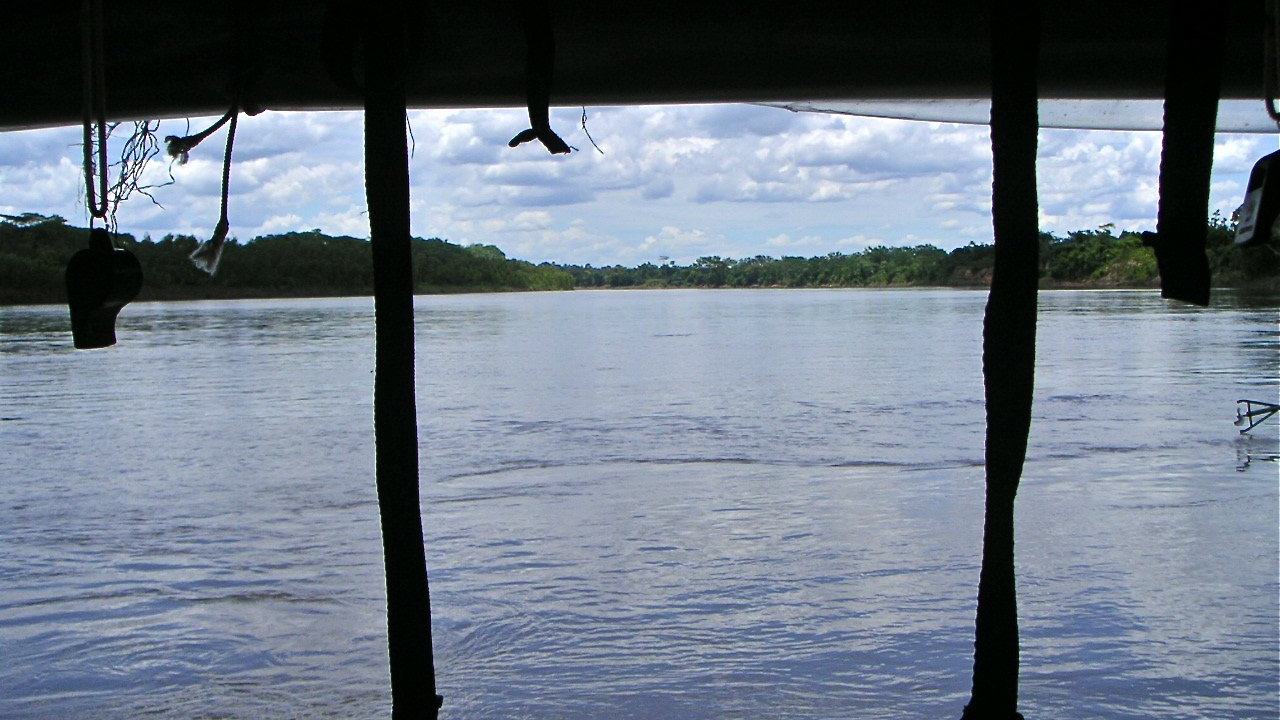
Photograph: Patrick Nouhailler's… — En route to Sandoval Lake Lodge , Tambopata - panoramio.jpg (CC BY-SA 3.0) via Wikimedia Commons. Original image resized as JPEG. Historical photograph en route towards Lake Sandoval in Tambopata, Peru; not a current tour operator, river condition or wildlife sighting. Source: https://commons.wikimedia.org/wiki/File:En_route_to_Sandoval_Lake_Lodge_%2C_Tambopata_-_panoramio.jpg. Licence: https://creativecommons.org/licenses/by-sa/3.0. Original rights remain with the credited creator or as specified by the source and licence.
