
An original Iriomote kayaking guide covering the Mare and Hinai rivers, tropical forest, Pinaisara Falls, tours, equipment and ferry connections.
A subtropical paddling excursion in Okinawa
Iriomote is one of Japan's Yaeyama Islands in Okinawa Prefecture, known for dense subtropical forest and rivers bordered by mangroves. Japan's official tourism organisation describes a guided kayak-and-trek excursion to Pinaisara Falls, where visitors paddle along the Mare and Hinai rivers before walking towards an impressive waterfall. The experience is very different from a city sightseeing cruise or a short paddle on a sheltered hotel lagoon. It requires a degree of physical activity and coordination with local guides, while rewarding visitors with a close view of one of Japan's distinctive tropical landscapes. The advertised programme may include a full-day or half-day option, depending on the provider. The essential attraction is a journey that combines a small craft, rainforest and a waterfall, rather than a passive excursion in which all the work is done by a boat's engine.
The island itself feels different from mainland Japan
The national tourism organisation notes that about nine-tenths of Iriomote is covered by jungle. That scale of forest helps explain why the island has become known for guided nature experiences. Its roads, settlements and tourism facilities occupy only part of the larger landscape, so a visitor should not imagine being able to reach every river or waterfall independently by driving. The appeal of a guided mangrove paddle is precisely that it introduces a particular section of the island in an organised way. The forest can feel remote even when the itinerary begins within reach of a ferry port. Travellers benefit from respecting that separation between accessible visitor routes and natural areas that should remain undisturbed. A national park setting deserves more care than a casual recreational beach.
Getting there begins with a ferry journey
Japan's tourism guide describes high-speed ferries between Ishigaki and Uehara Port on Iriomote, with an approximate crossing time of forty to fifty minutes and services operating at intervals that depend on the timetable. It suggests an early ferry for visitors joining a morning tour, because many guided programmes start around 9 a.m. These details are planning guidance rather than a guarantee of a specific sailing in November 2026. Weather can affect ferry services, and a visitor should check the actual operator's departure schedule before booking a day trip. Staying overnight on Iriomote may reduce the pressure of a very early start and provide time for other nature experiences. Either way, the ferry and the kayaking excursion are separate parts of the journey with different operating requirements.
Uehara Port is more than a map point
The official tourism description identifies Uehara Port as a common arrival point and says some tour operators offer pick-up and transfers to the kayaking centre. That can make logistics easier for someone without a rental car, but it should not be assumed that every company meets every ferry automatically. A booking confirmation should specify where the guide will be waiting, what happens if a ferry is delayed and what the visitor needs to bring. These are useful questions for families and independent travellers alike. Arriving in an unfamiliar place with limited time is less stressful when the connection has been confirmed. A successful excursion often depends on such practical details before the first paddle stroke, rather than only on the beauty of the destination.
The mangrove rivers shape the journey
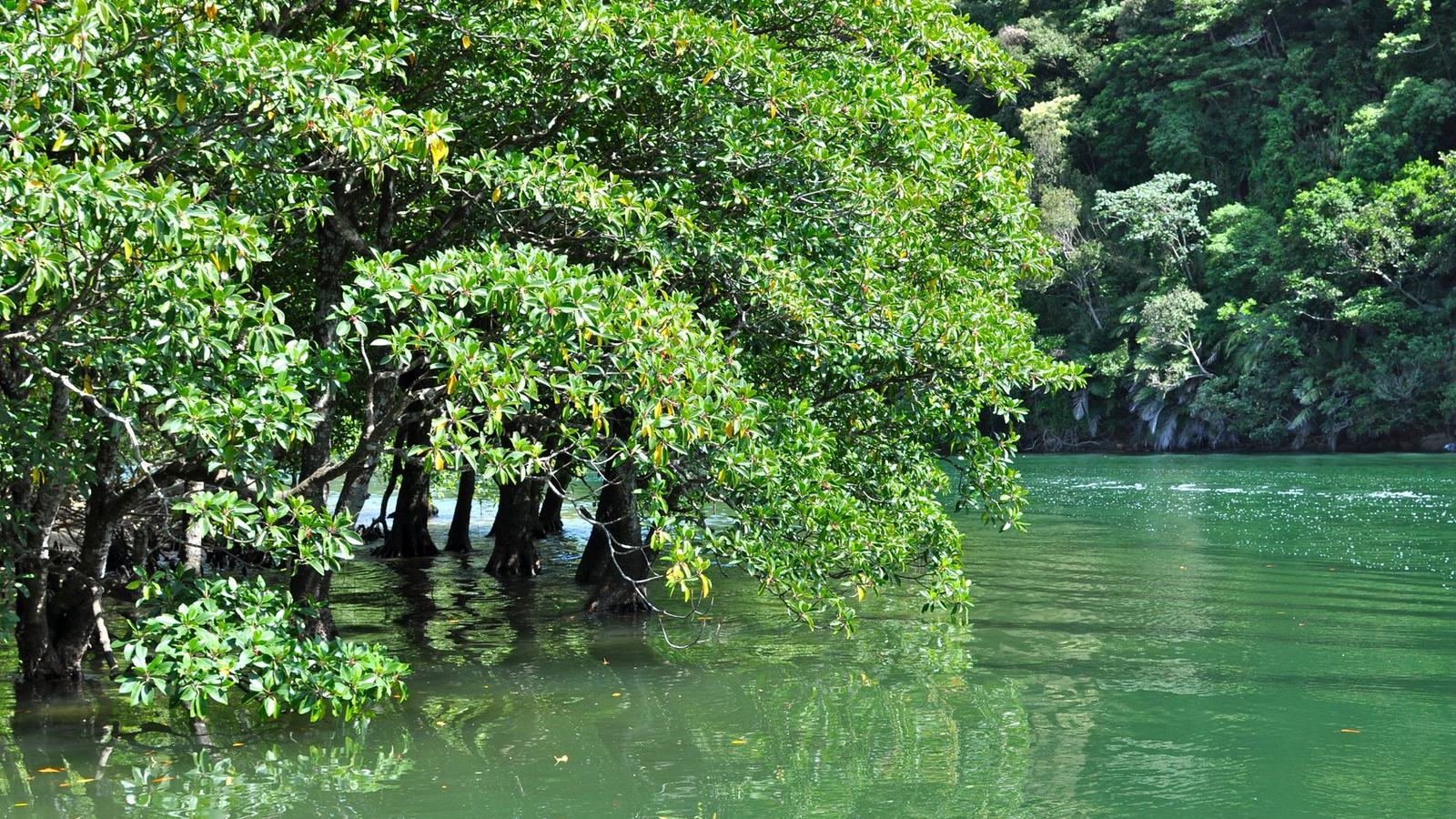
Paddling along the Mare and Hinai rivers brings visitors close to the plants and waterways that characterise northern Iriomote. Mangroves are adapted to tidal and coastal conditions, and the shape of their roots can make the riverbanks particularly memorable. A guide can help interpret the landscape without encouraging visitors to touch or damage sensitive vegetation. The water may seem calm within the forest, but the route still needs to account for tides, currents and the abilities of the group. A kayak offers a quiet way to observe the rivers, but its low profile also requires care around other craft and narrow passages. The best approach is steady progress, allowing time to look around while following the guide's directions.
Pinaisara is a waterfall with an unusual name
The Japan National Tourism Organization explains that Pinaisara is associated with the image of an old man's beard in the local language, describing the waterfall's pale ribbon of water down a steep rock face. It gives the height as approximately fifty-five metres, making it an important natural landmark on the island. The name adds character to the excursion, but the experience should not be reduced to a single photograph of the cascade. The paddling approach and forest walk are part of the appeal. Water flow and the waterfall's appearance can vary with conditions, and any viewpoint must be reached by an approved route. A visitor should not climb or enter a hazardous area simply to reproduce a well-known picture.
Kayaking is followed by walking
The official description makes clear that reaching the waterfall involves both paddling and trekking. That distinction is important for someone who expects a boat-only excursion. The walking section may be muddy, uneven or slippery depending on recent rain, and suitable footwear can matter. Participants should ask whether their fitness and mobility suit the chosen route before confirming a place. A kayak guide is not a substitute for appropriate personal preparation. The exact sequence and distance may vary among operators, particularly between half-day and full-day products. A visitor hoping to experience the waterfall from a particular viewpoint should verify that it is included in the selected programme. The name of the destination alone does not guarantee access to every part of the site.
Full-day and half-day options serve different travellers
Japan's official tourism website describes both longer excursions that can take up to eight hours and shorter options that return participants earlier. The choice depends on available time, stamina and the amount of trekking included. A full-day trip may allow a more unhurried experience of the river and waterfall, while a shorter excursion can make sense for someone with a ferry connection or less experience. It is not helpful to describe either as universally easy. Conditions, clothing and the pace of the group can change how demanding the day feels. Visitors should compare the published itineraries from actual operators rather than assume that every guided excursion includes the same lunch stop, viewpoint or time on the water.
A guide brings local knowledge and responsibility
A reputable local guide should explain the route, basic kayak handling and any relevant safety procedures. The official tourism information describes organised tours rather than advising first-time visitors to launch independently into the forest. That matters because small decisions about tide, weather and where to land can affect the outcome of a trip. Guides can also share information about plants and the history of the area, making the journey more than physical exercise. Participants should nevertheless listen carefully and disclose relevant needs to the operator before departure. No guide can guarantee wildlife sightings, perfect weather or a completely risk-free excursion. A good organised trip works through honest expectations and clear responsibilities on both sides.
Children need an age-appropriate programme
The destination guide says children from around six years old can generally join some tours, while noting that operators may impose different minimum ages. It would therefore be wrong to assume that every child aged six is automatically eligible for any Pinaisara excursion. The route's physical demands, the child's confidence and the equipment available all matter. Families should ask about minimum height, swimming ability, adult accompaniment and how the trek is managed before booking. If a child is uncomfortable with kayaking or sustained walking, another Iriomote activity may provide a better holiday experience. A family excursion works best when the least experienced participant is properly considered rather than expected to adapt to the ambitions of a stronger adult.
Clothing should be chosen for water and forest
The official visitor advice recommends appropriate waterproof equipment, sunscreen and headwear, and discourages jeans because they can become uncomfortable when wet. This practical guidance is useful in a tropical environment where rain and humidity may be significant. Footwear should suit both paddling and walking on uneven ground, following the provider's specific instructions. A dry bag may help protect personal belongings, but electronic equipment should remain secured rather than handled constantly. Visitors who are accustomed to warm-weather beach holidays may underestimate how tiring an active excursion can feel. Drinking water and appropriate food are also sensible considerations, even when lunch is included in a particular full-day package. The operator should clarify what it supplies and what guests are expected to bring.
Lunch and rest are part of some longer tours
Japan's tourism site describes full-day programmes that may include lunch and a rest around the waterfall experience. It also mentions the possibility of enjoying views from the higher waterfall area and the surrounding island landscape. The exact stop depends on the selected operator and the conditions, so a visitor should not expect every tour to have an identical picnic location. A meal in the forest can be particularly memorable after paddling and walking, but it creates responsibility for waste and conservation. Food packaging should be managed carefully and nothing left behind. A guide's instructions about where people can sit or enter the water should be followed. The goal is to enjoy the natural setting without damaging it or disturbing other visitors.
The island's ecological value deserves attention
Iriomote's environment includes mangrove forests, subtropical vegetation and sensitive wildlife. A kayak can be a relatively quiet way to move through some of its rivers, but quietness does not remove the potential for disturbance. Visitors should keep to authorised routes, avoid touching plants and never attempt to feed or pursue wild animals. The region's natural appeal is inseparable from its conservation needs. A guide may explain why certain channels or sections are restricted and help the group appreciate the landscape without seeking entry everywhere. No particular rare species sighting should be promised on the basis of a general destination article. A respectful trip is successful even if the only animals seen are the more common birds or small creatures around the water.
Ferry schedules make timing important
A visitor planning Pinaisara as a day trip from Ishigaki needs to coordinate the return ferry with the selected excursion. A full-day tour can take many hours, so arriving late or underestimating transfer time could create a problem. The official visitor guidance encourages advance booking and choosing a ferry that reaches the port early enough for a typical morning tour. Timetables can change, and weather-related disruption is possible. A sensible plan includes a clear return arrangement and avoids treating the final available ferry as an ideal connection after a physically demanding outing. Staying on Iriomote can make the experience more relaxed for visitors who want time to explore beyond one excursion. The best arrangement depends on the current transport and provider schedules.
What visitors can reasonably expect to pay
The national tourism information includes illustrative full-day tour prices of around 11,000 yen for adults and 10,000 yen for children, but those figures are not universal or guaranteed for future bookings. The selected operator may use a different package, age category or seasonal rate. Travellers should verify the current cost and whether equipment, transfers and lunch are included. A seemingly inexpensive half-day offer can differ substantially from a full-day guided experience. Price comparisons are most useful when they consider what is actually being provided, not merely the number in a headline. The quality of instruction and a well-managed itinerary matter more than choosing the lowest advertised figure without examining the terms.
An active alternative to conventional sightseeing
The appeal of the Pinaisara route is the combination of movement, landscape and local interpretation. A ferry delivers visitors to Iriomote, a kayak carries them through the mangroves and a walk brings them close to the waterfall. None of these components is interchangeable with a simple pleasure-boat cruise, and that is why the experience deserves careful preparation. The official source confirms the setting, approximate height of the falls, common tour formats and practical arrival considerations. A licensed historical photograph of the Iriomote mangrove waterways should be used only as contextual imagery, not as proof of a particular guide, tour or date. For a traveller willing to paddle and walk, the excursion offers an unusually vivid introduction to a subtropical side of Japan.
Sources and photograph attribution
Official destination and boating guidance: Japan National Tourism Organization — Pinaisara Falls Canoeing. Current access, rules, weather and reservations must be checked independently before travel.
Photograph: BenedettaR — Iriomote Island Mangrooves.JPG (CC BY-SA 3.0) via Wikimedia Commons. Original image resized as JPEG. Historical photograph of Iriomote mangrove habitat, not a particular Pinaisara tour, boat, route or weather condition. Source: https://commons.wikimedia.org/wiki/File:Iriomote_Island_Mangrooves.JPG. Licence: https://creativecommons.org/licenses/by-sa/3.0. Original rights remain with the credited creator or as specified by the source and licence.
