
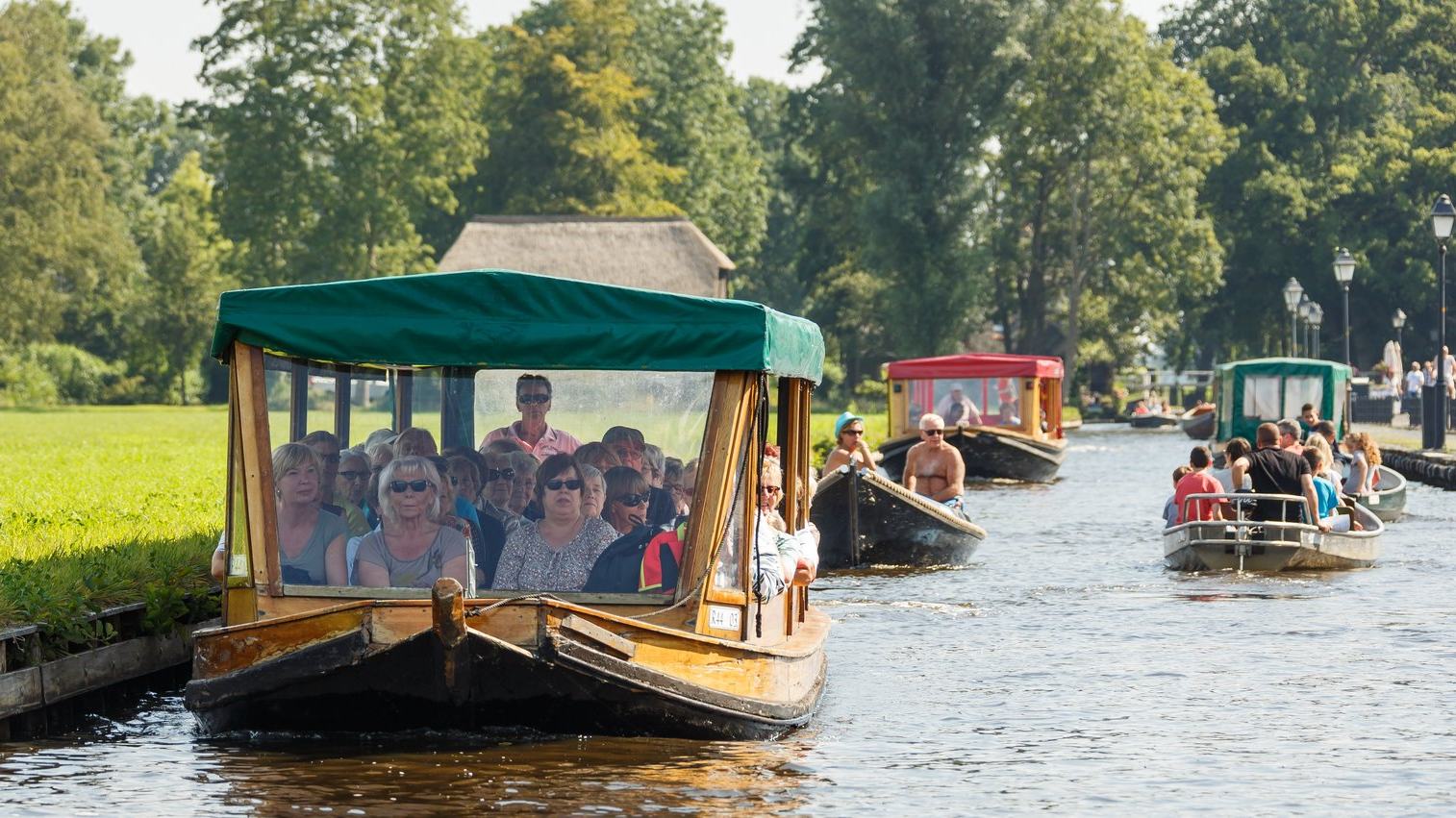
An original guide to self-drive Giethoorn whisper boats, canal routes, bridge clearance, village etiquette and the Weerribben-Wieden countryside.
A village where the water is part of everyday life
Giethoorn, in the Dutch province of Overijssel, is celebrated for canals running between thatched houses, gardens and small wooden bridges. The most memorable way to understand the place is to move slowly along those waterways instead of seeing them only from the footpaths. The destination's boating guide describes several choices, including self-drive whisper boats, electric sloops, traditional punters and organised tours with a skipper. For families who enjoy small craft, this creates a practical chance to spend time at the helm of a quiet electric boat without taking on a demanding offshore journey. The attraction is not high speed or distance but noticing how homes, bridges and village life sit beside the canals. As with any boat hire, the exact route and conditions should be confirmed before setting off.
What a whisper boat actually means
A whisper boat is an electric-powered hire craft designed for relatively quiet travel on inland waterways. In Giethoorn it is presented as one of the main ways to explore the historic village without the noise associated with a conventional engine. The word whisper should not be interpreted as a promise that there will be no sound at all: paddles, other boats, people on the banks and the movement of water remain part of the setting. Nor does electric propulsion eliminate the need for safe steering and respect for other users. A small hired vessel still needs an operator who watches ahead, understands the basic controls and observes the rental company's rules. The simplicity of the experience is part of its charm, provided that guests approach it as actual boating rather than as a ride that steers itself.
The canals create a natural sightseeing route
Giethoorn's guide places boating at the centre of the village experience. Narrow channels pass alongside traditional farmhouses and beneath bridges that are attractive to photograph. These are working paths for residents and visitors, not a film set reserved for holidaymakers. Boats need to give each other room and avoid obstructing places where people are boarding, unloading or managing property. Travelling slowly creates time to appreciate the scenery while also helping the person at the helm make better decisions. A popular route may involve boats moving in both directions, so a visitor should follow the operator's map rather than improvising a turn into any inviting side channel. A pleasant excursion depends on patience and good manners as much as scenery.
Choosing to steer or sit back
The official guide distinguishes between self-drive boats and tours conducted by a skipper. Both can suit a holiday, but the feeling is different. Operating a whisper boat gives the visitor an active role: choosing speed, watching the next bend and navigating under bridges. A guided passenger trip allows everyone to listen and look around while another person is responsible for handling the vessel. Neither is automatically superior. Someone with a young family may prefer a skipper-led tour if dividing attention between children and navigation would be difficult. A confident group may enjoy being responsible for a small electric boat. The right choice is based on the party's abilities, the forecast and the kind of day people want rather than a general assumption that self-drive is always more authentic.
Traditional punters offer another perspective
Giethoorn also advertises punters, traditional shallow-draught wooden craft, among the available boating options. Their method of propulsion and handling differs from a modern electric sloop, so a visitor should ask for instruction and not assume that operating one is the same as steering a motorboat. The traditional style has a close relationship with the low-lying water landscape of the Netherlands, where canals were historically important for moving people and goods. Trying a different craft can be an interesting part of a trip, but the aim should be competence and enjoyment rather than proving who can steer most quickly. A guided experience may be preferable if visitors are unsure about keeping a boat under control in a narrow public channel.
Electric sloops may suit a relaxed group
The tourism website presents electric sloops as a comfortable way to travel through the village. Depending on the operator, their seating and controls may differ from smaller whisper boats, so exact capacity should be checked at booking. A group should not assume that a boat will legally or comfortably hold more people just because the seating looks generous in a photograph. The size and layout also influence how easily the craft can negotiate narrow sections and turns. A longer rental may be attractive for anyone planning a picnic or a circuit beyond the busiest canals, but it increases the importance of allowing enough time to return. Finding a boat suited to the number and experience of passengers often makes a greater difference to enjoyment than choosing the most elaborate model.
The bridges are beautiful and practical obstacles
Wooden bridges create much of Giethoorn's distinctive appearance, yet they also require attention from anyone moving a boat beneath them. Passengers should remain seated where the hire operator directs, keep hands away from fixed structures and be mindful of low clearances. It is easy to become absorbed in taking photographs while the next bridge approaches. The person steering needs a clear view and should not be distracted by repeated requests to stop in an unsuitable position. Visitors walking across bridges also deserve consideration. Both groups share a historic village rather than separate tourist zones. The best photographs often come when someone else is operating the boat or the craft is safely moored in a permitted place, not during a hurried manoeuvre.
Giethoorn and Weerribben-Wieden connect
The village sits near the watery landscape of Weerribben-Wieden National Park, and local boating operators describe routes extending towards the surrounding nature areas. A longer trip can shift the emphasis from houses and gardens to reedbeds and broader water. That does not mean every small rental vessel is authorised or suitable for every channel or open section. Visitors should use the provider's permitted routes and pay attention to any conservation rules or restrictions on motorised craft. The countryside offers an appealing contrast to the village centre, but longer routes may feel more exposed and require different planning. A hire company is best placed to say how far its boats can travel on the battery and what route is reasonable for the booked time.
Planning around the village's popularity
Giethoorn is well known and can attract many visitors, particularly in warmer months and during holidays. A photograph showing an empty canal should not be mistaken for a promise of solitude. On popular days, boat traffic, walking groups and queues may shape the experience. Booking an appropriate departure time in advance may be sensible, especially for a family with a fixed travel plan. The official website can help visitors compare options, but actual availability and terms belong to the specific operator. Someone wanting a particularly quiet experience can ask about routes and times rather than assume that early morning or late afternoon will always be empty. It is better to choose an enjoyable realistic trip than to arrive expecting the whole village to be reserved for one's photographs.
An electric boat still needs responsible operation
An easy-to-use control does not remove the skipper's duty of care. A hire operator should explain the boat's controls, permitted routes and what to do if something goes wrong. Visitors need to know how to stop, how to keep clear of other craft and how to contact the operator. Alcohol and careless handling can make a gentle inland outing unsafe, particularly where boats pass close to pedestrians and private property. The current local rules and provider's safety instructions should take priority over assumptions based on experience elsewhere. Lifejackets or other buoyancy equipment may be required or recommended depending on the boat and its passengers. Asking about that equipment before departure is a sensible step, not an indication that the outing is unusually dangerous.
A family day needs unhurried timing
For many visitors the appeal of a Giethoorn boat hire is spending time together in a beautiful setting. That works best when everyone has room, the trip duration is manageable and the children know what to expect. A short rental can be an excellent introduction for a first-time group. People sometimes underestimate how long it takes to navigate a busy canal or stop for a meal, so it is wise not to schedule another booking immediately after the expected return. Packing water and suitable clothing can make a difference even on an apparently sheltered waterway. The children may enjoy passing beneath bridges or spotting birds more than travelling a long circuit. A leisurely pace gives the operator the attention needed to keep the boat safe.
Respecting people's homes and gardens
Much of Giethoorn's charm comes from the relationship between the canals and the houses beside them. Those homes are occupied and the gardens are not public extensions of the boat tour. Visitors should keep a respectful distance, avoid excessive noise and refrain from stepping onto private land simply because the boat can reach a garden edge. A camera is best used with the same courtesy as in any residential street. The canals are not an invitation to peer into private windows or block household access. Responsible tourism helps keep the village pleasant for residents while allowing visitors to enjoy its unusual layout. The strongest impressions come from observing the place thoughtfully rather than treating it as a collection of backgrounds for photographs.
Add walking and local food to the experience
A day in Giethoorn need not consist of an uninterrupted boat rental. Footbridges offer different views of the waterways, and cafés or restaurants may provide a comfortable break. Travellers can combine a shorter boat trip with a village walk or spend extra time exploring the surrounding countryside. Some operators advertise packages that combine cruising with food or other activities, but those should be assessed against the group's actual interests and time. Booking a package does not automatically mean it includes every rental option or attraction shown on a general website. The simplest day may be the most successful: a sensible boat journey, a relaxed meal and time to walk without worrying about a complex timetable.
Weather and season still make a difference
Giethoorn's canals can look inviting in sunshine, but rain, wind and cold temperatures may change the experience considerably. A quiet electric boat is not the same as a heated indoor attraction, and passengers may need layers or waterproof clothing. Individual rental operators can set seasonal hours and may restrict travel when conditions are unsuitable. A visit in November cannot be planned using only photographs from July. The traveller should verify whether the desired boat type is operating, whether a canopy is available and whether the booked route remains appropriate. A skipper-led tour might be a more comfortable alternative for some parties when conditions are less favourable. The right approach is flexibility rather than expecting the same experience throughout the year.
A quiet boating holiday built around small craft
The official Giethoorn boating guide confirms the choice of electric whisper boats, sloops, traditional punters, canoes and organised tours. The village's historic canals and bridges make the journey distinctive, while the nearby natural waterways offer alternatives for suitably planned trips. Prices, operating hours, licences and exact routes must be checked with the provider selected for the day. A licensed historical photograph of Giethoorn's canals illustrates its setting rather than a guaranteed quiet route or an individual hire vessel. The best reason to go is the chance to experience a village whose waterside identity is visible at every turn, while giving residents, nature and other boaters the respect they deserve.
Sources and photograph attribution
Official destination and boating guidance: Giethoorn Official Tourism — Boating in Giethoorn. Current access, rules, weather and reservations must be checked independently before travel.
Photograph: CEphoto, Uwe Aranas — Giethoorn Netherlands Channels-and-houses-of-Giethoorn-05.jpg (CC BY-SA 3.0) via Wikimedia Commons. Original image resized as JPEG. Historic photograph of Giethoorn village canals and thatched houses; not a specific hire vessel or a guaranteed quiet departure. Source: https://commons.wikimedia.org/wiki/File:Giethoorn_Netherlands_Channels-and-houses-of-Giethoorn-05.jpg. Licence: https://creativecommons.org/licenses/by-sa/3.0. Original rights remain with the credited creator or as specified by the source and licence.
