
An original guide to kayaking Abel Tasman, water-taxi gateways, coastal track options, island biosecurity, protected wildlife and visitor safety.
A coastal park made for small boats
Abel Tasman National Park occupies a remarkable stretch of the northern South Island of New Zealand, where wooded headlands meet golden beaches and small sheltered bays. At 22,530 hectares, the Department of Conservation describes it as the country's smallest national park. Its coastal geography gives visitors several ways to explore: walking sections of the Abel Tasman Coast Track, travelling by water taxi or joining a guided sea-kayaking excursion. Seeing the coast from a small craft can be particularly memorable because it brings beaches, islands and granite formations into close view without requiring the scale of an offshore yacht. Yet a pretty coastline is still a marine environment, and a trip needs to account for tides, weather, transport and protected-area rules. The park's official guidance is a useful starting point for putting enjoyment and care together.
The southern and northern gateways
Mārahau and Tōtaranui are important access points at different ends of the coastal track. The Department of Conservation explains that roads connect to these locations and that buses, launches and water-taxi services also assist access to the park. The precise journey time depends on the visitor's starting point, service and road conditions. It is sensible to decide first whether the goal is a short paddle, a walk-and-kayak day or a longer trip using a passenger vessel to reach a remote beach. A return journey by water taxi needs its own booking and boarding arrangements, not merely an assumption that the next passing boat will collect a walker. The choice of gateway affects how much time is spent moving between locations and how much can be devoted to actually enjoying the coastline.
Kayaking changes the perspective
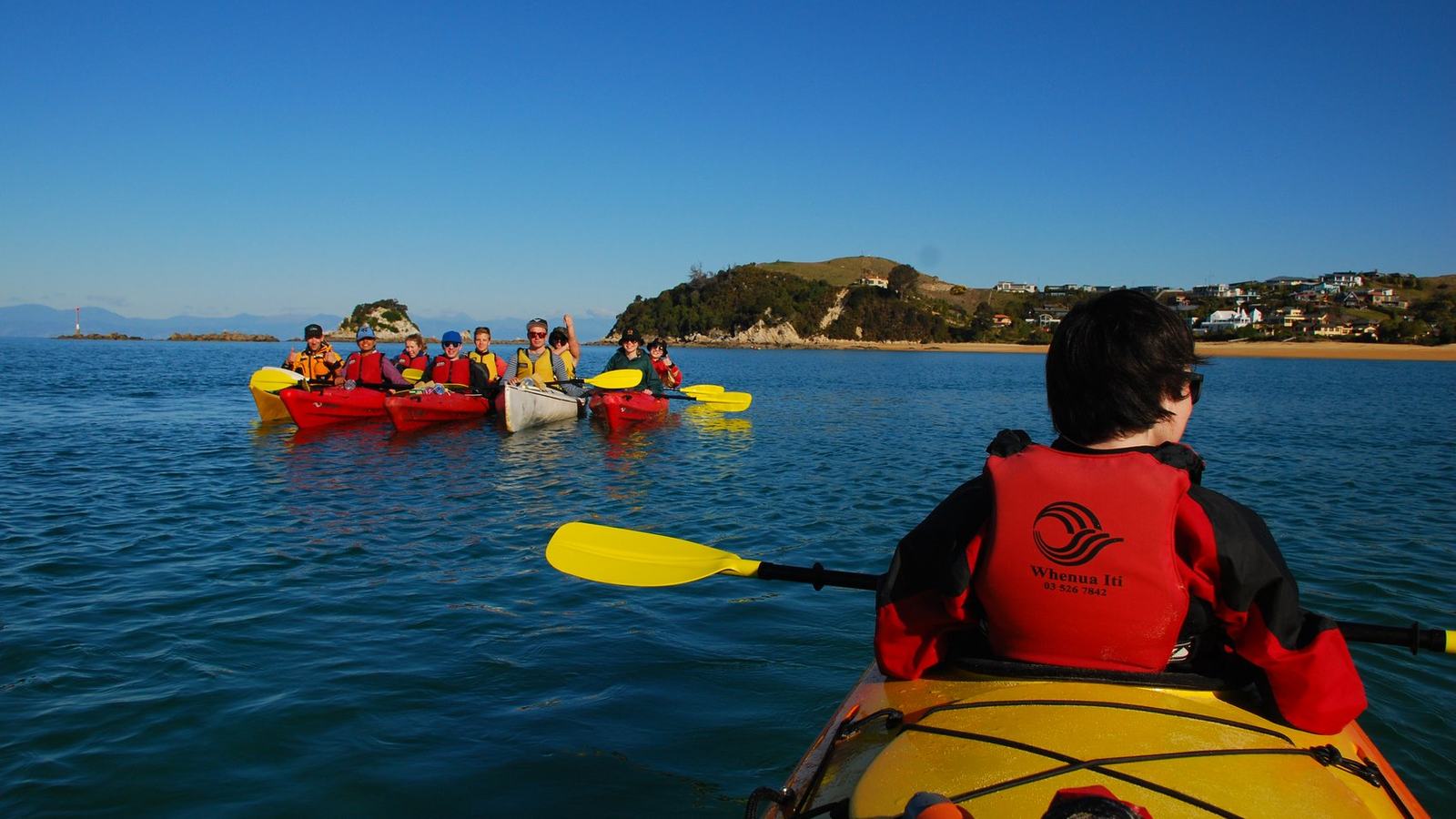
Walking the Coast Track reveals the forest and elevated views above the bays, while a sea kayak places the traveller almost at the level of the water. Paddlers can notice the shape of small coves, the curve of a sandy beach and the way coastal vegetation meets the sea. A guided excursion can help beginners understand basic paddle technique and the decisions involved in choosing a suitable route. That does not make the water risk-free; wind or changing seas may alter what a guide considers appropriate. Independent travel requires suitable experience and equipment. The purpose of a lifestyle visit should be to enjoy an appropriate part of the park, rather than to claim that every picturesque cove can be reached safely at any time. A shorter excursion may be the better choice for a family or a visitor unfamiliar with sea kayaking.
The Coast Track and the water belong together
The Abel Tasman Coast Track is internationally known, but it need not be walked from beginning to end for someone to appreciate the park. Water taxis and kayaking options create the possibility of exploring selected sections, with a beach landing and short walk where access is permitted. The detailed route, tidal crossings and availability of water transport all need confirmation before travel. The Department of Conservation provides specific track and campsite guidance, including alerts that may affect the experience. A shoreline that appears straightforward on a small map can be less simple in reality if tides affect an estuary crossing or a water taxi cannot safely land. Combining walking and boating is one of the region's appealing possibilities, but it works best with realistic timings and a proper understanding of conditions.
Golden sands come with conservation responsibilities
Visitors are naturally drawn to Abel Tasman's beaches, yet these coastal areas sit within a protected landscape. The Department of Conservation explains that the park's islands and shores support important native plants and animals. A relaxing picnic should therefore be planned with care. Do not leave rubbish, disturb nesting birds or treat protected beaches as unregulated camping sites. Rules can differ between a short day visit and an overnight stay, and the regulations governing the foreshore matter even to people who do not plan to walk inland. A kayak can reach some places that are difficult to approach by road, but access by water is not the same as permission to camp or light a fire. The best visitors enjoy the setting while helping preserve the reasons it is worth visiting.
Adele and Fisherman islands require particular care
The Department of Conservation identifies Adele and Fisherman islands as accessible by boat or kayak but states that camping is not permitted and toilets are unavailable there. The nearest toilets are at Appletree Bay. These are useful practical details because small islands can look suitable for a long stop without offering facilities. The department also asks visitors to check equipment carefully for rats, mice, ants, spiders, seeds and plant material before landing. Biosecurity is especially important for islands that do not have non-native mammalian predators and provide habitat for vulnerable wildlife. A beach visit should not inadvertently introduce a pest carried in a bag or food container. Cleaning equipment and carrying waste away are ordinary actions with a larger conservation purpose in this setting.
Some islands are not freely accessible
Tonga and Pinnacle islands have additional protections, and the Department of Conservation says public access to specially protected areas is by permit only. These measures are associated with protecting seal breeding colonies and other sensitive features. A kayaker should not regard an island as an open landing destination merely because it lies a short distance from a scenic route. The sensible approach is to consult current official maps and access guidance, and to respect any closures or restricted areas encountered. Wildlife viewing is often more satisfying when animals can behave undisturbed. A photograph taken from an appropriate distance may be preferable to landing in a place where human presence could cause harm. The protection rules are part of what makes the park's island ecology valuable.
Dogs are restricted in the park and foreshore
Visitors travelling with a pet need to pay special attention to Abel Tasman's rules. The Department of Conservation says dogs are not allowed in the national park and describes restrictions that also apply to much of the adjacent foreshore and offshore islands. There are narrowly defined exceptions in some locations and circumstances, but these should never be assumed to apply to an ordinary beach outing. A family planning a boating holiday with a dog should investigate permitted alternatives outside the protected area rather than arrive expecting to bring the animal ashore. The restrictions help protect nesting birds and other wildlife. This is especially relevant to leisure boat owners accustomed to taking pets on board. Being able to carry a dog in a private vessel does not automatically make a national-park landing legal.
Overnight trips need more preparation
The Department of Conservation advises overnight Coast Track travellers to carry suitable clothing, sleeping equipment, cooking gear and enough food, including an allowance for unexpected delays. Rain gear and warm layers matter even in a location famous for beaches and summer sunshine. Drinking-water safety also requires care: the department notes that Giardia has been found in park waters and recommends appropriate treatment. A kayak-based overnight plan has the additional challenge of keeping equipment dry and ensuring the boat remains suitable when loaded. Campsite bookings and any relevant access rules must be checked separately. A visitor should not treat an attractive bay as an invitation to camp without permission. Proper planning means an overnight adventure can be enjoyable without placing unnecessary pressure on rescue services or the protected environment.
Tides and weather cannot be ignored
A calm photograph cannot show how a bay behaves in different conditions. The water around headlands can change as wind and sea state alter, while coastal tracks may include tidal sections requiring careful timing. Department of Conservation resources direct visitors to weather information and current alerts. The park also has a visitor information app with maps, tide information and walking times. A useful trip plan compares these sources with the abilities of everyone travelling. Beginners may benefit from a professional operator who can choose a route and explain what to do if the conditions change. Experienced paddlers still need a realistic alternative plan. Neither sunny weather at the start nor a published route description guarantees that returning across open water will be simple later.
The visitor app can work offline
The Department of Conservation describes a free Abel Tasman visitor app containing points of interest, maps, environmental information, weather and tide details. It says the app can work offline and update when the device is within coverage or connected at a suitable hotspot. Named locations where the service can be available include Mārahau, Anchorage, Torrent Bay, Bark Bay, Awaroa and Tōtaranui. These features can be helpful for planning and understanding the route, but a smartphone must not be the sole means of navigation or emergency preparation. Batteries run down, devices get wet and signal conditions vary. The sensible approach is to prepare before departure, know the route and carry appropriate physical or independent navigation information where needed. Technology should support seamanship rather than replace it.
The history extends far beyond tourism
The park's coastline has a long human history. The Department of Conservation describes Māori occupation over hundreds of years, with people gathering food from the sea, estuaries and forests. Ngāti Tūmatakōkiri were living in the area when Abel Tasman's ships reached the coast in 1642. Later settlement involved logging, shipbuilding and other activities before conservation efforts led to the establishment of the national park in 1942. A modern kayak outing can pass landscapes that have been used and understood in very different ways over time. Recognising that history helps avoid treating the coastline as an empty wilderness discovered by modern travellers. Visitors should respect cultural places and any information about access or interpretation supplied by appropriate local authorities and communities.
Water taxis widen the range of experiences
For someone who does not want to paddle a full day, the availability of water taxis can make a short coastal walk possible without returning entirely by foot. The park's official information describes both scheduled and on-demand services associated with the surrounding communities. Operators can differ in landing locations, timetables and whether they provide transfers for specific walks or equipment. A passenger should verify the boarding point, pick-up location and what happens if conditions prevent an expected landing. It is unwise to assume that two services have interchangeable tickets. Using a passenger vessel can be a practical way for families and less experienced visitors to enjoy more of the coastline, while a guided kayak trip offers a more active and intimate viewpoint.
A gentle holiday does not require covering every bay
An Abel Tasman trip can become overambitious when visitors try to include too many beaches, tracks and activities in one day. The pleasure often lies in leaving time to enjoy the water, take a short walk and look at the headlands rather than rushing to reach the next location. Choosing a sheltered section under suitable conditions can produce a rewarding experience without an extreme itinerary. Families may need time for food, rest and unhurried transitions between boat and shore. Anyone arranging a combined package should confirm what equipment is provided, the level of instruction and the physical demands involved. An authentic sea-kayaking photograph of the park is useful for illustrating the activity, but it should not be used to guarantee that the same weather or water clarity will be present on a chosen date.
A responsible way to experience Abel Tasman
The most useful preparation is to read the Department of Conservation's current park rules and alerts, choose a suitable gateway, and decide whether the trip should be guided or independent. Particular attention belongs to island access, biosecurity, camping permissions, dog restrictions, tidal planning and the operation of water-taxi services. There is no need to travel the whole Coast Track to enjoy the region's character. A well-chosen small-boat excursion can reveal golden beaches and forested shorelines with an intimacy that larger transport does not offer. That enjoyment is inseparable from the responsibility of visiting a fragile coastal landscape. With appropriate planning, Abel Tasman offers a compelling example of how recreational paddling and protected nature can coexist.
Sources and photograph attribution
Official destination and boating guidance: New Zealand Department of Conservation — Abel Tasman National Park. Current access, rules, weather and reservations must be checked independently before travel.
Photograph: WhenuaItiOutdoors — Sea Kayaking Abel Tasman National Park.jpg (CC BY-SA 4.0) via Wikimedia Commons. Original image resized as JPEG. Historical authentic Abel Tasman kayaking photograph, not a promise of current weather, route access or water-taxi service. Source: https://commons.wikimedia.org/wiki/File:Sea_Kayaking_Abel_Tasman_National_Park.jpg. Licence: https://creativecommons.org/licenses/by-sa/4.0. Original rights remain with the credited creator or as specified by the source and licence.
