
A detailed Thousand Islands kayaking guide covering Parks Canada’s nine water routes, island landings, camping, navigation and wildlife viewing.
A different view of the Saint Lawrence River
Thousand Islands National Park lies in an island-studded section of the Saint Lawrence River where Canada and the United States meet. Parks Canada encourages visitors to explore portions of the protected landscape by kayak, canoe or stand-up paddleboard, offering a closer-to-the-water experience than a large sightseeing vessel. It is not an entirely carefree setting: busy navigation channels, shifting winds and the practicalities of travelling between islands require real preparation. For a capable paddler, however, the attraction is easy to understand. A quiet craft can bring the shores, rocks and wetlands into focus at a pace quite unlike an engine-powered journey. The park's official guidance describes nine mapped full-day and half-day Water Trail routes, together with equipment providers, island facilities and rules for landing. A good visit begins by choosing an appropriate section rather than assuming every channel is equally suitable.
Why paddling is different from taking a tour boat
A passenger cruise gives visitors an organised way to see a wider section of the river without handling a craft. Paddling gives the visitor responsibility for speed, steering and route choice, while placing them much closer to the wildlife and smaller shorelines. The contrast matters because this is an actively used waterway, not a boating lake closed to other traffic. Parks Canada highlights groups of islands with some shelter from the wind and with lower speed limits for other boats, but those benefits do not apply everywhere. A visitor with little experience can enjoy a guided trip rather than attempting an exposed route independently. The goal need not be travelling a long distance. A modest excursion around a suitable group of islands can be enough to notice the relationship between open water, small channels and sheltered shoreline.
Nine Water Trail routes, not one marked corridor
The official Thousand Islands Water Trail consists of maps for nine full-day and half-day routes, which can be linked to create longer excursions. The maps include access points, suggested travel times and distances, points of interest and possible hazards. Parks Canada specifically warns that they are not replacements for accurate nautical charts. That distinction is important for anyone interpreting a tourism map as if it showed every depth, marker and navigational risk. Each route should be matched with present weather, the abilities of the group and a sensible return plan. A route described as half-day does not guarantee a fixed duration, particularly in headwinds or if someone in the party is new to paddling. The park's maps help people consider possibilities while leaving safety and navigation responsibilities with the visitor.
Guides and outfitters can simplify a first visit
Parks Canada identifies local outfitters including 1000 Islands Kayaking Company and Misty Isles Lodge as offering rentals and guided tours. It also refers to other regional providers that may offer kayaks, canoes, paddleboards, suitable equipment and guidance. A visitor should check the present operating status and booking conditions of any particular company rather than presume that a historical listing guarantees availability. Guided excursions can be a useful choice when someone wants to concentrate on the scenery without spending the entire morning interpreting unfamiliar waterways. Instructors can demonstrate basic paddling technique and advise on conditions. They cannot remove every hazard or promise sightings of wildlife. The practical benefit is having a local professional help select an appropriate experience while the paddler remains engaged in the activity.
The rewards of a quiet approach
The park's visitor description mentions the chance of seeing turtles basking on rocks or a bald eagle above the river. These are possibilities, not scheduled attractions. Paddlers should avoid approaching wildlife too closely or disturbing a resting animal simply for a photograph. A boat that moves quietly can make it easier to notice details such as plants along the banks or the different shapes of the islands. The same quietness makes it important to remain visible to other water users. Reflective or bright equipment and thoughtful positioning can help, particularly where recreational boat traffic increases. The strongest wildlife experiences often come from observing patiently rather than pursuing an animal. No visit requires a guaranteed encounter to be worthwhile; the landscape itself offers enough interest across many different sections of the river.
A river with layers of history
Parks Canada's visitor materials refer to landscapes shaped by First Nations history as well as more recent river navigation and settlement. The islands also sit near historic castles and other landmarks that appear in the wider tourist story of the region. A paddler should be careful not to assume that all historic sites are publicly accessible merely because they can be seen from the water. Ownership and park boundaries vary, and a shore landing may require different permission from passing nearby. An island route can still encourage curiosity about how the river connected communities and industries long before modern recreation. Understanding that the landscape has both natural and cultural significance can change the quality of a day out. It invites more careful observation and respect for places that are not simply empty scenic backdrops.
Choosing an island stop
The park's facilities vary by island. Parks Canada says serviced islands have docks, places to beach craft, composting toilets and picnic tables, while drinking water and bathrooms with electricity and flush toilets are available on Central Grenadier Island. Other islands may have more limited provisions, so a visitor should not rely on finding drinking water or a staffed facility at every stop. The official facilities information is the right source for planning a lunch break or overnight visit. A small boat may have limited carrying capacity, making essential drinking water, dry clothing and basic safety equipment especially important. Landing conditions and available space can also change with weather or traffic. The best plan is to choose a stopping place that suits the people and craft rather than treating every island as interchangeable.
Camping gives the outing another dimension
Parks Canada describes island campsites and recommends reservations. Some locations may offer first-come, first-served options, but availability is not guaranteed at a particular time. A camping trip adds considerations that do not arise on a short afternoon paddle, including food storage, dry sleeping equipment, weather changes and a workable alternative if the intended site is full. The organisation notes that travelling among groups of islands can make it easier to consider another site, though that should not be taken as permission to land or camp anywhere. Current camping regulations and reservation conditions need to be checked directly. A small craft carrying camping equipment also handles differently from the same kayak on a day trip. Packing deliberately can help preserve stability and reduce the temptation to take unnecessary items.
Mooring and beaching permits are required
The official paddling information states that vessels need a valid mooring or beaching permit when using relevant park landings, and directs people to the current park fee schedule. It says permits are purchased on arrival at the island. A visitor should still check for any changed administrative arrangements before travelling, since park operating practices can be updated. The requirement is easy to overlook for paddlers who are accustomed to pulling up on any inviting beach. Protected islands are managed spaces, and small craft are not automatically exempt from the rules applying to larger boats. Island attendants may be available to assist with fees and facilities. Respecting those arrangements helps make the park usable for different kinds of visitors without sacrificing its conservation purpose.
Summer crowds and quieter alternatives
Parks Canada identifies July and August as the busiest visitor months. It notes that June and September can have less boat traffic and a quieter atmosphere. These observations provide a planning guide, not a promise that early or late-season conditions will always be calmer. The weather can be cooler, services may have different hours and water temperatures matter to anyone in a small craft. A visitor who values solitude may prefer a shoulder-season trip but should weigh that against daylight and conditions. Someone travelling with children or beginners may prioritise equipment availability and easier logistics instead. There is no single ideal date for every paddler. The relevant decision balances the experience people want with their realistic abilities and the services available.
Being visible to faster boats
The Saint Lawrence is not a private paddling course. Even around relatively sheltered islands, kayakers can encounter motorboats and other traffic. A low craft is harder to see from some helms, particularly near corners or where glare reflects from the surface. Good route planning should avoid unnecessarily exposed crossings, and paddlers need to watch ahead and behind. It is not enough to believe that a motorboat operator will always notice a kayak in time. Clothing, boat colour and the ability to communicate can all contribute to safety, although no single item guarantees visibility. The park's advice to use accurate nautical charts is particularly relevant here. Knowing where main channels and navigation hazards lie is essential before setting off, even if a tour map makes a route seem visually simple.
A day can be rewarding without a long crossing
A first-time visitor may be tempted to select a distant island because it appears particularly photogenic. Yet one of the benefits of kayaking is the pleasure of making an unhurried journey rather than recording the greatest mileage. A sheltered outing near a suitable access point can provide time to learn technique, stop for photographs and enjoy an appropriate picnic. Guided trips may also include breaks and local interpretation. The exact duration and route will depend on conditions and the operator's judgment. An ambitious route is not automatically a better holiday. The most enjoyable day is often the one that leaves enough energy for the return paddle and gives everyone in the group a sense of confidence, rather than turning the final section into a struggle.
Keeping a protected island landscape healthy
Waste management is an important part of an island visit. Parks Canada describes the availability of garbage and recycling collection on certain sites, but visitors should check whether the particular landing has those facilities and be prepared to carry out their own waste. Wildlife should not be fed or disturbed, and plants and natural materials should be left where they belong. A campfire may be possible in approved facilities under current rules, but an island picnic should never assume that any open beach is a suitable fire location. The best approach is to use designated facilities and the official park information for that day. Paddling can have a relatively light physical footprint, but thoughtful behaviour ashore is just as important as how the boat is propelled.
Planning a realistic Thousand Islands trip
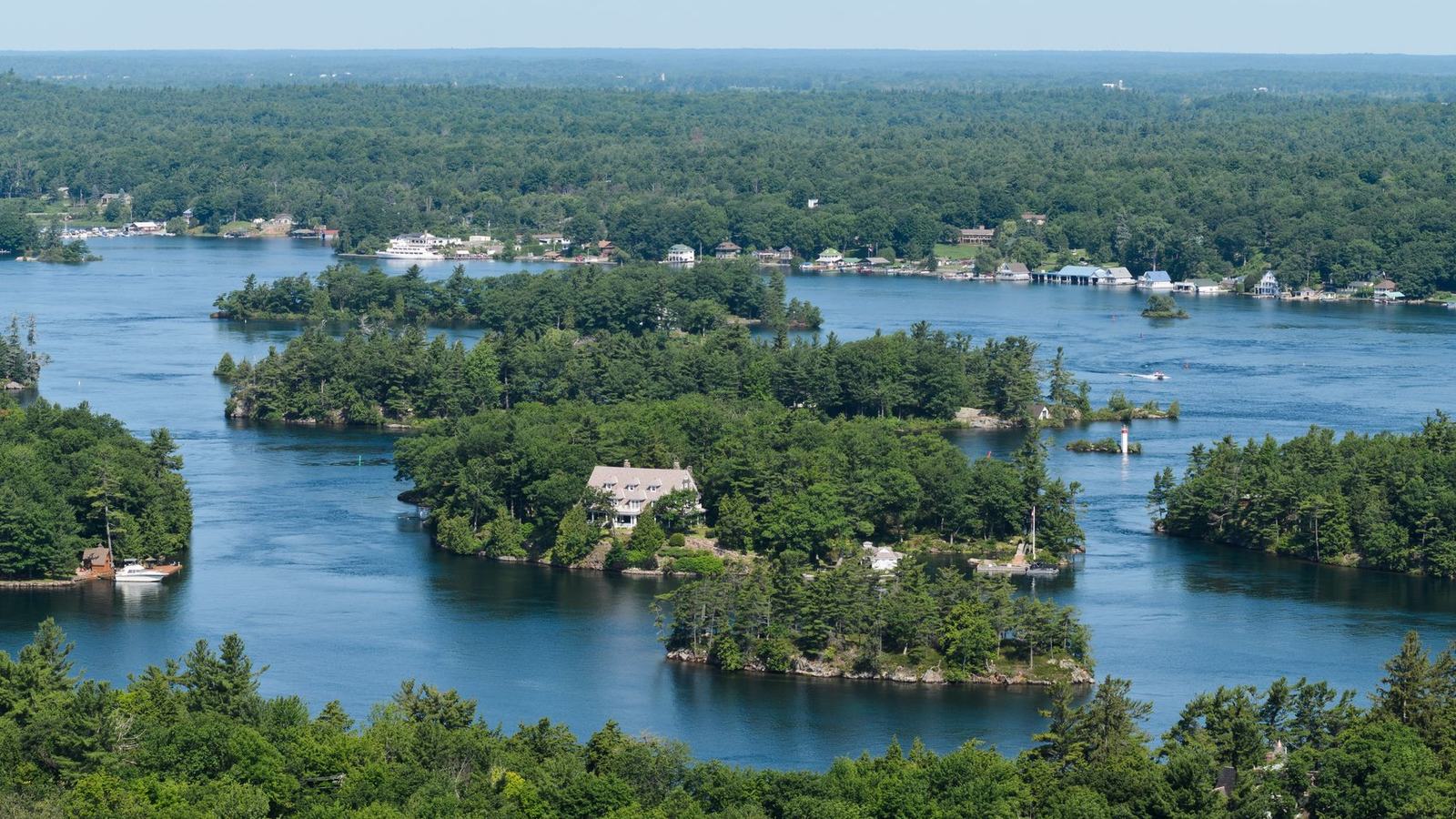
The strongest starting points are Parks Canada's current Water Trail maps, island facility information, fee details and visitor-safety guidance. Travellers should then choose whether their experience and equipment suit an independent outing or a guided excursion. A suitable plan identifies launching and landing places, takes account of changing conditions and includes a return option. It also leaves room for enjoying the river rather than treating the day as a race between map coordinates. The accompanying historic image of the Saint Lawrence Thousand Islands is a contextual view of the area, not evidence of the current route or an operating kayak service. As a boating lifestyle destination, this landscape offers something special: the chance to approach a famous river from the scale of a very small craft, provided the visitor respects both its beauty and its working-waterway realities.
Sources and photograph attribution
Official destination and boating guidance: Parks Canada — Paddling in Thousand Islands National Park. Current access, rules, weather and reservations must be checked independently before travel.
Photograph: King of Hearts — 1000 Islands Tower view July 2015 001.jpg (CC BY-SA 4.0) via Wikimedia Commons. Original image resized as JPEG. Historical location photograph of the Saint Lawrence Thousand Islands seen from the Thousand Islands Tower, not evidence of a particular Water Trail kayaking route or current conditions. Source: https://commons.wikimedia.org/wiki/File:1000_Islands_Tower_view_July_2015_001.jpg. Licence: https://creativecommons.org/licenses/by-sa/4.0. Original rights remain with the credited creator or as specified by the source and licence.
