
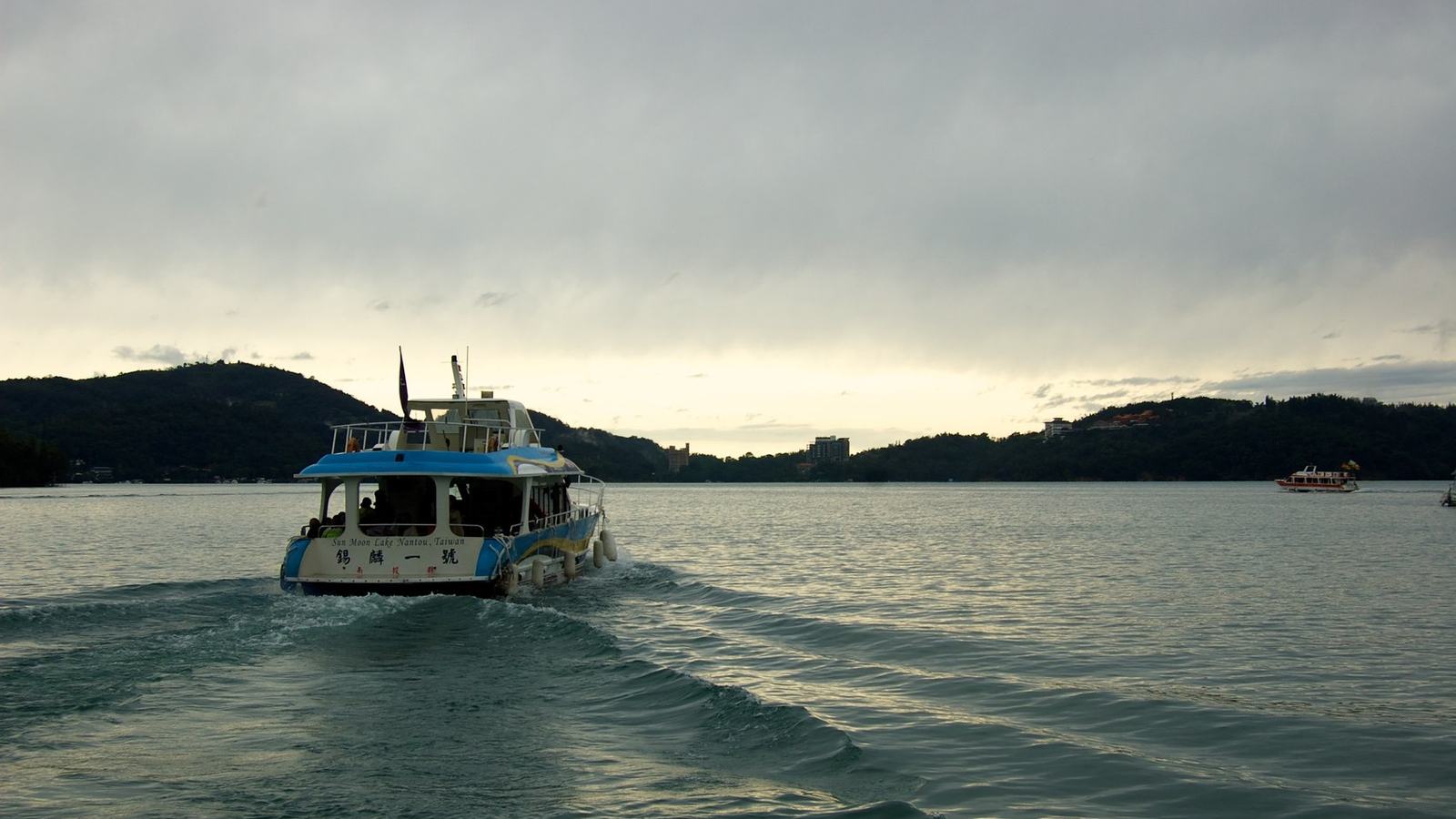
An original guide to Taiwan’s Sun Moon Lake by passenger ferry, its Shuishe–Xuanguang–Ita Thao circuit, lakeside villages and safe family boating.
Sun Moon Lake in Taiwan is a destination where a short passenger-boat journey can do more than carry visitors between attractions. From the water, the wooded slopes seem closer, lakeside settlements appear as part of a shared landscape and the rhythm of the day becomes easier to organise around a few deliberate stops. Taiwan's Sun Moon Lake National Scenic Area Administration explains the main ferry circuit connecting Shuishe, Xuanguang Temple and Ita Thao. The official visitor information is practical as well as scenic: it describes where passengers board, how the boats travel and how to connect with other experiences. For leisure boaters and families, the interest is in seeing an inland waterway through its working passenger-boat system rather than mistaking it for an unrestricted private boating lake.
Three piers form the basic journey
The scenic area administration identifies Shuishe Pier, Xuanguang Temple Pier and Ita Thao Pier as the three principal points for the tourist ferries. Its visitor transport information describes a counterclockwise circuit from Shuishe to Xuanguang Temple to Ita Thao and back to Shuishe. That sequence is a useful framework for planning, but it should not be taken as a permanent guarantee of departures or stops. Weather, operator schedules and temporary restrictions can change service arrangements. A traveller who understands the basic circuit can decide whether to remain aboard for a round trip or plan time ashore, while checking the latest timetable before setting out.
Beginning at Shuishe
Shuishe is a convenient orientation point because it combines a lakeside settlement with onward visitor services. Rather than rushing straight into the first available queue, take time to locate the boarding area, compare operator information and determine whether a ticket permits a later return. A lake day becomes more relaxing when the transport arrangements are clear at the beginning. Families should establish a meeting point away from the busiest part of the pier and allow extra time for young children, luggage or mobility needs. The vessel may be small compared with a seagoing ferry, but the basic principles of safe embarkation and following crew instructions are the same.
Xuanguang Temple from the water
The Xuanguang stop adds a different dimension to the circuit. Instead of seeing the lake only from the moving boat, travellers can step ashore and connect the waterside landscape with the cultural sites above it. The administration's travel guidance places Xuanguang among the recognised visitor stops and mentions Xuanzang-related religious heritage elsewhere in the area. An unhurried visit lets the scenery, architecture and movement of people at the pier form a coherent experience. It is important to keep the distinction between an actual ferry stop and a promise of access to any specific temple building: opening times and local access guidance should be confirmed separately.
Ita Thao and a change of pace
At Ita Thao the ferry journey connects with shops, food and further attractions, including the area associated with the Sun Moon Lake ropeway. The official visitor FAQ describes taking a ferry from Shuishe to Ita Thao and continuing on foot towards the cable car station. This is a good example of why the boat is more than a sightseeing loop. It can be one leg of a varied day that mixes transport, walking and a meal. Visitors should still consider the return journey before spending too long ashore. Last services, queues and local weather can make a loosely planned afternoon less pleasant than it seemed in the morning.
Reading a lake rather than a road map
A ferry gives a distinctive sense of distance. A landmark that appears nearby across the water may require an indirect trip on land, while two villages separated by a winding road may feel connected from the deck. This is one reason the three-pier circuit is such an engaging way to understand Sun Moon Lake. Photographs taken from shore also flatten distances that the boat reveals. Watch the transition between open water, the more settled pier approaches and the quieter wooded stretches. Even without a private craft, a traveller can experience the decisions about route, exposure and proximity to shore that make waterborne journeys different from ordinary sightseeing.
Passenger safety on a small vessel
When taking a scheduled tourist boat, passengers should follow the operator's instructions about boarding, movement on deck and flotation equipment. A pier can be slippery, particularly in wet weather, and a passenger carrying several bags may lose balance while stepping across a gap. Keep hands free where possible, help children without obstructing the crew and wait for an explicit signal before embarking. Once aboard, avoid leaning over the rail or changing seats suddenly to obtain a photograph. These habits are simple but matter most on vessels where the people and boat respond quickly to changes in movement and balance.
Why conditions still matter on inland water
A mountain-framed lake may look calm from one shore while conditions are different across an exposed stretch. Wind can raise short, steep waves, especially for smaller craft, and sudden rain may reduce visibility. Tour operators are responsible for deciding whether to sail, but visitors should also allow their itinerary to change when conditions deteriorate. Do not pressure staff to depart after a cancellation or assume that another operator has identical limits. For independent canoeists or paddleboarders, the decision-making burden is greater still: check permitted areas, local rules, suitable equipment and the return route instead of copying the path of a commercial vessel.
A day that combines boat and bicycle
The scenic area administration also publishes visitor ideas linking the ferry with cycle routes around parts of the lake. That combination can be attractive to travellers who enjoy moving slowly through a landscape, but bikes and boats are not automatically interchangeable transport. Confirm whether a particular ferry will carry a bicycle and what ticket or loading requirements apply before arranging a one-way ride. On roads and shared paths, follow the official route guidance rather than treating a waterside photograph as evidence that the entire shoreline is cycle-friendly. A modest stretch of cycling followed by a confirmed ferry journey is often easier to manage than an ambitious loop.
Food, rest and a humane timetable
A good lakeside day leaves enough room for a meal, a quiet view and ordinary travel delays. At a place with several popular piers, time spent in a queue is part of reality rather than proof that an itinerary has gone wrong. Plan one principal activity between sailings rather than stacking several bookings whose timings depend on one another. Visitors with children or older companions may appreciate a comfortable pause at Ita Thao or Shuishe instead of spending the whole day transferring between attractions. The quality of the experience is often determined more by the freedom to linger than by the number of stops collected.
Respecting cultural and natural settings
Sun Moon Lake is not merely a set of scenic backdrops. Its settlements and religious sites have their own cultural significance, while the surrounding water and hills support an environment affected by tourism. Treat temple areas with the respect appropriate to an active place of worship, observe signs and avoid turning other visitors into unwanted subjects of photography. Around the lake, take litter away and stay within marked public areas. From a boat, never throw food or wrappers overboard. A low-impact holiday does not depend on owning a low-powered vessel; it begins with dozens of small decisions that respect the places being visited.
Photography along the circuit
A ferry trip provides changing viewpoints and often attractive reflections, but the brightest view is not necessarily the best moment to reach for a camera. Glare and motion can make images difficult, and the temptation to stand or lean at the wrong time can compromise safety. Choose a stable position permitted by the crew, secure the camera strap and let the journey unfold. A photograph of a ferry approaching a pier tells a different story from a wide lake panorama, and both help explain how the three stops relate to one another. Good photographs can be made without obstructing gangways or disturbing fellow passengers.
Understanding what tickets include
Do not assume that every ticket sold near a pier grants the same boarding rights, stopovers or validity period. The scenic area has multiple tourist services and combinations, including arrangements linked to attractions beyond the water. Consult the official administration's transport pages and the individual operator's published terms before paying. Ask practical questions: which pier is the first departure, can passengers disembark and board later, when is the final return, and what happens if weather interrupts a service? Written confirmation of these details is more useful than relying on a remembered timetable from an older travel blog.
The importance of up-to-date official advice
The administration's website provides information about transport, attractions and frequently asked questions, but visitor conditions can change between the date a guide is written and the day someone arrives. Any specific ferry timetable or fare should therefore be checked again directly with the operating company. This November 2026 article describes the established three-pier arrangement without claiming that one departure time is guaranteed for future visits. The same caution applies to any local restrictions on private powered craft, paddling and shore access. Readers should rely on the current official notices, not interpret the presence of ferries as a general boating permit.
A practical family plan
For a comfortable first visit, choose a starting pier, identify the intended stopping point, agree on a return strategy and then leave flexibility for a scenic pause. A family might travel from Shuishe, explore one shore destination and return without attempting every possible activity. Keep travel documents and water protected from spray, carry sun protection and confirm accessibility needs with the operator in advance. An unexpected shower or a crowded boarding area should be manageable rather than disastrous. The point is not to complete the lake as a checklist; it is to enjoy the way movement across water changes the experience of a beautiful destination.
What the ferry reveals about leisure boating
The Sun Moon Lake circuit illustrates the social side of boating as clearly as any private cruise. A relatively short water journey joins communities, supports tourism and gives passengers a perspective they cannot obtain from a road. For a small-craft enthusiast it is also a reminder that good operations depend on safe boarding, reliable information and respect for weather. Visitors who arrive without a vessel can still enjoy the essential pleasure of being afloat. The most memorable part may be a few quiet minutes between piers, when the next village slips briefly out of sight and the lake becomes the focus of the journey.
Sources and photograph attribution
Official destination and boating guidance: Sun Moon Lake Scenic Area Administration — Traffic in the Area. Current access, rules, weather and reservations must be checked independently before travel.
Photograph: Alexander Rudy — 2012-01-16 Ferries on the Sun Moon Lake.jpg (CC BY-SA 2.0), via Wikimedia Commons. Resized and converted to JPEG for display. Source: https://commons.wikimedia.org/wiki/File:2012-01-16_Ferries_on_the_Sun_Moon_Lake.jpg. Licence: https://creativecommons.org/licenses/by-sa/2.0. Original rights remain with the credited creator or as specified by the source and licence.
