
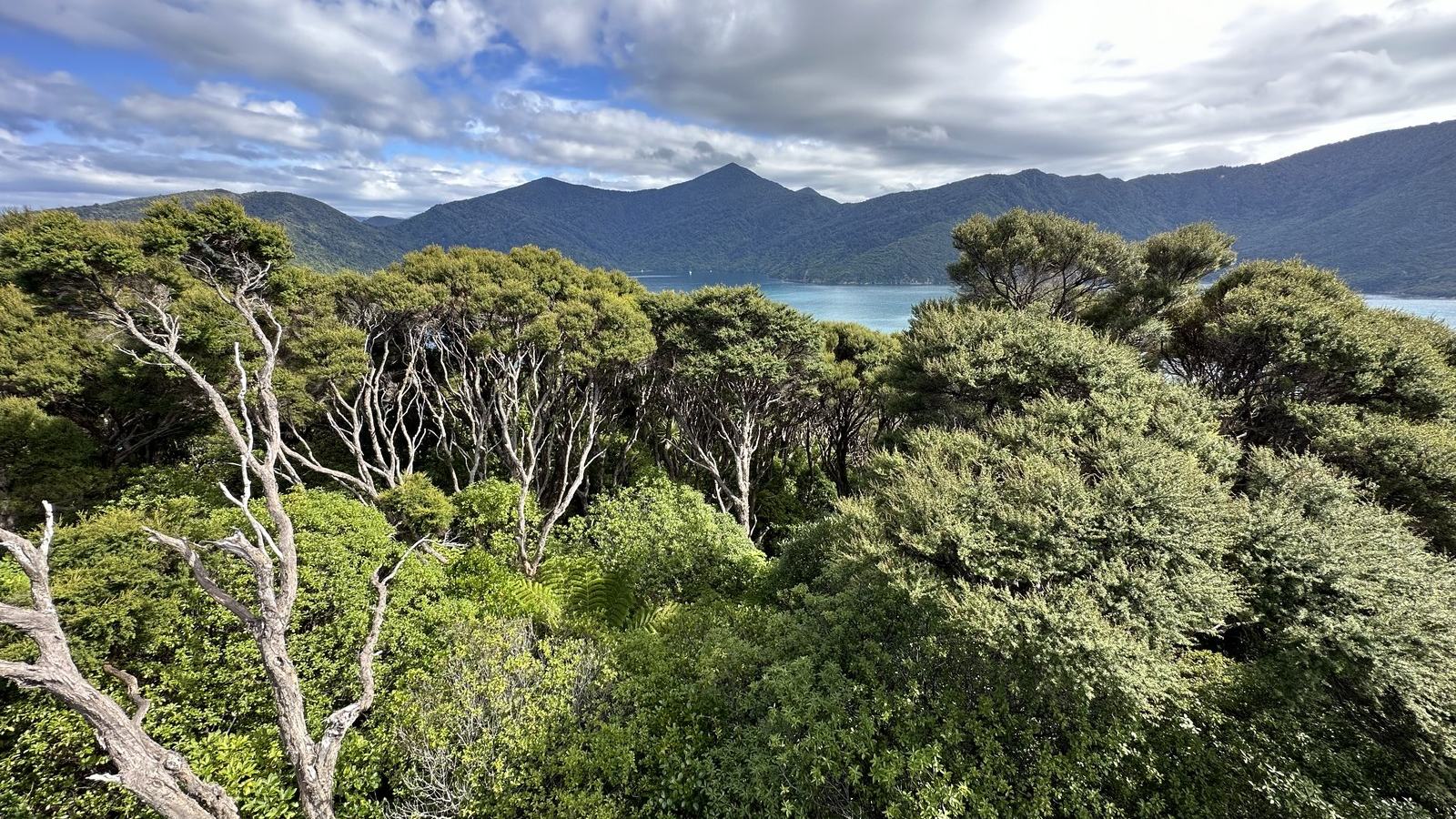
A detailed original small-boat guide to New Zealand’s Motuara Island, the DOC lookout track, bird refuge, safe landings and sensitive island habitat.
Motuara Island stands near the entrance to New Zealand's Queen Charlotte Sound, opposite historic Ship Cove in the Marlborough Sounds. It offers an appealing small-boat combination: a voyage through sheltered-looking but changeable coastal water, an island landing and a walking track to views above the surrounding channels. The Department of Conservation says visitors can arrive by their own boat, on a scenic cruise or by sea kayak. Its guidance also makes clear that the island is a refuge for native birds, not an unrestricted picnic stop. For anyone planning a trip by a boat under twelve metres, the attraction is to combine a manageable passage with careful, low-impact time ashore.
An island destination rather than a long crossing
The geographical appeal of Motuara is its place within the wider network of bays, headlands and islands that define Queen Charlotte Sound. The Department of Conservation puts it opposite Ship Cove and approximately 32 kilometres from Picton. That figure describes its general position, not a recommended route length for any individual vessel. A charter, water taxi and private dinghy may make quite different journeys depending on their departures and conditions. Visitors should plan an actual route from their own approved berth or launch, taking into account the sound's channels, local traffic and the protection available if the weather changes.
A reserve with conservation at its centre
DOC describes Motuara as a scenic reserve and highlights the chance to encounter rare native birds, including saddleback and yellow-crowned parakeet, alongside familiar New Zealand species such as kererū, tūī, grey warbler and bellbird. The birds are the reason to approach the island with restraint. Landing at a reserve does not confer permission to wander away from marked routes or interfere with feeding or nesting areas. Much of the pleasure comes from standing quietly, listening and allowing wildlife to continue behaving normally. The boat is simply the means of reaching a place whose principal value lies in its protected ecology.
The approach from Picton
Picton is a common point of reference for Marlborough Sounds journeys, with boating facilities and established connections to the surrounding water. A private owner should nevertheless avoid interpreting a map distance as evidence that a trip will be straightforward. The same distance can feel entirely different in calm weather and in a strengthening breeze across an open reach. In a small motorboat, fuel reserve and engine reliability matter; in a kayak, wind direction, exposure and the availability of qualified accompaniment matter even more. Check local charts, current maritime guidance and the weather in the actual sound before selecting a departure or promising a specific arrival time.
Choosing the right way to get there
A scenic cruise offers a way to visit without taking responsibility for navigation or finding a landing, while a kayak can deliver a closer-to-the-water experience for properly prepared paddlers. A private motorboat gives the owner more flexibility but also places every decision about anchoring, shore transfer and safe return on the skipper. These are different activities, not interchangeable versions of the same trip. Someone unfamiliar with local water may be happier booking a professional operator and observing the route before considering a future independent visit. The correct choice depends on the weakest member of the party, the forecast and the boat available.
The jetty and the first few minutes ashore
The DOC description of the Motuara Island Lookout Track refers to a jetty and a bird-viewing station only about a five-minute walk from it. That can make a quick wildlife visit attractive for passengers who do not intend to complete the whole ascent. Yet a jetty is not a guarantee that every private boat can use it whenever desired. The skipper should confirm current landing arrangements, whether commercial operators have priority and the safe method of transferring passengers. People should put on appropriate footwear and keep their hands free when stepping from a small boat to a fixed structure, especially when the water is moving.
The lookout track is part of the experience
The island's lookout walk climbs towards a summit viewpoint above Queen Charlotte Sound. Along the way DOC notes the bird-viewing station and Cook's Cairn near the top, giving the walk both natural and historic points of interest. It is worth treating the hike as a separate activity with its own requirements, rather than something to rush through before sailing home. Walking conditions may be slippery after rain, and the climb may not suit every visitor equally. The group should decide how long to spend ashore before leaving the boat, allowing for the return walk, changing sea conditions and the limitations of any booked operator's schedule.
Birdwatching with patience and distance
The best wildlife encounters are often quiet and unplanned. A visitor who slows down near the viewing station may notice movement in the undergrowth or hear calls before seeing a bird. Disturbing a habitat to improve a camera angle defeats the reason to visit. Keep noise down, avoid feeding birds and allow adequate space around any nesting or resting animal. Binoculars are useful because they make distance an advantage rather than an inconvenience. The landscape also deserves attention: even without a rare sighting, the changing light on the sound and the unfamiliar bird calls make a distinctive day out.
Keeping pests off a sanctuary island
An island refuge depends on visitors taking biosecurity seriously. Small boats can carry plant material, seeds, insects, rodents and other unwanted organisms in equipment, footwear or stores. Before departure, inspect the vessel, bags, food containers and shoes, and follow DOC's current pest-free island guidance. Do not leave rubbish or food scraps behind, and never assume that a bag of equipment which was clean at home remained clean throughout a day in a busy marina. Biosecurity is not a decorative conservation slogan; one accidental introduction can undermine hard-won protection for species that have few alternative safe habitats.
Food and rubbish need a plan
DOC's education material on Motuara notes that the island has no picnic areas or rubbish bins. Visitors therefore need to arrive with an orderly plan for water, food and waste. A snack taken on the boat or at an appropriate point should be securely packed so that wrappers cannot blow into the water. Do not scatter crumbs to attract birds, and do not leave biodegradable scraps on the island. The principle applies just as much to a family arriving on a short cruise as to people sailing their own craft. Taking everything back aboard is part of the admission price for enjoying a protected place.
A kayak is not always the gentler choice
A sea kayak has little noise or wake, and it can seem the obvious choice for an environmentally sensitive destination. But environmental suitability also depends on where a paddler lands, whether the approach disturbs birds and whether the party is genuinely capable of managing changing water. A tired or underprepared paddler may make more intrusive decisions when searching for emergency shelter. Use only permitted landing areas and avoid approaching wildlife along the shoreline. A guided sea-kayaking trip with an operator who understands the reserve can be the better choice for visitors without established local experience.
Safety in Queen Charlotte Sound
The long inlets of the Marlborough Sounds can look protected because land is visible on several sides. Wind, however, can funnel along channels and create uncomfortable water for small or lightly loaded boats. Current forecasts, tide and wind information should be assessed before departure and again before leaving the island. The skipper needs an alternative if the intended route becomes exposed, and enough fuel or paddling reserve to return without gambling on conditions improving. Passengers should know where suitable flotation devices are kept and how to use them. A small-boat excursion is most relaxing when the safety decisions have been made before people become distracted by the scenery.
Sharing channels with working vessels
The Sounds are used by more than leisure craft. Ferries, commercial tours, fishing boats and other operators may share parts of the same waterways. A kayak is not easy to see at a distance, while a small powerboat can also be obscured by headlands or glare. Skippers should maintain a proper lookout, use available navigation information and avoid abrupt manoeuvres in traffic. Do not linger unnecessarily near ferry approaches or assume that a larger vessel can change course quickly. A pleasant island itinerary needs to be integrated into the movement of the wider waterway, rather than treated as a private nature trail.
The significance of nearby Ship Cove
Motuara lies opposite Ship Cove, a place with an important history in the maritime story of the Sounds. DOC's visitor material points to Cook's Cairn on Motuara, offering a reminder that the harbour has been known and travelled long before today's pleasure craft and day-tour boats. Historical interest is best appreciated with care: do not remove material, disturb sites or improvise access to places outside the permitted track. Reading the official interpretive information before visiting can make the landscape more intelligible. It also gives younger travellers a reason to be curious about what they see beyond the immediate appeal of birds and sea views.
A comfortable itinerary for mixed ages
An achievable family plan might consist of a daylight departure, a carefully managed landing, time at the bird-viewing station and only as much uphill walking as everyone enjoys. The lookout can be a goal but not an obligation; someone who prefers to remain near the lower track should not feel that they have missed the entire island. Carry drinking water, sun protection and suitable footwear, and agree on the latest departure from shore before the day becomes busy. A slow journey with room for unexpected wildlife is more likely to create good memories than a timetable dependent on every member walking at the same pace.
Photography without changing the scene
Photographs of Motuara can show forest, sky, water and the intimate presence of birds, but the photographer should not draw an animal towards the lens with food or calls. A longer lens and patient observation reduce the temptation to leave the track. Keep camera equipment securely packed during a wet boat transfer and avoid placing loose gear where it might fall overboard. A lookout photograph can communicate the island's relationship to the wider sound, while a picture of a simple trail detail can tell the quieter conservation story. Both are stronger than an image obtained by causing avoidable disturbance.
Returning with the island unchanged
The most successful Motuara excursion ends with a safe boat journey home and no visible sign that the visitors were there. That means no rubbish, no interference with birds and no improvised landing that damages a sensitive shore. It also means an informed choice about when to depart so that a wildlife visit never becomes a risky race against the weather. DOC's current access and biosecurity guidance should be the last source checked before setting out. For owners of small recreational craft, Motuara is a reminder that the privilege of reaching a beautiful place by water comes with responsibility for the vessel, the passengers and the habitat ashore.
Sources and photograph attribution
Official destination and boating guidance: Department of Conservation — Motuara Island Lookout Track. Current access, rules, weather and reservations must be checked independently before travel.
Photograph: Tom Ackroyd — Motuara 1.jpg (CC BY-SA 4.0), via Wikimedia Commons. Resized and converted to JPEG for display. Source: https://commons.wikimedia.org/wiki/File:Motuara_1.jpg. Licence: https://creativecommons.org/licenses/by-sa/4.0. Original rights remain with the credited creator or as specified by the source and licence.
