
A first-party-sourced guide to the National Park Service’s 2026–27 Turner River ranger-led canoe and kayak programme in Big Cypress National Preserve.
Florida's Big Cypress National Preserve is announcing a new season of ranger-led outings for winter 2026–27, including paddling along the Turner River. This is a different proposition from an independent kayak journey through a wetland: the National Park Service offers a guided experience in which visitors learn about the preserve while travelling in a canoe or kayak with a ranger. The park's updated November 23 visitor notice says Turner River canoe trips begin on November 28, 2026, with specific schedules, equipment and reservation conditions; they have not yet started as of this article's publication date. Even so, the correct first step is to verify a place and departure details rather than assume that every advertised programme has launched on schedule. For leisure paddlers, the attraction is an informed introduction to a landscape where water, vegetation and wildlife are inseparable.
What the new seasonal programme says
The NPS schedules Turner River canoe programmes on Mondays and Thursdays through Saturdays at 9:00 a.m., with outings generally lasting one and a half to two and a half hours. Canoe trips start November 28, 2026. Children aged five and over may be eligible, but the NPS explicitly requires basic canoe and paddle experience. Canoes, paddles and flotation jackets are provided, although children weighing under 50 pounds must bring an approved life jacket. These are published programme details, not a guarantee that a place is available on any particular date. National park operations can change as water levels, staffing and conditions change. Visitors should use the current reservations and activity guidance to confirm the schedule, meeting point, equipment arrangements and any participation restrictions before setting aside a travel day.
Why winter is different in South Florida
Big Cypress has a seasonal rhythm shaped by rainfall and water levels. A winter visit can offer a different experience from the warm, wetter part of the year, but travellers should avoid assuming that a calendar date alone guarantees comfortable conditions. Water depth, temperature, sun exposure and the presence of insects may all affect a trip. A ranger-led programme is designed around the preserve's available conditions and interpretive objectives, yet participants remain responsible for arriving prepared. Lightweight sun protection, appropriate clothing and drinking water are often more useful than bulky expedition equipment for a morning outing. Always follow the specific equipment advice provided with the booking.
A water trail that changes its appearance
The Turner River passes through a landscape of cypress, waterways and mangrove habitat associated with the preserve. A canoe or kayak can take a visitor close to patterns that are hard to appreciate from a roadside viewpoint: the arrangement of roots, the subtle change in vegetation and the way shaded water contrasts with open passages. The experience need not involve covering a long distance. Small craft are well suited to slow observation, but confined or shallow sections require care with paddles, hull position and any instruction from the guide. Participants should resist the temptation to force a boat into a side channel simply because it looks like a convenient shortcut.
Guided does not mean without risk
A ranger's presence offers information and leadership; it does not eliminate the ordinary hazards of moving a small craft through natural water. Participants should listen to the safety briefing, wear the required flotation equipment and ask for clarification if they are unsure how to manoeuvre or stop. Because the NPS requires basic canoe and paddling experience, someone who has never paddled should gain suitable practice before attempting to reserve this programme rather than treating it as a first lesson. Everyone should understand what happens if they become tired, capsizes occur or weather changes. Choosing a guided outing is a responsible decision precisely because it makes these practical matters part of a structured activity.
How to book rather than simply arrive
The National Park Service accepts ranger-led programme reservations only one month ahead and directs Turner River canoe guests to book through Nathaniel P. Reed Visitor Center at (239) 695-1168. The programme notice also identifies no canoe trips on December 5, 2026, or December 23 through January 1. Current ranger-led activities and reservations information should always be checked together, because an attractive activity description does not prove that walk-up spaces are available. Check whether advance registration is required, where visitors meet, which equipment is supplied and whether any fee or cancellation condition applies. Programme capacity may be limited, and a group with several children or different ability levels should seek confirmation for every participant. A reservation should be treated as complete only when the park or authorised booking system confirms it; a screenshot of an old timetable is not a substitute.
Children and less-confident paddlers
The published minimum age of five makes the ranger-led tour relevant to some families, but age eligibility is not the same as readiness, and basic canoe and paddle experience is required by the NPS. A child should be comfortable wearing a properly fitted flotation device and following simple instructions over a potentially unfamiliar period on water. Parents should think about the child's attention span, confidence and ability to remain seated without repeatedly reaching over the side. Adults inexperienced with paddling also benefit from honest preparation. The aim is for every participant to notice the wetland and enjoy the outing, not to turn a scenic morning into a difficult endurance test.
Wildlife is best observed, not approached
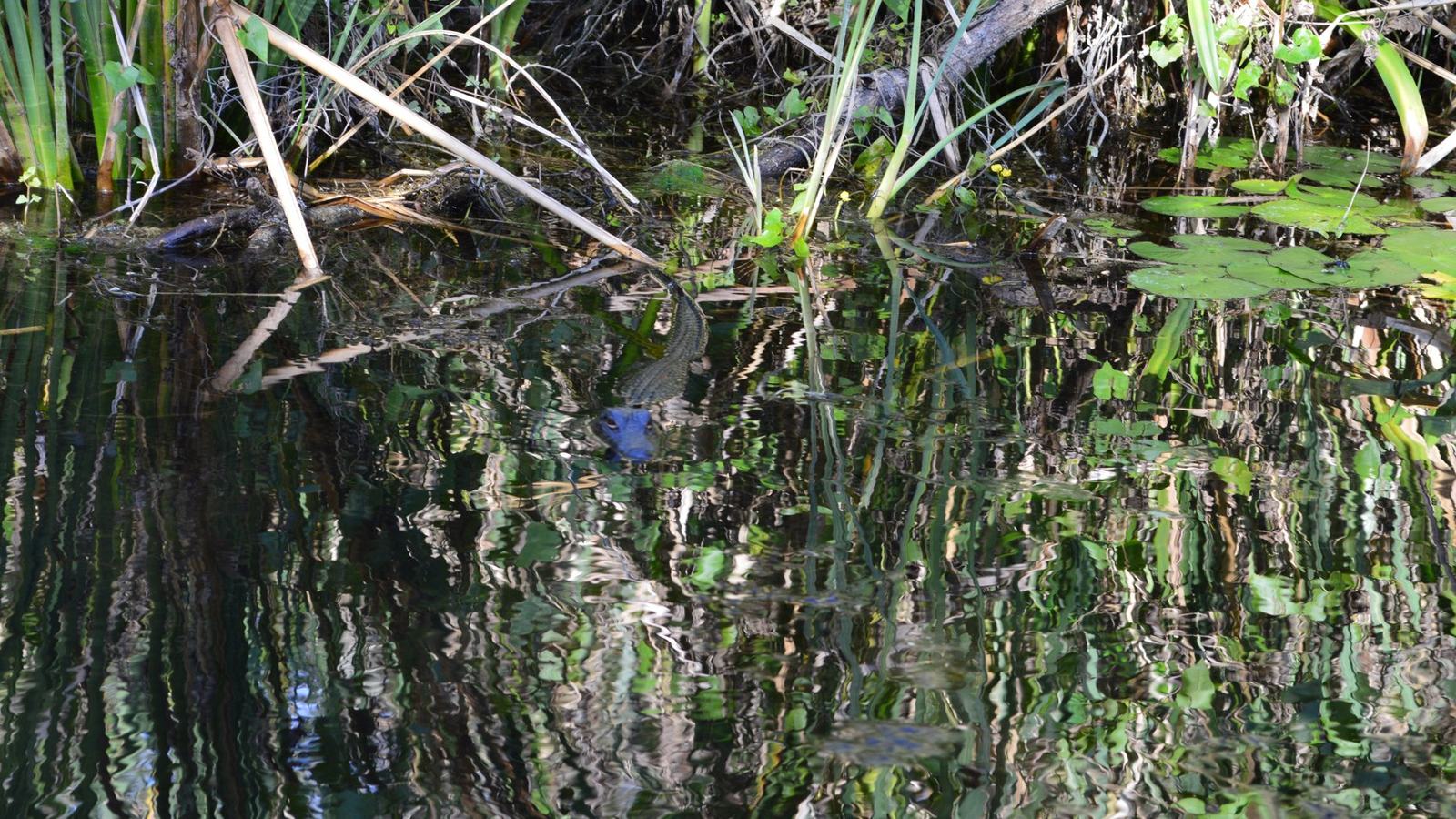
Big Cypress is a refuge for varied wildlife, and paddling can provide an unusually quiet viewpoint. Alligators are among the animals associated with the Florida wetland environment, but visitors should never attempt to approach, touch or feed them. The same general restraint applies to birds and smaller animals. A ranger may point out signs of wildlife that participants would otherwise miss, and those observations are part of the value of the guided format. The objective is not to collect a photograph of every species. Maintaining appropriate distance preserves the animals' normal behaviour and reduces the chance of an avoidable dangerous encounter.
The appeal of mangrove and cypress scenery
A paddle through this region can be memorable for small-scale details rather than panoramic landmarks. Water may be dark beneath vegetation, sunlight may appear in narrow bands and a bend can reveal a completely different composition of roots and foliage. That layered scenery helps explain why the preserve is not an ordinary recreational lake. An interpretive trip gives visitors a chance to understand the relationship between water movement, plants and wildlife instead of seeing the landscape as an obstacle course for boats. It is worth slowing down when the ranger is explaining a feature, even if the next bend seems inviting.
Respecting a national preserve
A protected area is not a place where visitors may cut a new route, break vegetation or collect interesting natural objects. Use the approved activity route, avoid unnecessary contact with roots and banks and take every item of litter away. Paddles should be used with care where vegetation is close to the hull, and visitors should not pull branches aside merely to make a photograph possible. Even if a small boat leaves no engine noise, it can affect sensitive habitat through careless handling. A successful tour should improve a visitor's understanding of the wetland while leaving the route and surrounding life as undisturbed as possible.
Camera equipment and water
A kayak or canoe exposes possessions to splashes, occasional contact with branches and the possibility of a capsize. Expensive camera equipment should be packed accordingly, not balanced unsecured across a seat. A small waterproof pouch, a secured strap and simple controls may be more practical than a large collection of lenses. Ask the guide when photography is appropriate and be ready to put the camera away during manoeuvres. Photographs from the correct seated position can still capture the structure of the mangrove channel and the shared experience of paddling. Safety and consideration for the group take precedence over the perfect shot.
The value of a ranger's interpretation
A ranger-led tour differs from a hire outing because the journey is organised around understanding the preserve. Visitors may learn why plant communities change, how water shapes the landscape and which behaviours protect wildlife. This educational element matters as much as the paddling itself, especially for families whose members have never experienced a subtropical wetland. Participants can improve the experience by asking a thoughtful question rather than treating the guide as a driver who must reach a particular destination. A successful outing may involve stopping and listening more often than travelling, which is precisely why a small, quiet craft is appropriate.
Water levels and possible changes
Natural waterways do not maintain a fixed, engineered depth throughout the year. Conditions that are suitable on one morning may be unsuitable later because of water levels, fallen material, weather or other operational issues. The NPS is the appropriate authority to determine whether its guided programme can proceed. Do not attempt to recreate a cancelled route independently based only on an online description. Anyone bringing a personal craft needs to verify separate access and launch rules, because ranger-led participant arrangements do not necessarily apply to privately organised trips. Flexibility is one of the most important pieces of equipment a visitor can bring.
Understanding what this tour is not
The Turner River programme should not be confused with every other Big Cypress canoe route or commercial paddling service. The preserve covers a broad landscape, and other waterways can have distinct hazards, access points and restrictions. Nor should a party assume that a two-hour guided experience trains them to navigate remote mangrove passages independently. The skills learned may be useful, but trip planning, emergency communication and assessment of conditions remain essential for future excursions. This article is about the NPS-advertised ranger-led seasonal programme, not a general recommendation to undertake any Turner River route without current official guidance.
Combining the trip with a wider visit
For someone travelling through South Florida, a morning ranger-led paddle may be one part of a broader day at Big Cypress. The NPS also offers interpretive activities and information about other aspects of the preserve. Rather than scheduling every hour tightly, leave a margin for check-in, the journey to the meeting place, weather delays and time to change after paddling. The surrounding landscape rewards patient observation from designated public places as well as from the water. A party that misses a tour should use the park's current visitor information to select another legitimate activity instead of improvising access at a roadside waterway.
What to check before leaving home
Review the latest NPS ranger-led activities page and the reservations instructions. Confirm that the programme is operating on the planned date; determine participant age and ability requirements; establish the exact meeting location; and ask what the operator provides. Bring clothing suitable for weather and potential immersion, drinking water, sun protection and only the camera equipment that can be secured. If booking from another country, remember that regional time and travel distances can complicate an apparently straightforward morning appointment. It is sensible to have an alternative activity if weather or park operations cause the paddle to be cancelled.
A small craft opens a different perspective
The value of the ranger-led Turner River programme lies in the contrast between the scale of the preserve and the modest pace of a canoe or kayak. A small vessel allows participants to enter a landscape and learn from it without needing to travel far or fast. The fact that the activity is guided should encourage curiosity, respect for rules and careful preparation, not complacency about natural conditions. For family leisure boaters, this can be a persuasive introduction to responsible paddling: understand the river, listen to those who know it, keep wildlife at a distance and return with a greater appreciation of what the wetland protects.
Sources and photograph attribution
Official destination and boating guidance: National Park Service — Big Cypress Ranger-Led Activities. Current access, rules, weather and reservations must be checked independently before travel.
Photograph: NPS Natural Resources — National Park (30517406358).jpg (Public domain), via Wikimedia Commons. Resized and converted to JPEG for display. Source: https://commons.wikimedia.org/wiki/File:National_Park_(30517406358).jpg. Licence: https://creativecommons.org/publicdomain/mark/1.0/. Original rights remain with the credited creator or as specified by the source and licence.
