
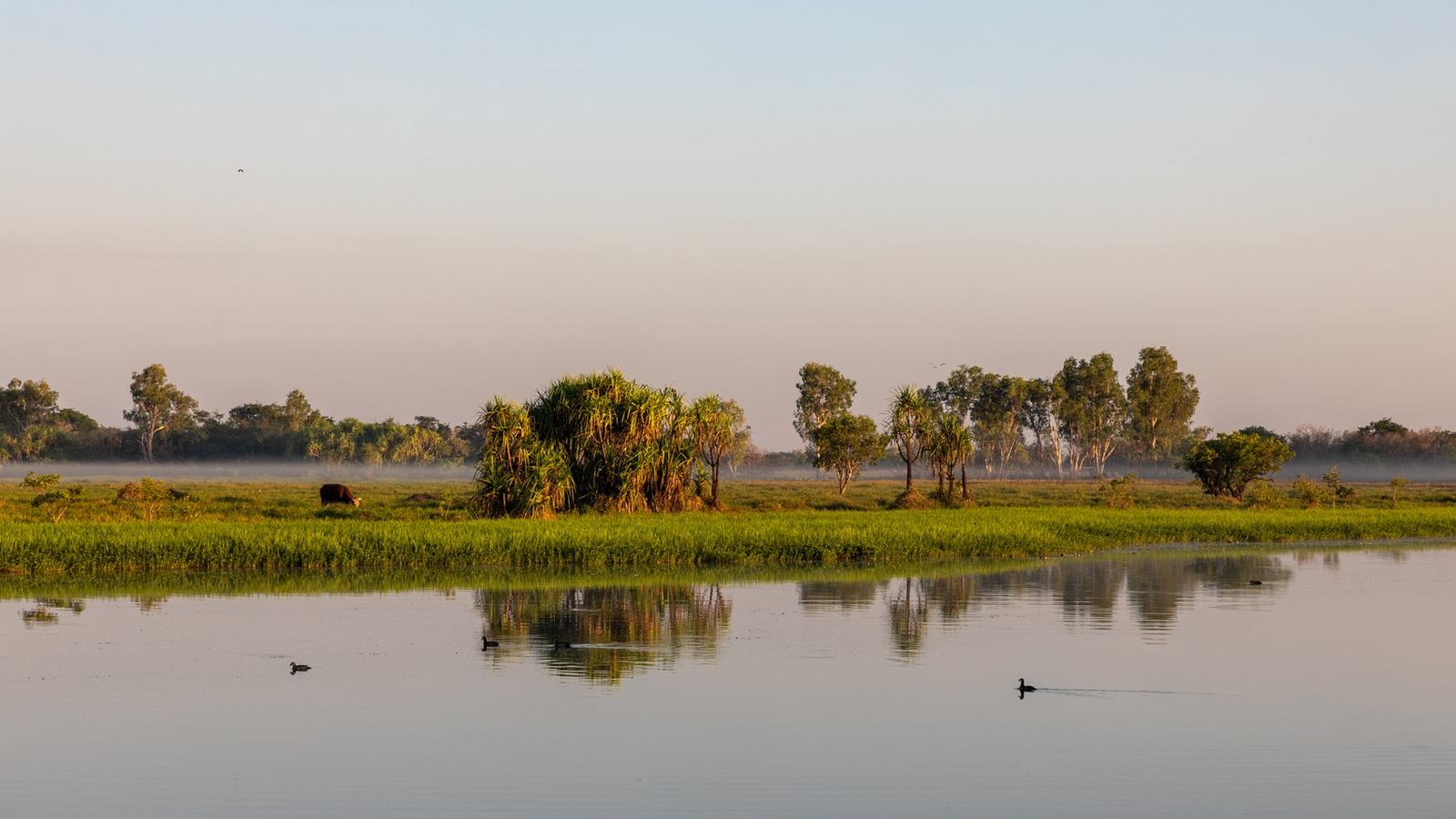
A detailed Yellow Water small-passenger-boat guide for Kakadu covering crocodile safety, Ngurrungurrudjba Country, wetland ecology and visitor planning.
The Yellow Water wetlands in Australia's Kakadu National Park offer a powerful example of why a guided passenger boat can be the safest and most rewarding way to explore an extraordinary natural environment. Known as Ngurrungurrudjba, Yellow Water forms part of the South Alligator River floodplain, where water, birds and large saltwater crocodiles occupy a landscape shaped by seasonal flooding. Parks Australia describes Yellow Water Cruises as a way to travel through the wetlands with experienced guides, often at sunrise or later in the day. For leisure boaters, the lesson is clear: even apparently calm inland water can demand professional local expertise, especially when wildlife and seasonal changes create risks unfamiliar to visitors.
A floodplain with a changing shape
Yellow Water lies within a broad wetland system, not on a permanent lake with a simple, unchanging shoreline. Rainfall, river levels and the movement of floodwater alter the extent of open water and the locations where vegetation is exposed. In some seasons, water extends across areas that were previously dry; at other times, channels and billabongs become more clearly defined. Parks Australia describes the wider landscape as part of Kakadu's extraordinary wetland environment. A visitor should not assume that a route used in the dry season will be available in the same form during tropical summer. Experienced guides make those decisions according to actual conditions.
Ngurrungurrudjba is Country
Kakadu is a place of continuing Aboriginal cultural importance, and the names and stories attached to its landscape are not incidental tourist labels. Ngurrungurrudjba is the Aboriginal name used for Yellow Water, and national-park information encourages visitors to understand the relationship between place, people and culture. A respectful cruise may introduce aspects of this context through its guide, but visitors should avoid reducing Aboriginal knowledge to a few decorative phrases. The appropriate way to learn is to listen, follow cultural guidance and recognise that the wetlands are living Country rather than an empty wildlife stage.
Why a guided cruise is appropriate
The Yellow Water Cruise is organised as a managed wildlife experience through a national-park setting. Its operators have practical knowledge of local weather, water depth, river conditions and animal behaviour. That knowledge matters when a substantial crocodile may be hidden beneath an apparently smooth surface. Visitors should not interpret the existence of tourist boats as permission to launch a kayak or private dinghy into the same channels. Parks Australia directs people towards established commercial cruises for safe viewing, and any independent boating proposal would require separate, explicit verification of applicable regulations. Guided access is a feature of the experience, not an obstacle.
The crocodile encounter must remain controlled
Kakadu is home to saltwater crocodiles, which can be dangerous even when they appear inactive near a bank. Parks Australia emphasises crocodile awareness and careful behaviour around water, including places where animals may not be immediately visible. A cruise offers the chance to observe crocodiles without approaching them on foot or in an unsuitable small craft. Passengers must never lean towards an animal, throw food or ask the skipper to move into an unsafe position for a photograph. The crew's judgement about distance takes priority over curiosity. A sighting remains memorable when the animal is left undisturbed.
Birds bring a second layer of interest
The wetlands are particularly rich in birdlife, with waterbirds using reeds, open water, shallow feeding areas and trees. A guided boat may reveal different species as it moves between habitats, although no operator can guarantee a particular sighting on every departure. Binoculars are useful for watching birds at a suitable distance. A guide may explain how seasonal water affects feeding and breeding activity. Visitors should not pressure the skipper to approach nesting birds closely or steer into sensitive vegetation. Observing the relationships among water, plants and birds can be as rewarding as photographing a single distinctive species.
Dawn reveals a different atmosphere
Parks Australia and the cruise operator promote sunrise excursions as an opportunity to experience the wetlands when light and animal activity can be especially rewarding. A departure in the early morning may reveal mist, reflections and bird calls before the heat of the day. However, sunrise conditions are not guaranteed to be calm or clear. A visitor should check the actual check-in time and allow sufficient travel from their accommodation, particularly when staying outside the immediate Cooinda area. Arriving late for an early boat is a poor way to begin a nature outing, and the schedule cannot be assumed to shift for one passenger.
Sunset creates its own experience
Later departures offer different light on the water and may provide views of birds returning to roost or crocodiles near the banks. The appeal lies partly in how the landscape changes as the sun lowers. The operator's published programme may contain seasonal variations, so travellers should confirm the actual departure time rather than rely on generic advice to book a sunset cruise. Good photography can still be challenging because the boat moves and the light fades. Passengers must remain seated when instructed, even when a dramatic reflection appears beyond the rail. A memorable image is not worth distracting the skipper.
Water levels influence where boats can travel
Seasonal flooding is central to Kakadu's ecology. The same water that supports wildlife can make certain roads, access points or boat routes unsuitable or temporarily closed. Parks Australia provides current access information that should be consulted close to a visit. The operator may adapt its route or itinerary to conditions, and this should be understood as responsible management rather than a failure to deliver a fixed attraction. An article published in November cannot predict the exact state of the floodplain on a future date. Visitors who build flexibility into their plan are more likely to enjoy the trip safely.
Cooinda provides a visitor base
Yellow Water is commonly accessed from the Cooinda area, where visitor facilities and the cruise operation form a practical base for exploring this part of Kakadu. Travel distances within the national park can be substantial, and driving times should not be underestimated. A guest staying elsewhere should consider road conditions, seasonal closures and the time needed to reach the meeting point before booking a dawn departure. The operator should confirm its exact check-in location and any included transport from nearby facilities. A wildlife cruise is best experienced without the stress of a long, rushed drive on unfamiliar roads.
The boat is a viewing platform, not a safari vehicle to direct
Guests may be eager to spot crocodiles or rare birds, but the skipper must prioritise safe navigation and maintain appropriate wildlife distances. A good wildlife boat is designed to offer broad views without passengers needing to stand or move suddenly. Listen to any briefing about where to sit and how to move around. The crew may stop the boat or adjust its position for an observation when conditions permit, but passengers should not assume they can instruct the skipper to pursue an animal. The right approach is to let the guide interpret the environment and accept the pace of the cruise.
Photography needs discipline around wildlife
A camera can capture dramatic reflections, a bird on a branch or a crocodile resting near the water. Long lenses are useful because they help preserve distance. Passengers should avoid reaching outside the vessel, standing on seats or crowding one side to obtain an image. If the guide identifies a sensitive area, keep cameras and voices under control. Wildlife can react to disturbance even when it does not immediately move away. A wide shot showing the animal in its floodplain habitat may communicate more than an extreme close-up. Responsible photography is part of maintaining the conditions that make wildlife tourism worthwhile.
Crocodile safety continues on shore
The risk associated with crocodiles does not disappear when the boat returns to its landing point. Parks Australia warns visitors to observe crocodile safety guidance around waterways throughout Kakadu. Do not walk to an unmarked water edge, allow children to play near a bank or assume that a crocodile-free view proves the water is safe. Swimming is prohibited or restricted in many areas, and visitors should follow local signs rather than rely on informal advice. The correct place to watch the wetlands may be a managed platform or commercial vessel. Respect for these rules protects both travellers and wildlife.
Clothing and equipment for a tropical cruise
Kakadu can be hot and humid, with strong sun and the possibility of rain depending on the season. Lightweight clothing, drinking water and sun protection are useful, but the actual recommendations should come from the operator. A dawn departure may require a light layer, while tropical rain calls for protection for cameras and personal belongings. Large bags can create clutter on a viewing boat, so take only what is needed. Anyone with mobility restrictions should ask about boarding and seating arrangements before booking. Comfort matters because wildlife observation is easier when passengers are not distracted by heat, rain or awkward equipment.
Visitor numbers and a quiet environment
Commercial wildlife cruises carry groups, and a popular departure may include several passengers hoping to photograph the same animal. A considerate guest does not monopolise the best viewing position or talk over the guide's explanations. Keep voices low when an animal is nearby, and allow everyone a chance to look. The wetlands are a living habitat, so a quiet period without sightings is not a failure. Watching the changing vegetation and water is part of learning how the ecosystem works. Respectful passenger behaviour helps the guide deliver a better experience without having to manage unnecessary conflict.
Learning from a guide rather than chasing sightings
A skilled guide can explain why a particular bird feeds in shallow water, how seasonal floods affect the landscape and why a crocodile's behaviour calls for caution. These insights make the outing more than a collection of photographs. Visitors who listen carefully may begin to recognise patterns in the floodplain that they would overlook alone. The value of an expert-led cruise is therefore interpretive as well as practical. A single sighting explained in depth may be more meaningful than seeing many animals without understanding the environment that supports them.
The broader national park deserves attention
Kakadu contains rock art sites, escarpments, woodland and other landscapes beyond the Yellow Water wetlands. A visitor planning several days can explore approved attractions in different areas, subject to seasonal access and cultural guidance. The national-park website publishes information about current road conditions, permits and visitor safety. It would be a mistake to regard the cruise as the only reason to visit or to assume that every famous site can be reached on the same day. Distances are large, and the best itinerary leaves time for interpretation and changes in weather rather than a rapid succession of stops.
Conservation is part of the excursion
National-park management seeks to protect ecological and cultural values while allowing visitors to learn from them. Passengers can contribute by leaving no litter, remaining within authorised areas and following instructions designed to reduce wildlife disturbance. Even a small plastic wrapper blown from a vessel can become a problem in a wetland. Boat operators have their own responsibilities for fuel, maintenance and navigation; visitors are responsible for their conduct on board. A well-managed cruise shows that access and protection need not be opposites, provided decisions are grounded in conservation rather than short-term convenience.
A reminder for independent leisure boaters
Yellow Water is a useful counterpoint to the idea that every attractive waterway should be explored with a privately hired small boat. The floodplain's crocodiles, seasonal changes and cultural significance create a situation in which guided passenger travel is the appropriate choice for many visitors. The most memorable parts of the cruise may be the stillness of the water, a close but safe wildlife observation and a guide's explanation of Country. With careful booking, respect for park rules and a willingness to accept changes in conditions, travellers can experience Kakadu's remarkable wetlands without taking liberties with safety or the environment.
Sources and photograph attribution
Official destination and boating guidance: Parks Australia — Yellow Water Cruises at Kakadu National Park. Current access, rules, weather and reservations must be checked independently before travel.
Photograph: Dietmar Rabich — Kakadu (AU), Kakadu National Park, Yellow Water -- 2019 -- 3769.jpg (CC BY-SA 4.0), via Wikimedia Commons. Resized and converted to JPEG for editorial presentation. Source: https://commons.wikimedia.org/wiki/File:Kakadu_(AU)%2C_Kakadu_National_Park%2C_Yellow_Water_--_2019_--_3769.jpg. Licence: https://creativecommons.org/licenses/by-sa/4.0. Original rights remain with the credited creator or as specified by the source and licence.
