
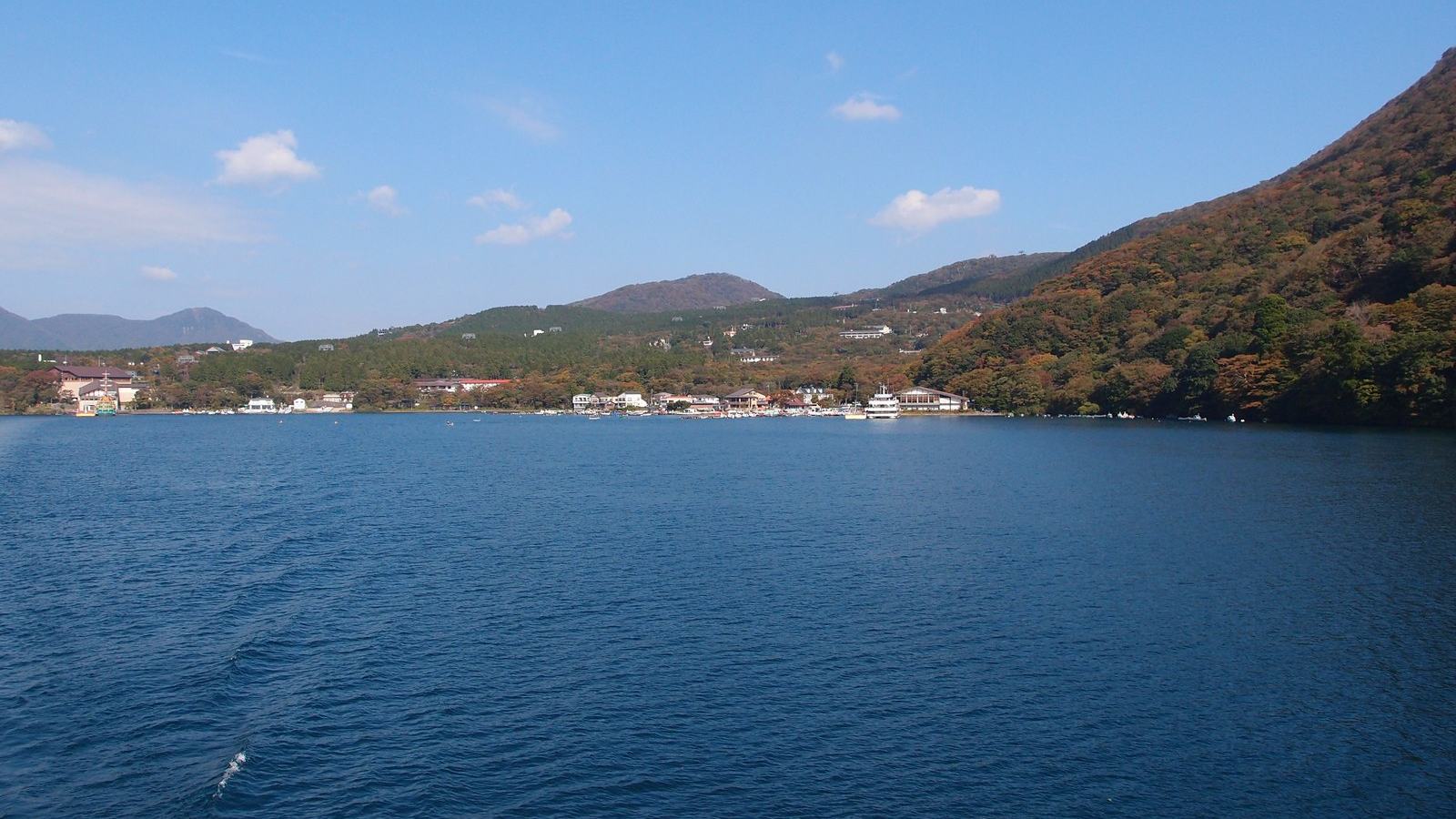
An original Hakone lake-boat guide explaining the three Ashinoko cruise ports, themed ships, cultural landmarks, conditional Fuji views and passenger safety.
A cruise on Lake Ashi, or Ashinoko, offers a memorable way to experience the volcanic mountain scenery of Hakone in Japan. The lake lies within Fuji-Hakone-Izu National Park, and its passenger services connect several visitor areas that otherwise require a longer journey by land. The Japan National Tourism Organization's national-parks guide describes a sightseeing fleet styled as colourful pirate ships, travelling between the lake's principal ports and offering possible views of Mount Fuji and the red torii gate of Hakone Shrine. The playful boats are only one part of the story. A well-planned crossing provides a clear sense of the landscape while linking cultural destinations and a practical network of local transport.
A mountain lake with a volcanic past
Lake Ashi occupies a landscape shaped by volcanic activity around Hakone. Forested hills enclose the water, and on clear days Mount Fuji can be visible beyond them. The national-park setting matters because the attraction is not solely a transport service or a novelty ship. Passengers are travelling through a protected scenic environment. Weather, cloud and visibility can change quickly, so the experience should not be sold as a guaranteed Fuji photograph. Even when the mountain remains hidden, the lake's steep slopes, shrine landmarks and changing shoreline provide worthwhile views. A good visitor appreciates the lake on its own terms rather than measuring the journey by a single distant peak.
The ships connect three named ports
The official national-parks guide identifies Hakone-Machi, Moto-Hakone and Togendai as stops used by the sightseeing cruise. These are important planning points because a visitor can use the boat as part of a longer circuit through Hakone rather than simply make a return trip to the same pier. The operator's current timetable and ticket conditions determine which passage is possible at a particular time. A passenger should confirm whether an advertised fare covers a single crossing or allows additional travel. Being clear about the intended arrival port is particularly useful for travellers connecting to a bus, cable car or other local transport.
Why the ships look like pirate vessels
Hakone's sightseeing fleet is known for its elaborate pirate-ship theme, which adds a playful dimension to an otherwise traditional lake cruise. According to the Japan national-parks guide, four themed ships offer distinctive facilities and decorations. Visitors should not assume every vessel will have an identical interior, viewing deck or photographic feature. The operator allocates boats according to its schedule, and a particular ship may not operate on the desired departure. Families can enjoy the decorations while recognising that the vessel remains a working passenger craft with normal navigation and safety rules. Children should not climb props, barriers or stairs outside designated public areas.
The shrine gate draws photographers
One of the lake's best-known sights is the vermilion torii gate associated with Hakone Shrine, which stands near the water and can appear to rise from the lake. The national-parks source identifies it as a landmark passengers may see. A boat view can help visitors understand its relationship with the wooded shoreline, though the route and visibility affect the precise angle. Photography from the deck should not require standing on railings or pushing past other passengers. The gate is part of an active religious site, not a structure placed solely for tourists. Travellers visiting the shrine on land should observe the local rules and show respect for worshippers.
Seeing Mount Fuji is conditional
Promotional photographs often place Fuji dramatically beyond Lake Ashi, but cloud, haze and seasonal weather frequently affect the view. The mountain may be visible for a few minutes or not at all. A visitor should avoid booking the entire day around an expectation of perfect visibility. Check local weather information and treat a clear view as a welcome bonus. The ship's changing position can offer several perspectives of the surrounding landscape even when distant peaks are obscured. This flexibility is especially valuable for families who might otherwise feel disappointed by conditions that no operator can control.
Choosing a one-way or return crossing
Some travellers use the cruise to connect the northern and southern parts of Hakone, while others prefer a scenic return journey. Both options can make sense, depending on local transport plans and the time available. A one-way route needs attention to the arrival port and onward connections. A return cruise requires enough allowance for boarding and the next sailing. The current schedule should be checked directly with the sightseeing-ship operator because service frequency and operational changes can vary. Arriving at a pier without understanding the route is an avoidable cause of rushed travel and missed connections.
Deck views and interior comfort
The vessels have public interior and exterior areas, but the precise layout differs by ship and ticket category. A visitor interested in photography may prefer an authorised open deck in suitable weather. Passengers who are sensitive to wind or cold may find the interior more comfortable, especially during the cooler months. The national-parks guide mentions facilities and decorations, but a guidebook photograph cannot establish the arrangements on a specific sailing. Ask about accessibility, steps and seating before booking if these are important. Passengers should also be ready to follow crew directions when moving between decks.
A safe experience starts at the pier
A sightseeing cruise begins with orderly queuing, ticket checks and boarding. The gap between a passenger ship and a pier can shift with vessel movement, so guests should use the designated gangway and hold handrails where appropriate. Families should supervise children closely, especially around steps and open deck areas. Large backpacks should be kept where they do not obstruct access or emergency routes. Once the vessel is under way, listen to announcements and avoid leaning over the railings. The theme of an adventurous pirate vessel does not change the basic requirement to act sensibly around water and moving equipment.
The national park shapes the itinerary
Lake Ashi is part of a protected national-park region with forests, volcanic features and historical sites. A boat trip can connect these experiences without requiring a traveller to cover every route by road. Visitors should remain on permitted pathways at stops and follow signs around shore vegetation and cultural sites. The lake is not an invitation to discharge litter or feed birds from the deck. A large sightseeing vessel may carry many passengers, so collective behaviour has a real effect on the quality of the environment. Simple courtesy allows the scenic experience to coexist with conservation.
Hakone-Machi and Moto-Hakone are not interchangeable
Both names appear on itineraries, and both are in the southern part of the lake, but they refer to distinct stops. The right port depends on the visitor's intended walking route, shrine visit or local transport connection. A boat ticket should be matched to the correct landing rather than the general idea of going to the southern end. Some attractions can be reached from one port more conveniently than another. Check the latest map from the operator or local tourism authority and allow walking time between activities. The small geographical distinction can make a large difference to a tightly scheduled day.
Togendai links the lake to a wider circuit
Togendai serves as a major northern gateway for sightseeing on Lake Ashi, with transport connections across the wider Hakone area. For visitors combining several attractions, the boat journey can therefore function as part of a coherent circuit instead of a standalone cruise. However, connection times and ticket validity should be confirmed, particularly when a bus, cable car or ropeway service has its own schedule and weather restrictions. An ambitious day that assumes immediate transfers may be frustrating. A manageable plan leaves enough time to appreciate the water and avoids turning the vessel into a mere means of getting to the next queue.
The surrounding shore gives the lake character
From the ship, stretches of wooded hillside and small settlements appear in a sequence that road travellers experience differently. The slow movement provides a useful perspective on the basin's shape and on how buildings fit into a mountainous national park. A visitor who watches the changing shoreline may learn more than one who focuses only on the theme decorations. The lake can seem spacious in the middle and more intimate close to the piers. This changing scale is part of the appeal of passenger boating, allowing a single trip to become both a scenic excursion and an introduction to Hakone's geography.
Photography without crowding the deck
On a popular sailing, many passengers may want the same view. A wide-angle photograph from a safe position can capture the red shrine gate, surrounding trees and water in a way that feels true to the landscape. A longer lens may be helpful for Mount Fuji when conditions permit, but it does not justify blocking a stairway or leaning over the side. Secure phones and cameras and pay attention to crew announcements. Where possible, take a few thoughtful photographs and then make space for others. A sightseeing deck is shared territory, and good manners improve the experience for everyone.
Families can make the voyage educational
The pirate-ship design can attract children who might not otherwise be enthusiastic about a scenic cruise. Parents can use the trip to explain the purpose of a passenger vessel, observe safe boarding and identify landmarks across the water. The route also provides opportunities to discuss the national park and local history without requiring a formal lesson. Children should be supervised at all times, with particular care around exterior decks and stairs. The ideal family outing leaves sufficient room for food, rest and unexpected delays. It does not need to include every amusement and transport connection that Hakone offers.
Seasonal planning matters
Hakone's weather and visibility vary across the year. In cooler months, wind over the lake can feel colder than expected, while summer may bring rain or humidity. A visitor should check both the forecast and the operator's current service status before departing. Some trips may be affected by low visibility, wind or operational adjustments. A ticket booked for a particular time is not permission to demand passage in unsafe conditions. Flexible travel plans improve the chances of a pleasant outing and allow visitors to enjoy local museums, shrines or walks if a lake service is interrupted.
Comparing the cruise with a private boat
A themed sightseeing ship is very different from navigating a private tender on the lake. The commercial service is operated by qualified crews following established routes, and passengers benefit from the vessel's infrastructure and local knowledge. Private boating, where allowed, would require separate attention to permits, launch arrangements and specific navigation rules. It is not sensible to infer permission from the presence of large passenger ships. For most visitors, the official cruise is the accessible way to experience the lake from water level without taking on the responsibilities of a skipper in unfamiliar conditions.
A journey worth taking without a perfect view
Lake Ashi offers more than the promise of Mount Fuji in the distance. Its passenger boats connect distinctive parts of Hakone, provide views of wooded shorelines and sacred landmarks, and bring a playful element to the experience through their themed design. The best voyage is the one planned around real port stops, suitable weather and enough time to enjoy the scenery. By staying alert to safety, respecting national-park surroundings and accepting that distant views are conditional, travellers can appreciate a memorable Japanese small-boat journey regardless of the clouds on the horizon.
Sources and photograph attribution
Official destination and boating guidance: Japan National Tourism Organization — Hakone Sightseeing Cruise. Current access, rules, weather and reservations must be checked independently before travel.
Photograph: Guilhem Vellut from Annecy, France — Sightseeing Cruise @ Lake Ashi @ From Togendai to Hakone-Machi (10621186405).jpg (CC BY 2.0), via Wikimedia Commons. Resized and converted to JPEG for editorial presentation. Source: https://commons.wikimedia.org/wiki/File:Sightseeing_Cruise_%40_Lake_Ashi_%40_From_Togendai_to_Hakone-Machi_(10621186405).jpg. Licence: https://creativecommons.org/licenses/by/2.0. Original rights remain with the credited creator or as specified by the source and licence.
