
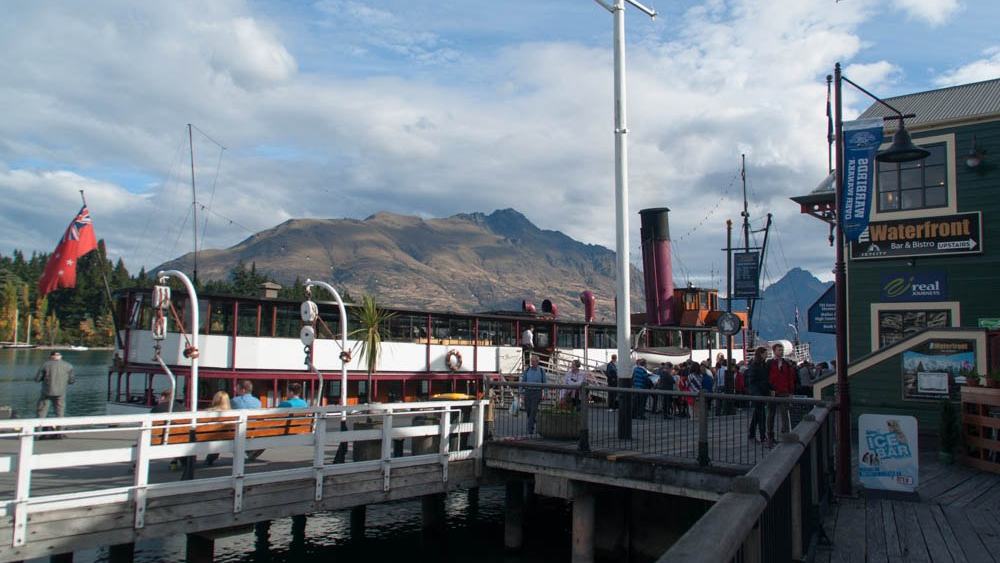
An in-depth Queenstown lake cruise guide covering TSS Earnslaw steam propulsion, the Walter Peak route, heritage displays, scheduling and vessel safety.
Queenstown in New Zealand is often promoted through mountain adventures, but a journey on the TSS Earnslaw offers a very different way to experience its alpine setting. The historic coal-fired steamship has operated on Lake Whakatipu since 1912 and continues to carry passengers across the water from Queenstown towards Walter Peak. Its operator, RealNZ, describes the voyage as a combination of scenery and working maritime heritage, with opportunities to view the engine room and explore displays about the vessel's history. For small-boat enthusiasts, this is not simply another tourist ferry. It is a chance to observe the machinery, design and operational routines of a passenger vessel whose character remains connected to the lake it serves.
A lake surrounded by mountains
Lake Whakatipu is a long alpine lake set among steep hills and the mountain ranges surrounding Queenstown. A boat journey provides a viewpoint unlike those offered by the road or lakeside walking paths. From the water, the scale of the Remarkables and nearby peaks becomes especially apparent, while settlements at the shore appear smaller against the broader landscape. Weather can alter the view dramatically, with a clear morning giving way to cloud or wind. A successful cruise does not require all the mountains to be visible. The lake itself, its colour and the passing shoreline offer enough to make a thoughtful journey worthwhile.
The steamship has a long working history
RealNZ explains that TSS Earnslaw entered service in 1912 and has remained an important part of the region's maritime identity. The letters TSS reflect its twin-screw steamship heritage, while its historic design recalls a time when water transport was essential to settlements around the lake. The vessel has been preserved and adapted for modern visitors rather than replaced with a new craft dressed to look old. That continuity is central to its appeal. Travellers who are interested in engineering may find the journey more rewarding if they read about its original purpose before boarding and observe how working machinery is still integrated into passenger operations.
A coal-fired engine remains the attraction
The ship's steam propulsion gives it a distinctive identity among contemporary lake cruises. RealNZ encourages passengers to view the engine room and watch aspects of the mechanical operation, an experience that can make the journey memorable even in poor mountain visibility. Visitors should use only the permitted viewing areas and follow signs or crew instructions. Moving machinery, hot surfaces and restricted working spaces are not places for an improvised photograph. A large camera or bag should not obstruct access. Seeing the machinery at a safe distance can provide a better understanding of the effort involved in maintaining a historic vessel than any promotional description of vintage charm.
The route links Queenstown with Walter Peak
The operator's published experience includes travel towards Walter Peak High Country Farm, on the opposite side of the lake from the principal Queenstown departure. Some bookings involve a scenic return cruise, while others combine the passage with a farm visit, meal or guided activity. These are different products and should not be confused. A passenger who books only the cruise should verify what is included, whether disembarkation at Walter Peak is permitted and when the ship returns. The precise sailing schedule and transfer arrangements matter more than a general assumption that the vessel crosses at regular intervals throughout every day.
Queenstown's wharf is the starting point
RealNZ identifies the central Queenstown waterfront as the place to check in for departures. The wharf is a busy visitor environment with other water activities operating nearby. Travellers should confirm the exact reporting point and allow time to reach the vessel, particularly when carrying luggage or travelling with children. A missed boarding is not easily remedied once the steamship has left. The group should have tickets and identification as required by the operator and understand how its booking relates to the chosen experience. A relaxed arrival leaves time to appreciate the vessel from shore and reduces unnecessary pressure on crew at the gangway.
Slow boating changes how the landscape feels
A steamship cruise crosses the lake at a pace that encourages observation rather than high-speed thrills. Passengers may notice the shifting outline of mountains, smaller boats crossing the water and the scale of the open basin. The engine sounds and the movement of the ship add to the atmosphere. A visitor who spends the entire time photographing the same peak may miss these details. The journey is particularly interesting because it links the historic machinery below deck with the vast outdoor landscape above. Boat design, propulsion and scenery become parts of one experience rather than separate attractions.
Walter Peak gives the cruise a destination
Walter Peak is a lakeside high-country setting where RealNZ offers activities alongside the steamship passage. Depending on the package, passengers may have time to explore aspects of the working farm environment or enjoy dining before returning. A person interested primarily in maritime history should choose an option that allows enough time aboard the ship, while a family may prefer a broader farm-and-lake experience. Confirm the exact inclusions, including the time ashore and any meal arrangements. It would be misleading to assume that every passenger automatically receives a farm tour or that a cruise-only ticket grants access to all facilities.
Weather deserves respect on alpine water
The enclosed shape of Lake Whakatipu does not prevent uncomfortable wind or chop. Mountain weather can change, and conditions may feel cooler on the water than on a sheltered street in Queenstown. Although TSS Earnslaw is a substantial passenger vessel, visitors should bring layers suitable for the forecast and listen to the crew's advice about exterior decks. A sailing may be adjusted or cancelled if conditions require it. A passenger who is prone to motion sickness should consider that possibility before booking. No scenic photograph or heritage interest justifies pressing an operator to travel in unsafe conditions.
Safe movement on a historic vessel
The decks and passageways of an older ship may differ from those of a modern ferry. Stairs, thresholds and viewing areas require attention, particularly when the vessel moves or visitors are carrying cameras. Use handrails, keep access routes clear and avoid entering restricted working spaces. Children should be supervised around any opening, stairway or exterior deck. The presence of fascinating machinery does not permit leaning across safety barriers. RealNZ's crew are responsible for passenger safety, so their instructions override the desire to obtain a better look. A careful passenger can still experience the ship's heritage without creating hazards.
Booking the right kind of trip
RealNZ offers several versions of the TSS Earnslaw experience, and the wording of a ticket matters. A scenic cruise is not necessarily the same as a Walter Peak barbecue lunch, dining experience or other combined activity. Check the exact itinerary, duration, boarding time and cancellation conditions. Meal options and access to farm activities should be confirmed rather than inferred from photographs. A couple interested in a quiet lake passage may find a different option suitable from a larger group celebrating an occasion. An informed booking avoids disappointment and allows everyone to make appropriate arrangements for the day.
The history is visible in details
A historic steamship reveals its age through more than an inscription stating the year of construction. Visitors may notice design choices in deck fittings, passenger spaces, the engine-room layout and the way a vessel is operated. Some features have been adapted for modern use, and preservation depends on ongoing maintenance rather than leaving the craft untouched. RealNZ's historical displays help put these elements into context. A traveller with a technical interest can use the voyage to compare older propulsion and passenger accommodation with contemporary vessels. The aim should be observation and learning, not entering a workspace where the crew needs to concentrate.
Photography should include the ship itself
The mountain views are compelling, but TSS Earnslaw is as much a photographic subject as the scenery. Images from the wharf can show its shape against Queenstown's waterfront, while permitted positions on deck reveal fittings, wake and the surrounding mountains. A wide composition conveys more of the vessel's working character than a detail isolated from the rest of the ship. Cameras should be secured against wind and sudden movement. Do not lean over rails, obstruct a gangway or ask crew members to interrupt their duties for a picture. Maritime heritage can be documented effectively from safe and respectful locations.
A particular experience for families
Children may enjoy watching the engine-room machinery and discovering that a vessel can be powered by steam rather than a modern diesel engine. Parents can make the journey educational by explaining the purpose of the ship, the route across the lake and the way the crew works together. However, busy passenger decks are not suitable for unattended exploration. Supervise children around stairs and machinery viewing areas, and confirm whether any additional activity ashore is appropriate to their age. The ideal family cruise provides time for curiosity and questions without rushing between tightly scheduled attractions.
How lake travel shaped local life
Before roads provided easy access to every settlement and farm around the lake, boats had an important role in moving people, goods and supplies. TSS Earnslaw belongs to that history, even though its modern operation focuses on visitors. The voyage can therefore be understood as a connection between present-day tourism and an earlier transport network. Looking towards farms or settlements across the water helps explain why a steamship was useful in such geography. The historic service is part of Queenstown's identity, rather than an ornamental vessel introduced only to entertain tourists.
The environmental question of a working steamer
A coal-fired ship is not equivalent to a low-emission electric passenger boat, and it would be inaccurate to describe its preservation as automatically environmentally neutral. Its cultural and engineering value coexists with the impacts of its fuel and operation. Visitors can acknowledge both facts without dismissing the heritage. Responsible tourism includes using appropriate waste facilities, avoiding litter and choosing a voyage for its educational and cultural merits. The ship's operators have responsibility for regulatory compliance and safe maintenance; passengers have a separate responsibility to behave carefully and understand that heritage vessels involve operational trade-offs.
A day on the water without excessive connections
Queenstown offers many excursions, and it can be tempting to combine a steamship cruise with several unrelated activities in a single day. But the journey is more satisfying when there is time to board calmly, observe the ship and enjoy the lake. A visitor booking a Walter Peak experience should account for the time ashore and the scheduled return. Avoid a tight onward connection that leaves no room for ordinary boarding delays. If weather changes, the operator may alter arrangements. A flexible day allows the lake and the ship to remain the focus instead of becoming one item to be checked off between appointments.
What makes the Earnslaw special
TSS Earnslaw demonstrates that a vessel can provide an experience based on its own working history as well as the landscape through which it travels. The movement of the engines, the careful preservation of the ship and the view across Lake Whakatipu all contribute to the journey. Travellers who choose a suitable itinerary, follow safety instructions and make time for the engineering displays can enjoy a living piece of New Zealand's maritime heritage. For boating enthusiasts, the lasting memory may be neither a mountain photograph nor a meal ashore, but the feeling of travelling across an alpine lake in a ship that has served it for generations.
Sources and photograph attribution
Official destination and boating guidance: RealNZ — TSS Earnslaw Lake Cruises, Lake Whakatipu. Current access, rules, weather and reservations must be checked independently before travel.
Photograph: Jocelyn Kinghorn — TSS Earnslaw Vintage Steamship.jpg (CC BY-SA 2.0), via Wikimedia Commons. Resized and converted to JPEG for editorial presentation. Source: https://commons.wikimedia.org/wiki/File:TSS_Earnslaw_Vintage_Steamship.jpg. Licence: https://creativecommons.org/licenses/by-sa/2.0. Original rights remain with the credited creator or as specified by the source and licence.
