
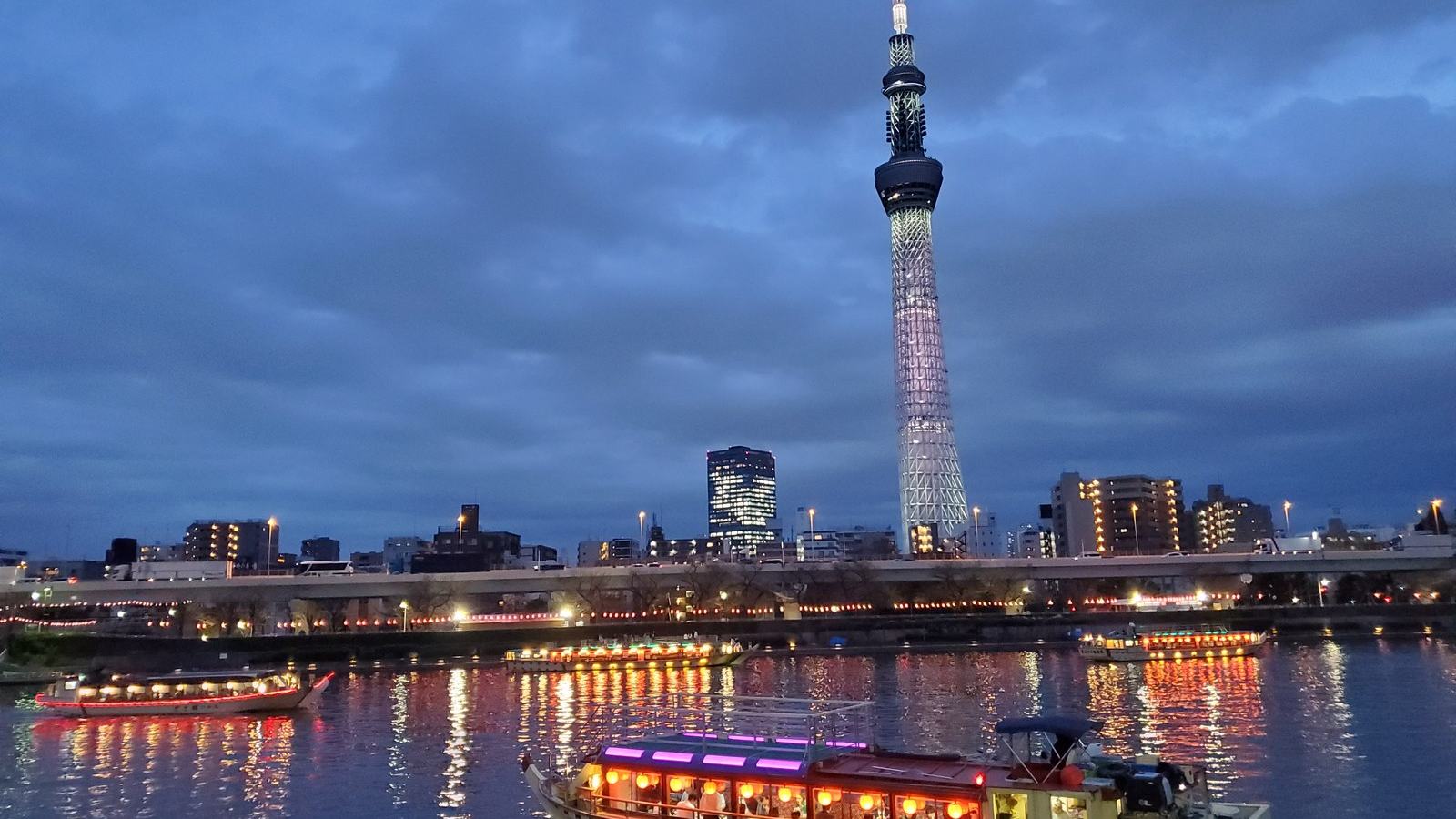
A detailed Tokyo yakatabune visitor guide exploring small covered dining boats, urban waterways, passenger experience, booking, safety and seasonal routes.
Tokyo is known for railways, towers and crowded streets, yet one of its distinctive leisure experiences takes place on the water. Yakatabune are traditional-style covered dining boats that operate on the Sumida River and Tokyo Bay, giving passengers a slow view of bridges, city lights and waterfront architecture while enjoying a meal. The Tokyo Metropolitan Government's official GO TOKYO visitor guide features yakatabune cruises and notes their connection to longstanding Japanese social traditions. For a leisure boating enthusiast, these vessels show how the character of a small passenger boat can be shaped by dining, local history and close-range urban sightseeing rather than speed.
A boat designed as a room on water
Unlike an open sightseeing launch, a yakatabune often offers a covered, enclosed or semi-enclosed space where passengers can sit around dining tables. The form evokes the pleasure boats associated with Japan's Edo period, though modern vessels and their facilities vary. The setting encourages a leisurely journey where time aboard matters as much as the route. A visitor should not assume that every yakatabune looks identical or provides the same seating, menu or view. The boat's interior is part of the experience, and choosing the right operator is important for anyone with accessibility needs or a particular interest in photography.
History at a modern city's edge
The waterways of Edo, Tokyo's historical predecessor, were important for transport, commerce and recreation. Pleasure boating developed in a city where rivers were central to daily life, and yakatabune can be seen as a contemporary continuation of that culture. Official Tokyo tourism information presents these cruises as a way to combine food and water views with an encounter with local heritage. It would be misleading to treat every modern boat as an untouched historical vessel. Today's services adapt traditional ideas to present-day passenger safety, catering and navigation. That balance between heritage and contemporary operations is part of their appeal.
The Sumida River provides a moving panorama
The Sumida runs through eastern Tokyo, passing bridges and neighbourhoods that look different from the water than they do from a train. A cruise may provide views towards Tokyo Skytree or other landmarks, depending on the operator's route and prevailing conditions. The official guide highlights the city's waterfront as a place for small-boat experiences. Visitors should confirm whether the chosen voyage stays primarily on the river or continues into Tokyo Bay; the two offer different scenery. A photograph showing a particular illuminated tower is not proof that every departure will pass the same point or remain there long enough for pictures.
Tokyo Bay has its own character
Some yakatabune services travel towards the wider bay, where the urban scale opens up and waterfront buildings can be seen against the sky. The operator may choose a route intended to showcase the skyline after dark or a calmer daytime passage. Weather, tidal conditions and traffic can affect how much of the bay is visited. A passenger who prefers a sheltered river experience should not assume that a dinner cruise is entirely free from movement on open water. Ask the provider about the expected route and what happens if sea conditions make a bay portion unsuitable. The destination is best approached with realistic expectations.
A meal is central to many sailings
Dining is a defining feature of the yakatabune experience, with providers commonly serving Japanese food during a voyage. GO TOKYO highlights the combination of traditional meals and scenery, but menus can vary substantially by operator, booking type and season. A visitor should ask what is actually included, including any dietary requirements, children's options and drinks. Some packages may feature tempura, sushi or other dishes, while others take a different approach. It is unwise to assume that a photograph of a lavish table represents the standard fare for the cheapest excursion. Food planning is part of choosing the right boat.
Shared and private cruises are different
Some operators offer shared public departures where individual travellers can book seats, while others focus on private charters for groups. The Tokyo Yakatabune Association publishes information about different service formats, helping travellers identify suitable operators. A shared cruise can be useful for a couple or small family, whereas a private booking may allow more flexibility for celebrations or business events. However, flexibility does not mean the charterer controls navigation or safety decisions. Crew and operator restrictions apply regardless of who pays for the voyage. Ask about group minimums, booking deadlines and cancellation terms rather than assuming that every advertised boat accepts walk-up guests.
Seasonal views are part of the tradition
Tokyo's waterways can look very different across the year. Cherry blossoms may create a special atmosphere in spring, while illuminated bridges and skyline views attract passengers after dark. A themed seasonal cruise is likely to be more popular and may need advance booking, but nature cannot be guaranteed to match a fixed calendar date. Blossom timing and weather vary. Travellers should choose the cruise for its overall experience rather than only a single photograph that may depend on perfect conditions. In winter, a comfortable covered boat may be attractive, but operating schedules and heating arrangements should still be confirmed directly.
A modern boat with real safety rules
A yakatabune may feel like a restaurant, but it remains a vessel. Passengers should listen to the crew's safety briefing, know the location of flotation equipment and follow instructions when boarding or moving around. The presence of tables and serving staff does not eliminate the risks of water, weather or confined access. Children should be supervised near doors, outside decks and gangways. Guests should not enter crew-only areas or climb onto exterior structures to obtain an unobstructed view. The skipper has an obligation to operate safely regardless of a group's social occasion or desire to extend the cruise.
Embarkation can be the hardest part
Tokyo's waterfront has multiple piers and landing areas, and not every yakatabune sails from the same place. A confirmation should give the exact boarding location, departure time and operator contact. The nearest railway station may still be some distance from the vessel, and passengers may need to navigate stairs or a floating gangway. Travellers with limited mobility should ask specifically about boarding and on-board facilities before paying. A bus or taxi to the wrong pier can ruin an otherwise carefully arranged evening. A good itinerary allows time to find the boat, check in and settle before departure.
Understanding the cruise duration
A yakatabune dinner voyage may occupy a substantial part of an evening rather than function as a quick shuttle. The actual journey length varies, and the operator may include time for boarding, serving the meal and a planned sightseeing stop. Visitors should not assume they can leave early at an intermediate point as they might from a city bus. The return is normally governed by the boat's scheduled route. Confirm when the craft is expected back at the pier and arrange onward transport accordingly. A relaxed cruise is far more enjoyable when passengers are not repeatedly checking the time for a train connection.
Photography from a dining boat
The contrast between interior light and a night skyline can be particularly appealing for photography, but it is also technically challenging. A camera held against a window may capture reflections from the dining area, while opening a door or standing on an outside platform may not be permitted. Ask where photography is allowed and keep clear of crew paths. A compact camera or phone may be more practical than a large tripod in a shared dining space. Respect other passengers who are there primarily for a meal. A few thoughtful images of bridges and boat interiors can express the experience without interrupting service.
The appeal of seeing familiar landmarks differently
Tokyo Skytree, Rainbow Bridge and waterfront neighbourhoods are already well known from land, but a small boat can reveal how these landmarks relate to the water. The view changes continuously, and the city's infrastructure becomes easier to understand from a moving vessel. A bridge that dominates the skyline from below can look unexpectedly intricate as the boat approaches. The journey also reveals commercial and passenger traffic sharing the waterways. For visitors interested in boats, it is worth noticing the design of other craft and the way operators manage a busy urban route safely and politely.
Food and passenger comfort
Dining aboard a vessel creates practical differences from eating in a restaurant. Passengers may experience movement, so anyone prone to motion sickness should ask whether the itinerary includes more exposed water. Dietary restrictions need to be discussed before food is prepared and loaded, since the crew may not be able to replace a meal once the boat leaves. Children may need an appropriately sized seat or a simpler menu. A visitor who plans to eat lightly can still appreciate the atmosphere, but should check how the package is structured. The aim is to choose a cruise compatible with the group's needs rather than discover limitations on departure.
Weather can change the route
Rain, wind, visibility and water conditions can influence a sightseeing cruise, even when the boat has a substantial covered cabin. An operator may change the itinerary or cancel a departure for safety or operational reasons. Guests should check the latest notice on the day and avoid relying on promotional photographs taken under ideal weather. A night excursion in autumn or winter may feel colder on exterior decks than the city streets suggest. Appropriate layers and sensible footwear help. A boat trip remains worthwhile for its social and cultural experience even if the distant skyline is partly hidden.
Respecting other users of the water
The Sumida River and Tokyo Bay are working waterways, shared with ferries, service craft and other tour operators. Passengers may hear engine noise, experience a wake or wait while the skipper follows traffic instructions. These are normal elements of operating in a city rather than indications that the cruise is poorly arranged. Guests should never pressure the captain to move closer to a passing vessel or deviate into a restricted area for photographs. The crew's navigation decisions take priority over the dining schedule. Responsible passenger behaviour helps preserve the conditions under which these experiences can operate safely.
Choosing an operator through reliable sources
The official GO TOKYO guide is a sound starting point for understanding what a yakatabune cruise offers, while the Tokyo Yakatabune Association provides a directory of participating services. Travellers should verify the actual operator, itinerary, menu, seating arrangement, price and cancellation conditions before committing. Some boats may advertise English-language assistance or particular entertainment, but these features should not be assumed for every departure. A private group should also ask about minimum passenger numbers and booking deadlines. Clear details matter much more than the general label of a traditional boat cruise.
The value of slowing down in Tokyo
Tokyo is a destination where visitors often measure their day by the number of districts and attractions they can reach. A yakatabune offers a different rhythm: the city moves past while passengers remain together around a table. The modest pace encourages conversation, awareness of the waterfront and appreciation for a tradition that links boats to hospitality. For small-craft enthusiasts, it is an instructive example of designing an experience around a vessel's setting rather than its technical performance. A thoughtful cruise makes use of the river's scenery without pretending to be a high-speed transport service.
Why the boat is the attraction
A yakatabune journey can be memorable even when clouds cover the skyline or a specific landmark is not visible. Its distinctive feature is the combination of a working passenger craft, a shared meal and Tokyo's waterways. A successful visit depends on choosing the right route and service, following safety instructions and accepting the skipper's decisions. Traditional character and modern operation coexist in a way that rewards attention to detail. For someone who enjoys leisure boating, the lesson is simple: a relatively small vessel can produce a rich and lasting travel experience when the journey is designed around its passengers and place.
Sources and photograph attribution
Official destination and boating guidance: Tokyo Metropolitan Government GO TOKYO — Yakatabune Boat Cruises. Current access, rules, weather and reservations must be checked independently before travel.
Photograph: Nurg — Yakatabune Sumida 1.jpg (CC BY-SA 4.0), via Wikimedia Commons. Resized and converted to JPEG for editorial presentation. Source: https://commons.wikimedia.org/wiki/File:Yakatabune_Sumida_1.jpg. Licence: https://creativecommons.org/licenses/by-sa/4.0. Original rights remain with the credited creator or as specified by the source and licence.
