
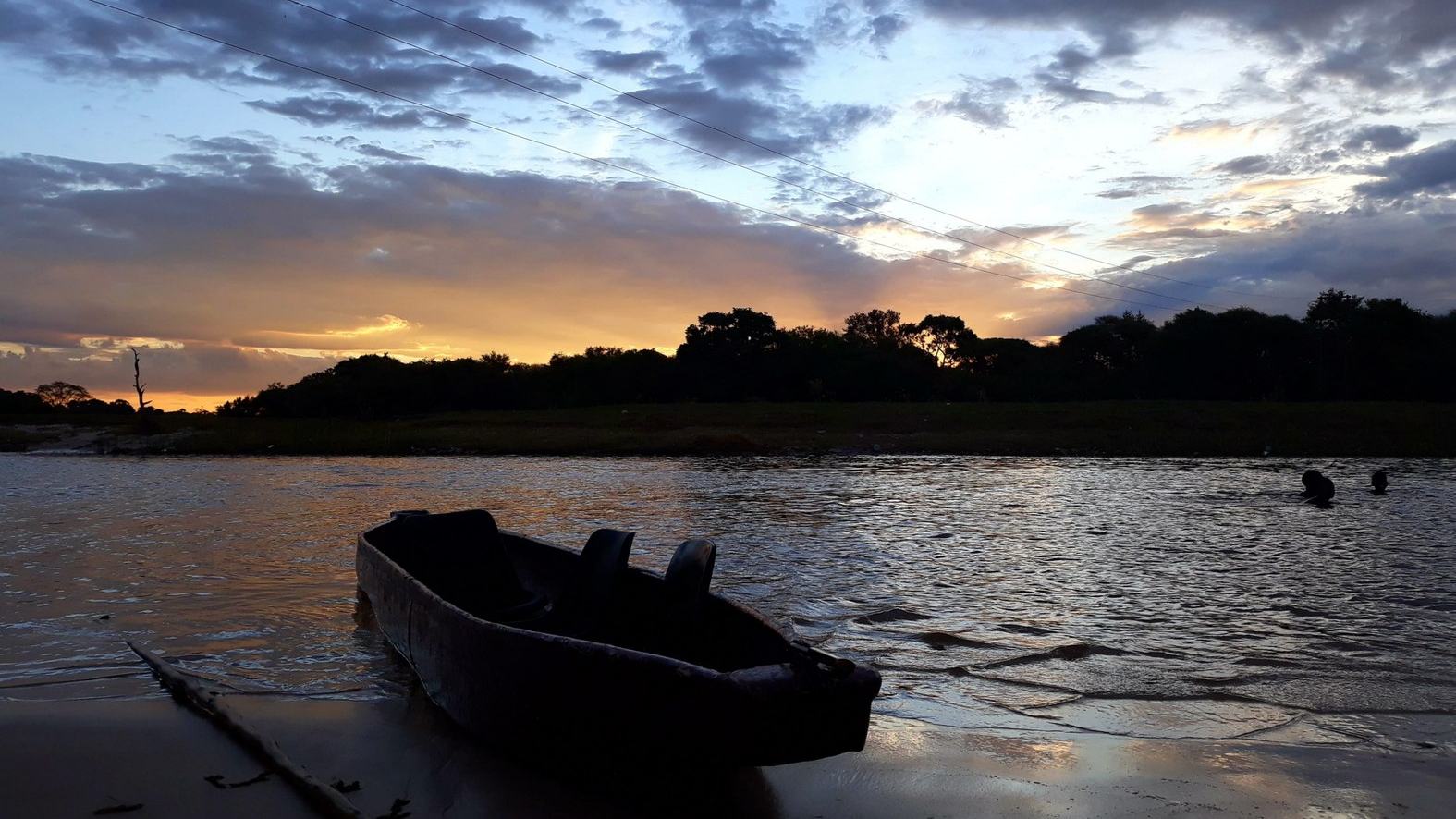
An original guide to Okavango mokoro water safaris, covering narrow canoe handling, wildlife distance, guide expertise, seasonal water and conservation.
Few small-craft journeys place the passenger as close to the water as a mokoro excursion in Botswana's Okavango Delta. A mokoro is a narrow canoe traditionally moved by a skilled standing poler through shallow channels and flooded grassland. Unlike a fast motorboat safari, its central attraction is the quiet opportunity to notice reeds, birds, ripples and the shifting shapes of a wetland. Specialist safari operator &Beyond describes seasonal mokoro adventures among the experiences at Xaranna Okavango Delta Lodge, where water levels determine which routes are possible. It is a distinctive boating experience, but not an invitation to launch independently among wild animals. Local expertise, seasonal timing and conservation discipline are essential.
The Delta is not a single open lake
The Okavango is a vast inland delta where water arrives from the highlands of Angola and spreads into channels, floodplains, islands and seasonal lagoons in northern Botswana. Its waterways are constantly influenced by the flood cycle and local conditions. A broad expanse visible on a map may not be navigable by a particular craft, while a dry area can be underwater during another season. &Beyond's regional guidance explains how a mokoro offers access to shallow, quieter parts of this landscape. For a leisure boater accustomed to fixed harbour entrances, the important difference is that the available water route can change dramatically without a change of destination.
Why the mokoro works so well
The canoe's slender profile suits winding routes where reeds and water plants create narrow corridors. A poler stands at the back and uses a long pole against the bed of the waterway, moving the vessel without the normal disturbance of an engine. Historically many mokoro were carved from trees, while some contemporary operators use alternative materials as part of reducing pressure on large native trees. The passenger's role is principally to sit carefully, listen and observe. This is a boat designed for its environment and handling method, not a miniature yacht meant to maximise speed or range. Its effectiveness comes from specialised local knowledge.
A guided experience rather than self-hire
The low profile of a mokoro may make it look simple, but effective poling requires judgement about depth, vegetation, currents and safe passages. &Beyond offers the excursion as a guided activity within the lodge's safari programme. Visitors should not assume that a canoe can be rented like a paddleboard on a holiday beach and navigated alone. Wildlife may be present, and the poler needs to respond safely to unexpected conditions. A good visitor follows the guide's instructions about seating, movement and photography, and respects the decision to change a route. The goal is to explore a protected landscape without creating unnecessary risk or disturbance.
Seasonal water changes the itinerary
&Beyond specifically describes mokoro adventures as seasonal at Xaranna, dependent on the availability of water in the channels. The arrival of floodwater in the Delta does not match a simple assumption that the wettest local rainfall month automatically offers the deepest navigable channels. Water travels across a large catchment before reaching the tourism areas, so routes can change through the year. Travellers should ask the lodge which activity is normally suitable during the intended dates and understand that the final decision depends on conditions. A booking may include several possible safari activities, but it should not be represented as a guaranteed particular mokoro route.
The safety value of sitting still
A narrow canoe reacts to movement differently from a broad motorboat with fixed seats and a heavy hull. Passengers should stay in the position assigned by the poler, keep luggage light and avoid leaning out to touch the water. Standing for photographs or switching seats while underway can disturb the balance. A guide may ask everyone to remain especially still when passing through vegetation or an area with wildlife. These instructions are part of boating safety, not an attempt to prevent enjoyment. The most impressive view often comes from observing quietly at water level and allowing the canoe to follow the guide's line.
Wildlife cannot be scheduled
The Okavango is famous for animals that can include elephants, hippos, crocodiles, antelope and a broad range of birds. A mokoro excursion should never promise a close encounter with any of them. Some wildlife requires particular caution around waterways, and experienced guides may avoid areas where a safe passage cannot be maintained. The correct response when an animal appears is to follow the poler's directions, not to seek a better position for a photograph. A visitor should not attempt to feed or call animals, nor ask to follow them into vegetation. Learning how animals use the wetland can be more valuable than obtaining a dramatic image at close range.
Hippos make local knowledge essential
A hippo can be present in water that appears calm and empty. Because it may react defensively when surprised or approached, a trained local guide has a crucial role in judging which channels to use. Do not second-guess a decision to turn back or abandon a route. A wildlife encounter in a narrow canoe cannot be handled by accelerating away in the manner sometimes imagined by inexperienced motorboat owners. Prevention, distance and careful interpretation of the environment are fundamental. Guests should understand that the poler's expertise is not decorative storytelling; it is an important safety system throughout the excursion.
Birdwatching at an unusually low viewpoint
The Delta supports a rich birdlife, with different species using reeds, open water, grassland and trees. A mokoro lets visitors observe these habitats from a steady, low position when conditions are suitable. Binoculars can be more useful than a large camera held over the side of the canoe, and a guide may identify calls or behaviour long before a bird is clearly visible. Avoid sudden movements as the canoe approaches sensitive vegetation. A sighting of an unfamiliar waterbird, even at a distance, can make the journey memorable. It is also worth observing patterns in the landscape rather than treating every quiet stretch as an absence of wildlife.
What separates a mokoro from a motorboat safari
&Beyond describes both motorised water activities and mokoro excursions at some Delta properties, but they provide different experiences. A motorboat can cover more distance and may be appropriate for larger channels; a mokoro moves slowly through shallower areas under the control of a poler. Neither is automatically better. A visitor interested in observing plant life and enjoying near silence may prefer the mokoro, while a longer boating route needs different equipment and planning. Both activities depend on water levels and the guide's assessment. Ask which kind of excursion is actually included rather than assuming that the generic term water safari describes a single service.
Choosing the right lodge or operator
The Delta contains different tourism areas and private concessions, and not every property has the same access to mokoro routes. &Beyond Xaranna explicitly lists the seasonal experience, making its operator information an appropriate starting point for planning. Other operators may use distinct launch points, local poling teams and rules. Before booking, confirm whether a mokoro ride is offered at the chosen location and season, whether it is guided, how long it normally lasts and who makes the safety decision. A premium safari brochure is not real-time confirmation that a particular channel is open. The practical details matter far more than a photograph of a canoe in perfectly still water.
Weather and water temperature
Even in a warm region, wind, rain and changing weather can influence a small open craft. A mokoro offers little shelter, so passengers should bring only the clothing and equipment recommended by the operator. Sun protection, a light waterproof layer and drinking water may be useful, depending on the season and duration. Keep valuable equipment secure against splashes and loss. The guide may decide that a planned passage is unsuitable because of weather or water conditions. A guest should accept that judgement without pressure. It is better to enjoy another safari activity than insist upon a narrow-water journey when conditions are wrong.
The importance of responsible photography
A photograph taken from a mokoro can show the scale of a reed bed or the unusual relationship between the canoe and its wetland setting. For the passenger, the chief restraint is the craft's stability and the need to keep movements deliberate. A long camera lens can also encourage the false impression that wildlife is closer than it truly is, which is often the safer way to photograph it. Never stand, reach into the water or ask the poler to approach an animal beyond a prudent distance. The journey is a conservation encounter first, and a photographic opportunity second. Its beauty is not diminished when animals remain undisturbed.
Community skills behind the experience
Poling has long been part of local water transport in the Delta, and guided mokoro tourism can support people whose knowledge of the channels is highly specialised. Visitors should recognise the skill involved in moving a loaded canoe through shallow water while observing the environment and managing risk. Respectful conversation with a guide may reveal how routes, water conditions and birdlife change through the year. The guide should not be treated merely as a human engine whose only job is to move a tourist towards a photo stop. A good excursion is built on the partnership between local knowledge and a visitor willing to listen.
Conservation in a fragile wetland
The Delta's habitats are affected by natural flooding and by human activity. Motorboats, visitors on foot and even quiet canoes can cause disturbance if used carelessly. Remain within authorised routes and never remove plants or animals as souvenirs. Avoid dropping food, litter or other material into the channels. A guide may avoid some islands because they are sensitive or because wildlife is resting nearby. Respecting those decisions supports the long-term viability of tourism and the wetland itself. The low wake of a mokoro is an advantage, but it does not create an exemption from responsible behaviour.
Children and physical expectations
A guided mokoro trip may look gentle in promotional photographs, but a family should verify minimum ages, seating arrangements, flotation equipment and the operator's risk assessment. A child who struggles to sit still for an extended period may not be suited to a narrow canoe near wildlife. Visitors with mobility limitations need to discuss boarding, seating and transfer arrangements in advance, rather than discover a difficulty at a remote launch point. A responsible operator may recommend a different water activity or a land-based safari. That advice should be understood as matching the experience to the passenger's needs.
One quiet journey can be enough
The most rewarding mokoro outing need not cover a large area. A short, carefully chosen passage can reveal changing vegetation, ripples made by small animals and the work involved in moving silently through the wetland. Guests who stop measuring the experience by distance may notice more. &Beyond's guided excursions offer a way to learn from the poler rather than simply move through a beautiful landscape. Anyone planning a trip should check seasonal availability, the precise operator programme and current wildlife safety arrangements before committing. The Delta's water levels make flexibility an essential part of a good itinerary.
What the Delta teaches boaters
The mokoro demonstrates that a very small craft can be extraordinarily capable when it is designed, handled and operated within the environment for which it evolved. Its strengths are quiet movement, narrow access and the skill of the person using the pole. It cannot be detached from local knowledge and converted into an unrestricted leisure activity without losing the conditions that make it safe. A properly guided visit offers both the pleasure of boating and a lesson in humility around wildlife and water. For anyone who enjoys small craft, that combination is a compelling reason to experience the Okavango.
Sources and photograph attribution
Official destination and boating guidance: &Beyond Xaranna Okavango Delta Lodge — Mokoro Experiences. Current access, rules, weather and reservations must be checked independently before travel.
Photograph: Mmuso Nare — Mokoro Of The Okavango.jpg (CC BY-SA 4.0), via Wikimedia Commons. Resized and converted to JPEG for editorial presentation. Source: https://commons.wikimedia.org/wiki/File:Mokoro_Of_The_Okavango.jpg. Licence: https://creativecommons.org/licenses/by-sa/4.0. Original rights remain with the credited creator or as specified by the source and licence.
