
An original guide to Mljet’s saltwater lakes and St Mary islet boat excursions, covering seasonal services, visitor tickets, private cruisers and park rules.
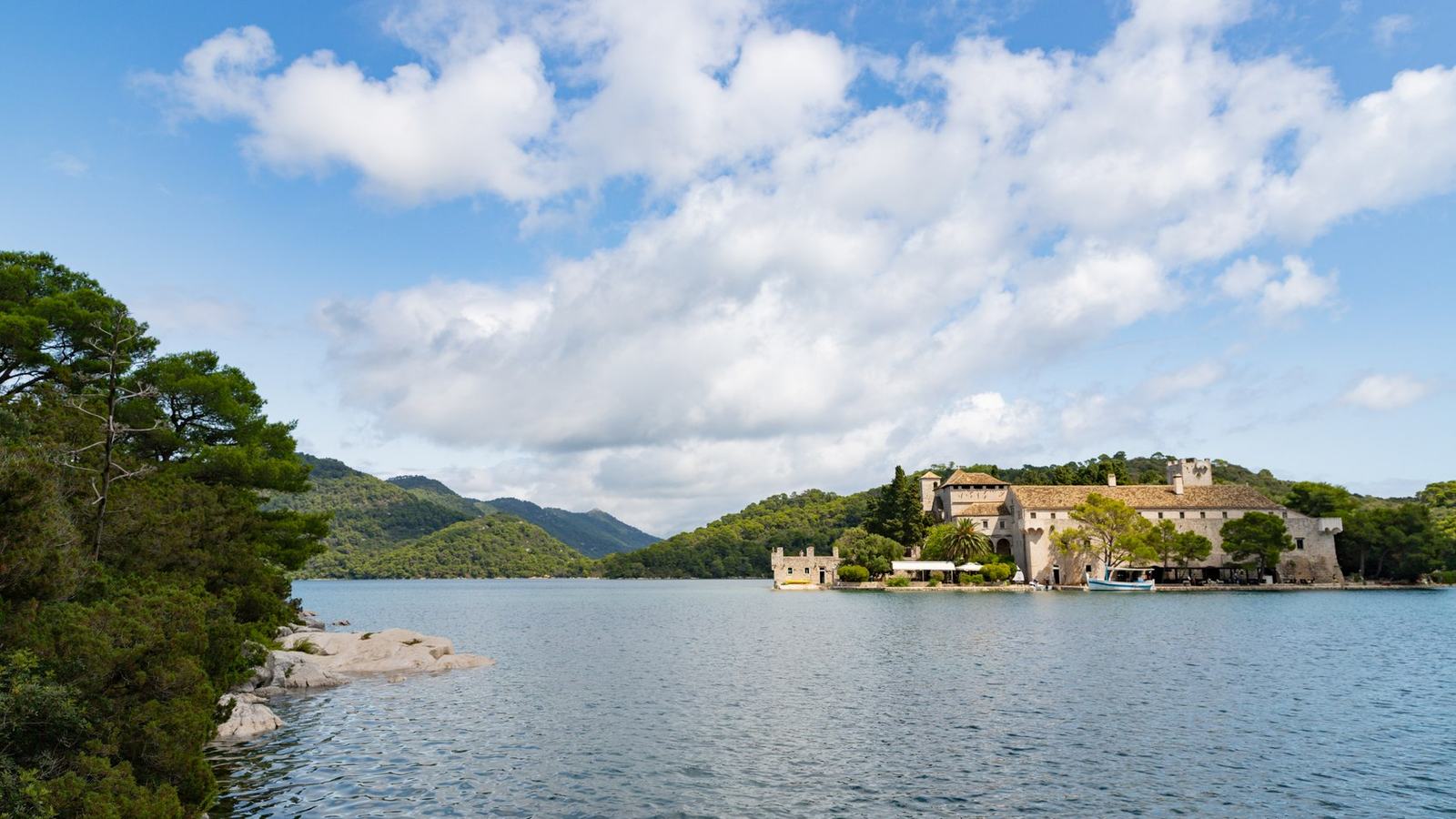
On the wooded Croatian island of Mljet, the national park's two interconnected saltwater lakes form a remarkable setting for small-boat travel. Veliko Jezero, the Great Lake, contains the tiny island of St Mary, where a historic Benedictine monastery sits among trees beside the water. Visitors reach the islet using the park's own passenger boat service, an excursion whose appeal depends upon the contrast between the sheltered saltwater lake and the open Adriatic beyond. The Croatian national parks authority announced updated 2026 opening and boat schedules, while Mljet National Park publishes separate instructions for boats arriving from the sea. This is a destination where a private cruiser and a park excursion boat play very different roles.
Why the lakes are unusual
Mljet's protected northwest is famous for Veliko Jezero and Malo Jezero, often described as lakes though connected to the sea. Their calm-looking surfaces are enclosed by forested hills, creating a quieter atmosphere than the surrounding Adriatic coast. The water's saltwater character is part of the setting, but it does not remove the need for conservation rules. A recreational boater should not assume that the sheltered appearance permits unrestricted motorboat access. Visitors generally explore the lake area on foot, by bicycle or through designated park boating services and permitted small craft activities. The resulting experience is intentionally slower than a conventional island-hopping charter.
A monastery reached by water
St Mary's islet, sometimes called Sveta Marija, is the centrepiece of the Great Lake excursion. A boat approaches the historic monastery buildings from the lake, allowing passengers to appreciate their scale against the surrounding forest and shoreline. The Croatia national parks website identifies the monastery and church as important heritage features of the protected area. A visit combines a cultural destination with an exceptionally short island crossing. The islet is not a private anchorage for visitors to occupy at will; the park manages boat access. Travellers should use the authorised passenger boat and follow the current arrangements for walking around the monastery and nearby paths.
A boat timetable matters
The national parks authority published updates to the Mljet boat service for the 2026 season, including the operation from St Mary's islet and access points on the lakes. Such a timetable is a practical visitor tool, not a permanent rule that automatically carries over into winter or the next year. A trip planned in November should not rely upon an April or June announcement without checking the park's present operating information. Arriving too late for the last return service can create an avoidable problem. Confirm the departure point, whether a return journey is included in the park ticket, and the schedule for the specific date before travelling to the lake.
The Great Lake is part of a larger park
The national park is not limited to a single photographic viewpoint. It contains forest, walking routes, coastal approaches and the two well-known saltwater lakes. The visitor can choose how to combine a boat crossing with a walk or bicycle trip, depending on opening conditions and physical ability. The park's official materials describe the paths connecting access points such as Pomena and Polače with the lakes. A good plan leaves time to explore the shoreline rather than taking the passenger boat to St Mary and immediately returning. The broader landscape helps explain why the park is protected and why tourism is managed carefully.
How private cruisers reach the area
Yachts and small motorboats may approach Mljet by the Adriatic, using suitable harbours, mooring locations and any designated park arrangements permitted by current regulations. The official park information includes guidance for arriving by vessel, and visitors should establish whether tickets, mooring fees or access rules apply to their planned stop. Entering the protected area by boat does not automatically entitle a crew to use the lake services or walk anywhere without a park ticket. Depths, shelter and local navigation hazards should be assessed using appropriate charts. Owners should obtain current information from the park or harbour authority instead of relying on an old cruising forum.
Pomena and Polače as gateways
The settlements of Pomena and Polače are familiar names to visitors approaching the park. They can serve as starting points for land and lake excursions, but their marine arrangements vary according to the berth, operator and season. A small cruiser may be able to use a lawful mooring or berth in the surrounding area, yet this requires advance checking rather than an assumption that every quay is public. A crew should consider the vessel's draft, overnight shelter and access to shore transport. Once landed, the lake journey can be treated as a separate excursion on the park's authorised transport rather than an extension of the yacht's own route.
The passenger boat changes the scale
The short crossing to St Mary's islet is not intended to cover great distance. Instead it changes the viewpoint: forest slopes, the water's surface and the monastery become part of a single composition. A modest passenger craft is well suited to this sheltered destination, allowing people to appreciate detail without an engine-dominated experience. The boat crew must still follow a defined route and manage embarkation carefully. Travellers should remain seated when requested and keep bags clear of gangways. The most rewarding approach is to let the islet appear gradually rather than treating the boat as a shuttle that merely delays the next attraction.
Walking after the crossing
A visit to the monastery is more satisfying when passengers allow time to explore the permitted paths and understand the historical setting. Visitors should observe any rules about entry to religious buildings, dress and photography. The environment may be quiet even when the mainland ferry terminals are busy, and travellers should help preserve that atmosphere. Do not climb walls or enter closed spaces to obtain a photograph. Paths around the lake can be uneven, so footwear should be chosen for walking rather than only for boarding a boat. A thoughtful itinerary combines a cultural stop with the natural character of Mljet.
Swimming and paddling need separate rules
Mljet's clear-looking water may tempt visitors to swim, kayak or paddleboard. Those activities may be offered or permitted in particular locations, but a park ticket is not a blanket authorisation for all forms of water use. Check current national-park guidance and the local operator's terms before entering the water. The safety conditions for a kayak differ from those of a park passenger boat, especially if wind develops or a group heads into a less sheltered section. Motorised craft face further restrictions. Even a gentle-looking inland waterway has conservation and access rules that deserve attention.
Preserving shore vegetation
Forest and lakeshore plants contribute to the park's protected character. Repeated informal landings can damage vegetation and disturb wildlife, even when each individual visit seems harmless. Use designated paths, jetties and permitted access points, and avoid dragging boats through plant-covered edges. Do not collect stones, shells or vegetation as souvenirs. A small vessel's comparatively light wake is helpful, but low disturbance also depends on where it travels and how passengers behave ashore. The continued appeal of Mljet relies on conserving the relationship between water, forest and historical buildings rather than allowing visitor pressure to reshape the shoreline.
Weather still influences a sheltered lake
The protected lake environment may feel calm after an exposed sea passage, but local wind and rain can still affect small-craft operations. A day trip needs a forecast appropriate to the location, and the park may revise or cancel boat services if conditions require it. Travellers arriving by private cruiser face the additional task of judging the open-water approach and berth safety. These are separate decisions. A safe day on the Great Lake does not prove that a yacht should attempt an uncomfortable return across the Adriatic that evening. Flexible scheduling allows both the park excursion and offshore voyage to be conducted sensibly.
Park tickets and genuine costs
The Croatian national parks system provides ticket information and the park authority lists prices for visitor categories and relevant boating arrangements. These can change by season and by the way a ticket is purchased. For a future visit, travellers should use the official online ticket service or park office rather than rely upon an old amount quoted in an article. Check whether the islet boat transfer is included, how children are treated and whether any separate mooring or concession fees apply. A family travelling from a yacht should not assume that vessel fees cover every passenger's park admission. Clarity avoids unpleasant surprises at the boarding point.
The importance of cultural heritage
The monastery on St Mary's islet is more than a picturesque structure for boating photographs. It represents a long religious and cultural presence within an island landscape. The combination of building, tree cover and water makes it a valuable place to understand how communities historically used small islands and sheltered shorelines. Visitors should behave with respect even if they approach primarily for nature or photography. A short period of quiet observation can reveal more than constant movement. By taking care around historical structures, tourists help preserve the experience for people who will travel to Mljet long after the current season.
An island day without a rushed itinerary
A sensible park visit need not include every walking route, lookout and beach on the same day. The lake crossing and a relaxed exploration of St Mary may be enough for a visitor with limited time. Others may choose a longer walk or cycle along designated routes. Allow for actual opening hours, boarding queues and the time required to return to the coast. An overly ambitious schedule can create pressure to rush around historic buildings or take shortcuts through sensitive vegetation. Mljet is better suited to slow travel, and much of its appeal lies in the contrast with busy marinas or high-speed island excursions.
Photography on the Great Lake
The ideal photograph often combines the monastery with a stretch of lake and wooded hillside. A wide view conveys the islet's small scale within the protected landscape. If photographing from the passenger boat, stay inside the seating area, keep camera straps secure and avoid leaning over the side. Respect other travellers' view of the scenery instead of taking over a window or boarding platform for an extended shoot. Drones and commercial photography may be subject to park permission; never assume that a protected site permits unrestricted aerial filming. Images made from authorised paths and boats can be compelling without disturbing visitors or wildlife.
Planning ahead for another season
The park's 2026 announcements illustrate the importance of checking seasonal hours and boat timetables. Before making a future reservation, consult the current Mljet National Park site for official visitor information and any updates on transport to St Mary. A private skipper must also confirm the marine approach, legal berthing options, navigation conditions and relevant park fees. If a service is not running or the weather is unsuitable, exploring another accessible section of the island may still make for an enjoyable day. The best boating holidays preserve flexibility rather than expecting every attraction to operate regardless of season.
The pleasure of two kinds of boating
Mljet offers two complementary experiences for enthusiasts of modest craft. A private cruiser can bring its passengers to the island's coast, while the park's smaller passenger boat can take them into the protected lake setting under separate rules. The point is not to bring a powerful vessel into every stretch of water simply because it can float there. The most memorable journey may be the quieter and shorter one, made with the right boat in the right place. With respectful use of the national park's services and careful planning ashore and afloat, Mljet illustrates the enduring appeal of small-boat travel.
Sources and photograph attribution
Official destination and boating guidance: Croatian National Parks — Mljet National Park 2026 Visitor Opening and Boat Service. Current access, rules, weather and reservations must be checked independently before travel.
Photograph: dronepicr — A view to the St. Mary Island in Mljet National Park in Croatia (48739061007).jpg (CC BY 2.0), via Wikimedia Commons. Resized and converted to JPEG for editorial presentation. Source: https://commons.wikimedia.org/wiki/File:A_view_to_the_St._Mary_Island_in_Mljet_National_Park_in_Croatia_(48739061007).jpg. Licence: https://creativecommons.org/licenses/by/2.0. Original rights remain with the credited creator or as specified by the source and licence.
