
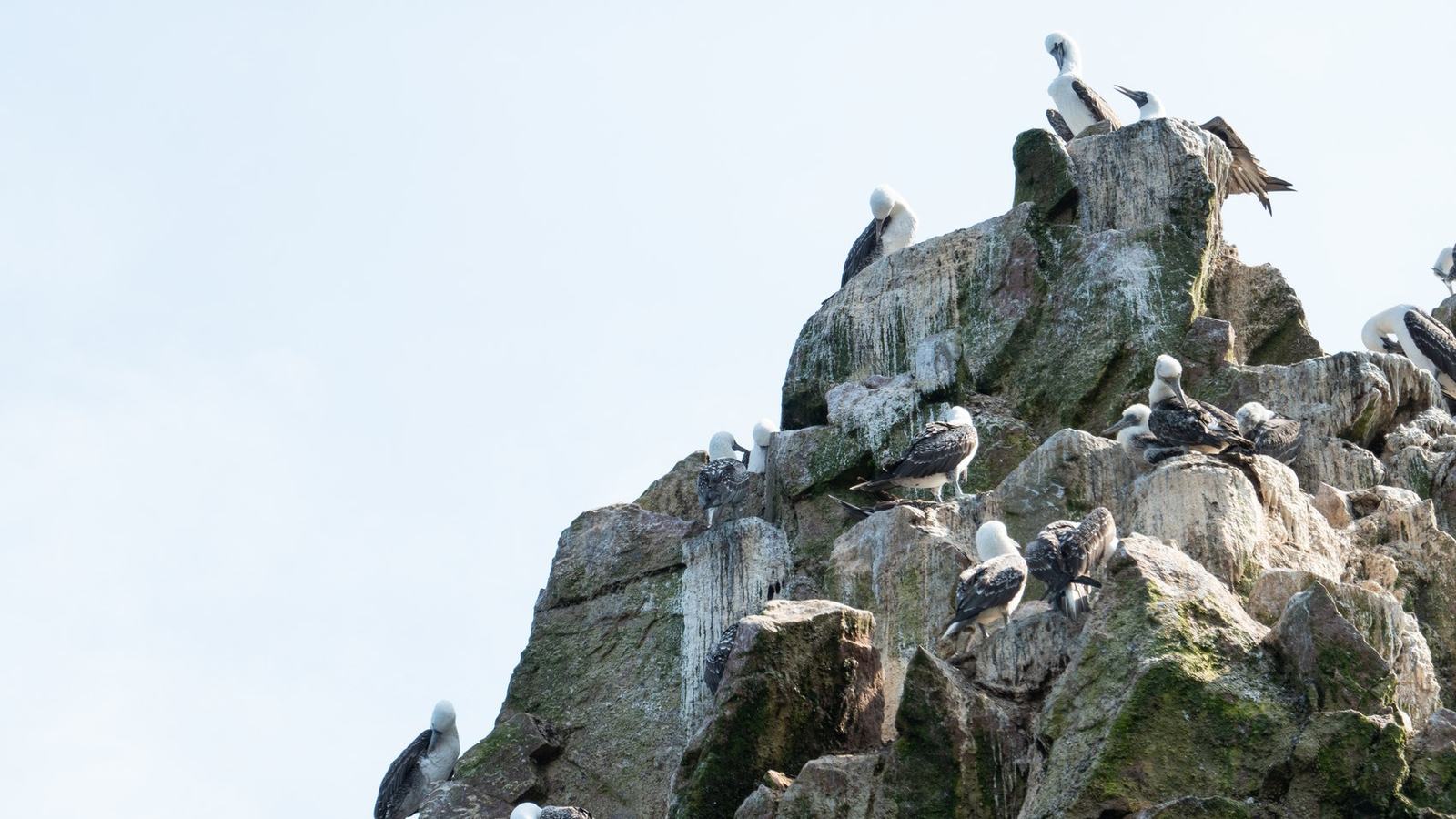
A detailed small-boat wildlife guide to Peru’s Ballestas Islands, including guided departures from Paracas, seabirds, sea lions and responsible marine tourism.
Off Peru's southern coast, the Ballestas Islands offer an unusual form of small-boat nature excursion. Travellers generally depart from Paracas on a guided passenger boat and head into the Pacific to see rocky islands populated by seabirds and sea lions. Peru's official tourism authority describes the area as one of the coast's outstanding wildlife attractions, closely associated with the Paracas region. The pleasure comes from seeing a living marine landscape from the water, not from landing on the rocks or approaching animals at arm's length. This distinction makes the trip particularly relevant to leisure boaters: an attractive offshore destination can require tightly controlled visitor access and competent local skippers.
The islands are the subject, not an anchorage
Ballestas is an offshore group of steep rocks, arches and sea caves rather than an ordinary set of holiday beaches. Its visual drama comes from cliffs rising directly from the sea and the concentration of animals that use the exposed habitat. That setting makes the islands memorable from a boat, but it is not a place where tourists should assume they can step ashore. The visitor experience is organised around observing the islands from permitted waters. Choosing a reputable excursion is more suitable than attempting to approach the cliffs in a private tender without local authorisation and knowledge of the currents, swell and conservation rules.
Paracas provides the practical gateway
The coastal town of Paracas is the usual starting point for a Ballestas excursion, with organised departures from local facilities. Travellers should confirm their actual meeting point and check whether the operator provides a safety briefing, appropriate lifejackets and a clear return schedule. A morning outing is often recommended by providers when conditions are suitable, but the actual availability depends on marine forecasts and port authority decisions. Paracas is not the destination's only attraction; it also serves as a starting point for land visits to the surrounding protected landscape. A well-paced itinerary can combine wildlife viewing at sea with time to learn about the coast on shore.
A boat trip into a productive marine ecosystem
The rich marine environment off Peru is influenced by cold, nutrient-rich waters associated with the Humboldt Current system. These conditions support fish and the birds and mammals that feed upon them. The scale of an offshore wildlife colony may surprise visitors accustomed to a lake or sheltered bay. From a guided boat, passengers may see densely occupied rock ledges and movement across the water as seabirds travel to feeding areas. Yet animal numbers and species visible on a particular day cannot be guaranteed. Wind, sea conditions, time of year and the animals' own movements all affect what is observed.
Seabirds make the coast extraordinary
The islands support several seabird species, including birds associated with the guano-rich coastal ecosystem. A visitor may hear calls long before recognising individual birds on the rocks. Binoculars are valuable because they allow observation at distances that reduce pressure on wildlife. Photographers should avoid encouraging a skipper to move close to nesting ledges or fly drones above colonies without explicit permission. A dramatic photograph obtained by disturbing birds would defeat the purpose of visiting. The best experience is often to watch the wider scene: birds moving between water and cliff, individual groups changing position, and the continuing rhythms of an active colony.
Sea lions demand respectful distance
South American sea lions can be among the conspicuous wildlife viewed around the rocks. They may be resting, socialising or moving through the water, and their behaviour should determine how carefully a boat approaches. The presence of a large animal near a vessel is not a reason for passengers to lean out or attempt to touch it. A responsible operator maintains suitable separation and avoids blocking access to resting areas. On some days an animal may enter the water nearby; on others the only view may be from a distance. Neither outcome should encourage pursuit. The lasting appeal is seeing these animals in the habitat they have chosen.
The Candelabra is a separate coastal landmark
Some Ballestas boat trips pass the famous Paracas Candelabra, a large geoglyph visible on the desert coast near the Paracas Peninsula. It is not located on the islands themselves, and its age and meaning should not be presented as settled facts. Passing it by sea can give travellers a sense of the region's broader cultural landscape before the boat continues towards wildlife habitats. The guide may explain competing interpretations, but a cautious account distinguishes established observations from speculation. This is another advantage of a thoughtful guided trip: the journey can include both cultural context and natural history without inventing explanations to fill a silence.
The ocean dictates the schedule
A boat excursion outside the shelter of a harbour depends on conditions that can change quickly. Wind and ocean swell may lead operators or port authorities to suspend departures, sometimes at short notice. A ticket purchased in advance is not a guarantee that a trip will sail on the chosen morning. Travellers should check the forecast and the operator's latest instructions, allowing a spare day when wildlife viewing is a priority. A small motorboat that looks comfortable beside the pier may move very differently once it reaches open water. Passengers should be prepared for an exposed coastal passage and accept cancellations rather than press a skipper to leave unsafely.
The correct boat matters
A guided visitor vessel should be suitable for its authorised route and passenger load. Ask about safety equipment, crew arrangements and how the boat handles rough conditions before paying. Larger passenger launches may offer different comfort from smaller craft, but size alone does not establish the quality of the operation. A responsible provider explains boarding, seating and emergency procedures. Independent leisure-boat owners should not assume that the sight of tourism boats establishes a safe or legal route for their own vessel. Local regulations, wildlife exclusion zones and practical handling requirements may be different for privately operated boats.
Boarding from Paracas
A safe trip begins with orderly embarkation. Passengers should wait for instructions before stepping aboard, keeping their hands clear of the gap between vessel and pier. Bags should be compact and secured so they cannot slide or fall into the water. Everyone should have a properly fitted flotation device if required by the operator and local regulations. Families need to confirm appropriate sizes for children. Once under way, avoid walking around without permission or gathering on one side for photographs. The skipper needs an unobstructed view and a stable boat, particularly when manoeuvring near other excursion vessels or entering more exposed water.
Conservation comes before close photographs
The Ballestas Islands and nearby waters form part of a sensitive ecological setting. Wildlife disturbance can result from excessive noise, poorly judged approaches or repeated visits too close to a resting colony. A responsible tourist should follow the guide's instructions, never throw food and never ask to land in a protected area. Boat operations must respect any route or speed restrictions issued for the locality. The fact that an animal appears curious does not establish consent for a close interaction. A respectful visitor may return home with fewer close-ups, but a more authentic understanding of how a marine colony lives without human interference.
Photography on a moving boat
Long lenses can help capture birds and sea lions without the need to approach closely, but a moving vessel creates challenges. Spray can damage equipment, wind can make a camera difficult to hold, and sudden changes in the boat's movement may catch an unprepared passenger off balance. Use a strap or suitable waterproof protection and remain seated when instructed. A wide composition showing an island arch, surrounding sea and scattered birds can communicate the setting better than a tightly cropped animal portrait. Photographing the journey itself, including the changing colour of the coastline, also provides context that wildlife-only images may miss.
Families and motion sickness
An offshore excursion may be exciting for children, but adults should assess how comfortable they are in an open boat for the expected duration. A child who becomes anxious in rough water may not enjoy the experience, even when the vessel and crew are operating properly. Ask about minimum ages, flotation equipment and the ability to change or cancel a booking for weather reasons. People prone to motion sickness should consider appropriate advice in advance and choose a trip suited to their circumstances. It is unwise to expect a skipper to interrupt a protected-area route simply because one passenger underestimated the motion at sea.
Bird guano is part of the history
The dense concentration of seabirds along this coast has long been associated with guano, an organic material historically collected for use as fertiliser. That history offers a reminder that marine ecosystems have economic as well as conservation significance. A visitor may see pale deposits on rocky surfaces, but this does not justify collecting anything from a protected habitat. The guide can help explain how birds, fish and the ocean's productivity are connected. Understanding the ecological system adds depth to the trip and avoids reducing the islands to a collection of dramatic animal photographs.
A visit to the Paracas region can be broader
After returning to shore, travellers may explore approved viewpoints or visitor attractions within the broader Paracas area, subject to the applicable rules and weather. The region's desert landscape contrasts dramatically with the sea, making it an interesting companion to a boat excursion. Time ashore also gives children and less experienced travellers an opportunity to rest after the ocean passage. A realistic day leaves room for transportation, boarding and unexpected delays. Avoid scheduling an immovable onward connection immediately after an offshore tour. A little flexibility can turn a cancelled or shortened crossing into a worthwhile day rather than a hurried disappointment.
Understanding the source of a tour offer
Travel websites often describe Ballestas as a simple two-hour boat ride, but specific itineraries, timing, prices and inclusions vary. Confirm all details with the actual operating provider before committing, including where to meet and whether entrance or conservation fees are included. Older online fares can be misleading, and a price promoted for a large group may not apply to an individual booking. The official Peru Travel information is useful for understanding the destination, while the operator and local authorities should supply current operational details. An honest booking is one that explains weather uncertainty as clearly as the attractions.
A lesson in marine responsibility
Many leisure-boat owners dream of quiet coves, wildlife encounters and remote islands. Ballestas shows that some of the world's most memorable marine places are best experienced from an authorised excursion without landing. A visitor who understands the role of the guide, accepts the weather and observes animals from respectful distances may see a remarkable ecosystem without adding to its pressures. The boat provides a changing view of sea and rock, while the wildlife remains the central subject. The reward is not possession of an island for an afternoon but the privilege of observing a protected coast on its own terms.
Sources and photograph attribution
Official destination and boating guidance: Peru Travel — Ballestas Islands, Ica and Paracas. Current access, rules, weather and reservations must be checked independently before travel.
Photograph: PsamatheM — 15-Islas Ballestas-nX-42.jpg (CC BY-SA 4.0), via Wikimedia Commons. Resized and converted to JPEG for editorial presentation. Source: https://commons.wikimedia.org/wiki/File:15-Islas_Ballestas-nX-42.jpg. Licence: https://creativecommons.org/licenses/by-sa/4.0. Original rights remain with the credited creator or as specified by the source and licence.
