
An original boating guide to Phewa Lake in Pokhara, including the island temple, local boat hire, responsible visits, freshwater ecology and lake safety.
Pokhara in central Nepal is widely associated with high mountains, paragliding and trekking, but one of its most accessible attractions sits much closer to the water. Phewa Lake, also called Fewa, forms an important part of the city's everyday landscape. Traditional rowing boats carry visitors from the lakeshore towards Tal Barahi Temple, situated on an island in the lake, while a longer outing can reveal how the town, forested slopes and Himalayan skyline relate to the water. Nepal Tourism Board specifically identifies Phewa as a major recreational boating destination and describes boats available for hire. For a leisure-boating audience, the attraction is the scale of the experience: a modest craft, a considered route and a unique cultural setting.
The water at the heart of Pokhara
The lake is not a remote wilderness that must be reached after an expedition. It lies beside Pokhara's tourism district, with restaurants, pathways and boat departure points near the shore. That accessibility makes it tempting to treat boating as something to do spontaneously without much thought. Yet even a short crossing deserves preparation. Boat traffic, sudden changes in wind and the requirements of different passengers all matter. A relaxed visit begins by deciding whether the group wants to reach the temple, enjoy a quiet row along the shore or hire a boat with an experienced local boatman. The ideal outing is suited to actual conditions rather than a fixed picture in a travel brochure.
A lake among several
Nepal Tourism Board describes Pokhara as a city of lakes, including Phewa, Begnas and Rupa and the wider cluster of lakes in the valley. Phewa is the best-known tourism setting, but it is useful to understand that it is part of a larger freshwater landscape rather than the country's only mountain lake. Different lakes have their own boating arrangements, shorelines and conservation considerations. A visitor should not assume that a boat hired on Phewa can be moved to another lake or that access rules are interchangeable. If considering several water-based excursions, verify local operators and regulations separately, and allow time to experience each location rather than racing between them.
Tal Barahi Temple creates a destination
The small island holding Tal Barahi Temple is one of the reasons many visitors take a boat onto Phewa. Nepal Tourism Board describes the temple as an important religious site dedicated to a form of the goddess Shakti. The crossing therefore has a purpose beyond sightseeing: people travel to a living place of worship. Visitors should approach that dimension respectfully, ask about appropriate dress and conduct, and avoid obstructing worshippers while taking photographs. Boats arriving at the island need to follow the actual landing arrangements rather than selecting an informal place to beach. A short, courteous visit can add cultural depth to an otherwise scenic boating holiday.
Rowing boats keep the pace human
Traditional wooden boats suit the sheltered parts of the lake because they travel at a speed that encourages observation. The sound of a paddle or oar, views of the nearby hills and reflections on the water become part of the experience. A visitor who wants to concentrate on the scenery may prefer a local boatman, while someone wishing to row should ask whether self-rowing hire is available and permitted for their experience level. The existence of a rental service does not mean every passenger is qualified to handle every craft. The boat's load, seating arrangement and stability should be explained before leaving the bank.
Hiring from the shore
The lakeside has established boat operators, but prices and rules can change by season and supplier. Instead of reproducing an unverified fare, check the official or operator information for the actual date and agree on the destination, duration and whether a boatman is included. A short temple crossing differs from a longer recreational row, and passengers should understand when the boat is expected back. Clarify how children are accommodated and whether buoyancy aids in suitable sizes are available. Make sure personal belongings can be protected from spray or rain. A clear agreement at the start helps avoid an unnecessarily hurried return or confusion about where to disembark.
Mountains shape the setting, not the forecast
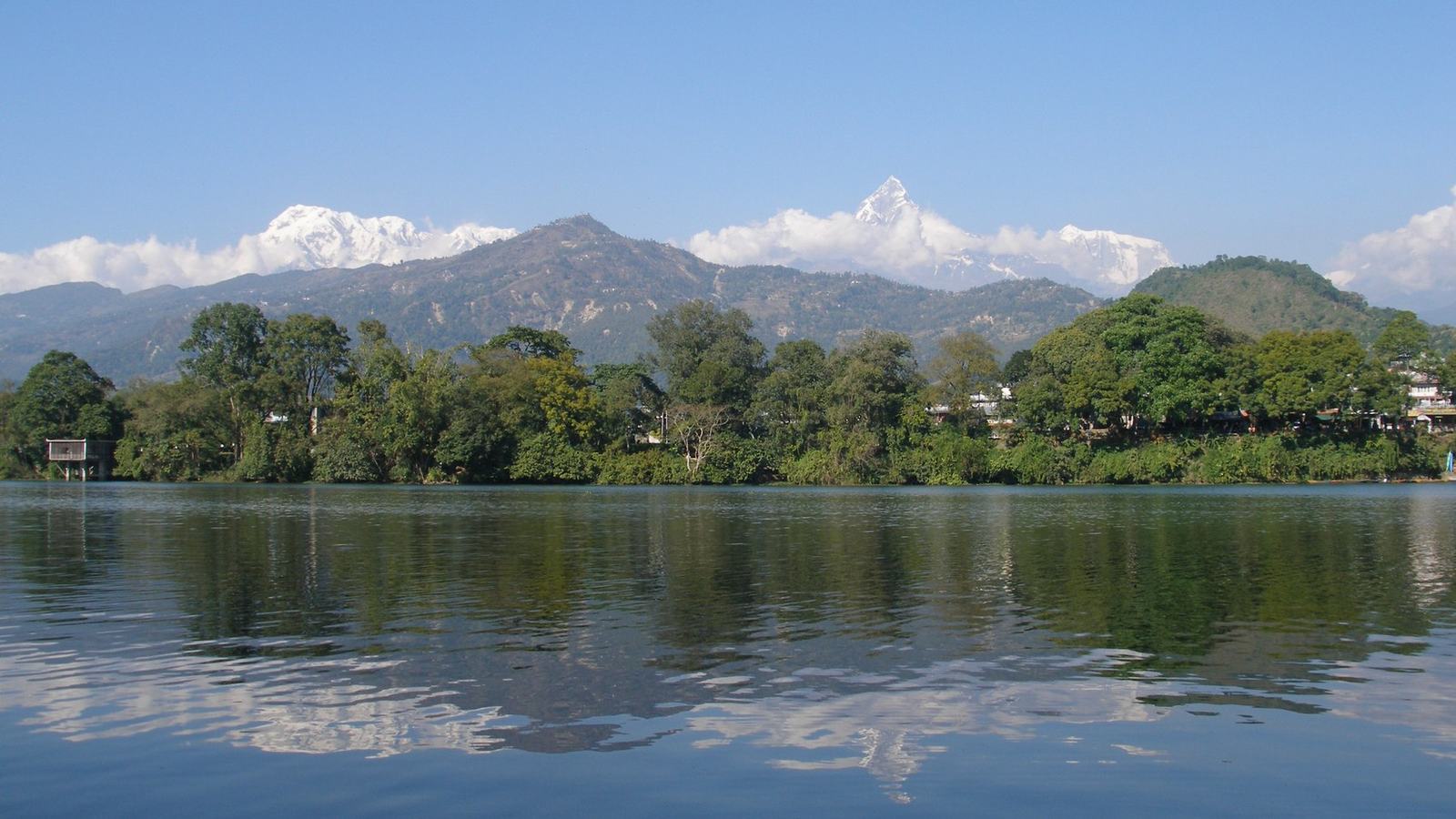
Images of Phewa often show distant mountains rising beyond the lake, and on clear days this contrast is a major attraction. But visibility can vary significantly with cloud, haze and weather. Planning a boat trip solely to obtain a mountain reflection is risky: a lake that looks perfectly still at dawn may change by afternoon. Give the outing value in its own right, even when the peaks are hidden. The shoreline, the temple and the movement of local boats can still provide a memorable experience. Photography should follow the conditions available rather than encourage a crew to stay out in deteriorating weather waiting for the clouds to clear.
Wind deserves attention on inland water
The fact that a lake is enclosed does not remove the risk created by wind. A breeze that feels pleasant on shore may make a rowing boat harder to control away from the bank. A person with little rowing experience may drift or struggle to return against the wind. Check the weather, listen to local operators and keep close enough to the departure area to return comfortably. If stronger winds or thunderstorms are expected, postpone the outing. A temple visit can be arranged for a better period, and many of Pokhara's attractions remain available on land. A small boat should never be taken out simply because a ticket has been purchased.
Flotation equipment matters for everyone
Even on a short journey to an island, passengers should have properly fitted personal flotation equipment as appropriate to local rules and sensible boating practice. Ask the operator to explain where the gear is and how to wear it correctly. A flotation device that is too large for a child may be ineffective, while one packed underneath a bench is not useful during an unexpected capsize. Keep the passenger load within the boat's design and do not lean over one side for a photograph. When boats are low in the water, the crew should be particularly careful about standing suddenly or shifting places without instruction.
A visit that respects local worship
Because Tal Barahi is an active temple, a boating article should not describe it merely as a picturesque island backdrop. People may be arriving for religious observance rather than tourism, and the atmosphere can change during festivals and busy periods. Follow signs and local guidance about shoes, photography and access to religious spaces. Do not block steps or landing points while organising a group picture. A respectful visit allows boaters to appreciate the unusual relationship between water transport and worship without treating the community's traditions as a performance. An island destination can be both culturally important and beautiful; good visitors acknowledge both.
Quiet places beyond the busy departure area
The lakeside closest to the tourism district can be active, but a longer permitted route may reveal stretches where the wooded banks or the distant hills become more prominent. Whether such a journey is available depends on the operator, weather and time allowed. Never assume that a private rental comes with unlimited access to the entire lake. Some areas may be more exposed or have different traffic patterns. A sensible route provides opportunities to stop rowing, enjoy the view and return without fatigue. The purpose of the journey should be to see the lake carefully, not simply maximise distance before the hire period expires.
Wildlife and clean freshwater
Freshwater ecosystems depend on the quality of their water and the condition of the shore. Visitors can contribute by taking rubbish away, avoiding disposable packaging likely to blow overboard and keeping any food scraps out of the lake. Never feed birds or fish in an attempt to improve a photograph. The lake is a shared resource for residents, boat operators and wildlife, not just an attraction for visitors. A small rowing craft can have a relatively low wake, but careless behaviour still creates pollution and disturbance. Responsible use helps preserve a place that is central to both the city's identity and its tourism economy.
The best photography is often unhurried
A low boat creates attractive compositions of the island, shoreline and hills beyond, but photography should never interfere with basic stability. Secure cameras and phones with suitable straps or waterproof cases and keep them inside the boat when not in use. Rather than standing to gain a higher angle, wait for the boat to settle and make photographs from a safe seated position. Respect other passengers and the boatman, particularly when approaching the temple landing. A quiet image of the lake and its rowing boats may tell a fuller story than a tightly framed picture of a monument isolated from its setting.
Families can choose a shorter outing
A trip to Tal Barahi is an accessible introduction to boating for many family groups, provided the boat and conditions are suitable. Parents should confirm flotation equipment, boarding arrangements and the operator's rules before bringing young children aboard. A boat with a skilled local boatman may be preferable to self-rowing when adults are also responsible for supervising children. Agree on a manageable duration and explain why everyone must remain seated. A successful first experience need not include an extended lake tour. Children may remember the act of travelling by water and landing at the temple more clearly than a long, tiring circuit.
Connecting the cruise with the city
Pokhara offers many ways to spend time ashore, from walking along the lakeside to visiting viewpoints and local cultural attractions. A good itinerary leaves enough space for both boating and land-based exploration rather than treating the lake as one rushed stop among many. Nepal Tourism Board's destination information helps visitors place Phewa within Pokhara's wider natural and cultural setting. Transport arrangements and individual attraction opening times should be confirmed independently. If rain interrupts the boating plan, the entire day need not be lost. Time in the city can still reveal how the lake influences local life, trade and the way residents and visitors experience the landscape.
Choosing an appropriate season
A visitor planning a future trip should consider the broader weather pattern of the Pokhara valley, not just the temperature shown for one day. Rain, changing visibility and seasonal variations in lake conditions can affect the comfort and safety of a small boat. Operators may change availability or routes when conditions require it. A fixed calendar description cannot guarantee a clear mountain view, a smooth crossing or quiet water. Check the latest local guidance close to departure and be willing to rearrange the schedule. The lake is worth experiencing for more than one photographic moment, so flexibility improves the chances of a rewarding visit.
The pleasure of a modest crossing
Phewa shows how a small leisure craft can connect natural scenery, everyday local transport and an important cultural destination. The boat journey to Tal Barahi may be brief, yet it changes how the temple is approached and how the surrounding hills are perceived. The most satisfying visit combines a suitable craft, fair arrangements with a local operator, careful attention to weather and genuine respect for a place of worship. Travellers who move slowly, protect the freshwater environment and keep their expectations flexible can experience one of Nepal's distinctive boating landscapes without needing a long voyage or a powerful engine.
Sources and photograph attribution
Official destination and boating guidance: Nepal Tourism Board — Pokhara: Phewa Lake and Tal Barahi Temple. Current access, rules, weather and reservations must be checked independently before travel.
Photograph: Vyacheslav Argenberg — Phewa Lake, Pokhara, Nepal.jpg (CC BY 4.0), via Wikimedia Commons. Resized and converted to JPEG for editorial presentation. Source: https://commons.wikimedia.org/wiki/File:Phewa_Lake%2C_Pokhara%2C_Nepal.jpg. Licence: https://creativecommons.org/licenses/by/4.0. Original rights remain with the credited creator or as specified by the source and licence.
