
A detailed guide to Storms River Mouth kayaking and lilos, describing weather-dependent routes, gorge scenery, safety expectations and conservation.
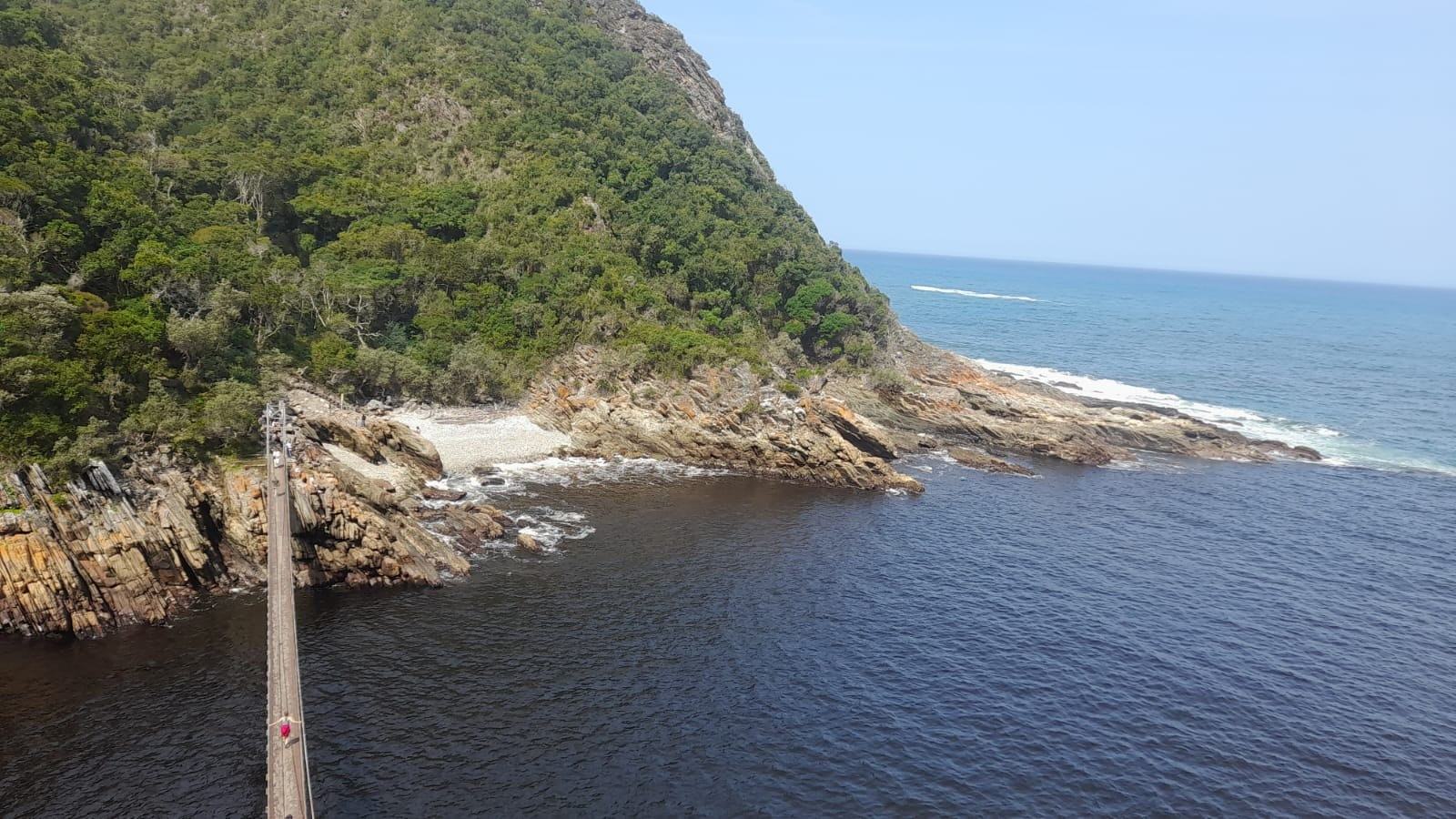
At Storms River Mouth in South Africa's Garden Route National Park, the scenery changes rapidly from open ocean to a river gorge enclosed by high, forested rock. It is a striking setting for small-boat travel, but it is not a place where visitors should casually launch a recreational kayak and expect a sheltered paddle. The official activity operator, Untouched Adventures, offers a guided kayak-and-lilo excursion that changes according to conditions. When sea conditions are suitable, kayaks can approach the river mouth from the harbour. When the ocean is too rough, participants may use the forest path and suspension bridge to reach an alternative starting point. This flexibility is central to a safe visit.
Where ocean and gorge meet
Storms River Mouth is part of the Tsitsikamma section of Garden Route National Park, where steep coastal scenery meets the river. The landscape is visually dramatic because the open Indian Ocean and the narrow gorge sit close together. A group travelling in small kayaks can experience both environments during an authorised guided excursion, although the exact route depends on the sea. The narrow gorge offers calm-looking pools and steep walls, but the mouth is a marine environment with its own hazards. A visitor should not confuse the beauty of the setting with permission to explore independently. A guided activity provides a structured way to enjoy the place.
The kayaking and lilo format
Untouched Adventures describes its kayak-and-lilo outing as a combination of paddling and floating farther into the Storms River Gorge on inflatable lilos. The name does not mean that visitors spend the whole experience sitting in a kayak. The programme may involve leaving the kayak section for an inflatable water mattress and entering parts of the gorge differently. This is part of its attraction but also means participants need to understand the full activity before booking. Ask the operator what the current route includes, whether swimming is required and which sections are optional. A promotional photograph cannot explain all the practical demands of a mixed water-and-walking experience.
The sea dictates the launch
The operator's route description is specific about weather. When the ocean is safe, guests may paddle from the harbour across a short stretch of coastal water, pass beneath the suspension bridge and travel into the gorge. If conditions make that sea crossing unsafe, the group can instead follow a forest boardwalk route to launch in the river mouth. Neither variation should be interpreted as an assurance that the tour will always operate. Conditions can cause further changes or cancellation. Respecting the guide's choice of route is essential: a short exposed sea passage can be considerably harder than a calm photograph suggests.
Why the suspension bridge matters
The Storms River suspension bridge is a well-known feature of the Tsitsikamma coastline, drawing walkers as well as boat visitors. Seeing the bridge from the water places it in a different context, with the gorge's vertical rock walls and the sea beyond. The operator uses the bridge area as a reference point in its route, while the national park's visitor information describes the Mouth Trail that reaches it on foot. These two activities are connected but not identical. A walker cannot assume that reaching the bridge provides access to a kayak without a booked tour, and a paddler should not treat a bridge crossing as a compulsory part of every itinerary.
Not a normal boat-hire trip
An independent paddler accustomed to hiring a kayak at a lake may find the Storms River activity unfamiliar. The operator supplies a guided programme rather than promising open-ended use of a boat. Participants may have to follow an instructor's pace, move from a kayak to another type of flotation equipment and complete sections that involve walking or swimming. A successful booking therefore depends on matching the activity to personal ability. Ask about age, weight, fitness, swimming confidence and any health or mobility restrictions before paying. An operator who advises against participation is protecting the guest, not spoiling their holiday.
A gorge seen at paddle height
From the river, rock walls and vegetation can feel much taller than they appear from a viewpoint above. The sound of water against stone, changes in light and the narrowness of the passage make the experience particularly memorable. Yet the best way to appreciate it is to move calmly, listen to instructions and avoid touching fragile banks or climbing on rock formations. The gorge is not a playground constructed to tolerate repeated impacts from boats and shoes. Staying with the group allows the guide to choose safe areas for observation without disturbing sensitive places. A quiet moment on the water may be as rewarding as the most dramatic photograph.
Swimming and water confidence
Because the kayak-and-lilo itinerary can include floating on lilos and optional water-based activities, participants must be honest about their comfort in water. A flotation aid does not replace the ability to follow instructions or remain calm if water splashes over a boat. Ask the operator whether swimming is expected, how deep the water may be and how participants transfer between craft. Clothing should be suitable for becoming wet, and anything that cannot tolerate water should be secured or left ashore. Visitors who cannot swim confidently should not assume the programme is appropriate simply because a travel listing calls it an adventure for tourists.
Safety equipment and the briefing
A competent guided outing starts before the first paddle stroke. Participants need to understand where to meet, how the equipment fits, how to stop or steer, and what to do if separated from the group. The operator should explain the role of flotation equipment and the actions to take if a kayak capsizes. Follow those instructions closely rather than relying on advice from a different river or an online video. Paddlers should also listen for any requirement to wear helmets or other specialist gear. If equipment is damaged or uncomfortable, report it immediately. Small problems are easier to resolve before entering a confined gorge.
The forest approach is not second best
When the ocean route is unsuitable, the operator may take guests along the indigenous forest path before entering the water farther inside the river mouth. Some visitors may initially see this as a disappointment because the sea kayak segment is shortened. In reality it can offer a useful perspective on the national park's forest and coastline, while avoiding unnecessary exposure. The alternative route depends on actual access conditions and cannot be assumed to remain available during every period of heavy rain or maintenance. Flexibility keeps the trip focused on the gorge itself rather than treating a particular launch point as more important than safety.
Time estimates need confirmation
The operator describes the standard experience as taking roughly two to two-and-a-half hours, depending on which version of the route is offered. Travel time to the meeting place, changing clothes and the safety briefing may add to a visitor's day. Before scheduling other attractions, check the current booking confirmation for the expected duration and arrival time. A group that is late may miss important instructions or be unable to join. It is particularly unwise to plan a long drive immediately after a strenuous outing without allowing time to dry off, eat and rest. A small margin in the itinerary makes the whole visit more enjoyable.
Conservation rules still apply
Storms River Mouth lies within a protected national park. Park rules against removing natural objects or disturbing wildlife apply just as much to visitors on the water as to walkers on the trail. Do not collect stones or shells from the gorge or leave litter behind. Keep clear of wildlife and avoid using the inflatable equipment to force a passage into vegetation. The guide's route may be chosen partly to reduce environmental impact, so a change of direction should not be treated as an invitation to explore a forbidden side channel. Good conduct helps ensure that small-group adventure tourism can remain compatible with the park's conservation purpose.
Wildlife viewing without promises
The Tsitsikamma coast supports birds and other animals whose movements cannot be scheduled. A guide may point out wildlife or explain the habitats along the water, but the outing should not be promoted as a guaranteed chance to see a particular species. A visitor who stays alert may learn more from the landscape than from chasing a fleeting sighting. When photographing an animal, keep the equipment secure and do not interrupt the group's progress. The gorge is a dynamic environment; the guide may need participants to paddle, stop or move promptly, and instructions should always take precedence over a photograph.
The role of the harbour
The harbour at Storms River Mouth is not simply a convenient spot on a map. It is part of a controlled national-park visitor setting with operational arrangements for guided activities and other users. Meet the authorised operator at the specified place rather than launching a private boat near a commercial group. A motorboat or tender should not attempt to follow the kayaks into confined waters without verifying whether it is permitted and appropriate. The physical ability of a vessel to fit through a passage does not establish a right to navigate there. Using the designated activity respects other visitors and reduces safety conflicts.
Choosing a suitable day
Weather can alter the route significantly, including whether the guided sea crossing is attempted at all. Check the operator's current advice before making a long journey and be prepared for a cancellation. Sea conditions may change during the day, and a decision taken by a guide reflects local judgement rather than a general prediction. A visitor should never ask staff to override a safety limit to preserve a holiday schedule. Instead, consider a nearby permitted walk or another land-based activity if the kayaking cannot proceed. A flexible plan can still provide a memorable encounter with Tsitsikamma's forest and coastline.
Photographing the water and cliffs
A waterproof camera or secure phone case may be sufficient for most visitors, especially when equipment must be transferred between kayak and lilo. Large bags and unsecured straps can become awkward in a small craft. Avoid sudden movements for a closer photograph of the bridge, and do not drift away from the group to frame an empty gorge. Light changes rapidly between the sea and the shaded rock walls, so a few simple compositions may be more effective than constant shooting. One image that shows the scale of the kayaks beneath the cliffs can explain the experience better than many pictures taken without regard for safety.
Getting the booking details right
Untouched Adventures is the primary source for current activity descriptions and bookings. The visitor should confirm the exact trip purchased, whether the standard kayak-and-lilo outing or a longer adventure, the equipment and clothing requirements, transport to the meeting point and current cancellation conditions. Check any age or fitness restrictions rather than assuming that a family group can all participate. The operator's published programme may change, and prices shown in older articles should not be treated as reliable. When park access conditions affect the route, the operator's current instructions take precedence over a travel writer's general description.
A different experience of the Garden Route
A kayak-and-lilo journey into Storms River Gorge is distinctive because it combines active water travel with scenery that would otherwise be viewed mostly from a bridge or walking path. The point is not to cover a great distance but to encounter the forested gorge at water level. That experience depends on a willingness to follow the guide, understand water confidence requirements and accept a weather-based route. Travellers who approach it as a carefully managed excursion, rather than an unrestricted kayak hire, can appreciate a remarkable South African coastal landscape without putting themselves or the protected environment at unnecessary risk.
Sources and photograph attribution
Official destination and boating guidance: Untouched Adventures — Storms River Gorge Kayak and Lilo. Current access, rules, weather and reservations must be checked independently before travel.
Photograph: M J Hurter — Storms River Estuary 2024.jpg (CC BY 4.0), via Wikimedia Commons. Resized and converted to JPEG for editorial presentation. Source: https://commons.wikimedia.org/wiki/File:Storms_River_Estuary_2024.jpg. Licence: https://creativecommons.org/licenses/by/4.0. Original rights remain with the credited creator or as specified by the source and licence.
