
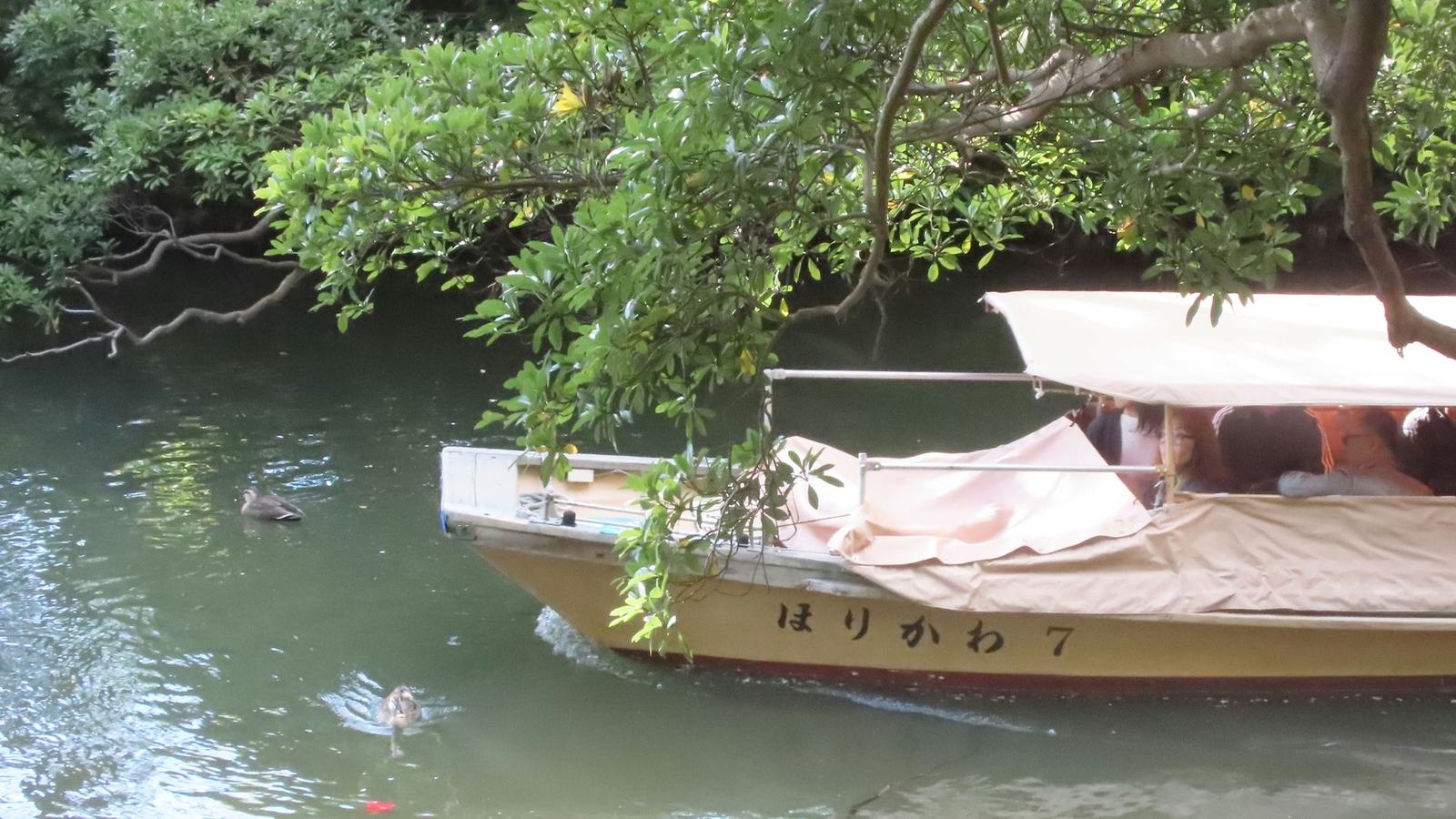
An original guide to Matsue's electric sightseeing boats, exploring historic castle waterways, quiet propulsion, bridge clearance and practical travel.
In Matsue, on the western side of Japan's main island of Honshu, a small sightseeing boat offers an unusually close view of a historic castle town. Visitors travel along the waterways around Matsue Castle, moving beneath bridges and past gardens, stone embankments and old neighbourhoods. The Japan National Tourism Organization has highlighted the Horikawa sightseeing boats as an example of local tourism adopting quieter electric propulsion. The journey is not an offshore expedition, but it demonstrates the appeal of compact passenger craft designed for a very particular waterway. For leisure boaters interested in low-impact propulsion, urban heritage and close-range sightseeing, the experience offers a different kind of inspiration.
The castle is the centre of the route
Matsue Castle sits above a network of moats that helped define the city's historic layout. A water journey provides a viewpoint unavailable to someone who stays on the surrounding streets. Rather than seeing the castle as a single distant monument, passengers observe how walls, bridges and neighbourhoods relate to the water that shaped the settlement. JNTO describes the sightseeing boats as a way to explore the area while experiencing both history and local scenery. The route is a reminder that the importance of small boats extends beyond the sea: inland waterways can connect public spaces, cultural heritage and everyday urban life in ways that roads cannot.
A traditional form with a modern motor
The Horikawa boats have a low, distinctive appearance suited to passing through the castle moats. JNTO's official tourism feature reports the move towards electric-powered sightseeing boats as part of local efforts to reduce the environmental impact of visitor transport. Electric propulsion is not a promise of entirely impact-free travel, because batteries and charging systems also have environmental costs. Its immediate advantage in a confined visitor setting can be the reduction of local exhaust and engine sound. That quieter operation helps people appreciate a landscape where conversation, flowing water and the sound of the city are important parts of the experience.
Why quiet boats suit historic waterways
A castle moat is not a marina fairway designed for high-speed vessels. Its appeal lies in close proximity to stonework, trees and narrow passages where noise can dominate the atmosphere. Small electric tour boats make sense because the journey is slow, predictable and focused on observation. The propulsion system should be understood as part of a complete operating arrangement, however. Skilled operators still need to manage speed, passenger loads, charging and manoeuvring. The technology does not remove the need for careful seamanship. The most interesting lesson for leisure-boat owners is how a boat can be matched thoughtfully to the scale and character of its waterway.
Passing under the bridges
The historic bridges around Matsue create some of the tour's memorable moments. Low clearance demands boat designs and operations suited to the route, and it changes the viewpoint for passengers as they move between more open reaches. Visitors should follow the crew's instructions about seating and keeping hands and belongings inside the boat. A bridge that looks picturesque from shore can create real constraints for a vessel, and those constraints should not be treated casually. The fact that the official sightseeing boats negotiate the passage safely does not mean a private craft may enter the moat or fit beneath the same structures.
The river view of Matsue Castle
From the water, Matsue Castle's tower and surrounding green spaces appear in a broader urban context. The city's history is expressed through the relationship between its fortifications, stone embankments and channels. This perspective can make a boat excursion a worthwhile companion to a conventional castle visit rather than a substitute for one. The passenger sees details that may be missed while walking, then can explore selected streets and historical sites ashore at their own pace. A good itinerary leaves time for both experiences. Racing from one attraction to another would miss the value of moving slowly along a route designed for observation.
The difference between sightseeing and self-hire
An official sightseeing service is a managed passenger operation. It is not equivalent to renting a small electric boat and steering it through the same moats. Visitors should confirm departure points, ticketing arrangements, accessibility and present operating schedules with the local operator before arriving. The existence of a public cruise also does not establish that private boats can use the route. The waters may be subject to specific local access and heritage rules. Anyone who owns a small electric tender should appreciate the engineering and design of the tour craft without assuming those features confer unrestricted navigation rights in historic city channels.
Electric propulsion and the visitor experience
The appeal of an electric motor in a small sightseeing boat is partly acoustic. A quieter journey may allow passengers to hear birds or moving water and follow the boatman's commentary more easily. It also reduces the sense that the boat is imposing itself on the surrounding historic landscape. Yet the practical effectiveness of electrification depends on the vessel's operating cycle, charging arrangements and maintenance. A leisure-boat owner considering a similar conversion should think about range, energy reserve and the actual waterways used, rather than copying a tour boat's technology without examining its duty cycle. Matsue demonstrates a useful application, not a universal technical specification.
A seasonal city seen from the water
Trees and gardens along the canals change their appearance through the year, giving passengers different views of the castle town in spring, summer, autumn and winter. That variation is one reason to seek current operating information rather than assume every photograph represents the season of a future visit. Weather may also alter the comfort or availability of the cruise. Visitors should ask whether a particular service is operating during their travel period and whether a reservation is useful. A cool-weather trip may require warmer clothing than a city walk, especially when passengers sit still for an extended period close to the water.
Where the boat fits into the day
Matsue offers more than the moat cruise, and the best outing combines water travel with time ashore. Nearby cultural sights and historic streets can help visitors understand what they saw from the boat. A relaxed plan might begin with the castle area, include a sightseeing cruise and leave a generous interval for walking and refreshments. The exact sequence should be determined by actual opening times and ticket arrangements. Travellers who cannot comfortably embark on a low boat should discuss accessibility before setting out; proximity to a major tourist attraction does not guarantee step-free access at every boarding point.
Photography from a low vessel
The changing view beneath bridges and towards the castle tower can be rewarding for a photographer. A compact camera is often more practical than a large kit that occupies space on a small passenger craft. Keep hands inside the boat and avoid standing or leaning as it approaches a low bridge. A wide composition showing the water, stone embankment and historic buildings may be more expressive than a telephoto close-up of the castle alone. Passengers should also respect the privacy of residents in nearby homes, avoiding intrusive photographs through windows. Being on a public cruise does not remove the ordinary responsibilities of considerate photography.
Heritage water needs careful stewardship
Moats and canals may look decorative today, but they are part of the city's historic structure and contemporary environment. Operating a tourist service involves maintaining the waterway and protecting its banks from unnecessary damage. Visitors contribute by taking rubbish away, remaining within the boat and following the crew's requests. A quiet motor does not justify careless manoeuvring or close approaches to wildlife. Heritage tourism works best when the technology is unobtrusive and operations are predictable. The Matsue example is valuable because the boat and its surroundings form one experience rather than competing attractions.
What private boaters can learn
A small-craft enthusiast may notice the compromises involved in designing a shallow, compact passenger vessel. Low bridges influence the vessel's profile; limited space affects seating and boarding; slow operating speeds create opportunities for quiet propulsion. These details illustrate the importance of designing for a clear use case. They do not imply that a similar vessel would be appropriate for crossing open water or transporting passengers in rough conditions. The strength of Matsue's boats lies in their adaptation to a particular urban circuit. The wider boating lesson is that appropriate dimensions, propulsion and operating discipline can create a better experience than excessive power.
The value of a guided interpretation
The setting gains depth when visitors understand why the castle was built here, how the waterway shaped the town and what they are seeing along the banks. An operator's interpretation may vary by language and departure, so tourists should check what information is available in their preferred language. A guidebook or official visitor leaflet can add context without requiring constant phone use aboard the boat. It is worthwhile to look beyond the headline claim of an electric cruise and learn how it connects with the city's wider heritage. A modest water journey can become a useful introduction to an unfamiliar place.
Booking and conditions should be verified
JNTO's feature establishes the concept of the electric-powered Horikawa sightseeing boats, but it is not a real-time timetable. Confirm current route, boarding point, duration, ticket price and possible maintenance or seasonal changes with the operator. Allow for weather interruptions and be aware that some services may be more popular at particular times. If mobility, hearing or seating arrangements are important, ask about them before booking. A visitor should not assume that every photograph depicts the current fleet configuration. Tourism operators adapt their service over time, and a reliable itinerary follows the information issued for the actual travel date.
A good destination for families
A short urban cruise can introduce children to boating in a structured environment without exposing them to a long offshore passage. Adults should still supervise younger passengers, follow seating instructions and ensure that any required safety equipment is used correctly. The passage beneath bridges can be particularly interesting, but it is important not to encourage children to reach upwards or trail hands in the water. The appeal lies in observing the changing scenery and learning the relation between castle and town. Families can then explore a nearby park or historic street at a pace suited to the youngest traveller.
A small boat that changes how a city feels
Matsue's electric sightseeing boats show how leisure boating can be meaningful even on a short, slow urban route. Their value is the chance to experience a historic waterway without overwhelming it with engine noise or speed. The castle, bridges and streets are the main subjects; the boat simply makes a different kind of looking possible. Visitors who check the latest operating details, respect the crew's instructions and combine the cruise with time ashore can appreciate both heritage and modern propulsion. For small-boat owners everywhere, it is a reminder that thoughtful use often matters more than size.
Sources and photograph attribution
Official destination and boating guidance: Japan National Tourism Organization — Matsue Electric-Powered Sightseeing Cruise. Current access, rules, weather and reservations must be checked independently before travel.
Photograph: Spiegel — Horikawa Sightseeing Boat, Matsue - Nov 7, 2026.jpg (CC BY 4.0), via Wikimedia Commons. Resized and converted to JPEG for editorial presentation. Source: https://commons.wikimedia.org/wiki/File:Horikawa_Sightseeing_Boat%2C_Matsue_-_Nov_7%2C_2026.jpg. Licence: https://creativecommons.org/licenses/by/4.0. Original rights remain with the credited creator or as specified by the source and licence.
