
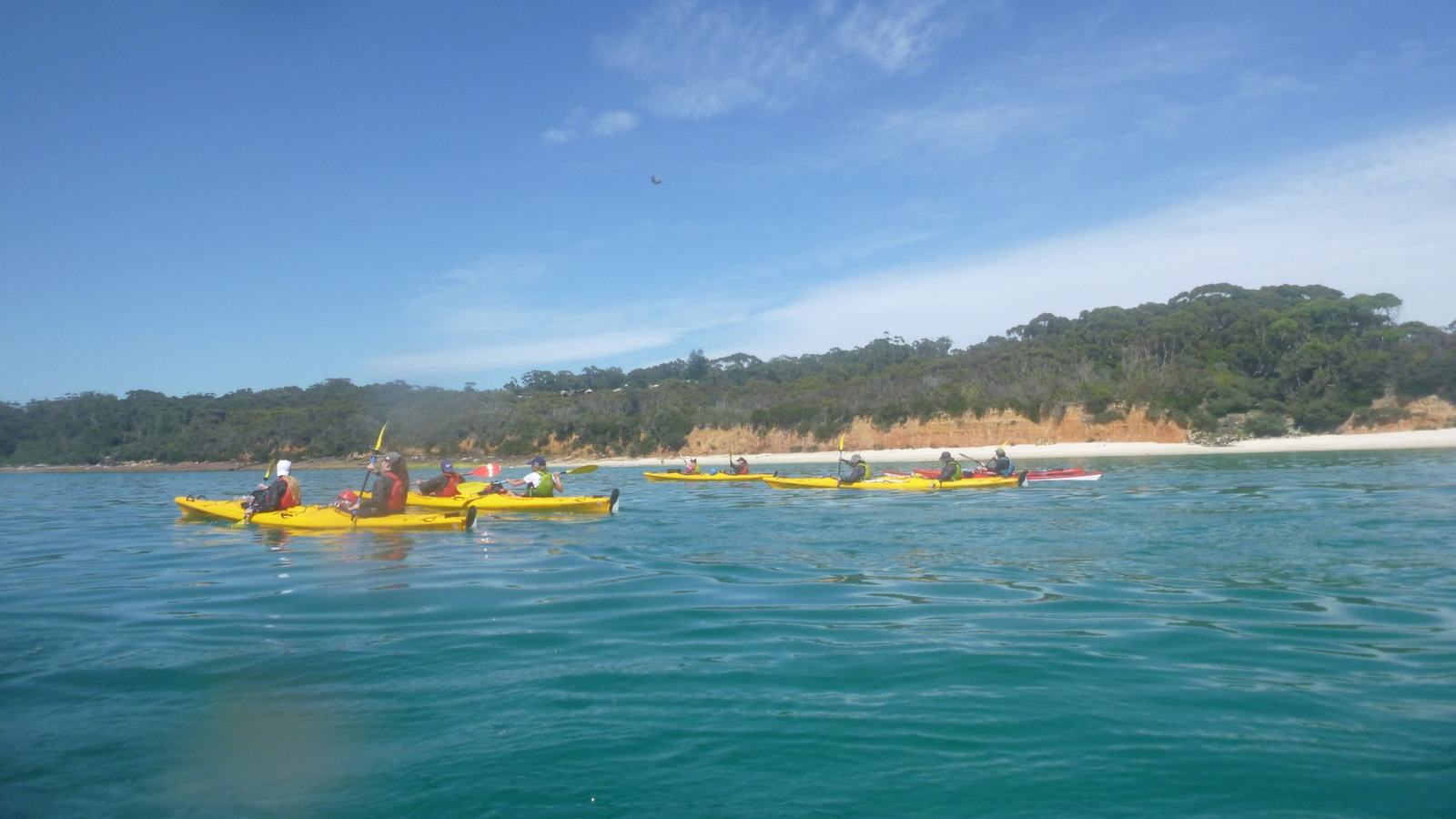
A detailed Jervis Bay sea kayaking guide, covering licensed guided activities, Booderee National Park, beach launches, wildlife and weather planning.
Jervis Bay, on the New South Wales south coast, is associated with white beaches, clear water and a coastline that invites exploration at a gentle pace. The official Visit NSW tourism service lists sea kayaking as one of the outdoor adventures available in the Jervis Bay and Shoalhaven area, and highlights guided excursions through the marine park. Nearby Booderee National Park adds a distinctive cultural and conservation setting, including beaches that visitors often use as starting points for waterside activities. For someone accustomed to a small motorboat or a weekend kayak, the most appealing choice may be a carefully planned, low-impact outing rather than an attempt to cover the whole bay.
A bay with more than one character
Jervis Bay can look like a sheltered turquoise basin in photographs, but its coastline includes open-water edges, headlands, beach approaches and changing conditions. A paddle along a protected stretch of shore offers a different experience from a crossing exposed to wind and swell. Visit NSW describes the region as a place for outdoor adventure, but a tourist listing does not itself specify which routes are safe on a given day. Choose a journey matched to the crew's ability, obtain current local information and keep a realistic turnaround point. The view should be the reward for a sensible route, not a reason to extend the outing beyond safe limits.
Guided sea kayaking as a first choice
Visit NSW points visitors towards Sea Kayak Jervis Bay, an outfitter offering paddling experiences in the marine park. A guided trip may provide equipment, instruction and informed route selection, making it appropriate for visitors who do not own a sea kayak or know the area. It is important to check which specific tour is available, whether the route is suitable for beginners and how weather affects departures. Some experiences involve longer paddling periods or more exposed water than others. A guest should explain their swimming confidence and prior paddling experience to the provider rather than assume every kayak advertised for tourists is equally easy.
Why the marine park matters
Jervis Bay Marine Park helps protect marine habitats while accommodating recreation, tourism and other uses. For boaters, the existence of a marine park is a reason to check the rules rather than a reason to assume navigation is prohibited. Restrictions can vary by zone and activity, including fishing and collecting marine life. A responsible paddler should consult the current official marine-park maps and follow any signage at the chosen launch. Wildlife should not be disturbed, and vegetation should be left intact. A kayak may have a relatively modest wake, but many visitors landing in the same sensitive area can still leave a significant environmental footprint.
Booderee's separate identity
Booderee National Park occupies the southern side of Jervis Bay and is jointly managed with the Wreck Bay Aboriginal Community. Visitors should understand that the national park has its own rules, entry arrangements and cultural significance. A beach within Booderee is not simply another open access point for any boat or visitor activity. Check Parks Australia's current notices for access, parking, boat ramps and any conservation restrictions. Take time to learn about the area's Aboriginal heritage from official park interpretation, and avoid treating cultural sites as decorative scenery for photographs. Respectful planning makes the trip more meaningful for everyone.
A beach launch requires more skill than it seems
A gently sloping white beach may look like the simplest place to launch a kayak, but waves, sand and water depth can complicate getting in and out. A paddler should choose an authorised access point suited to the craft and conditions, keeping clear of swimmers. If wind or chop makes the landing uncertain, a different launch may be preferable. Motorboat owners face additional questions about ramp design, trailer access, parking and local rules. Do not assume that a beach appearing in promotional material is approved for powered-vessel launching. Local information should guide the practical choice of where to start and finish.
Murrays Beach and the south side
Murrays Beach is one of the best-known beaches within Booderee National Park, with a setting that gives visitors views across parts of the bay. Parks Australia has published updates about works in the Murrays area, including arrangements affecting the beach car park and boat ramp. Those notices illustrate why current access must be checked immediately before arrival. A ramp remaining open during one phase of works does not guarantee unchanged conditions at every subsequent date. For any small craft, understand where loading and parking are permitted and avoid obstructing other users. A relaxed outing begins with an orderly launch, not an argument over crowded access.
Seeing the coastline at kayak height
The great reward of a sea kayak is how close the paddler sits to the surface. Colours in the water, movement of small waves and the shape of rocky headlands become more vivid when experienced slowly. A touring kayak allows time to watch the shoreline change without the noise of a larger engine. However, sitting low also makes the craft less visible to other vessels. Bright clothing, suitable visibility measures and a proper lookout are important, particularly when passing a busy beach or an area used by commercial excursion boats. The ability to enjoy the landscape depends upon remaining aware of the surrounding traffic.
Wildlife encounters on their terms
The bay is home to marine and coastal wildlife that visitors may encounter from a boat. No guide can responsibly promise a close view of a dolphin or any other wild animal at a particular place. If animals appear, slow down or stop where appropriate and allow them room to move without pursuit. Never attempt to surround wildlife with multiple kayaks for a photograph. Marine-park regulations may specify approach distances and conduct for particular species, and those requirements should be checked before setting out. A distant encounter can be extraordinary without interfering with the animal's normal behaviour. Good wildlife tourism relies on restraint.
Wind and the return passage
Wind is often the deciding factor in an otherwise attractive kayak trip. A route that begins with a helpful breeze can become a tiring return into stronger conditions, particularly as the day warms. Check current marine forecasts and establish a conservative limit for distance and time. The group should understand how to communicate if someone becomes fatigued and where a safe alternative landing would be possible, subject to local access rules. A first-time visitor should not embark on a long crossing simply because the opposite beach looks close. Distances on open water can be deceptive, and a small craft has limited ability to make rapid progress against rough conditions.
Equipment for a real sea paddle
A properly fitted personal flotation device is fundamental, alongside suitable paddles, weather protection and a means of contacting help. A sea kayak used beyond a sheltered beach may need additional rescue and navigation equipment according to the route. Check whether a rental provider supplies dry bags, spray decks and other essentials, and ask for instruction in using any unfamiliar gear. Protect phones from water while keeping emergency communications accessible. A group should know what to do after a capsize rather than assume it will never happen. The right equipment cannot make every forecast safe, but it improves the options available when a problem occurs.
Families need the right level of outing
Jervis Bay can appeal strongly to families because of its beaches and accessible outdoor activities. But a child comfortable swimming near shore may not be ready for a sustained sea-kayaking trip. Choose a tour or shore-based experience that suits the youngest and least experienced participant. Ask about minimum age, tandem boats, fitted flotation devices and the time spent paddling. Do not force a tired child to continue toward a distant photo stop. The best family introduction might be a short guided paddle in genuinely sheltered conditions, followed by time on a permitted beach. Building confidence is more important than reaching the farthest headland.
A sea kayak and a small powerboat differ
The same coastline may attract motorboat owners looking for a cove or picnic destination, yet the logistics are different. A powered vessel needs suitable ramp access, enough navigational depth and compliance with speed and zoning rules. A kayak needs manageable sea conditions, landing arrangements and time for a safe return. Neither craft automatically has the right to enter every sheltered inlet. A thoughtful itinerary matches the vessel to the task rather than treating all small boats as interchangeable. The marine park is enjoyed by swimmers, anglers, tour vessels and wildlife watchers, so considerate navigation is vital.
The role of local guides
An experienced guide can explain why a particular stretch of coast is appropriate on the day and which places are sensitive or difficult to approach. This knowledge is particularly useful for visitors unfamiliar with the bay's wind patterns and marine-park arrangements. It is worth listening when a guide selects a less dramatic route for safety or conservation reasons. A good outing need not involve the longest advertised distance. Guided travel also offers opportunities to learn about sea-kayak handling, group formation and lookout responsibilities that can improve future independent paddling. Such learning remains valuable long after the photographs have been shared.
Photography on a bright-water day
White sand and bright water can create striking photographs, but reflections and glare may obscure details. Keep a camera protected from splashes, and avoid sudden movements that could destabilise the kayak. A low viewpoint showing the bow, shoreline and distant headland often communicates the experience more effectively than a telephoto shot of another paddler. Do not follow dolphins or enter a restricted area to obtain an image. The setting has plenty to offer without interference: variations in water colour, coastal vegetation and the relationship between small boats and long beaches can all tell the story of a responsible visit.
Combining water travel with time ashore
Visit NSW highlights outdoor experiences across Jervis Bay and Shoalhaven, providing alternatives when boating conditions are unsuitable. A visitor might plan a morning kayak tour, then leave time for a walk, a cultural stop or a relaxed meal in the surrounding region. Such a plan is more resilient than spending the entire holiday on one exposed water journey. The locations of beaches and attractions should be checked carefully, because some involve separate parking, entry or travel arrangements. Booderee National Park has its own management and access requirements. A flexible schedule respects both the natural conditions and the practical needs of travellers.
Checking access and current notices
Before setting out, consult Visit NSW for tourism information, the current marine-park rules for navigation and environmental obligations, and Parks Australia for Booderee National Park notices. If booking with a kayak operator, verify the exact start point, duration, cancellation arrangements and included equipment. Do not rely on an old social-media post for car-park access or ramp availability, particularly where maintenance work has been announced. A small amount of checking prevents unnecessary travel and helps avoid crowding sensitive areas. If conditions change, choose another permitted activity rather than improvise a launch from an unsuitable beach.
The pleasure of moving slowly in a large bay
Jervis Bay demonstrates how a low-powered craft can reveal a coastline without demanding speed or a complicated itinerary. Its attractions are the relationship between water and shore, changing light, marine life observed respectfully and the freedom to pause at a sensible place. A guide or well-prepared skipper can help translate those attractions into an outing that suits real weather and ability. By using authorised access, respecting the marine park and taking care around wildlife and other water users, visitors can enjoy an Australian small-boat experience that is both memorable and considerate.
Sources and photograph attribution
Official destination and boating guidance: Visit NSW — Outdoor Adventures in Jervis Bay and Shoalhaven. Current access, rules, weather and reservations must be checked independently before travel.
Photograph: Eezu Tan — Jervis Bay - sea kayaking in groups.jpg (CC BY-SA 4.0), via Wikimedia Commons. Resized and converted to JPEG for editorial presentation. Source: https://commons.wikimedia.org/wiki/File:Jervis_Bay_-_sea_kayaking_in_groups.jpg. Licence: https://creativecommons.org/licenses/by-sa/4.0. Original rights remain with the credited creator or as specified by the source and licence.
