
An original practical paddling guide to Point Pelee’s marsh channels, canoe rentals, wildlife viewing, water safety and careful conservation.
At the southern end of mainland Canada, Point Pelee National Park is known for more than its narrow peninsula and views across Lake Erie. Its marsh occupies a large part of the protected area and offers an unusually intimate way to explore a wetland by canoe or kayak. Parks Canada describes the internationally important marsh as occupying about two-thirds of the park, and provides detailed visitor guidance for paddling through channels, ponds and cattail beds. A November 2026 article should not imply that boats are available every day irrespective of weather or season. Instead, it can help visitors understand what a future trip involves and what makes this particular small-boat landscape so distinctive.
A wetland inside a national park
Point Pelee's marsh is not simply a pool at the edge of an ordinary beach. The park's official description identifies a Ramsar wetland of international significance, with habitats supporting plants, birds and aquatic life. Its water channels offer a different perspective from the observation boardwalk, bringing a visitor near the height of reeds and the changing surface of shallow water. That access also carries responsibilities. A canoe can reach places that pedestrians cannot, but the freedom to float does not amount to permission to disturb vegetation or wildlife. A well-planned paddle keeps conservation at the centre of the experience.
The channel towards Lake Pond
Parks Canada suggests exploring the marsh through a channel to Lake Pond and identifies West Cranberry Pond, East Cranberry Pond and Redhead Pond as other areas of interest. These names help a visitor appreciate that the wetland has a navigable geography rather than one uniform stretch of water. Nevertheless, they should not be treated as a guaranteed sequence for a first-time paddler. Water levels, wind, permitted access and the crew's ability may change what is realistic. Use the current official paddling map and local advice, and turn back early rather than pressing into a channel merely because it appears on a tourism page.
The sight and sound of cattails
The visual character of the marsh comes from its dense reeds and the narrow passages they create. A canoe moving slowly through a channel can bring the texture of cattail stands, rippling water and calls of birds into focus. This is not an environment where speed improves the experience. Paddles should be used smoothly to avoid unnecessary damage near the banks, and the crew should remain alert for crossing boats or natural obstructions. A small vessel makes quiet observation possible, but it can also scrape plants or create disturbance if handled carelessly. A deliberate, respectful pace suits the setting.
Meeting wildlife at its own distance
Parks Canada mentions turtles, frogs and fish among the animals visitors may notice while paddling. It is tempting to seek a photograph of a turtle basking close to the water, but a good sighting should end before the animal feels compelled to flee. Avoid feeding wildlife or moving a boat into vegetation simply to obtain a better view. A pair of binoculars can make a distant observation more satisfying without altering the animal's behaviour. The marsh is also an active ecosystem, so visitors should watch where they place paddles and avoid lifting plants or objects from the water for inspection.
A freighter canoe provides another option
For people not comfortable navigating on their own, Parks Canada describes a freighter canoe tour in a ten-person canoe with an interpreter. The published guidance lists weather-dependent sessions on Saturdays and Sundays, with a reservation phone number and a recommendation to check the fees page. That does not prove the programme is running on a particular November date or that spaces remain available. Visitors should ask park staff about current operating conditions, times and suitability. A guided group can make learning about the marsh accessible to people who would not otherwise rent an independent canoe, while retaining the fun of being afloat.
Renting rather than bringing a boat
The park's paddling page identifies Pelee Wings as a local rental provider for canoes and kayaks, subject to weather and availability. Hire arrangements are commercially separate from the ranger-led freighter canoe tour, and the two should not be confused. Before arriving, check whether the business is operating, which hulls and safety equipment are available, what assistance is provided at the launch and how long the rental period lasts. Owners bringing their own craft should verify the park's relevant rules and the actual access point. Assuming that the presence of a rental dock guarantees permission for every type of private vessel is unwise.
The channel must be shared
Parks Canada explicitly reminds paddlers that traffic flows in both directions through the marsh channel. Canoes meeting head-on need room to pass without damaging plants or blocking the waterway. A group travelling side by side can occupy more width than expected, so formation and communication matter. When another craft approaches, ease off, make intentions clear and give sufficient room. Avoid abrupt corrections near reeds that could make a canoe unstable. A low-speed wetland is still a navigational space, and consideration between crews reduces the risk of collisions, groundings and frustration for everyone.
Cattail pads are not solid ground
One of the park's more useful warnings is that paddlers should not climb onto cattail pads. Floating or vegetated material can look firmer than it is, creating a real hazard when someone attempts to stand. It may also be sensitive habitat. If a paddler needs to stop, use an approved landing rather than stepping onto apparently dry vegetation. The park also advises avoiding crushing or collecting plants. These rules are not merely bureaucratic: a small boat can reach fragile places easily, and visitors should take responsibility for preserving them. An intact wetland is a more rewarding destination than one marked by careless shortcuts.
What safety equipment the park specifies
Parks Canada's paddling guidance is unusually concrete. It tells paddlers to wear lifejackets and describes required equipment including a flotation device for every person, a buoyant heaving line, spare paddle or oars, an anchor with line, a bailer and a whistle. Visitors should verify the current list for their exact craft and ensure that hire equipment meets the requirements. Merely finding a whistle or buoyancy aid in a storage compartment does not mean it is ready for an emergency. A safety briefing should cover who has each item, what it is for and how the crew will communicate if separated.
Wind can become the hardest part
The park warns that winds can be stronger beyond the windsock and that weather can change rapidly. Cattail channels may offer an impression of shelter that disappears on wider water. A paddler who explores farther from the launch must also face the return journey, possibly with a headwind or greater chop. Check the forecast, watch the actual conditions and agree on a sensible turnaround time before leaving shore. A canoe with tired passengers may progress slowly against wind, so having an easy escape plan is more important than completing every pond on a map. It is entirely acceptable to shorten a trip.
The windsock and the route home
Parks Canada says the windsock identifies the return channel and that maps are available at the Cattail Café rental shop. A windsock helps with orientation, but it should not be the only navigational reference, especially in poor visibility or changing weather. Take a suitable map, understand the route before setting out and note landmarks that will remain recognizable on return. A phone can be useful but should be protected from water and not treated as infallible. In a marsh with many similar-looking reed edges, even an uncomplicated departure can become confusing if the crew relies solely on memory.
How the park advises a capsized paddler
The official safety advice says that a person who capsizes should remain with the overturned boat, move shoreward where possible and sound three long whistle blasts when assistance is required. Every paddler should know this before departure. A capsize can be disorienting, particularly if a camera, bag or paddle floats away. Protect life before equipment, maintain flotation and call for help rather than trying to solve every problem without assistance. The appropriate response will depend on actual conditions, so pre-trip safety instruction matters. A small-boat holiday is not spoiled by discussing emergencies; it becomes more comfortable when everyone understands the essentials.
A day for families and beginners
The marsh's educational appeal makes Point Pelee attractive to families, but the best arrangement depends on individual ability. Some visitors may prefer the guided freighter canoe, while others with experience can use a rental boat and a conservative route. Children should wear properly fitted flotation equipment and know simple rules about sitting, holding onto gear and following instructions. Packing drinking water, sun protection and clothing for wind or rain can make the outing more comfortable. Allow time to explore the boardwalk or other official visitor facilities without pressuring the group to spend every possible minute on the water.
Photography from within the marsh
Cattails, reflections and wildlife often create more interesting pictures when photographed from a stable, unobtrusive position. A paddler who abruptly changes seats or leans over the gunwale to obtain a low angle can introduce avoidable risk. If an animal appears, it may be better to allow the boat to drift at a safe distance than chase it. Keep gear in a dry bag when not in use and respect other boats passing through narrow channels. A photograph showing the canoe's relationship to the wetland may tell a fuller story than an isolated animal image. The goal is to record a visit without altering the place being observed.
Check the season before promising a trip
Point Pelee's official pages describe rentals and guided tours, but availability can depend on season, staffing and weather. An online page may remain visible after a particular operating period has finished. For a future visit, confirm the current park opening information, rental arrangements, any booking procedure and weather conditions close to the date. Do not assume that a programme's advertised weekend hours apply throughout the winter. The park's rules and navigational information should take priority over informal suggestions circulating online, especially if those suggestions involve landing in vegetation or exploring an area not shown on the approved route.
A modest boat reveals an extraordinary wetland
The canoe suits Point Pelee because the best moments happen at the speed of a paddle stroke: a bird calling beyond the reeds, a turtle seen from a respectful distance or a changing reflection near the water's edge. The park has supplied unusually practical guidance on sharing channels, handling weather and protecting cattails, all of which make the experience safer and more responsible. Visitors who use that guidance, choose the right boat and confirm current services can enjoy a landscape that is easy to overlook from the road. The result is a distinctive Canadian small-boat outing grounded in conservation rather than speed.
Sources and photograph attribution
Official destination and boating guidance: Parks Canada — Point Pelee Canoeing and Kayaking. Current access, rules, weather and reservations must be checked independently before travel.
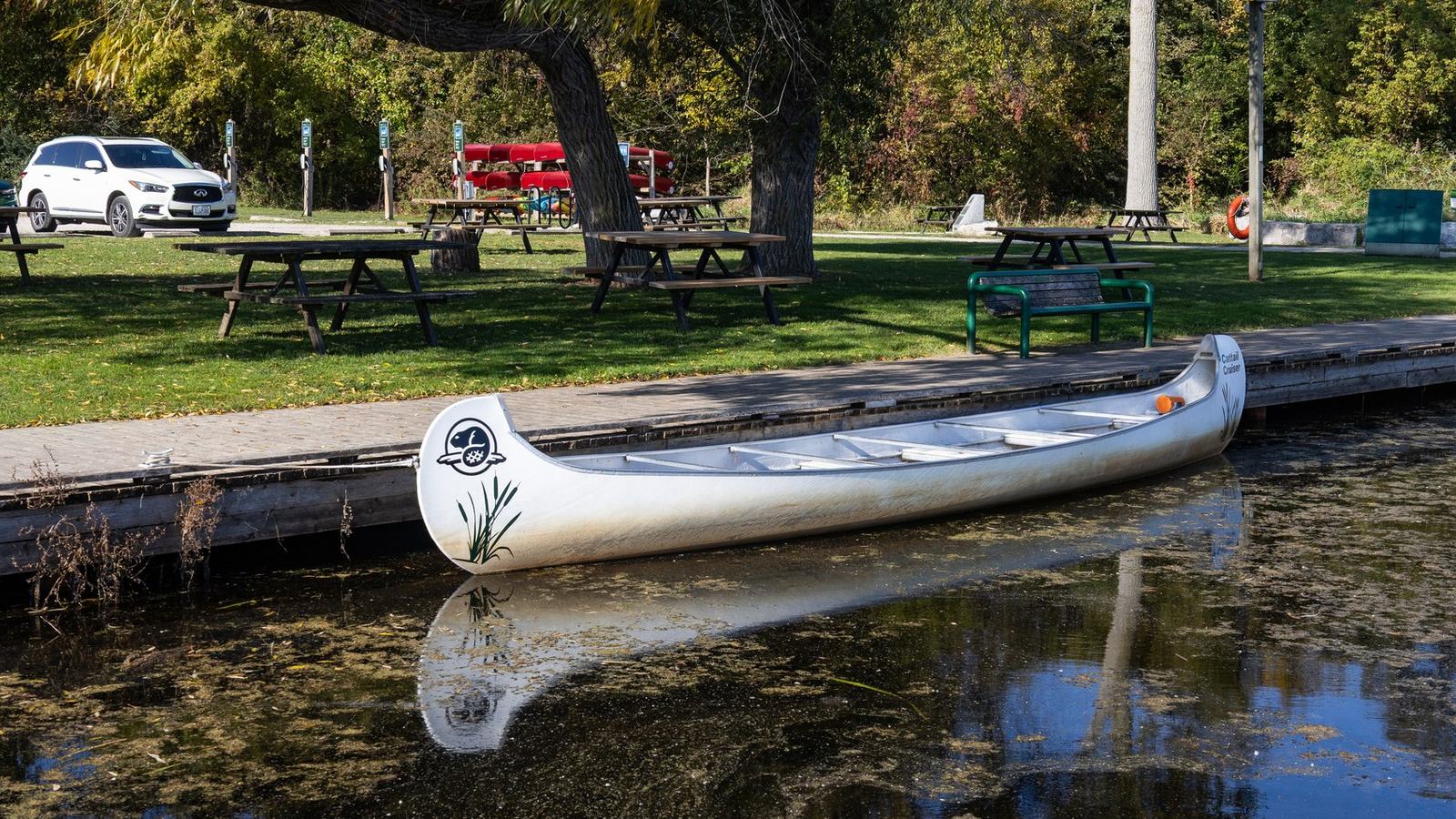
Photograph: Chris Woodrich — Canoe docked at Marsh Boardwalk, Point Pelee National Park, Leamington, Ontario, 2026-10-24.jpg (CC BY-SA 4.0), via Wikimedia Commons. Resized and converted to JPEG for editorial presentation. Source: https://commons.wikimedia.org/wiki/File:Canoe_docked_at_Marsh_Boardwalk%2C_Point_Pelee_National_Park%2C_Leamington%2C_Ontario%2C_2026-10-24.jpg. Licence: https://creativecommons.org/licenses/by-sa/4.0. Original rights remain with the credited creator or as specified by the source and licence.
